For many individuals with limited mobility, standard power chairs are often too bulky for travel and too heavy for caregivers to manage, leading to a restricted lifestyle and missed opportunities. Struggling with a cumbersome chair can turn a simple trip to the grocery store or a family vacation into an exhausting logistical nightmare. The fear of being stranded or the physical strain of lifting heavy equipment often results in staying home, sacrificing independence and social connection.
A modern lightweight electric wheelchair offers the perfect balance of portability and performance, providing a seamless solution for those who refuse to let mobility challenges dictate their quality of life. This guide explores the essential factors to consider, ensuring you find a solution that restores your freedom without weighing you down.
What drive wheel is best for a lightweight electric wheelchair?
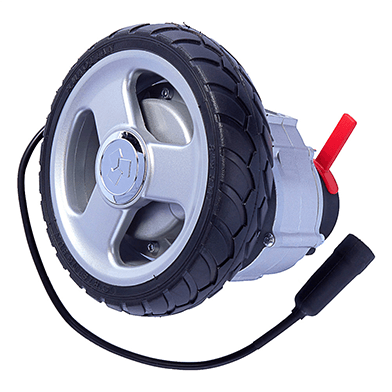
The best drive wheel configuration depends entirely on your primary environment, with mid-wheel drive offering superior indoor agility and rear-wheel drive providing better outdoor stability. When selecting a lightweight electric wheelchair, you must evaluate where the motor power is applied to the frame. Rear-wheel drive models are common in the portable category because they offer a familiar driving feel and excellent tracking on straight paths. However, mid-wheel options are becoming more popular for their ability to turn on a dime in tight hallways.
Are mid-wheel drive systems ideal for indoor use?
Mid-wheel drive systems place the drive wheels directly under the user’s center of gravity, creating a very small turning radius. This design allows the chair to rotate within its own footprint, making it perfect for navigating small apartments or crowded cafes. Users find that the intuitive steering reduces the learning curve associated with power mobility.
Is rear-wheel drive better for outdoor stability?
Rear-wheel drive configurations excel when you need to cover long distances or handle slightly uneven sidewalks. The placement of the wheels at the back provides a stable base that resists tipping during acceleration or when climbing small inclines. This setup is often preferred by those who enjoy taking their chair to parks or on suburban walks.
Key Takeaway
Drive wheel placement dictates the chair’s performance profile; choose mid-wheel for maximum indoor precision or rear-wheel for reliable outdoor tracking.
Summary Table
| Feature | Mid-Wheel Drive | Rear-Wheel Drive | |
|---|---|---|---|
| Turning Radius | Excellent (Smallest) | Moderate | |
| Outdoor Stability | Good | Excellent | |
| Indoor Agility | Best in class | Standard | |
| Speed Handling | Sensitive | Stable |
How to assess seating on a lightweight electric wheelchair?
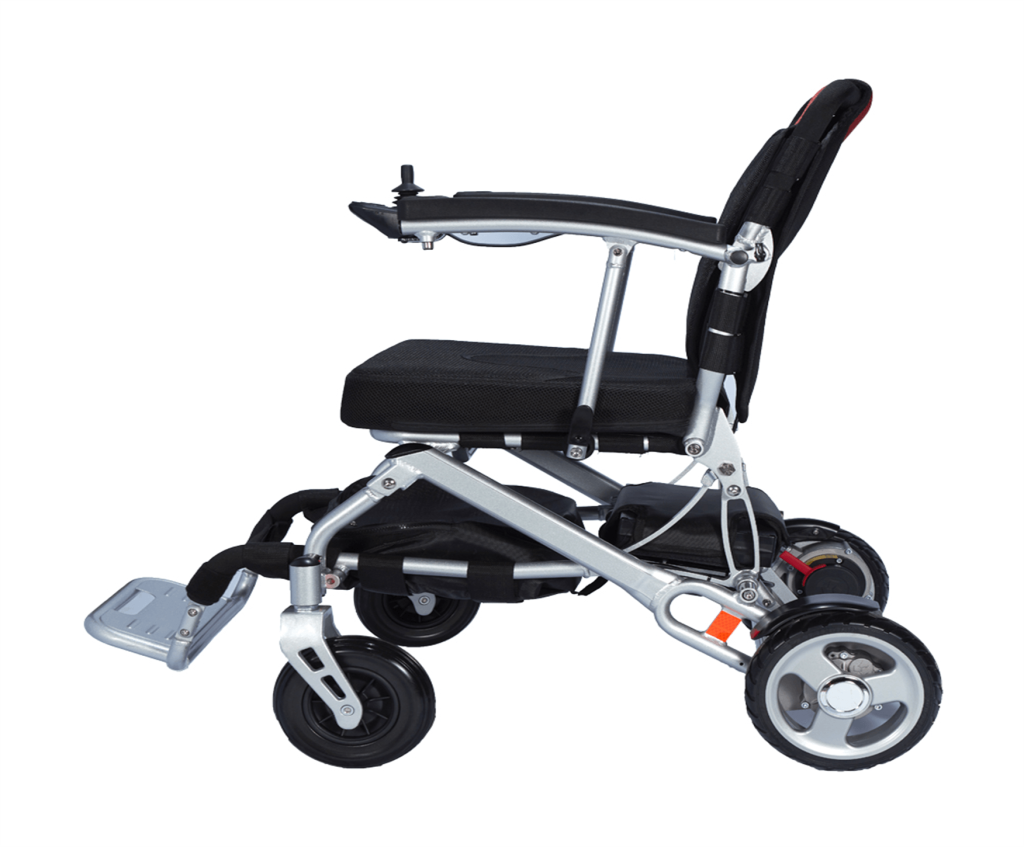
Proper seating assessment involves checking for pressure relief, lateral support, and adjustable dimensions to prevent long-term postural issues. A high-quality lightweight electric wheelchair should never sacrifice ergonomic support for the sake of reducing total poundage. Manufacturers now use high-density foams and breathable fabrics to ensure the user remains comfortable for several hours. Without the right seat, even the most portable chair becomes a burden.
Which cushion type provides the best skin protection?
Skin protection is a critical consideration for anyone spending more than four hours a day in a seated position. High-end lightweight models often feature gel-infused or air-cell cushions that redistribute weight away from bony prominences. These materials help prevent pressure sores, which can be a significant health risk for those with limited sensation.
How do seat dimensions impact daily comfort?
Seat width and depth must be tailored to the user’s specific anatomy to avoid hip pain and poor circulation. If a seat is too wide, the user may lean to one side, leading to scoliosis or other spinal misalignments. Conversely, a seat that is too narrow will cause painful rubbing against the armrest supports.
Key Takeaway
Ergonomic seating is the foundation of long-term mobility success; prioritize high-quality cushions and precise anatomical measurements over weight savings alone.
Summary Table
| Dimension | Ideal Fit Criterion | Risk of Poor Fit | |
|---|---|---|---|
| Seat Width | 1 inch of clearance on each side | Pressure sores or instability | |
| Seat Depth | 2 inches from back of knee | Circulation issues or slouching | |
| Back Height | Below shoulder blades | Restricted arm movement | |
| Armrest Height | Elbows at 90-degree angle | Shoulder fatigue |
Which power features fit a lightweight electric wheelchair?
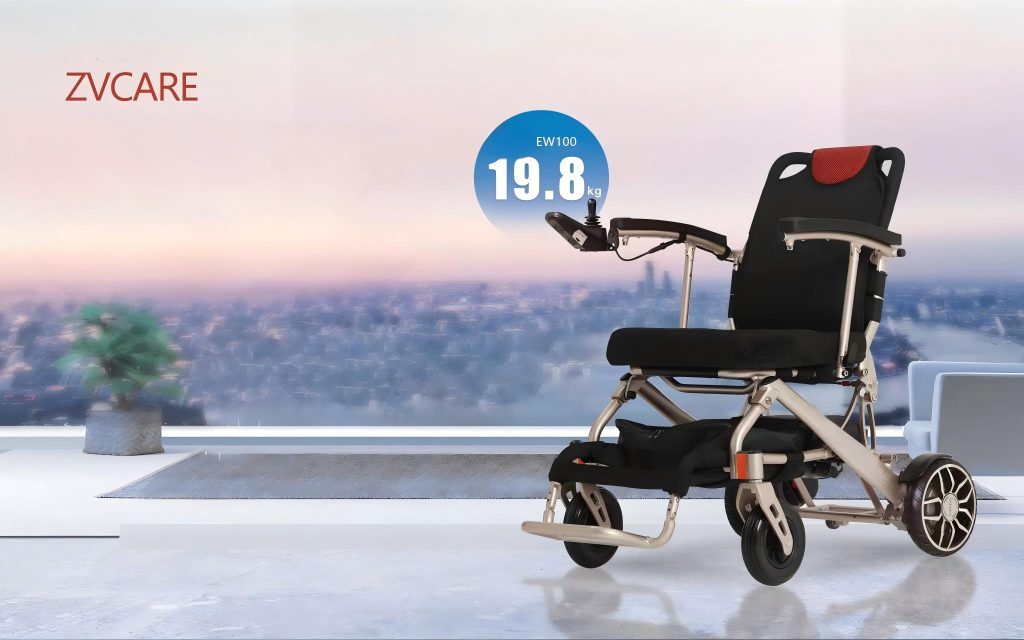
Power features such as tilt-in-space or elevating seats are increasingly available in the lightweight category to enhance user health and independence. These motorized functions allow for weight shifts without the need for a caregiver’s physical intervention. While they add some weight to the overall frame, the clinical benefits often outweigh the portability trade-off. Modern engineering has made these actuators smaller and more efficient than ever before.
Why is power tilt important for pressure relief?
Power tilt-in-space allows the entire seat assembly to pivot backward while maintaining the angle of the hips and knees. This function is vital for gravity-assisted pressure redistribution, moving the weight from the pelvis to the back. It also helps with managing edema in the lower extremities by allowing the legs to be positioned higher.
Can elevating seats improve social engagement?
Power elevating seats allow the user to rise to eye level with standing peers, which significantly boosts social confidence. This feature also facilitates safer transfers by allowing the chair to be positioned higher than a bed or a car seat. Beyond social benefits, it provides access to high cabinets, ATM machines, and grocery store shelves.
Key Takeaway
Integrated power features transform a simple transport device into a comprehensive seating system that manages pressure and improves vertical reach.
Summary Table
| Power Feature | Primary Benefit | Best For | |
|---|---|---|---|
| Power Tilt | Skin health and pressure relief | High-risk users | |
| Power Recline | Stretching and catheterization | Postural changes | |
| Power Elevation | Vertical reach and social equity | Independent living | |
| Power Legrests | Edema management | Circulation issues |
What control systems work for a lightweight electric wheelchair?
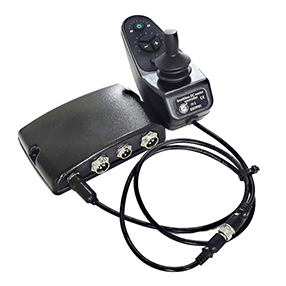
Advanced control systems range from simple joysticks to sophisticated, programmable interfaces that manage multiple chair functions and external devices. Choosing a high-configuration wheelchair ensures that the controller is responsive and can be fine-tuned for acceleration, deceleration, and turning sensitivity. This customization ensures that the chair behaves exactly how the user expects in different environments.
Are programmable joysticks necessary for most users?
Programmable joysticks allow technicians to set specific profiles for indoor and outdoor use, tailoring the response to the user’s neurological needs. For example, an indoor profile might limit top speed but increase turning sensitivity for tight spaces. This level of personalization prevents accidents and reduces user fatigue over the course of the day.
How does Bluetooth connectivity enhance the experience?
Many modern controllers now include Bluetooth capabilities, allowing the user to operate their smartphone or computer through the wheelchair’s joystick. This integration is a game-changer for individuals with limited upper-body mobility who find touching a screen difficult. You can answer calls, send texts, or navigate the internet without ever taking your hand off the chair’s controls.
Key Takeaway
Modern control systems bridge the gap between physical mobility and digital communication, offering a personalized interface for diverse physical capabilities.
Summary Table
| Controller Type | Key Advantage | Best Application | |
|---|---|---|---|
| Standard Joystick | Simple and reliable | General mobility | |
| Touchpad Controls | Requires minimal force | Muscle weakness | |
| Bluetooth Enabled | Controls external devices | Tech-savvy users | |
| Attendant Control | Rear-mounted for caregivers | Dependent users |
How to choose the battery for a lightweight electric wheelchair?
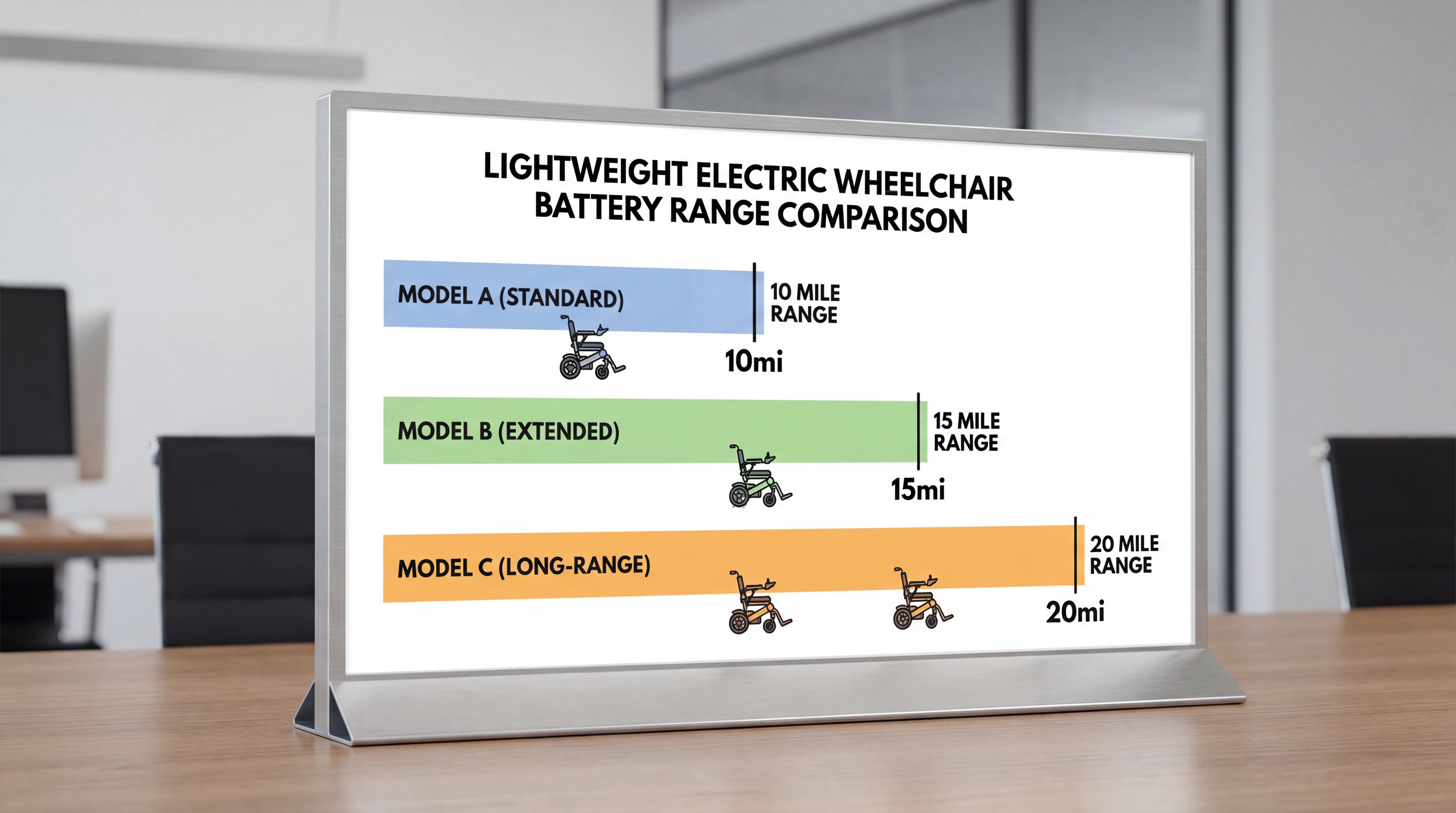
Choosing the battery involves weighing the benefits of lightweight lithium-ion technology against the lower cost of traditional lead-acid options. Battery choice directly impacts the chair’s weight, travel range, and charging speed. For a chair designed for portability, the battery is often the heaviest single component other than the frame itself. Understanding how chemistry affects performance is essential for long-term satisfaction.
Is lithium-ion technology worth the extra cost?
Lithium-ion batteries are significantly lighter than lead-acid batteries and offer a longer lifespan, lasting for thousands of charge cycles. Lithium batteries provide consistent power throughout the entire discharge cycle, meaning the chair won’t slow down as the battery gets low. While the initial investment is higher, the total cost of ownership is often lower over time.
How do you calculate your daily range requirements?
Calculating range involves looking at the battery’s Amp-hour (Ah) rating and considering your local terrain and user weight. A chair rated for 15 miles on flat ground may only achieve 10 miles in a hilly neighborhood. It is always wise to choose a battery that offers at least twenty percent more range than you think you need to avoid being stranded.
Key Takeaway
Lithium-ion batteries are the gold standard for lightweight chairs, offering significant weight savings and consistent power for active lifestyles.
Summary Table
| Battery Type | Weight | Lifespan | Charging Time | |
|---|---|---|---|---|
| Lithium-Ion | 5 – 10 lbs | 3 – 5 years | 2 – 4 hours | |
| Sealed Lead Acid | 20 – 40 lbs | 1 – 2 years | 8 – 10 hours | |
| Gel Cell | 15 – 30 lbs | 2 years | 6 – 8 hours | |
| Lithium Iron Phosphate | 7 – 12 lbs | 5 – 7 years | 1 – 3 hours |
Is transportability key for a lightweight electric wheelchair?
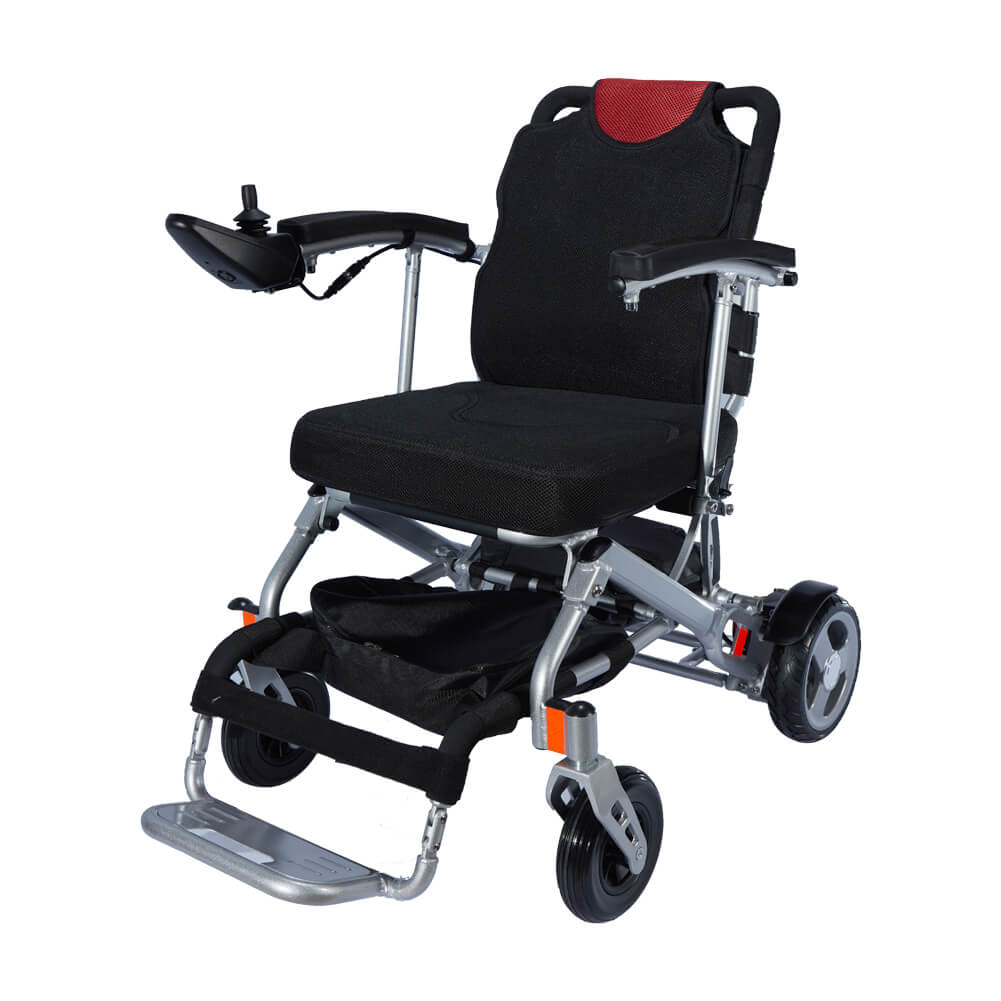
Transportability is often the primary reason users search for a lightweight electric wheelchair , as it determines how easily the device fits into your travel routine. A chair that is easy to fold or dismantle allows for spontaneous trips and easier storage in small homes. You must decide whether a one-piece folding design or a multi-piece dismantling frame fits your physical abilities better.
Should you choose a folding or dismantling frame?
Folding frames collapse in one motion for quick storage, while dismantling frames allow you to break the chair into several lighter pieces. If you can lift the total weight of the chair, folding models offer maximum convenience. If you have strict lifting limits, a dismantling model ensures each piece remains manageable.
What is the maximum weight for safe lifting?
Safe lifting weight is subjective, but most professionals recommend avoiding lifting more than 35 pounds repeatedly without assistance. When reviewing specifications, always verify the weight of the heaviest single component rather than just the total “gross weight.” This ensures the chair remains truly portable for your specific situation.
Key Takeaway
The choice between folding and dismantling frames should be based on your personal lifting capacity and the storage space available in your primary vehicle.
Summary Table
| Transport Method | Effort Level | Space Required | Best For | |
|---|---|---|---|---|
| One-Piece Folding | Low (one motion) | Moderate | Taxis and Planes | |
| Multi-Piece Dismantle | High (multiple steps) | Minimal | Small car trunks | |
| Rear Hitch Lift | Minimal (motorized) | High | SUVs and Vans | |
| Portable Ramps | Moderate (pushing) | High | Home entryways |
How to handle repairs for a lightweight electric wheelchair?
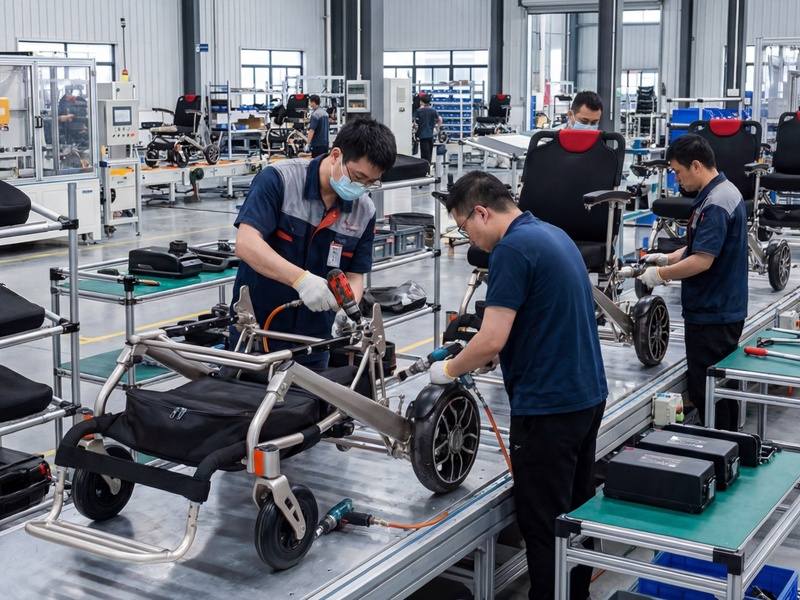
Maintenance and repair for a lightweight electric wheelchair require a proactive approach to ensure that small mechanical issues do not become major failures. Because these chairs use complex electronics and high-torque motors, they require occasional professional servicing. However, many daily checks can be performed by the user to extend the life of the device and ensure it remains a reliable partner.
What does a routine maintenance schedule look like?
A routine maintenance schedule should include weekly tire pressure checks and monthly inspections of the wiring harnesses. Loose connections are a leading cause of intermittent power loss, while keeping the frame clean prevents motor infiltration. Lubricating moving parts like folding hinges will prevent squeaks and premature wear.
Where can you source high-quality spare parts?
Sourcing spare parts should always be done through authorized dealers to ensure compatibility and safety standards are maintained. Common wear items like tires, armrest pads, and joystick knobs should be kept in stock at home if you travel frequently. Using genuine manufacturer parts protects your warranty and ensures the chair operates at peak efficiency.
Key Takeaway
Proactive maintenance and the use of authorized spare parts are essential for extending the life of your chair and preventing costly emergency repairs.
Summary Table
| Component | Maintenance Frequency | Sign of Failure | |
|---|---|---|---|
| Tires | Weekly | Cracking or slipping | |
| Battery | Monthly check | Reduced range | |
| Joystick | Monthly check | Error codes or lag | |
| Motor | Annually | Grinding noises |
What weight capacity suits a lightweight electric wheelchair?
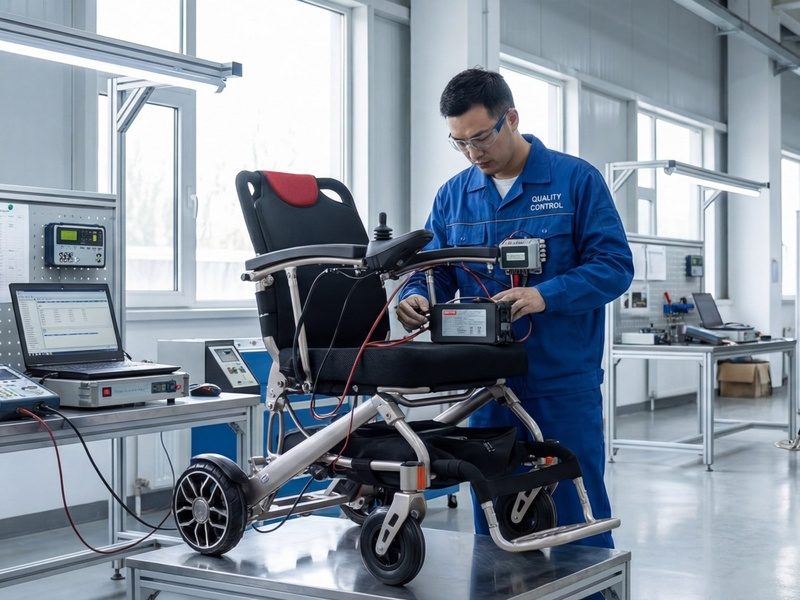
Selecting the correct weight capacity is vital for both user safety and the mechanical longevity of the motors and frame. If you are unsure of your requirements, consult a guide on how to decide on electric wheelchair repair vs replacement , as an over-stressed frame is often beyond safe repair. You must account for your own body weight plus any accessories, bags, or medical equipment you carry regularly.
How do you match frame durability to your needs?
Frame durability is a result of the materials used, with high-strength aluminum and magnesium being the standards for the lightweight category. Aluminum offers a great strength-to-weight ratio and natural corrosion resistance, making it ideal for daily use. It is generally safer to have a 20-30 pound “buffer” between your weight and the maximum rated capacity.
Are there heavy-duty options in the lightweight category?
Yes, specialized bariatric lightweight chairs use reinforced geometry and dual motors to support up to 450 pounds while remaining portable. These chairs often feature widened wheelbases to handle the additional load without sacrificing maneuverability. They prove that high capacity and portability can exist in the same mobility solution.
Key Takeaway
Always choose a chair with a weight capacity that comfortably exceeds your total load to ensure motor efficiency and frame integrity.
Summary Table
| User Weight | Recommended Capacity | Frame Material | |
|---|---|---|---|
| Under 200 lbs | 250 lbs Standard | Aluminum | |
| 200 – 250 lbs | 300 lbs Standard | Reinforced Aluminum | |
| 250 – 350 lbs | 400 lbs Heavy Duty | Steel or Reinforced Alloy | |
| Over 350 lbs | 450 lbs+ Bariatric | Heavy-Duty Steel |
Can a lightweight electric wheelchair handle outdoor terrain?

While primarily designed for portability, many lightweight models are surprisingly capable on outdoor surfaces like packed gravel, grass, and slightly uneven pavement. The key lies in the motor torque and the size of the drive wheels, which dictate how well the chair handles resistance. However, users must be realistic about the limits of a portable device when facing extreme off-road conditions.
How do you navigate uneven surfaces safely?
Navigating uneven surfaces requires a chair with a good suspension system and anti-tip wheels to maintain stability. Small front casters can get caught in cracks, so choosing a model with slightly larger front wheels can help with transitions. You should always approach inclines straight-on to prevent the chair from tipping sideways.
Can these chairs maneuver through tight indoor corridors?
Indoor maneuverability is where the lightweight chair shines, offering a narrow footprint that fits through standard bathroom and bedroom doorways. Because the wheelbase is shorter, the chair can complete 360-degree turns in small kitchens or elevators. This precision allows for a much higher degree of independence within a residential setting.
Key Takeaway
A lightweight chair provides the best of both worlds: extreme indoor precision and reliable performance on standard outdoor surfaces.
Summary Table
| Terrain Type | Capability Level | Best Feature to Look For | |
|---|---|---|---|
| Pavement/Concrete | Excellent | Solid tires | |
| Grass/Turf | Moderate | Large drive wheels | |
| Gravel/Dirt | Fair | High-torque motors | |
| Indoor/Carpet | Excellent | Small turning radius |
Which safety specs define a lightweight electric wheelchair?

The safety specifications are the most important features to verify, as they ensure the device remains stable and responsive in all environments. When ordering spare parts , prioritize safety-critical items like brakes and anti-tip casters. Manufacturers use automatic electromagnetic braking systems that engage as soon as the user releases the joystick, providing immediate security on slopes.
How do electromagnetic braking systems work?
Electromagnetic brakes are “fail-safe” systems that lock the motors automatically if the power is cut or the battery dies. This prevents the chair from rolling away unexpectedly on an incline, ensuring the user remains stationary. These brakes are integrated directly into the motor assembly for smooth, predictable performance.
Why is visibility crucial for power wheelchair users?
Visibility is essential for users who plan to travel near traffic or in low-light conditions, where being “low to the ground” can be a risk. Many models now include built-in LED headlights and rear reflectors to ensure they are seen by motorists and pedestrians. Adding high-visibility flags or reflective tape further enhances your safety during evening outings.
Key Takeaway
Safety features like electromagnetic brakes and anti-tip wheels are non-negotiable requirements for any reliable power mobility device.
Summary Table
| Safety Feature | Function | Importance | |
|---|---|---|---|
| Electromagnetic Brakes | Prevent rolling on hills | Critical | |
| Anti-Tip Wheels | Prevent backward flipping | Essential | |
| Seat Belt | Keeps user secure in seat | Recommended | |
| Speed Governor | Limits max speed for safety | High |
Conclusion
Choosing the right mobility aid requires a careful balance between your clinical needs and your lifestyle goals. By focusing on drive configuration, transportability, and seating comfort, you can select a device that enhances your autonomy and allows you to live life to the fullest. Always consult with a healthcare professional to ensure the best fit for your specific medical requirements. To find your perfect match, contact us today .
Frequently Asked Questions
Can I take my lightweight electric wheelchair on an airplane?Most lightweight models are airline-approved if they use dry-cell or lithium-ion batteries that meet specific Watt-hour limits. You should notify the airline 48 hours in advance and bring the battery’s safety data sheet.
What’s the best way to maintain the battery life?Charge the battery fully after every day of use and avoid letting the charge drop below twenty percent. For long-term storage, keep the battery in a cool, dry place and charge it at least once a month.
Do lightweight models support custom pressure-relief cushions?Yes, most lightweight chairs feature a standard seat base that can accommodate third-party cushions. Ensure the dimensions match the seat frame exactly to maintain stability and center of gravity.
How do I know if I need a repair versus a replacement?If the repair cost exceeds fifty percent of the chair’s value or if the frame shows structural cracks, a replacement is usually safer. Frequent motor failures are also a sign that the chair is nearing the end of its life.
Is it difficult to learn how to drive a power chair?Most users become comfortable with a joystick controller within a few hours. Modern controllers are very intuitive, and many chairs feature a “beginner mode” that limits speed and sensitivity during the learning phase.