How Distributors Handle a Bad Electric Wheelchair Shipment
November 20, 2026
A bad batch does not announce itself with a loud alarm. It shows up as a joystick that will not respond, a frame that will not fold, or a battery that will not hold a charge. It shows up on the day your customers are waiting.
How Distributors Handle a Bad Electric Wheelchair Shipment is a practical question, not a theory question. The answer decides what happens to your money, your stock, and your name in the market. This guide walks through the flow a distributor follows after incoming inspection finds a bad batch: quarantine first, evidence second, grading third, and only then a talk with the factory.
What counts as a bad shipment — and what does not?
A bad shipment is a batch that fails the checks you agreed with the factory before the order shipped. A frame weld that cracks under a normal load is a defect. A joystick that drifts on its own is a defect. A 24V 10Ah lithium battery that dies after a short charge is a defect.
A crushed carton is a different story when the chair inside still works, and that case belongs to the carrier. Our guide on how distributors handle electric wheelchair freight damage covers it in full. A fault that shows up after weeks of use is different again, and it belongs to the warranty stage. The batch in your warehouse failed before a single sale, so it is a supplier quality problem under your order contract.
Key Takeaway: A bad shipment is a batch that fails the checks you agreed in advance. Freight damage and after-sale faults are different problems with different fixes.
What should you do in the first hour after the delivery arrives?
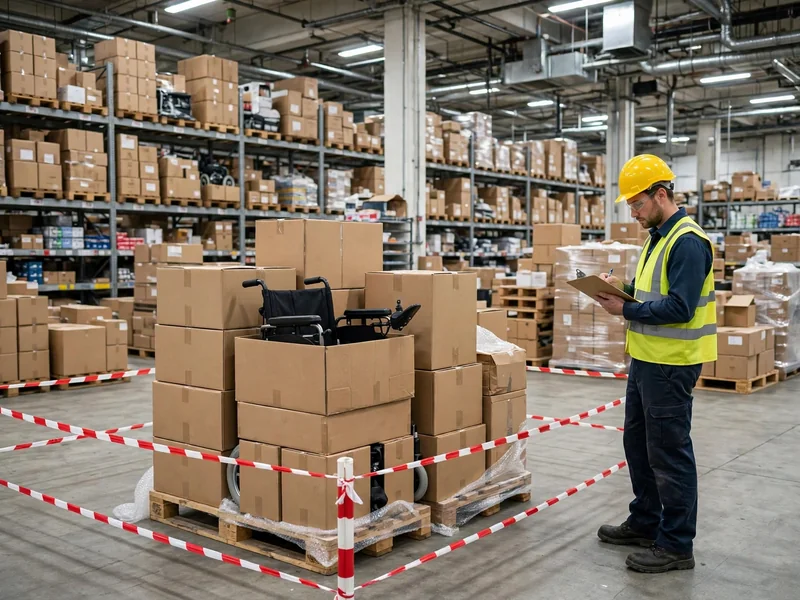
Stop the batch from moving. Do not put the chairs on the shelf. Do not send any of them to a customer. Do not mix them with good stock from an earlier order.
Move the whole batch to one marked area of the warehouse. Tape it off, or put up a sign that says the stock is on hold. Tell every person who handles stock, in person, that nothing from this batch leaves the building until you say so. Write the date and the batch number on the sign, so nobody has to guess which stock is held.
Key Takeaway: Once a faulty chair is sold, the problem changes shape. A chair that stays in the warehouse is still a factory problem. A chair that leaves becomes yours too.
How do you photograph and count the evidence properly?
Evidence is what turns a complaint into a claim. Start with the batch as a whole, and count as you go. Photograph the pallets, the cartons, and the labels on the cartons. Write down how many chairs arrived, how many you opened, and how many failed.
Then photograph each faulty chair from the front, the side, and the back. Take a close shot of each fault itself, with the fault in the center of the frame. Put a number on each chair or carton with a sticker or a tag. Use the same number in your photos, your notes, and your message to the factory.
Key Takeaway: A photo without a number is hard to argue with. A numbered photo, tied to a count, is a claim the factory can act on.
How do you grade each defect as critical, major, or minor?
Not every fault carries the same weight, and the factory will ask you to sort them. A critical defect makes the chair unsafe to use, or stops it from working at all. A brake that will not hold is critical. A frame that cracks under a normal load is critical.
A major defect breaks a function the customer paid for: a joystick that drifts, a folding lock that will not catch, or a charger that will not charge. A minor defect does not change how the chair works. A small scratch on a cover is minor. A loose sticker is minor.
Grade
What it means
Example
What it usually leads to
Critical
Unsafe to use, or will not work
Brake will not hold; frame cracks
Replacement or full rework
Major
A paid-for function fails
Joystick drifts; folding lock will not catch
Rework, replacement, or credit
Minor
Looks wrong, works fine
Small scratch on a cover
Touch-up, discount, or accept
Key Takeaway: Grade each faulty chair on its own, and write the grade next to its number. If you call a scratch critical, the factory will stop trusting your list. If you call a dead brake minor, your customer pays the price.
What does your contract actually say about a bad batch?
Before you write to the factory, read the order contract you already signed. Look for the quality standard you agreed, the inspection method, and the level of defects you both accepted. That accepted level is the agreed AQL, or acceptable quality level. The contract is the referee here, and it tells you what counts as a failed batch.
It also tells you who pays for the return freight, and how long the factory has to answer. Do not guess at these terms. Open the document and read the words as they stand. If the contract is silent on a point, say so in your message, and ask the factory to state its position in writing.
Key Takeaway: A verbal promise on a phone call is easy to forget. A written reply is part of the file, so keep every message, photo, and contract version in one folder, with dates on all of it.
How do you negotiate rework, replacement, discount, or credit?
There are four remedies on the table, and each one fits a different grade of fault. Rework means the factory fixes the batch, at its plant or by sending parts and a technician to you. Replacement means the factory sends new chairs for the faulty ones. A discount means you keep the batch at a lower price, which only makes sense for minor faults.
A credit means the factory takes the value off your next order instead of sending money back. Ask for the remedy that matches the grade, and put the reason in writing. A critical fault is hard to settle with a discount, because a discount does not make a chair safe. Name the remedy you want, the chairs it covers by number, and the date by which you need an answer.
Remedy
Best fit
Freight
Watch out for
Rework
Major faults that can be fixed
Agree who pays in writing first
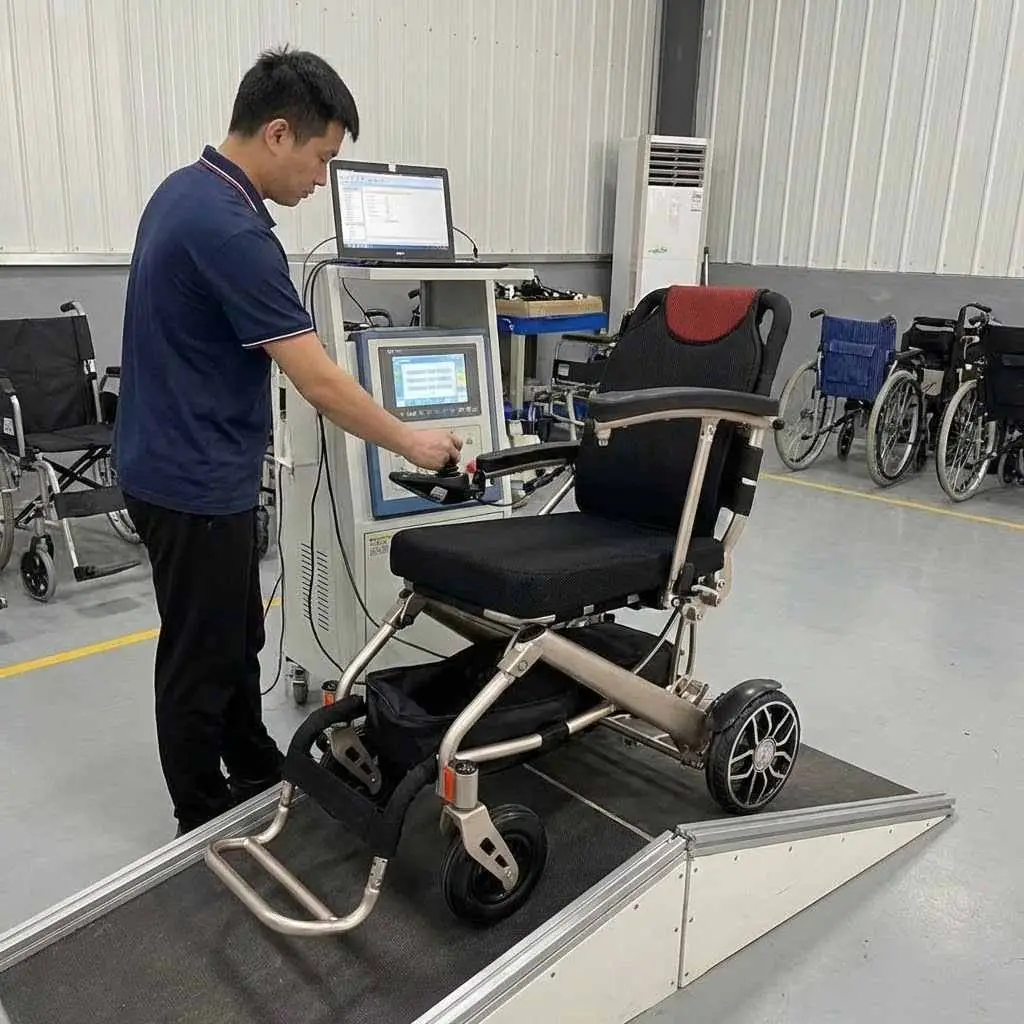
Test every reworked chair again
Replacement
Critical faults
Agree who pays in writing first
Confirm the new batch is inspected before it ships
Discount
Minor faults only
No freight moves
Never accept a discount for a safety fault
Credit
Small value, next order soon
No freight moves
Get the credit in writing, with the order it applies to
Key Takeaway: Wait for the written reply before you move the stock. A remedy agreed by phone is not agreed until it is written down.
What happens when the factory asks you to fix the batch yourself?
Some factories will ask you to repair the chairs in your own workshop, and send you the parts. This can be a fair deal when the fault is small and your team knows the chair. It is a bad deal when the fault touches safety: brakes, frames, or batteries. It is also a bad deal when your team has never done that repair.
Say yes only if you can name the repair, the parts, and the person who will do it. If you cannot, say so, and ask the factory to take the work back. If you do accept, agree the terms in writing before you touch a single chair. Who pays for the parts, who pays for your labor, and who carries the warranty on the repaired chair?
Key Takeaway: A repair you do without these answers in writing is a repair you own. Test every repaired chair the same way you tested the batch on arrival, and keep the test notes in the file.
How Distributors Handle a Bad Electric Wheelchair Shipment — When Customers Have Already Ordered?
This is the hardest call in the whole flow. If customers have already paid for chairs from this batch, tell them the truth at once. Say the batch failed inspection, their delivery will be late, and you will not send a chair you would not use yourself. Most customers accept a delay when they hear it early and hear a plan with it.
None of them accept a faulty chair they find out about later. Stop selling the batch while the case is open. Take the model off your order list, or mark it as out of stock until the factory answers. If you have good stock of the same model from an earlier order, offer that instead, but only after you have checked it the same way.
Situation
What to say
What to offer
Customer paid, chair not shipped
Batch failed inspection; delivery will be late
A firm date, or a chair from checked good stock
Customer asks why it is late
Honest reason, no blame, no detail on the fault
Regular updates until the chair ships
Customer asks for a chair now
The batch is on hold until the factory fixes it
A different model, or a refund of the deposit
Key Takeaway: Do not fill a gap with a chair from the bad batch and hope the customer will not notice. That hope is how a supplier problem becomes a reputation problem.
How do you close the file and stop the same problem next time?
A case is closed when the remedy is done, not when the factory says sorry. Every faulty chair is reworked, replaced, or credited. Every reworked chair is tested again. The credit appears on the next order in writing.
Only then do you release the batch from quarantine and file the case away. Keep the photos, the counts, the grades, the messages, and the final agreement in one folder, with the date on it. Then change one thing before the next order: a tighter check at your end, a clearer line in the contract, or a talk with the factory about the fault that caused the trouble.
Key Takeaway: The point is not to blame. The point is to make the next batch better, so the file you close today becomes the checklist you use tomorrow.
What should you check before you order the same model again?
Ask the factory what changed. A good factory can tell you, in writing, what caused the fault and what it changed on the line to stop it happening again. If the answer is vague, or if no answer comes at all, treat that as information. It tells you how the next batch is likely to go.
Check the next batch harder than the last one, and start with the chairs that failed before. If the model is new to you, order a small trial batch first, since a small order limits the damage if the batch fails again. Our incoming inspection checklist for electric wheelchairs is the tool for that check, and it costs far less than a second bad batch.
Key Takeaway: A factory that explains the fix in writing earns the next order. A factory that will not explain it has not fixed anything yet.
How Distributors Handle a Bad Electric Wheelchair Shipment comes down to order: quarantine the batch, gather the evidence, grade the faults, and talk to the factory with the contract in hand. A distributor who follows that order protects the customer, keeps the claim clean, and gives the factory a fair chance to fix it. ZVCARE — Shenzhen Zhiwei Health Technology Co., Ltd., founded in 2015 and ISO 13485:2016 certified — works with distributors on that basis. MOQ is 1 unit, lead time is 7 days after payment, and spare parts support covers the models you stock. If your next order needs a factory that stands behind its inspection, talk to us before you place it.
Frequently Asked Questions
What is the first thing to do when a batch fails incoming inspection?
Quarantine it. Move the whole batch to one marked area, tape it off, and tell everyone who handles stock that nothing from the batch leaves the building. Do not sell any of it, and do not mix it with good stock. Everything else — photos, grading, and the talk with the factory — comes after the batch is held.
Can a distributor sell chairs from a batch that failed inspection?
No. A chair that failed inspection should not reach a customer, even if the fault looks small. A small fault can hide a bigger one, and a customer who finds a fault will not trust the next chair you send. Hold the batch, settle the case with the factory, and sell only chairs that passed inspection.
Who pays for return freight on a bad batch?
Your order contract decides. Read the terms on quality failure, returns, and freight before you write to the factory. If the contract is silent, ask the factory to state its position in writing, and agree who pays before any chair moves. Never ship a batch back on a verbal promise.
What is the difference between a bad shipment and freight damage?
A bad shipment fails the quality checks you agreed with the factory: a dead joystick, a cracked frame, a battery that will not charge. Freight damage is harm done in transit, like a crushed carton or a bent part from a drop. The factory owns the first. The carrier owns the second.
What happens if a fault shows up after the customer has used the chair?
That is no longer a bad shipment case. It moves to the warranty stage, and our guide to the electric wheelchair warranty claims process walks through it. The warranty terms are frame 36 months, motor and controller 12 months each, and battery 6 months for lead-acid or 12 months for lithium. Keep the same habit: photos, dates, and everything in writing.
Founded in 2015, ZVCARE is an ISO 13485:2016 certified electric wheelchair manufacturer in China, providing OEM & ODM solutions for global distributors and medical stores.