How Distributors Onboard a New Electric Wheelchair Model
November 20, 2026
The sample passed. The factory is ready to build your first batch. But a model that is approved is not yet a model that sells, and the gap between the two is where most launch problems start.
How Distributors Onboard a New Electric Wheelchair Model is the work that fills that gap. It covers testing the sample properly and pricing the model a tier apart from the ones you already sell. It also covers preparing your team, choosing the size of the first batch, and deciding what happens to the model it replaces. This guide walks through each step in order, so the model reaches your buyers ready to sell.
What does onboarding a new model actually cover?
Onboarding starts the day you approve the sample and ends the day the model goes on sale. In between, you test the sample against the checks you agreed, you set the price tier, you prepare the material your team needs, and you plan the first order. It is launch work, not buying work, and it sits after sample approval and before the first sale.
Our guide to the electric wheelchair OEM sample approval process covers the step before this one: how a sample gets approved in the first place. This post starts where that one ends. If you skip the onboarding round, the problems still arrive, only later, when a buyer finds them first.
Key Takeaway: Onboarding is the round of work between sample approval and the first sale. Skip it, and the launch problems show up in front of your buyers instead of in your warehouse.
What should you test on the sample before you order the first batch?
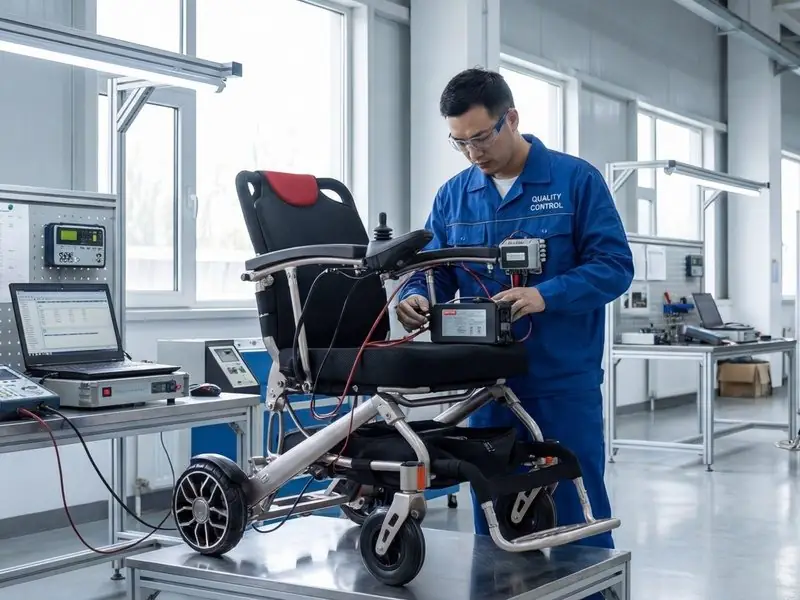
Test the sample the way your buyers will use it. Fold it and unfold it until the lock catches every time. Test the brakes on a slope, not only on flat ground. Charge the battery from empty, and check that the charger behaves the way the manual says it should.
Then take the chair out for a real ride, and watch the range against the figure the factory gave you. A folding model such as the EW1000 is rated at 15±3 km, and the EW100 at 12±5 km, so expect a spread, not a single figure. Our guide on how to evaluate electric wheelchair samples walks through the full check in detail. Write down every result, because a note you made on the sample is the proof you need if the first batch behaves differently.
Test
What to check
What good looks like
Folding
Lock catches every time, frame folds flat
Same result on every fold, no loose joints
Brakes
Holds on a slope, releases cleanly
Chair stays put, no drift, no sticking
Charging
Full charge from empty, charger runs cool
Charger follows the manual, no warning lights
Driving
Range, steering, joystick response
Range inside the rated spread, smooth control
Key Takeaway: Test folding, brakes, charging, and range on the sample, and write the results down. The sample test is your baseline for every chair that follows it.
How do you know the sample you tested is the model you will receive?
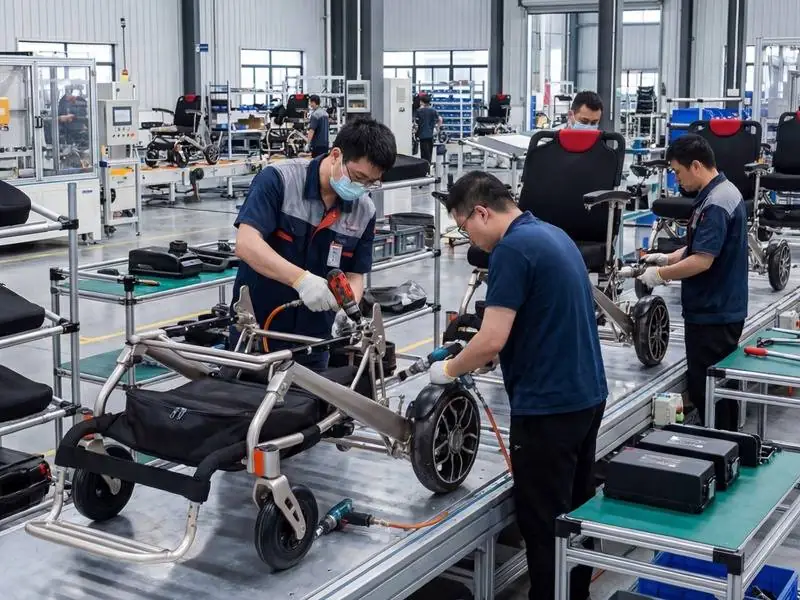
A sample is one chair, built with care. The first batch is many chairs, built to a schedule. Ask the factory to confirm in writing that the batch will match the sample: same frame, same motor, same controller, and same battery. A change to any of those is a change to the model, and you should hear about it before the batch ships, not after it arrives.
Check the battery label yourself when the batch lands. A 24V 10Ah lithium battery is the EW1000 pack, and a different pack in the batch is a change you should have been told about. Ask what quality checks the factory runs before the batch ships, and ask for the check list in writing. A factory that can show you its incoming inspection routine is a factory you can trust with a batch. If the factory cannot say what it checks, treat that as information, and check the batch harder when it arrives.
Key Takeaway: Get the match between sample and batch in writing before you order. A sample you trust is only useful if the batch that follows it is the same chair.
How do you price the new model a tier apart from your current models?
A new model that sits on top of an old one steals its sales. A new model that sits too far from it leaves a gap no buyer fills. Price the new model so each model in your range has its own buyer, its own job, and its own reason to exist. That is the point of how distributors build an electric wheelchair range: a range works when the models do not fight each other.
Start from the buyer, not from the cost sheet. Ask who this model is for, and what it gives them that your current models do not. A lighter frame, a smaller folded size, a longer range, or a stronger build each point at a different buyer. When the buyer is clear, the tier is clear, and the price follows the tier. A tier that is built on the buyer is easy to explain to your team. It is also easy to defend to a buyer who asks why this model costs more than the one beside it.
Key Takeaway: Price from the buyer outward, not from the cost sheet inward. When each model has its own buyer, the models stop fighting each other.
What does a clean price ladder look like between your models?
A clean ladder has steps a buyer can feel. Each step up should change something the buyer can see or use: weight, folded size, range, or build. If two models differ only by a name, buyers will pick the cheaper one, and your margin goes with them.
Use real differences to mark the steps, and say them in plain words on your price list. The EW1000 weighs 15 kg and folds to 73×39×71 cm, while the EW100 weighs 23 kg and folds to 73×55.5×31 cm. Those are differences a buyer can hold in their hands. Our guide to how distributors price electric wheelchairs covers the pricing method itself. This post is about keeping the steps apart, so each model earns its place on the list.
Tier
Model example
Buyer it fits
What sets it apart
Lightweight folding
EW1000
Buyers who lift the chair often
15 kg frame, folds to 73×39×71 cm
Compact folding
EW100
Buyers who need a small folded size
Folds to 73×55.5×31 cm, 24V system
Small-wheel comfort
EW8722
Buyers who want a steady everyday chair
Folds to 80×39×74 cm
Key Takeaway: Each step on the ladder must change something the buyer can feel. If two models differ only by a name, the cheaper one wins and your margin loses.
What training material should your team have before launch day?
Your team cannot sell a model they have not touched. Give them the sample to fold, to drive, and to charge before the first batch arrives. A short sheet that lists the folded size, the weight, the range, and the warranty terms beats a thick brochure nobody reads. Put the sheet where your team actually looks: on the desk, not in a drawer.
Prepare the answers to the questions buyers will ask first. How does this model differ from the one we already sell? What is the warranty? How long does the battery last? If your team cannot answer those three, the launch is not ready. Keep the answers on one page, and update the page when the factory changes anything. A team that answers with confidence sells the model; a team that guesses about it sends the buyer to your rival.
Key Takeaway: Train on the sample, not on a brochure. One page of real answers beats a thick pack of marketing lines.
How many chairs should you order for the first batch?
The first batch is a test of the market, not a bet on it. Order enough to put the model in front of buyers and to fill the first orders that follow. But do not order so many that a slow start leaves you with a warehouse full of one model. Your existing sales of the closest model are the best guide you have. The new model will sell to buyers who look much like the ones who bought that one.
Keep the order small enough to change course. If the model sells fast, the next order follows. ZVCARE lead time is 7 days after payment, so a second order does not take long to arrive. If it sells slowly, a small first batch is a lesson, not a loss. Either way, agree the spare parts with the first order, so a buyer who needs a part does not wait for the next batch. Controllers, motors, chargers, and batteries are the parts buyers ask for first, and a shelf without them turns a small fault into a lost buyer.
Key Takeaway: Size the first batch to learn, not to gamble. A small batch that sells out teaches you more than a big batch that sits still.
What happens to the old model — clear it or run it in parallel?
A new model does not have to kill the old one. Run them in parallel when the old model still has buyers the new one does not serve. Those buyers may need a lower price or a different folded size. Clear the old model when the new one does the same job better. The choice is about buyers, not about tidiness.
If you run both, say so clearly in your price list and your sales sheet, so buyers see two choices, not two versions of the same chair. If you clear the old model, tell your buyers early, and keep spare parts flowing for the chairs already sold. A buyer who cannot get a part for last year’s chair will not buy this year’s model. Either way, write the decision down with a date, so your team does not have to guess which model is still for sale.
Choice
When it fits
Watch out for
Run in parallel
Old model still has its own buyers
Two models must stay a tier apart
Clear the old model
New model does the same job better
Keep spare parts for chairs already sold
Key Takeaway: Parallel or clear, decide on the buyers, not on tidiness. And whichever you choose, keep spare parts flowing for the chairs already sold.
What should you check when the first batch arrives?
Check the first batch the same way you checked the sample, and start with the checks that failed before. Fold each chair, test the brakes, and charge the battery. Compare the battery label and the folded size with the sample you approved. If anything differs, stop and ask the factory before you sell a single chair. A chair that leaves your warehouse with a fault you could have caught is a chair you own.
Check the packaging too. The cartons, the foam, and the labels are part of the product your buyer receives. Our guide to how distributors approve electric wheelchair OEM packaging covers what to look for. A chair that arrives well is a chair your team can sell the same day. Keep the check notes with the sample test notes, so the whole launch sits in one file.
Key Takeaway: Check the batch against the sample, not against hope. If anything differs, stop and ask before a single chair is sold.
How Distributors Onboard a New Electric Wheelchair Model — What Does Launch Day Look Like?
Launch day is the day every piece of the work comes together. The batch is checked, the price is set, the team knows the answers, and the old model has a plan. Put the model on your order list, tell your buyers it is here, and watch the first orders come in. The first week tells you more than any plan can, because real buyers ask questions no checklist thought of.
Keep the notes from the whole round in one file: the sample test results, the price decision, the training sheet, and the first batch check. That file becomes the template for the next model, and the next launch starts faster because of it. A model that is onboarded well sells itself to the next buyer. A model that is rushed in keeps asking your team for help, and your team has better things to do.
Key Takeaway: Launch day is a checkpoint, not a finish line. The file you keep from this launch is the template for the next one.
How Distributors Onboard a New Electric Wheelchair Model comes down to order. Test the sample, set the tier, and prepare the team. Size the first batch, and settle the old model’s fate before the first sale. A distributor who follows that order gives the new model a clean start and keeps the old models selling beside it. ZVCARE — Shenzhen Zhiwei Health Technology Co., Ltd., founded in 2015 and ISO 13485:2016 certified — works with distributors on that basis. MOQ is 1 unit, lead time is 7 days after payment, and spare parts support covers the models you stock. If your next model needs a factory that stands behind its launch, talk to us before you place the order.
Frequently Asked Questions
How long does it take to onboard a new electric wheelchair model?
There is no fixed length. The work is done when the sample is tested, the price tier is set, the team is trained, and the first batch is checked. A model that goes on sale before those four are done is not onboarded. It is rushed, and the problems it carries will show up in front of your buyers.
Should the new model replace the old one at once?
Not always. Run them in parallel when the old model still has buyers the new one does not serve. Those buyers may need a lower price or a different folded size. Clear the old model when the new one does the same job better. Either way, keep spare parts flowing for the chairs already sold.
What should you test first on a new sample?
Fold it, test the brakes, charge the battery, and take it for a real ride. Those four checks catch the faults buyers notice first. Write down every result, because the sample test is the baseline you will check the first batch against.
How do you keep the new model from taking sales from the old one?
Price it a tier apart, and give each model its own buyer. When the buyer is different, the two models serve two buyers instead of fighting over one. The step between them must be something the buyer can feel, such as weight or folded size.
What spare parts should you order with the first batch?
Agree the parts with the first order, before the batch ships. Controllers, motors, chargers, and batteries are the parts buyers ask for first. A shelf without them turns a small fault into a lost buyer, and a buyer left waiting for a part rarely comes back for the next model.
Founded in 2015, ZVCARE is an ISO 13485:2016 certified electric wheelchair manufacturer in China, providing OEM & ODM solutions for global distributors and medical stores.