If you are selling electric wheelchairs in Canada, you are not just choosing products to import. You are building a local business that has to answer real questions from dealers, care providers, and end users, in two languages, across long distances, and through every season. This guide covers the practical side: who buys, how they buy, what range to start with, and how to support customers after the sale, for distributors who want a steady, credible start rather than a quick shipment that creates problems later.
Who buys electric wheelchairs in Canada, and how do they decide?
Most sales in Canada go through a local intermediary rather than straight from a factory to an end user. Independent mobility dealers are often the first point of contact. They run showrooms, arrange demonstrations, fit the chair to the user, and stay responsible for follow-up service. Home care agencies and community care providers are another important buyer group. They may buy chairs for clients, recommend a model, or work with a dealer on assessment and delivery. Some buyers also come through rehabilitation professionals and local health services, who want to know that the product is reliable, that parts are available, and that someone local will answer the phone when help is needed.
That changes how you should sell. An end user often asks about comfort, ease of folding, and everyday use. A dealer or care provider asks instead: How long will this chair last in daily use? What happens if a controller or charger fails? How fast can you send a replacement part? Answer both levels: show the chair, let people try it, and back it up with clear warranty terms, a spare parts plan, and honest delivery information.
It also helps to know your local market before you commit to stock. A city dealer may see more demand for lightweight folding models that fit into a car, while a dealer serving smaller towns may hear more about durability and longer range. Visit dealers and care providers first: a range built around those conversations will sell more steadily than one chosen from a catalogue alone.
Key Takeaway: Sell to the dealer and care provider as well as the end user, because their confidence in service and parts is what turns a first sale into repeat business.
Which sales channels make sense for a new distributor?
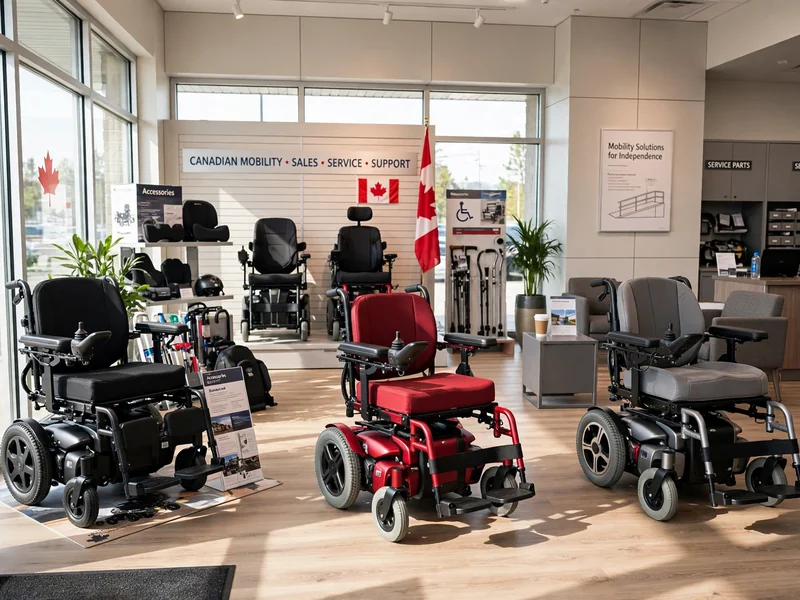
A showroom still matters, even when many buyers start their research online. People want to sit in a chair, practise folding it, and see how it fits through a doorway or into a vehicle. If you do not have a showroom yet, partner with an existing dealer or arrange demonstration days with care providers.
Online channels work best as a support for that local presence, not as a replacement for it. A clear website with real specifications, honest photos, and a simple enquiry form brings in buyers who are already comparing options. Follow up quickly, offer a demonstration or a video call, and explain delivery, warranty, and after-sales support in plain language. Buyers here are often deciding for a family member or a client, so patience and clear information count for as much as price.
Partnerships with home care agencies, community organisations, and rehabilitation professionals can also bring steady enquiries, but they take time to build. These partners need to trust that you will look after their clients after the sale. Start with a small number of strong local relationships rather than trying to cover the whole country at once.
Key Takeaway: Combine a place to try the chair with clear online information and a few strong local partnerships, and let each channel support the others.
What should your opening range look like?
A new distributor does not need every model on the market. A focused opening range is easier to explain, easier to stock parts for, and easier for your staff to learn. Start with one lightweight folding model for travel and everyday use, one practical mid-weight option, and one heavier, more durable model for users who need extra stability and longer range. That spread covers most enquiries without tying up your cash in slow-moving stock.
The table below uses confirmed specifications for the current ZVCARE range, so you can see how the models sit alongside each other.
Model
Who it suits
Weight and folded size
Range
EW1000
Travel and everyday use
15 kg including battery, folded 73×39×71 cm
15±3 km
EW100
Everyday use with easy folding
23 kg, folded 73×55.5×31 cm
12±5 km
EW8722, EW8703G, EW8720
Users who need a heavier, durable chair
45–46 kg
18–22 km
Lightweight models have a clear story for buyers who travel or need to lift a chair into a vehicle. The EW1000, for example, weighs 15 kg including the battery, and lightweight models in this range are designed for air travel (airline approval required). Heavier models suit buyers who prioritise stability and longer range over lifting weight. Explain that trade-off plainly, let the buyer try both, and let their daily routine decide.
Keep your first order manageable. A small, well-chosen first shipment lets you test which model local buyers prefer and adjust your next order with real sales information behind it. You can read a companion regional guide on selling electric wheelchairs in Australia for the same kind of distributor thinking in another large, spread-out market, but your Canadian range should still be chosen from Canadian conversations, not copied from elsewhere.
Key Takeaway: Start narrow, cover travel, everyday, and durable use, and let real local demand shape your second order.
How important are English and French materials?
In Canada, bilingual materials are not a nice extra. They are part of doing business properly. Many buyers, dealers, and care providers work in English, while French is essential for customers and partners in Quebec and for French-speaking communities elsewhere. If your product information, manuals, and enquiry replies are only in English, you will lose enquiries you never hear about, because those buyers will simply move on to a supplier who speaks their language.
Start with the documents buyers actually read: user manuals, safety notes, warranty terms, and quick-start guides, all in both English and French. Your website should make the language choice obvious, your enquiry replies should match the language the buyer used, and labels and packaging deserve the same attention.
Translation quality matters as much as coverage. A literal translation that confuses a safety instruction is worse than no translation at all. Use a translator who understands mobility products, ask a French-speaking dealer or care provider to read the finished text before you print it, and check that model names, specifications, and warranty terms are identical in both versions.
If you are unsure about current labelling or language requirements for your province or sales channel, confirm current requirements with your broker or regulator before you print a large run of materials. Requirements can change, and a short check now is cheaper than reprinting later.
Key Takeaway: Provide accurate English and French materials from the start, and have them checked by someone who actually works with French-speaking buyers.
What should you plan for cross-border shipping and delivery?
Cross-border logistics reward careful planning and punish guesswork. Before you order, agree the basics in writing with your supplier and your freight forwarder: what is included in the price, how the goods are packed, what documents you will receive, and who handles each step after the goods leave the factory. A short written checklist prevents most of the misunderstandings that delay deliveries.
Freight is normally quoted on gross weight or carton weight, not on the net weight of the chair alone, so use carton dimensions and gross weight when you ask for a quote or compare offers. Chairs are bulky, and a quote based on net weight will understate the real cost. Ask your forwarder to confirm how cartons are measured, whether chairs ship assembled or folded, and how many cartons fit on a pallet, so you can plan warehouse space as well as transport.
Customs and import paperwork also need time. Work with a customs broker early, and confirm current requirements with your broker or regulator rather than relying on a general article or an old shipment as your guide. This guide deliberately does not quote tariff rates or detailed import rules, because those can change and depend on the exact product and shipment. Your broker can confirm the correct treatment for your order, and that confirmation is worth more than any general statement.
Finally, set delivery expectations honestly. The factory lead time is separate from international transit and customs clearance, so do not promise a delivery date that only covers the first part of the journey. Tell buyers what you know, what is still to be confirmed, and when you will update them.
Key Takeaway: Plan freight on gross and carton weight, use a broker for current import requirements, and keep factory lead time, transit, and clearance as separate steps in your promises.
How do you set up after-sales service and spare parts?
After-sales service is where a distributor earns or loses a reputation. A buyer who waits weeks for a simple part will not recommend you, however good the chair itself is. Before your first sale, decide who answers service calls, who carries out repairs, and how quickly a buyer can expect a reply, and share that simple written process with every dealer you supply.
Stock the parts that fail or wear first, and build that list from experience rather than guesswork. Controllers, motors, chargers, and batteries are the obvious starting point, because a fault in any of them takes a chair out of use. Keep a small stock of the fast-moving items, such as chargers and controller components, and agree a restocking route with your supplier so you are not left waiting when a part runs low. You can see the current range of electric wheelchair spare parts to plan that first stock list around the parts your models actually use.
Warranty terms should be stated in plain language on every quotation and invoice. For the ZVCARE range, the frame is covered for 36 months, and the battery is covered for 6 months for lead-acid or 12 months for lithium, and the motor and controller are each covered for 12 months. Explain what the customer should do if a fault appears, what information you need from them, and how a claim is handled. A clear process protects both sides and stops small faults from turning into disputes.
Training matters too. Offer your dealers a short, practical session on setup, basic fault-finding, and battery care, with a simple checklist they can use on a service visit. Staff who feel confident with a product will recommend it more readily and solve more problems on the first visit.
Key Takeaway: Treat service as part of the sale, stock the parts that stop a chair working, and put warranty and repair steps in writing before you need them.
How should you handle winter and everyday Canadian conditions?
Winter deserves a mention in any Canadian guide, but it does not need to dominate your sales plan. Most buyers already know that snow, slush, and salt make everyday travel harder. Your job is to help them plan for it in practical terms: store and charge the chair indoors where possible, wipe down the frame and wheels after wet trips, and allow extra time for winter journeys. Keep the advice simple and tied to the buyer’s routine, not to dramatic claims about extreme conditions.
For dealers, winter is also a service point. Offer a pre-winter check covering tyres, brakes, battery connections, and general condition, and remind buyers to report faults early. A short seasonal reminder in both English and French is a useful reason to stay in touch with past buyers without pushing a sale.
Beyond winter, everyday conditions include long distances and a mix of city and smaller-town use. A chair that folds small may matter most to a buyer who travels by car, while range and durability matter more to one who covers longer distances each day. Ask about the buyer’s typical day, and match the model to that day rather than to a single feature.
Key Takeaway: Keep winter advice short and practical, offer a simple seasonal check, and match the chair to the buyer’s everyday routine.
What should you ask a manufacturer before you commit?
A good manufacturer relationship starts with direct questions, not with a glossy catalogue. Ask about minimum order quantity, so you know whether you can start small. Ask about lead time after payment, and about how production and shipping dates are confirmed. Ask about warranty terms, spare parts supply, and how faults are handled when a chair is already with a customer. The answers to those questions tell you more about a supplier than any product photo can.
Ask about production capacity and quality control in practical terms. What checks happen before a chair ships? Who is your contact if a shipment arrives damaged or incomplete? A supplier who answers these questions clearly, in writing, is easier to plan around than one who only talks about product features.
Also ask what sales support is actually available. Can the supplier provide product photos, specifications, and manuals in English and French? Is there someone who can answer a technical question from your service team? Can you get a demonstration unit to show dealers before you place a larger order? These are questions to ask, not promises to assume.
Finally, check the supplier’s background for yourself. Look at their about page and their product ranges, such as the lightweight electric wheelchair models and the heavy-duty electric wheelchair models, and compare what you read there with what you are told in conversation. Consistent information across the website, quotation, and warranty terms is a good sign; if the story changes, ask why before you commit.
Key Takeaway: Ask about order size, lead time, warranty, parts, and support in writing, and check that the answers match what the supplier publishes.
Conclusion
Selling electric wheelchairs in Canada rewards distributors who do the unglamorous work well: listening to dealers, offering a focused range, providing bilingual materials, planning freight honestly, and standing behind the chair after the sale. You do not need the largest catalogue or the loudest marketing to succeed. You need a range you understand, partners who trust you, and a service plan that holds up when a customer actually needs help.
If you are ready to explore a supplier relationship, start a conversation through the contact page. You can begin with a minimum order of 1 unit, with a lead time of 7 days after payment. Warranty cover is 36 months for the frame and 6 months for the lead-acid battery, 12 months for the lithium battery, and 12 months each for the motor and controller, and production comes from two facilities totalling more than 3,000 square metres. Bring your questions about models, parts, and bilingual materials, and judge from the answers whether the range fits your buyers.
FAQ
Do I need to stock every model before I start selling in Canada?
No. A focused opening range is usually better than a warehouse full of slow-moving stock. Start with a lightweight folding model, a practical everyday model, and a heavier durable model, then let real enquiries and sales show you where to expand.
Should my product information be available in both English and French?
Yes, from the start. Manuals, warranty terms, website pages, and enquiry replies should be available in both languages, with the translation checked by someone who works with French-speaking buyers. This is especially important in Quebec and for French-speaking communities elsewhere.
How long does it take to get stock after I place an order?
The factory lead time is 7 days after payment, but that is only the first part of the journey. International transit and customs clearance take additional time, so ask your freight forwarder and broker for a realistic total timescale for your shipment. Give your customers that full picture rather than a date that only covers production.
What spare parts should I keep on hand first?
Start with the parts that take a chair out of use when they fail: controllers, motors, chargers, and batteries, plus a small stock of fast-moving service items for the models you sell. Agree a restocking route with your supplier before your first sale, so low stock triggers a reorder instead of a long wait.
Can a customer take a lightweight electric wheelchair on a plane?
Lightweight folding models in this range are designed for air travel (airline approval required). That approval is the airline’s decision for each trip, so advise customers to confirm with their airline before travel, including battery and check-in rules. Do not promise approval on their behalf.
Founded in 2015, ZVCARE is an ISO 13485:2016 certified electric wheelchair manufacturer in China, providing OEM & ODM solutions for global distributors and medical stores.