Electric Wheelchairs for Train Stations Buyers Guide
November 20, 2026
A train station does not sell wheelchairs. It lends them for the length of a journey through the building, and then it takes them back. This Electric Wheelchairs for Train Stations Buyers Guide is written for the station operator, or the distributor who supplies one.
It walks through the station the way a passenger does. It goes from the entrance to the platform edge, and it turns each step into a buying decision.
What Should the Electric Wheelchairs for Train Stations Buyers Guide Help You Decide?
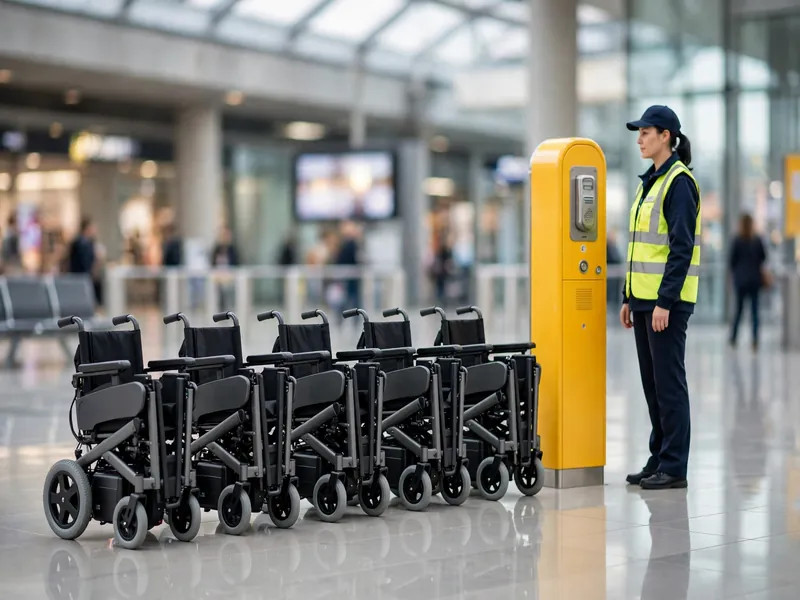
A station fleet is not a shop sale, and it is not an airport fleet either. At an airport, a passenger takes the chair through security. They return it at the gate. The chair may even fly on the plane. At a train station, the chair never leaves the building. The passenger borrows it inside the station, rides it to the platform, and returns it before leaving the station. That one difference shapes every choice that follows, from the size of the fleet to where the chargers go.
Our Electric Wheelchairs for Airports Buyers Guide covers the airport flow in full. Read it side by side with this one. The contrast makes the station job clearer. This guide helps you decide which chairs to buy, how many you need, and where they wait. It covers how staff hand them over and how the fleet keeps running at peak hours.
Key Takeaway: Buy for a short loan inside one building, not for a journey on a train. Borrow and return happen in the station, and that sets the whole fleet plan.
How Do You Map the Station Before You Choose a Chair?
Start on foot, not in a catalog, and walk the full passenger route with a notebook — the main entrance, the ticket hall, and the concourse first, then the lifts and ramps, the platforms, the waiting areas, and the exits. Note where the floor changes, where crowds gather, where a chair must turn, and where the route narrows, because a chair that fits the concourse may still struggle at a side passage or a crowded stair landing. The walk has to cover the side routes, not just the main hall.
Then walk the same route with a trial chair. Drive it yourself, or ask a staff member to ride. Note where the chair slows down, where it needs a push, and where it feels tight. University campuses face the same problem on a larger scale. They have long distances between buildings and mixed surfaces along the way. Our Electric Wheelchairs for Universities Buyers Guide covers that kind of route in full. Write down each pinch point as you find it. Confirm every fix with the station operator before you order.
Key Takeaway: Walk the route first, then test it with a real chair. The station floor decides the spec, not the brochure.
What Keeps a Passenger Safe Near the Platform Edge?
The platform edge is the one place in a station where a mistake has real consequences, so a loan chair should never wait or turn around there. Set the waiting spot back from the edge, where the passenger can still see the train coming without sitting close to the drop, and make guiding each passenger to that spot part of the handover, every time.
Choose chairs that make slow, steady movement easy. A clear joystick matters here. So does a low speed setting, and brakes that hold on a slope. All three matter more than top speed. Test the brakes on the platform surface itself, not just on a showroom floor. A platform can be wet, worn, or slightly sloped. The chair has to stop cleanly on that surface. If a chair feels twitchy or hard to stop, it is the wrong chair for platform work. That holds however good it looks elsewhere.
Key Takeaway: Keep waiting spots back from the platform edge. Pick chairs that stop cleanly at low speed on the real platform surface.
How Do You Get a Chair Through Gates, Ramps, and Lifts?
Every station has its own gates, ramps, and lifts. No catalog can tell you whether a chair will pass through yours. The only test that counts is taking a real chair through them on site. Use the wide accessible gate, or the staff gate where the station provides one. Ride up the ramps inside the station, and take the lift between levels. If a route fails, find the alternate route before you order. Agree it with the station operator.
Folding chairs earn their place here. When a lift is out of service, staff can fold a light chair and move it by hand. The same holds when a route is blocked. The EW1000 weighs 15 kg including the battery. It folds to 73×39×71 cm. One staff member can carry it up a flight of stairs. The EW100 weighs 23 kg and folds to 73×55.5×31 cm. It suits stations where storage is tight. Keep the folded size in mind when you plan storage. A folded fleet takes far less room than one left open.
Key Takeaway: Test the real chair through your own gates, ramps, and lifts. A light folding chair is your backup plan when a route is blocked.
How Many Chairs Do You Need, and Where Do They Wait?
Station demand comes in waves, because trains arrive in waves, and a quiet hour can turn busy in minutes — so size the fleet for the busy wave, not for the quiet average. Watch the station at its busiest and count how many passengers ask for help, then let that count set the fleet size instead of guessing from the size of the building alone.
Where the chairs wait matters as much as how many there are. Keep the main stock at the entrance help point, where passengers first ask for help. Keep a smaller stock near the main platform exits. Then a chair is ready where a passenger steps off a train. Start small if you need to. The minimum order is 1 unit. Grow the fleet from real borrow counts rather than from a guess.
Key Takeaway: Size the fleet for the busy wave. Split it between the entrance help point and the platform exits.
How Should Staff Hand a Chair Over and Take It Back?
A good handover takes a few minutes and prevents most problems. Staff check the battery and brakes, show the passenger the joystick, and agree where the chair will be returned. The passenger leaves knowing how to stop, how to turn, and where to go. The return is just as simple. Staff take the chair back and check it over. They put it back on charge if it needs one. Write this down as a short routine, and train every staff member on the same steps.
The right setup depends on the station layout. Libraries run a similar loan system. They use fixed borrow and return points that regular users learn quickly. Our Electric Wheelchairs for Libraries Buyers Guide covers that loan system in full. The table below compares the common station setups.
Borrow and return setup
How it works
Best when
Watch out for
Entrance borrow, exit return
Pick up at the entrance, hand back at the exit
One main entrance and one main exit
Chairs pile up at the exit at peak times
Fixed points inside the station
Set points at the help point and the platforms
Large stations with more than one entrance
Staff must check each point through the day
Staff escort
Staff stay with the passenger for the whole trip
Passengers who need full help
Uses more staff time per trip
Key Takeaway: Use the same short handover routine every time. Check battery and brakes, show the joystick, and agree the return point.
Which Models Fit a Station Fleet Best?
A station fleet works best as a mix, not a single model. Light folding chairs suit most loans. Staff lift, fold, and store them with ease. Sturdier chairs suit long platform runs and heavier daily use. The table below shows the ZVCARE models that fit station work. It lists the figures that matter for a fleet buyer.
Model
Weight
Folded size
Range
Best station use
EW1000
15 kg incl. battery
73×39×71 cm
15±3 km
Light loans, easy folding and carrying
EW100
23 kg
73×55.5×31 cm
12±5 km
Compact fold where storage is tight
EW8722
45 kg
—
18–22 km
Small-wheel chair for steady daily use
EW8703G
46 kg
—
18–22 km
Big-wheel chair for long platform runs
EW8720
45 kg
—
18–22 km
High-end chair, dual 12V 22.3Ah lead-acid in series = 24V 22.3Ah
Hospitals face a similar choice, with chairs that must turn in corridors and fit in lifts all day. Our Electric Wheelchairs for Hospitals Buyers Guide covers that choice in full. Small-wheel models like the EW8722 suit tight turns. The EW1000 suits any job where staff must fold and carry the chair. Do not fill the fleet with one model before you have run a trial. Let a few weeks of real loans show which chairs staff reach for first. Then order more of those.
Key Takeaway: Mix light folding chairs for most loans with sturdier models for long platform runs. Let real loan counts set the mix.
How Do You Charge, Store, and Service the Fleet?
A loan fleet only works if a charged chair is ready when a passenger asks. Give the fleet a dry storage room close to the help point, with wall chargers for the waiting chairs. Match each charger to the battery type it serves. A lithium battery and a lead-acid battery do not share a charger. Rotate the chairs so no chair sits unused while another runs flat. Put each returned chair on charge as part of the return routine.
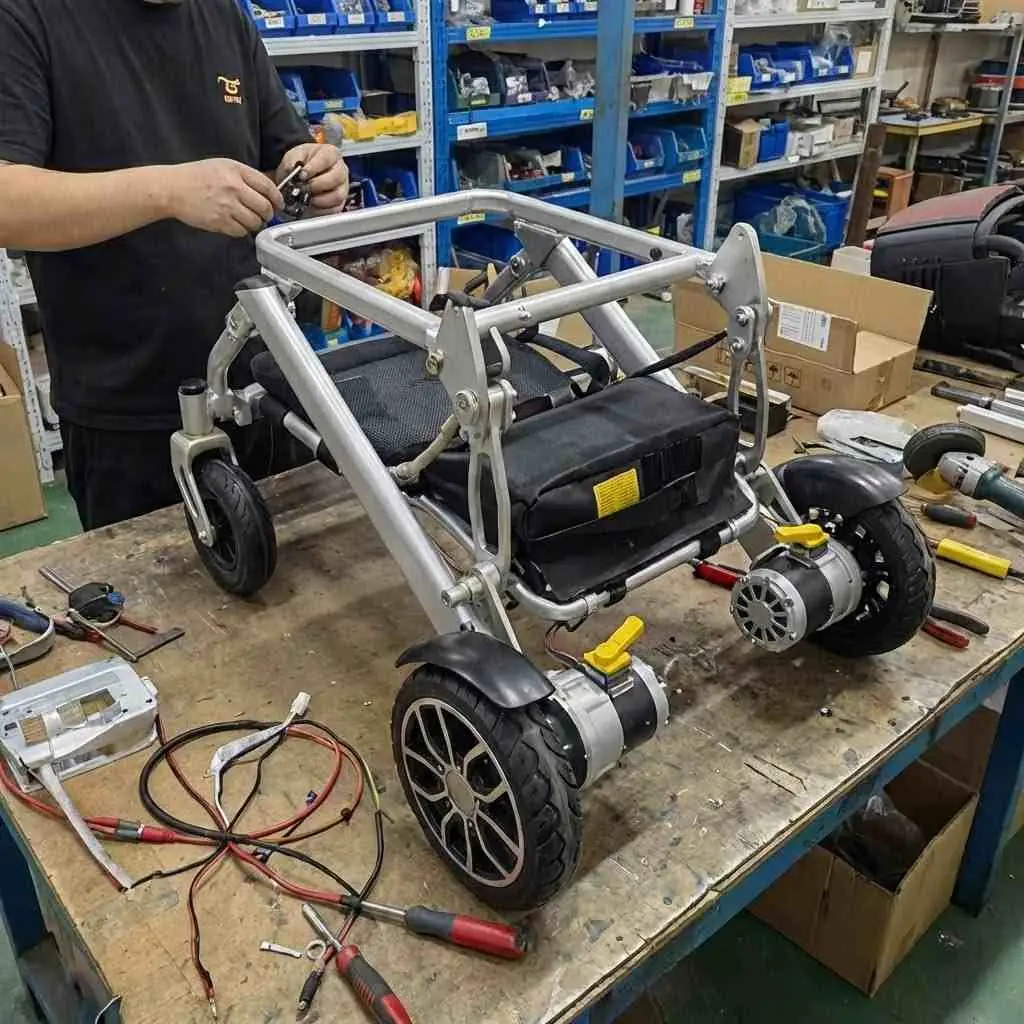
Service is a buying decision, not an afterthought. Ask the supplier what spare parts are held in stock, and how fast they ship. Controllers, motors, and chargers fail first, so keep one of each on hand. Every ZVCARE chair passes 100% visual inspection before shipment. The warranty covers the frame for 36 months. It covers the motor and controller for 12 months each. The battery is covered for 6 months on lead-acid and 12 months on lithium. Know those terms before you order. Keep the supplier contact where every staff member can find it.
Key Takeaway: Store the fleet near the help point. Charge each returned chair as part of the routine, and keep key spare parts on hand.
How Do You Run the Fleet at Peak Hours?
Peak hours are when the fleet earns its keep, and also when it breaks down if no one is watching. When several trains arrive at once, chairs go out fast and come back together. Keep one staff member at the help point during the busy wave. Handovers stay quick, and no passenger waits without an answer. Keep one charged spare chair ready, so a flat battery never leaves a passenger stranded.
A simple log makes peak hours easier to manage. For each loan, note the time out, the time back, and the battery state. At the end of each week, read the log and look for the pattern. Note which hours run short of chairs, which return point fills up, and which chairs come back flat. That pattern tells you where to add a chair and where to move a charging point. A fleet run on guesswork always runs short at the worst moment.
Key Takeaway: Staff the help point through the busy wave. Keep one charged spare ready, and let a simple loan log set the next fleet change.
What Should You Check Before You Order?
Before you place an order, run one full trial day with a small set of chairs. Let real passengers borrow them and staff run the handover routine. Watch what happens at the busy wave. The trial will show you things no catalog can. A gate may need a wider turn. A ramp may feel steep. A return point may fill up too fast. Fix the plan first, then order the fleet to match the fixed plan.
Confirm every open point with the station operator before ordering. No supplier can promise that a chair meets a given station standard. Each station sets its own rules for its own building. The table below is the final check to run before you sign.
Check
What to do
Who confirms it
On-site trial
Run a full trial day with real passengers
Station staff and the supplier
Gates, ramps, lifts
Drive a real chair through each route
Station operator
Platform safety
Agree waiting spots back from the edge
Station operator
Charging and storage
Agree a dry room near the help point
Station operator
Staff training
Train every staff member on the same routine
Station manager
Spare parts
Confirm stock and shipping for key spares
Supplier
Key Takeaway: Run a full trial day. Fix the plan from what the trial shows. Confirm every open point with the station operator before you order.
A train station loan fleet is a small system, not a single purchase. The chairs, the waiting spots, the handover routine, the chargers, and the peak-hour plan must all work together. This Electric Wheelchairs for Train Stations Buyers Guide has walked you through each part in station order. It went from the entrance to the platform edge and back to the charging room. Buy the fleet that fits your station floor. Test it with real passengers. Grow it from real borrow counts.
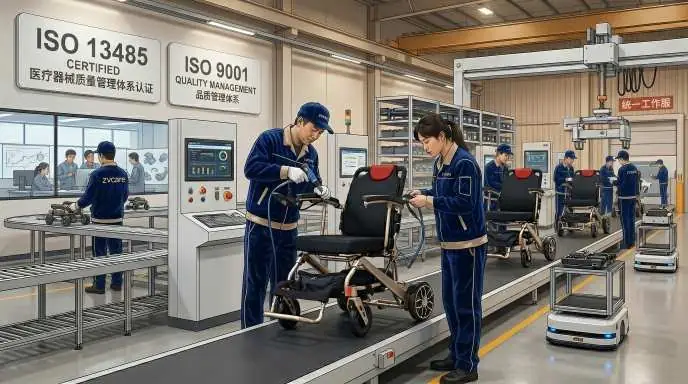
If you are ready to start, talk to the factory first. ZVCARE, Shenzhen Zhiwei Health Technology Co., Ltd., was founded in 2015. It is ISO 13485:2016 certified. The standard is published by the International Organization for Standardization. The minimum order is 1 unit. Lead time is 7 days after payment. Spare parts support covers the fleet after delivery. With 50+ global partners already served, the factory can supply a trial unit first. You can test it on your own station floor before you commit to a full fleet.
Frequently Asked Questions
Can a passenger take the loan chair onto the train?
No. The loan chair stays inside the station. The passenger borrows it at the entrance or help point. They ride it to the platform and return it before leaving the station. If a passenger needs a chair on the train, that is a separate matter. Raise it with the train operator. It is not part of the station loan fleet.
How do staff help a passenger board the train?
Staff guide the passenger to the waiting spot back from the platform edge. Then they help them move from the chair to the train seat when the train arrives. The chair itself does not board. After boarding, staff take the chair back to the return point and put it on charge if it needs one.
What happens if a chair runs out of charge mid-station?
Staff bring a charged spare chair to the passenger and take the flat chair back to the charging room. That is why the fleet plan keeps one charged spare ready during busy hours. It is also why the return routine puts each chair on charge right away. A chair that is checked at handover should not run flat, but the spare covers the days when it does.
Do we need the same model for every chair in the fleet?
No. A mix works better for most stations. Light folding chairs like the EW1000 suit most loans. Sturdier models like the EW8703G suit long platform runs and heavy daily use. Run a trial first, see which chairs staff reach for, and order more of those.
How do we start with a small fleet and grow it?
Start with a trial unit, since the minimum order is 1 unit. Run it through a full trial day. Then order a small fleet for the entrance help point and the platform exits. Keep the loan log, and add chairs where the log shows the fleet running short. Growth from real borrow counts beats growth from a guess.
Founded in 2015, ZVCARE is an ISO 13485:2016 certified electric wheelchair manufacturer in China, providing OEM & ODM solutions for global distributors and medical stores.