How Distributors Run Electric Wheelchair Home Demos
November 20, 2026
A home visit takes more time and people than any other way of selling an electric wheelchair, and it gets you closest to the real decision. How Distributors Run Electric Wheelchair Home Demos decides whether that visit earns its keep or drains your week. This guide covers one visit, step by step. It covers who gets one, what goes in the van, what to check at the door, and what happens after you leave.
A home demo is a service you run, not a favor you hand out. It has a booking step, a screening step, a load list, a route, and a follow-up step. When any of those steps is missing, the visit costs the same but works less well. When all of them are in place, one visit can settle a decision that weeks of phone calls cannot.
How Distributors Run Electric Wheelchair Home Demos — Which Customers Are Worth a Visit?
Not every request for a home visit deserves one. A visit is worth it when three things are true: the customer has a real need, a home the chair must fit, and a decision to make soon. A customer who only wants a first look can come to your showroom instead. A customer who cannot travel, or whose home has tight doorways and steps, is the one a visit serves best.
Ask yourself three things before you say yes. Does the customer know which type of chair they need, or at least the problem it must solve? Is the home inside the area you can serve and support after the sale? And is someone at home who will take part in the decision? If all three answers are yes, book the visit. If two are no, offer the showroom first.
Key Takeaway: A home visit is for customers who cannot come to you and who are close to a decision. Everyone else starts at the showroom.
How far should you travel for one home demo?
Distance is the first cost in a home demo, and it is the easiest to misjudge. A visit far from your base eats the morning in driving, and the afternoon if the visit runs long. It also puts after-sale service further away.
Set a service area before the requests arrive, hold to it, and ask for a firmer reason to travel outside it. A customer who has already chosen a model, and only needs the home check, is one such reason. Group visits that fall in the same direction on the same day, so one trip serves more than one home. Tell the customer the visit date and time window in advance, and confirm it again the day before.
Key Takeaway: Distance decides whether a visit pays. A clear service area, grouped trips, and a confirmed time window keep the driving from eating the day.
Which chairs should you bring — and which should stay behind?
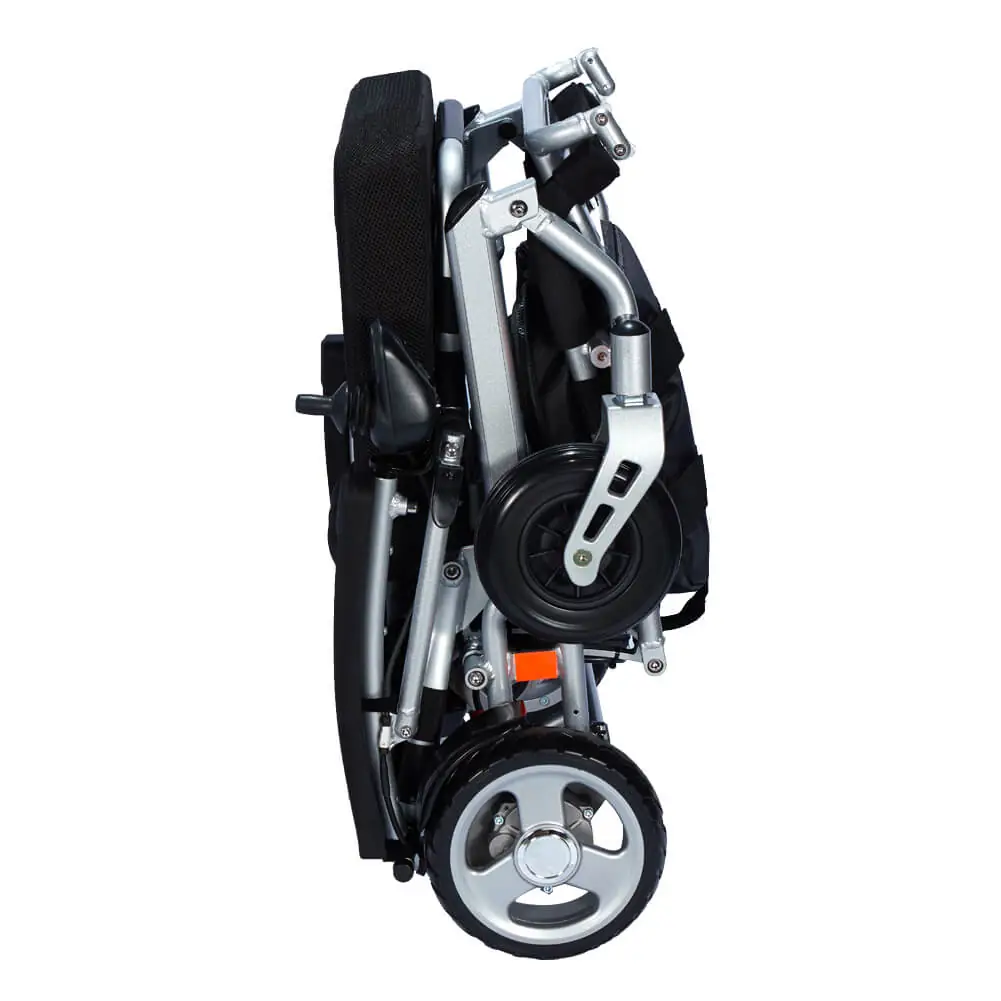
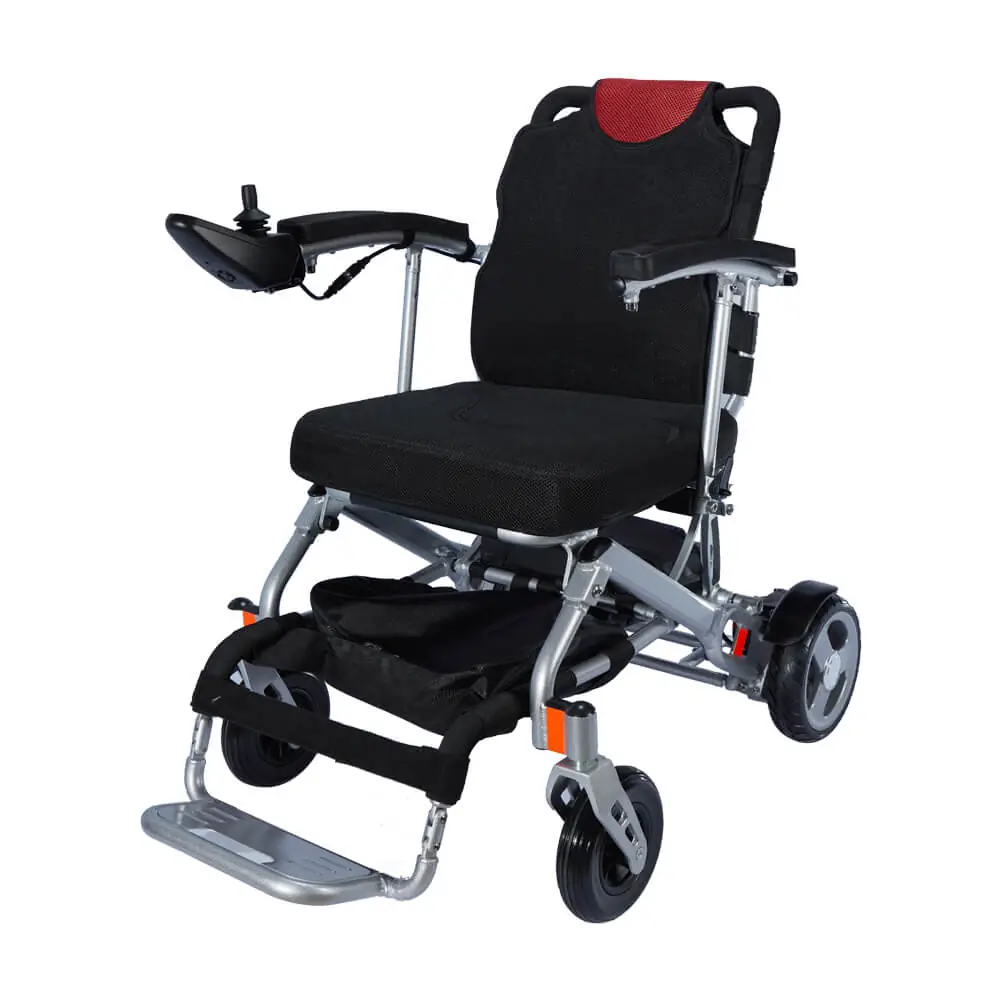
Bring lightweight folding models first, and never bring the whole range, because a home visit is not a showroom on wheels. Two chairs are enough for most visits: one folding model as the main chair. Add a second model only when the customer asked about it by name. Every extra chair adds weight, time, and confusion.
Choose the chairs from what the customer told you on the phone. A customer who needs a chair for the car boot wants a folding model. A customer who needs a chair for daily use around the house wants the model that fits their doorways. Our guide on how distributors manage electric wheelchair demo stock shows the routine: keep a small demo set ready, charged, and clean.
Model
Folded size
Weight
When to bring it
EW1000
73×39×71 cm
15 kg
The first chair on most visits; light, folds small, fits a car boot
EW100
73×55.5×31 cm
23 kg
When the customer asked for a folding model with a different frame feel
EW8722
80×39×74 cm
—
When the customer needs a small-wheel chair for indoor use
EW8703G
89×43×76 cm
—
When the customer needs a big-wheel chair for outdoor ground
EW8720
80×34×74 cm
—
When the customer asked about the high-end model by name
Key Takeaway: Two folding chairs cover most visits. Bring the chair that matches what the customer asked for, and leave the rest of the range in the showroom.
How do you load the van for a home demo?
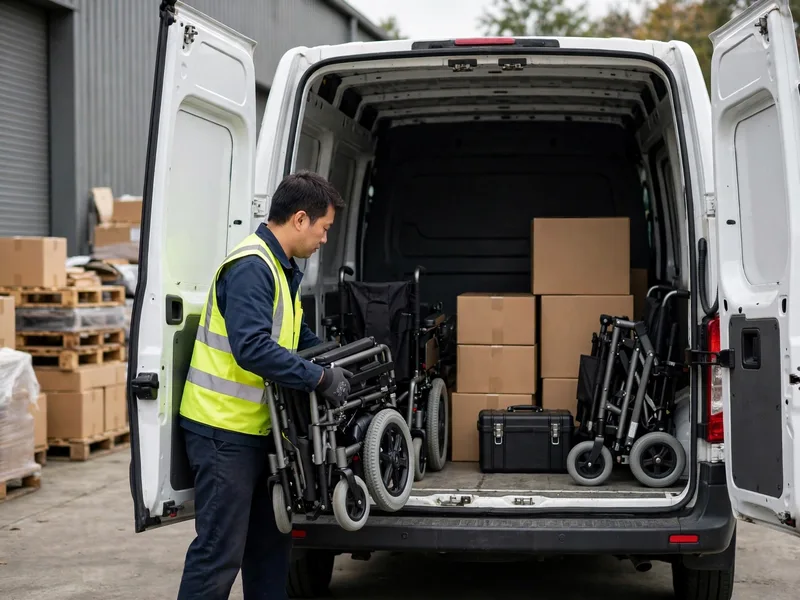
Load the van the night before, so the visit starts on time. Fold each chair, lock it, and strap it down so it cannot slide or tip. Put the heaviest chair nearest the doors, so it comes out first. Keep the walkway clear, so nobody climbs over a chair to reach the kit.
The kit rides with the chairs, not behind them. Pack the charger for each model, plus a spare battery and a tool roll for a loose bolt or a small adjustment. Add a clean cloth, a tape measure, and the one-page checklist your team uses at the home. Check the battery charge before you leave, and charge the chairs the night before, so a flat battery never ends a visit early.
Key Takeaway: A van loaded the night before starts the visit on time. Chairs strapped down, charger and spare battery packed, and the checklist on top.
What should you check first when you arrive at the home?
Start at the door, not in the living room. Measure the front doorway, the hallway, and the tightest turn between the door and the room where the chair will be used. Check the floor: a thick rug, a high threshold, or a loose mat can stop a chair that runs fine elsewhere. Our guide to folding electric wheelchair dimensions gives the folded and unfolded sizes, so compare them against the doorway you just measured.
Then look for a charging socket near where the chair will park. The charger needs a socket the customer can reach without a cable across a walkway. Note where the chair will be stored at night, and check that the route from the door to that spot is clear. Go in pairs, and confirm the visit time in advance, so the customer is ready and the door is open when you arrive.
Key Takeaway: Doorway, hallway, floor, and charging socket come first. If the chair cannot get in or charge where it will live, the rest of the visit does not matter.
How does the test route run inside the house and outside it?
The route is a loop, not a free drive. Start inside the house, and follow the customer’s daily path: front door, living room, kitchen, bedroom, and back. Watch the tight turns, the door frames, and the spots where the chair must stop and start. Keep the loop short, and repeat it once.
Then take the chair outside for a stretch of real road. Use the pavement outside the house, the driveway, and the nearest quiet street, so the customer feels the surface they will actually use. This is the part of the visit that shows whether the chair fits the world outside the front door. How staff talk the customer through the chair itself is a separate skill, covered in Distributor Staff Training for Electric Wheelchair Demos, and it is not part of this route.
Key Takeaway: Run a loop inside the house, then a stretch of real road outside. The loop tests the home. The road tests the world beyond the front door.
What should you do when the visit does not close on the day?
Most visits do not close on the day, and that is normal. The customer needs time to talk it over at home, check the budget, or compare one more model. Do not press for a decision at the door. Pressing turns a good visit into a bad memory, and a bad memory does not come back to buy.
Before you leave, agree on the next step out loud: the model the customer liked best, the question still open, and the day you will call. Write those three things down before you drive away, while the visit is still fresh. If the customer wants more time with a chair, a short loan from your trial fleet can be the next step. Our guide on how distributors run an electric wheelchair trial fleet covers how that loan works.
Key Takeaway: A visit that does not close is not a failed visit. Name the next step, write it down, and leave with a date to call.
What should you leave behind after the visit?
Leave one page, not a pile: a single sheet with the model name, the folded size, the warranty terms, and your phone number is enough. The customer can put it on the table and find it again the next day. A thick brochure goes into a drawer and stays there. A single page stays visible, and it keeps your name in front of the customer while they decide.
Write the price terms on that page by hand if the customer asked about them, and add the date of the visit. Add anything the customer asked you to check after you left, so the page shows you listened. Take a photo of the page before you hand it over, so your file holds the same words the customer holds. Then load the chairs, check nothing is left behind, and lock the van.
Key Takeaway: One page with the model, the warranty, and your number beats a thick brochure. The customer can find it, and your file can match it.
How do you follow up in the days after the visit?
Call within a few days, while the visit is still fresh in the customer’s mind. Open with the question that was still open at the door, not with a sales line. If they asked about charging, answer the charging question, and if they asked about the folded size, confirm it. A follow-up that answers the open question moves the decision forward, while one that only asks if they are ready to buy does not.
Keep the follow-up in one file per customer, with the visit date, the model they liked, and each call noted. If the customer is not ready, ask when to call again, and call on that day. If they bought elsewhere, note the reason and close the file. When the decision turns into a delivery, the handover checklist takes over, with the checks that close the sale cleanly.
Key Takeaway: Follow up within days, answer the open question first, and keep one file per customer. The follow-up is part of the visit, not an afterthought.
How does the cost of home demos add up?
A home demo costs fuel, labor hours, and the wear on the van and the chairs. Fuel is the line you see first, but labor is the line that grows fastest. Two people on the road for a visit are two people away from the showroom and the phones. A wasted trip costs the same as a good visit and returns nothing: nobody home, or a chair that cannot fit the door.
Track each visit on one line: the date, the distance, the people who went, and the result. After a few weeks, the pattern usually shows itself: screened visits waste less time than visits booked on the spot, so use that pattern to tighten the screening. A well-run home demo is a service customers remember, and it wins buyers over sellers who never leave the showroom.
Cost line
What drives it
How to keep it down
Fuel
Distance and the number of trips
Group visits in one direction on the same day
Labor hours
Two people away from the showroom
Screen on the phone first, so fewer visits are wasted
Wasted trips
Nobody home, or a chair that cannot fit
Confirm the time in advance, and ask about doorways before you travel
Wear on chairs and van
Loading, unloading, and road miles
Strap chairs down, and keep the demo set small
Key Takeaway: Fuel, labor, wasted trips, and wear are the four cost lines. Track each visit on one line, and let the pattern tighten your screening.
How Distributors Run Electric Wheelchair Home Demos comes down to order. Screen the request, bring two folding chairs, and load the van the night before. Check the door first, run the loop inside and the road outside, and follow up within days. A distributor who follows that order spends the visit where it counts and wastes little on the road. ZVCARE is Shenzhen Zhiwei Health Technology Co., Ltd., founded in 2015 and ISO 13485:2016 certified. We build the folding models your demo set needs. The EW1000 weighs 15 kg and runs on a 24V 10Ah lithium battery, and the EW100 is its 23 kg folding partner. MOQ is 1 unit, lead time is 7 days after payment, and spare parts support covers the models you stock. Does your home demo service need a factory that stands behind its chairs? Then talk to us before you place your next order.
Frequently Asked Questions
Which customers should get a home demo instead of a showroom visit?
Customers who cannot travel easily, and customers whose home must be checked before a chair can be chosen. Tight doorways, an uneven floor, or a customer who cannot reach your showroom: a home visit answers questions a showroom cannot. Customers who only want a first look at a chair should start at the showroom.
How many chairs should a distributor bring to a home demo?
Two, in most cases. Bring one folding model as the main chair, and add a second model only when the customer asked about it by name. Bringing the whole range adds weight, time, and confusion, and it slows the decision instead of helping it. The van is for transport, not for display.
What should a distributor check first inside the customer’s home?
The front doorway, the hallway, the tightest turn, the floor, and the charging socket. Measure the doorway against the chair, and check that the charger can reach a socket near where the chair will park. If the chair cannot get in or charge where it will live, that finding shapes the whole visit.
What happens if the customer does not decide on the day of the visit?
Nothing is lost. Most visits do not close on the day. Leave one page with the model, the warranty, and your number. Agree on the next step and the day you will call, then follow up within a few days. A short loan from your trial fleet can be the next step. It gives the customer more time with a chair.
How can a distributor keep home demo costs under control?
Screen every request on the phone, set a service area, group visits in one direction on the same day, and confirm the time in advance. Track each visit on one line. Note the date, the distance, the people who went, and the result. Then let the pattern show where the wasted trips come from. The goal is fewer wasted visits, not fewer visits.
Founded in 2015, ZVCARE is an ISO 13485:2016 certified electric wheelchair manufacturer in China, providing OEM & ODM solutions for global distributors and medical stores.