Electric Wheelchairs for Leisure Centers Buyers Guide
November 20, 2026
A leisure center does not sell wheelchairs. It lends them for the length of a visit, and then it takes them back. This Electric Wheelchairs for Leisure Centers Buyers Guide is written for the center operator, or the distributor who supplies one.
It walks through the center the way a visitor does. It goes from the front door to the pool, the gym, and the courts. It turns each step into a buying decision.
What Does the Electric Wheelchairs for Leisure Centers Buyers Guide Help You Decide?
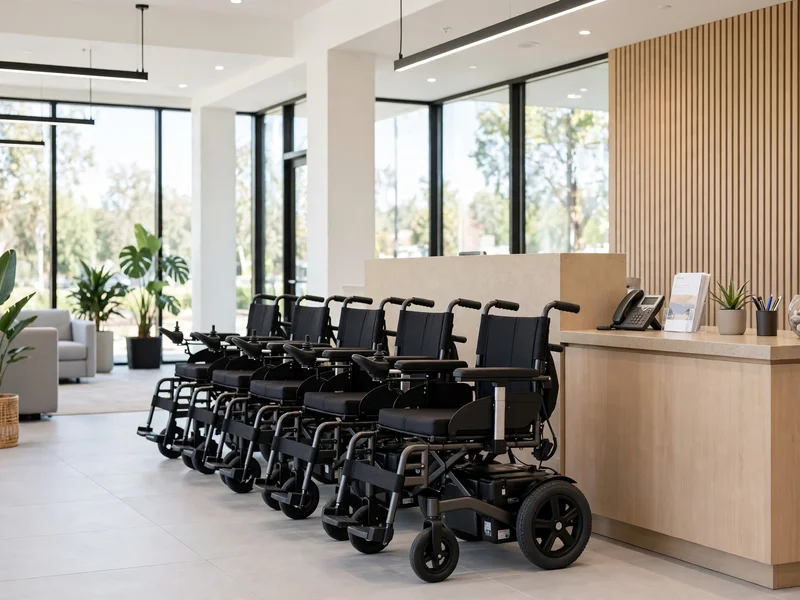
A leisure center fleet is not a shop sale, and it is not a stadium fleet either. A stadium lends chairs in a rush on match day, when the crowd arrives together and the chairs go out together. A leisure center lends chairs all day long, one visitor at a time, for a swim or a gym session. That steady flow of short loans shapes every choice that follows.
Our Electric Wheelchairs for Stadiums Buyers Guide covers the match-day fleet in full. Read it side by side with this one. This guide helps you decide which chairs to buy, where they wait, and how staff keep them charged and tracked through a full day of loans.
Key Takeaway: Buy for many short loans spread across the whole day, not for one big rush. Borrow and return happen again and again, and that sets the whole fleet plan.
How Do You Map the Center Before You Choose a Chair?
Start on foot, not in a catalog, and walk the full visitor route with a notebook. Go from the front door to the reception desk and the lobby first, then the corridors to the pool, the gym, and the courts, and back again. Note where the floor changes, where crowds gather at class times, where a chair must turn, and where the route narrows. A chair that fits the lobby may still struggle at a pool door or a crowded gym entrance.
Then walk the same route with a trial chair, and drive it yourself or ask a staff member to ride. Note where the chair slows down, where it needs a push, and where it feels tight. Train stations face the same problem in a different building, and our Electric Wheelchairs for Train Stations Buyers Guide covers that kind of route in full. Write down each pinch point as you find it.
Key Takeaway: Walk the route first, then test it with a real chair. The center floor decides the spec, not the brochure.
What Works on Damp and Slip-Resistant Floors?
The pool hall is the hardest floor in the building. The deck stays damp all day, and the surface is built to grip, not to glide. A loan chair has to move at a slow, steady pace on that surface without slipping or skidding when it stops, so choose chairs that make slow, steady movement easy. A clear joystick, a low speed setting, and brakes that hold on a wet floor matter more than top speed.
Test the brakes on the pool deck itself, not just on a dry showroom floor. Drive the trial chair across the wettest stretch of the deck and stop it more than once. If a chair feels twitchy or hard to stop, it is the wrong chair for pool work. Wipe the chair down after every pool loan, so water does not sit on the frame, the seat, or the joystick.
Key Takeaway: Test the brakes on the real damp pool deck. Pick chairs that stop cleanly at low speed, and wipe each chair down after every pool loan.
Where Should the Fleet Live Near the Pool?
Chairs that serve the pool should wait near the pool, not in a distant store. Keep the main stock at the reception desk, where visitors first ask for help. Keep a smaller stock near the pool entrance, so a guest who arrives for a swim does not have to cross the whole building to find a chair. Then a chair is ready where the visitor needs it, and the return is just as short.
The store itself has to stay dry. Pool air is humid, and a damp store will age a fleet fast. Give the fleet a dry storage room close to the pool entrance, with space for each chair to sit without blocking the next one. Keep towels and cleaning cloths in the same room, so staff can wipe a chair down the moment it comes back, and agree the storage spot with the venue operator before you order.
Key Takeaway: Keep the main stock at reception and a smaller stock at the pool entrance. Store the fleet in a dry room, and agree the spot with the venue operator.
Which Models Fit a Leisure Center Fleet Best?
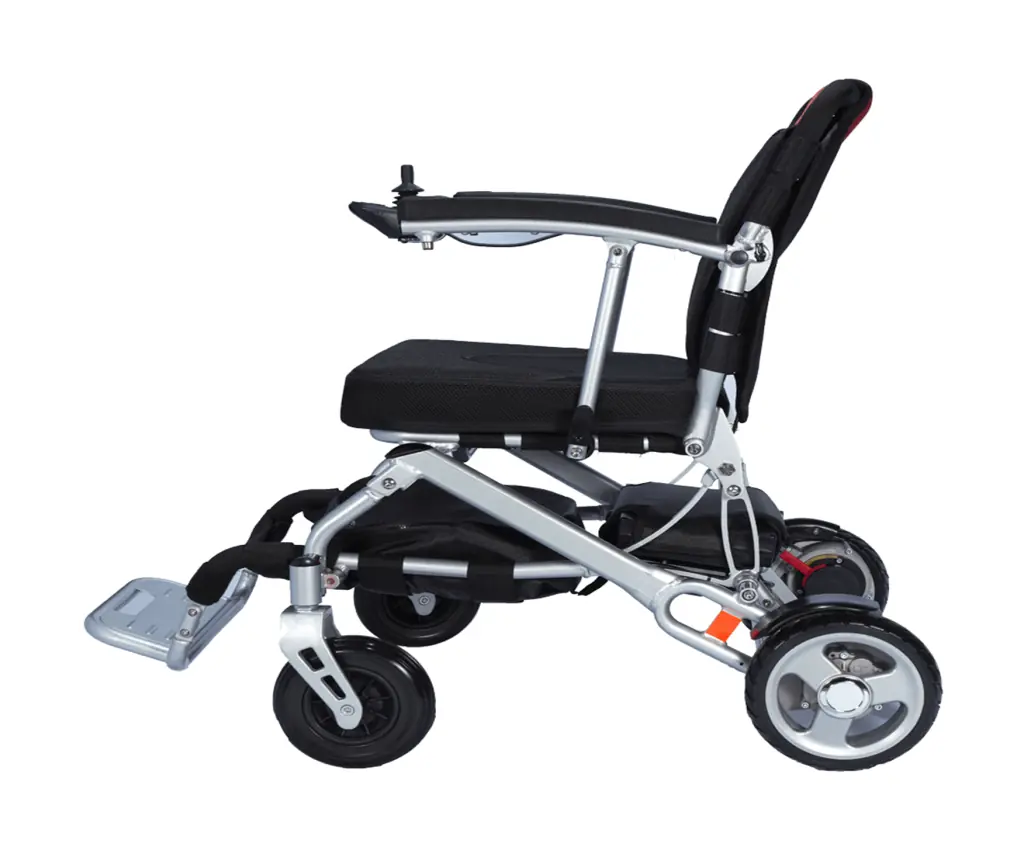
A leisure center fleet works best as a mix, not a single model. Light folding chairs suit most loans, and staff lift, fold, and store them with ease. Sturdier chairs suit long days of back-to-back loans and heavier daily use. The table below shows the ZVCARE models that fit leisure center work, with the figures that matter for a fleet buyer.
Model
Weight
Folded size
Range
Best leisure center use
EW1000
15 kg incl. battery
73×39×71 cm
15±3 km
Light loans, easy folding and carrying
EW100
23 kg
73×55.5×31 cm
12±5 km
Compact fold where storage is tight
EW8722
—
80×39×74 cm
—
Small-wheel chair for steady daily use
EW8703G
—
89×43×76 cm
—
Big-wheel chair for long days of loans
EW8720
—
80×34×74 cm
—
High-end chair for the main loan stock
The EW1000 suits any job where staff must fold and carry the chair, and the EW100 suits centers where storage is tight, because it folds flat. Small-wheel models like the EW8722 suit tight turns in corridors and changing rooms. Do not fill the fleet with one model before you have run a trial. Let a few weeks of real loans show which chairs staff reach for first, and then order more of those.
Key Takeaway: Mix light folding chairs for most loans with sturdier models for long days of back-to-back use. Let real loan counts set the mix.
How Do You Keep Chairs Charged Across Many Short Loans a Day?
A leisure center day is a string of short loans, not one long shift. A chair goes out for a swim, comes back, goes out again for a gym class, and comes back again. The practical answer is rotation: charge the full fleet before the doors open, send out charged chairs first, and plug in each returned chair the moment it comes back, so it starts recovering while the next chair goes out.
Match each charger to the battery type it serves. A lithium battery and a lead-acid battery do not share a charger. Put the chargers in the fleet store itself, where the chairs already live. Keep a simple board by the door so staff can see at a glance which chairs are ready and which are still charging, and use the rhythm in the table below for a full day of short loans.
Part of the day
Charging action
Chairs involved
Before the doors open
Charge the full fleet and check every battery indicator
All chairs in the store
Between loans
Plug in each returned chair right away
Chairs back from loan
Midday lull
Swap in charged chairs and top up the rest
Chairs that ran the morning loans
After closing
Return every chair to charge overnight
Full fleet, ready for the next day
Key Takeaway: Rotate the fleet and plug in every returned chair at once, so the next visitor always gets a charged chair and no chair has to last all day alone.
How Should Staff Hand a Chair Over and Take It Back?
A good handover takes a few minutes and prevents most problems. Staff check the battery and brakes, show the visitor the joystick, and agree where the chair will be returned. The visitor leaves knowing how to stop, how to turn, and where to go. The return is just as simple: staff take the chair back, check it over, wipe it down if it has been near the pool, and put it back on charge if it needs one.
Write this down as a short routine, and train every staff member on the same steps, so a visitor gets the same handover from any staff member on any shift. Keep the routine on a card at the reception desk, where staff can see it. Libraries run a similar loan system, with fixed borrow and return points that regular users learn quickly, and our Electric Wheelchairs for Libraries Buyers Guide covers that loan system in full.
Key Takeaway: Use the same short handover routine every time. Check battery and brakes, show the joystick, and agree the return point.
How Does the Loan Register Keep Chairs From Going Missing?
A simple loan register fixes that. For each loan, note the visitor name, the chair number, the time out, and the time back. A paper book at the reception desk does the job, and so does a simple sheet on the desk computer. The tool matters less than the habit, so every loan goes in the book, with no exceptions.
Number each chair on the frame, so the register and the chair match at a glance. When a chair comes back, staff tick it off and check it over. At closing time, staff read the book and count the fleet, and any chair still out gets a phone call, not a shrug. A missing chair found at closing is a quick call, while one found the next morning is a lost chair.
Key Takeaway: Log every loan with the visitor name, the chair number, and the time out and back. Count the fleet against the register at closing time, every day.
How Do You Run the Fleet Across Staff Shift Handovers?
A leisure center runs on shifts, and the fleet changes hands with them. The morning team knows which chairs ran flat, but the afternoon team does not, unless someone tells them. A short handover note fixes that. At each shift change, the outgoing team notes which chairs are on charge, which need a wipe or a repair, and which are still out on loan. The incoming team reads the note before the first visitor asks for a chair.
Cleaning between users is part of the job, not an extra. Wipe the seat, backrest, armrests, and joystick after every loan, and give the chair a deeper clean at the end of the day, including the frame and the wheels. Shared chairs pass from one visitor to the next all day, and a clean chair is the clearest sign that the center takes its visitors seriously. Hospitals run shared chairs through the same routine, and our Electric Wheelchairs for Hospitals Buyers Guide covers that cleaning routine in full.
Key Takeaway: Hand the fleet over in writing at every shift change. Clean every chair between users, and keep supplies at the loan desk.
What Should You Check Before You Order?
Before you place an order, run one full trial day with a small set of chairs. Let real visitors borrow them and staff run the handover routine. Watch what happens at class times, when the lobby fills and the pool stock runs low. The trial will show you things no catalog can, so fix the plan first and then order the fleet to match the fixed plan.
Confirm every open point with the venue operator before ordering: no supplier can promise that a chair meets a given venue standard, and each venue sets its own rules for its own building. Ask the supplier about spare parts too, since controllers, motors, and chargers fail first, so keep one of each on hand. Every ZVCARE chair passes 100% visual inspection before shipment, and the warranty covers the frame for 36 months, the motor and controller for 12 months each, and the battery for 6 months on lead-acid and 12 months on lithium. The table below is the final check to run before you sign.
Check
What to do
Who confirms it
On-site trial
Run a full trial day with real visitors
Center staff and the supplier
Pool deck and floors
Drive a real chair across the damp deck
Venue operator
Storage near the pool
Agree a dry room near the pool entrance
Venue operator
Charging rhythm
Agree charging points in the fleet store
Venue operator
Loan register
Set up the register and the closing count
Center manager
Spare parts
Confirm stock and shipping for key spares
Supplier
Key Takeaway: Run a full trial day. Fix the plan from what the trial shows. Confirm every open point with the venue operator before you order.
A leisure center loan fleet is a small system, not a single purchase. The chairs, the waiting spots, the handover routine, the chargers, the loan register, and the shift notes must all work together. This Electric Wheelchairs for Leisure Centers Buyers Guide has walked you through each part in center order. It went from the front door to the pool, the gym, and the courts, and back to the charging room. Buy the fleet that fits your center floor. Test it with real visitors. Grow it from real borrow counts.
If you are ready to start, talk to the factory first. ZVCARE, Shenzhen Zhiwei Health Technology Co., Ltd., was founded in 2015. It is ISO 13485:2016 certified, and the standard is published by the International Organization for Standardization. The minimum order is 1 unit. Lead time is 7 days after payment. Spare parts support covers the fleet after delivery. With 50+ global partners already served, the factory can supply a trial unit first. You can test it on your own center floor before you commit to a full fleet. To start, reach out through our contact page and tell us about your pool, your gym, and your busiest day.
Frequently Asked Questions
Can a visitor take the loan chair outside the center?
No. The loan chair stays inside the center and on its grounds. The visitor borrows it at the reception desk or the pool entrance. They use it to move between the pool, the gym, and the courts, and they return it before leaving. If a visitor needs a chair beyond the center, that is a separate matter. Raise it with the center operator.
How do staff keep pool water off the chairs?
Staff wipe each chair down after every pool loan. They dry the seat, the armrests, the frame, and the joystick before the chair goes back on loan. The fleet store stays dry, and chairs wait in the store rather than on the damp pool deck.
What happens if a chair runs out of charge during the day?
Staff bring a charged spare chair to the visitor and take the flat chair back to the charging room. That is why the fleet plan keeps charged spares ready through the day. It is also why the return routine puts each chair on charge right away. A chair that is checked at handover should not run flat, but the spare covers the days when it does.
Do we need the same model for every chair in the fleet?
No. A mix works better for most centers. Light folding chairs like the EW1000 suit most loans. Sturdier models like the EW8703G suit long days of back-to-back loans and heavy daily use. Run a trial first, see which chairs staff reach for, and order more of those.
How do we start with a small fleet and grow it?
Start with a trial unit, since the minimum order is 1 unit. Run it through a full trial day. Then order a small fleet for the reception desk and the pool entrance. Keep the loan register, and add chairs where the register shows the fleet running short. Growth from real borrow counts beats growth from a guess.
Founded in 2015, ZVCARE is an ISO 13485:2016 certified electric wheelchair manufacturer in China, providing OEM & ODM solutions for global distributors and medical stores.