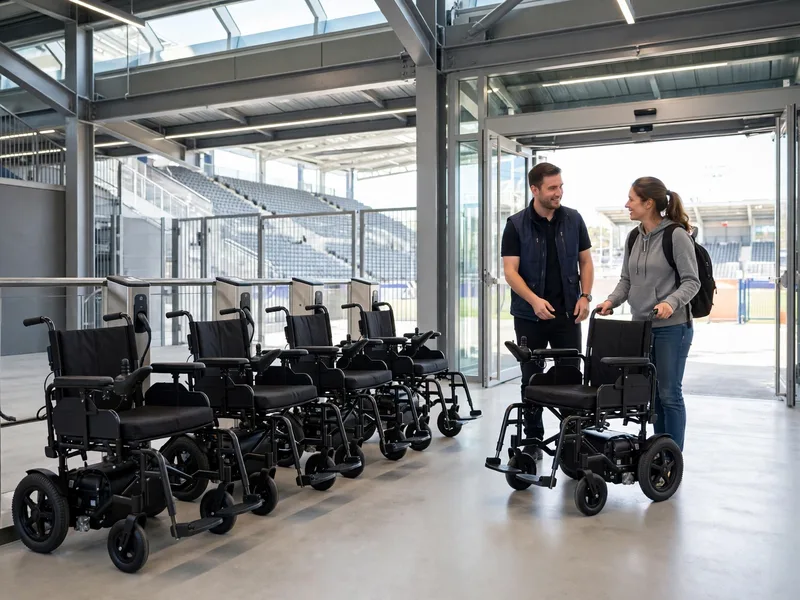
This Electric Wheelchairs for Stadiums Buyers Guide is written for the people who run the building, not the people who sit in the chair. If you manage a stadium or an arena, your job is to make sure any guest who cannot walk the concourse or climb to their seat still gets to their place without a long wait, a long walk, or a fuss at the gate. That means buying a small loan fleet, storing it where staff can reach it, keeping it charged through a full event day, and keeping it in good shape season after season. This guide walks through each of those decisions in the order you will actually face them, from fleet size to the questions worth asking your supplier before you order.
How Many Electric Wheelchairs Does a Stadium Loan Fleet Need?
Start with the shape of your event day, not with a number from another venue. A stadium loan fleet serves guests who arrive on foot, find the walk too long, and need a chair for part of the visit, plus guests who arrive in their own chair and need nothing from you at all. Therefore the fleet you need depends on how far guests walk from the gate to the seating bowl, how many entry points you run, and whether your concourse has long flat stretches or steep ramps and stairs between levels. A single central store works when every guest passes one main entrance, while a building with several busy gates usually needs a small stock at each one so nobody waits at the far end of the concourse for a chair to be wheeled over.
Think in terms of peak demand, not average demand. Most of your loans will cluster around the same windows: gates opening, the rush before kickoff, and the outflow at the end of the event. For that reason, a fleet that looks generous on a quiet day can still run short in the first hour, and a fleet that covers the first hour comfortably will usually have chairs spare for the rest of the day. In addition, keep one or two chairs in reserve for breakdowns and for guests who need a chair unexpectedly during the event, because a fleet with no spare is a fleet that says no at the worst moment. Shopping malls face the same pattern with their own loan fleets, and our guide to electric wheelchairs for shopping malls explains how shared-use fleets plan for peak hours rather than averages.
Key Takeaway: Size your stadium fleet for the busiest hour at the busiest gate, and keep a spare chair in reserve so a breakdown never turns into a refused guest.
Which Electric Wheelchair Models Suit Stadium Use?
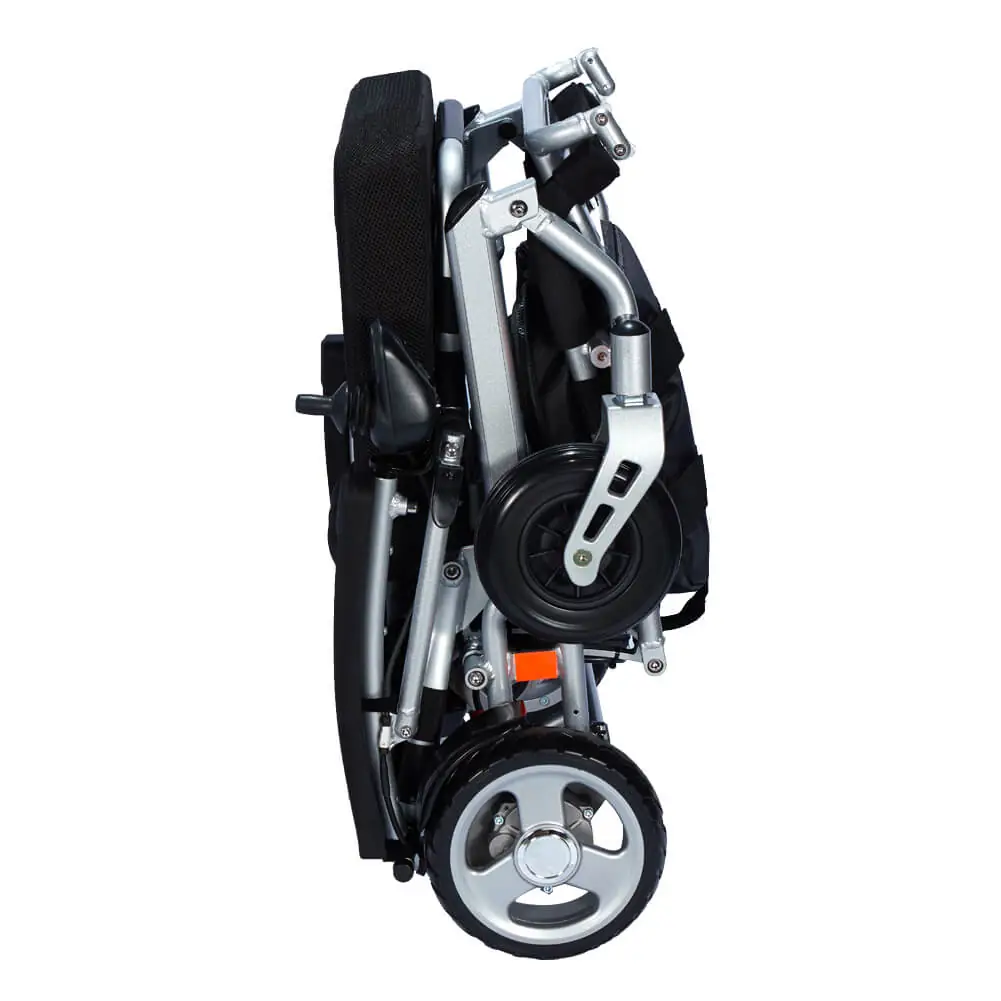
A stadium fleet needs chairs that fold fast, survive daily sharing, and move easily through crowds, so start by comparing folded size and range rather than top speed or luxury features. The EW100 folds to 73×55.5×31 cm with a range of 12±5 km, which makes it a practical loan chair that staff can fold and store between events. The EW1000, with its carbon fiber frame, weighs 15 kg including the battery, folds to 73×39×71 cm, and offers a range of 15±3 km, so it suits venues where staff carry chairs between levels or load them into a service vehicle. The EW8722 is the heavier workhorse of the three at 45 kg, with a folded size of 80×39×74 cm and a range of 18–22 km, which fits a stadium that wants one durable chair doing long shifts all day without a mid-event battery swap.
Model
Folded Size
Range
Best Stadium Role
EW100
73×55.5×31 cm
12±5 km
Light loan chair, quick to fold and store
EW1000
73×39×71 cm
15±3 km
Lightest chair at 15 kg including battery, easy for staff to move
EW8722
80×39×74 cm
18–22 km
Durable chair for long event days
However, do not build a fleet from a single model without thinking about who will use it. Some guests need a chair with a wider seat and a sturdier frame, while others only need a light chair for a short trip from the gate to their seat. A mixed fleet covers both cases, and shared parts across models make life easier for whoever looks after the chairs. Schools face a similar choice when they buy for shared daily use, and our guide to electric wheelchairs for schools shows how a mixed fleet serves different users without multiplying spare parts.
Key Takeaway: Compare folded size and range first, then mix models so the fleet serves both light short trips and long durable shifts.
How Do Loan Wheelchairs Move Through a Stadium on Match Day?
A loan chair is only useful if it can actually reach the guest, so map the route before you buy. Walk the path from each loan point to the seating bowl the way a guest would travel it: through the gate, along the concourse, past concession queues, and into the seating area. Look for narrow pinch points, sharp turns around concession stands, ramps with tight landings, and any stretch where crowd flow pushes against the chair. The route that looks fine on an empty Tuesday can become a slow squeeze when the concourse is full, so plan the loan route for a full house and keep a second route in mind for the busiest periods.
Seating-bowl access deserves its own check. Accessible seating areas are usually reached by level aisles, and your staff should know exactly which aisles a loan chair can use, where it should stop, and where it should never be left blocking an exit route. The ADA Standards for Accessible Design set out the requirements for assembly areas, including wheelchair spaces and companion seating, and they are the right reference when you check your seating bowl against the rules that apply to your venue. Airports plan the same kind of movement through busy terminals, and our guide to electric wheelchairs for airports covers how loan chairs keep moving when the building is at its busiest.
Key Takeaway: Walk the full loan route on a full-house plan before you order, and confirm which aisles a loan chair may use and where it must never block an exit.
Where Should a Stadium Put Charging Points for Its Fleet?
Charging points belong where the chairs already live, not in a distant room staff only visit once a day. The best spot is usually the same store where the fleet is kept between events: a dry, ventilated space with wall outlets along one side, enough floor space for each chair to sit without blocking the next one, and a clear path so staff can pull a chair out without unplugging three others. Keep charging away from public walkways, because trailing cables across a concourse are a trip hazard and a chair left charging in public is a chair that walks away or gets knocked over.
Think about power as part of the building, not as an afterthought. Ask your facilities team how many outlets the store actually has, whether the circuit can carry the whole fleet charging at once, and whether the store stays powered overnight when the building is otherwise shut down. A store that loses power at night will greet your staff with flat chairs on event morning, which is the worst time to discover the problem. Hotels solve the same puzzle with guest loaner fleets, and our guide to electric wheelchairs for hotels explains how charging corners are organized so every chair is ready before the first guest asks.
Key Takeaway: Put charging in the fleet store itself, with enough outlets and overnight power for the whole fleet, and keep cables off public walkways.
How Do You Keep a Stadium Fleet Charged Through a Full Event Day?
A stadium event day is long, and the fleet earns its keep in bursts rather than in one steady shift. Chairs go out at gate opening, come back between periods, go out again for late arrivals, and then face the final rush home. The practical answer is rotation: charge every chair fully before gates open, send out charged chairs first, and plug in each returned chair the moment it comes back so it starts recovering while the next chair goes out. That way the fleet never depends on a single chair lasting all day, and no guest waits while a chair finishes charging.
Event Stage
Charging Action
Chairs Involved
Before gates open
Charge the full fleet and check every battery indicator
All chairs in the store
During the event
Plug in each returned chair immediately
Chairs back from loan
After the last guest leaves
Return every chair to charge overnight
Full fleet, ready for the next event
Keep a simple log at the charging point so staff can see at a glance which chairs are ready and which are still charging. A whiteboard or a clipboard by the door does the job, and it stops the familiar mistake of sending out a chair that only looks ready. Cruise ships run loan fleets through even longer days at sea, and our guide to electric wheelchairs for cruise ships shows how rotation and a visible charging routine keep a shared fleet going from morning to night.
Key Takeaway: Rotate the fleet and plug in every returned chair at once, so the next guest always gets a charged chair and no chair has to last all day alone.
What Wear Shows Up First on Stadium Wheelchairs?
Shared chairs wear in a pattern, and knowing it lets you spot trouble before a guest does. Armrests and seat cushions show scuffs and stains first, because every user grips the same places and sits on the same surface. Tires pick up the next share of wear from concourse concrete, outdoor walkways, and the grit that gets tracked in on wet days. After that, watch the folding joints and the joystick: folding joints loosen with constant folding and unfolding between events, and joysticks take knocks when chairs are stacked or loaded in a hurry.
Therefore build a short inspection into the return routine rather than waiting for a scheduled service day. When a chair comes back, staff should check the tires, wipe the seat and armrests, test the joystick and brakes, and fold and unfold the chair once to feel for stiffness or play in the joints. Anything that feels wrong goes to the side with a tag on it, not back onto the loan shelf. A written maintenance plan turns that habit into a routine the whole team follows, and our guide to electric wheelchair maintenance plans for distributors explains how regular checks, records, and spare parts fit together over the life of a fleet.
Key Takeaway: Armrests, tires, folding joints, and joysticks wear first, so inspect every returned chair briefly and tag anything that feels wrong instead of sending it straight back out.
How Should a Stadium Run Borrowing, Returns, and Cleaning?
A loan system only works when guests understand it in seconds. Keep the handover short: staff confirm the guest can drive the chair, show the joystick and the brake, and agree where the chair should be returned. A simple loan card or a note of the guest’s seat location is enough to track the chair, and it avoids the awkward search at the end of the event when a chair is parked somewhere unexpected. The return point should be as visible as the loan point, ideally the same desk, so guests never have to hunt for it while the crowd is leaving.
Cleaning between users is part of the job, not an extra. Wipe the seat, backrest, armrests, and joystick after every loan, and give the chair a deeper clean at the end of the event day, including the frame and the wheels. Shared chairs pass from one guest to the next all day, and a clean chair is the clearest sign that the venue takes its guests seriously. Rehabilitation centers run shared chairs through the same routine, and our guide to electric wheelchairs for rehabilitation centers covers how shared-use fleets stay clean and ready between users.
Key Takeaway: Keep handover to a short driving check, make the return point as visible as the loan point, and clean every chair between users.
What Should a Stadium Ask Its Supplier Before Ordering?
Before you order, ask the questions that decide whether the fleet is still working in its second season. Start with the warranty in writing: the frame is covered for 36 months, the motor and the controller for 12 months each, and the battery for 6 months on lead-acid and 12 months on lithium. Then ask about spare parts: which parts wear first, which ones the supplier keeps in stock, and how fast a replacement armrest, tire, or joystick can reach you when an event is days away. A supplier who can answer those questions plainly is a supplier who has supported fleets before.
Next, ask about the order itself. Confirm the minimum order is 1 unit, so you can start small and add chairs once you know your real demand, and confirm the lead time is 7 days after payment, so you can plan the order around your event calendar rather than around guesswork. Ask how each chair is inspected before it leaves the factory, because a fleet that arrives with a fault costs you an event day before it has carried a single guest. At ZVCARE, every chair passes 100% visual inspection before shipment, and we work with 50+ global partners who run loan fleets of their own, so the answers to these questions come from real fleet experience rather than a sales sheet.
Key Takeaway: Get the warranty, spare parts, minimum order, lead time, and inspection in writing before you order, and judge the supplier on how plainly it answers.
Conclusion
An Electric Wheelchairs for Stadiums Buyers Guide only helps if it ends in a fleet that works on a busy Saturday, so keep the decisions in order: size the fleet for the busiest hour, choose models by folded size and range, walk the loan route before you buy, charge where the chairs live, rotate through the event day, inspect every return, and clean every chair between guests. Do those seven things well and the fleet becomes part of the venue rather than a problem the staff work around.
If you are planning a stadium or arena fleet, talk to us before you order. ZVCARE builds folding electric wheelchairs for shared-use fleets, with a minimum order of 1 unit, a lead time of 7 days after payment, and 100% visual inspection before shipment. Tell us about your gates, your concourse, and your event calendar, and we will help you choose the mix of models that fits your building and your busiest day.
FAQ
How many electric wheelchairs should a stadium keep for a loan fleet?
There is no single right number, because it depends on your gates, your walking distances, and your busiest hour. Size the fleet for the peak window around gate opening and the end of the event, keep a spare chair in reserve for breakdowns, and start with a modest fleet you can grow once you see real demand.
Can stadium staff fold and store loan wheelchairs between events?
Yes. Folding models such as the EW100 at 73×55.5×31 cm folded and the EW1000 at 73×39×71 cm folded are built for exactly that routine, and a store with wall charging lets staff fold, plug in, and stack the fleet in one place.
Do loan wheelchairs need charging during the event?
Usually not, if the fleet starts the day fully charged and staff rotate chairs as they come back. Plug in each returned chair immediately so it recovers while another charged chair goes out, and the fleet will cover a full event day without a mid-day charging break.
What warranty covers a stadium loan fleet?
At ZVCARE, the frame is covered for 36 months, the motor and the controller for 12 months each, and the battery for 6 months on lead-acid and 12 months on lithium. Ask for these terms in writing before you order, and check which spare parts the supplier keeps ready for fleet owners.
How do stadiums keep shared wheelchairs clean between guests?
Wipe the seat, backrest, armrests, and joystick after every loan, and give each chair a deeper clean at the end of the event day. Keep cleaning supplies at the loan desk so staff can clean a chair the moment it comes back instead of leaving it for later.
Founded in 2015, ZVCARE is an ISO 13485:2016 certified electric wheelchair manufacturer in China, providing OEM & ODM solutions for global distributors and medical stores.