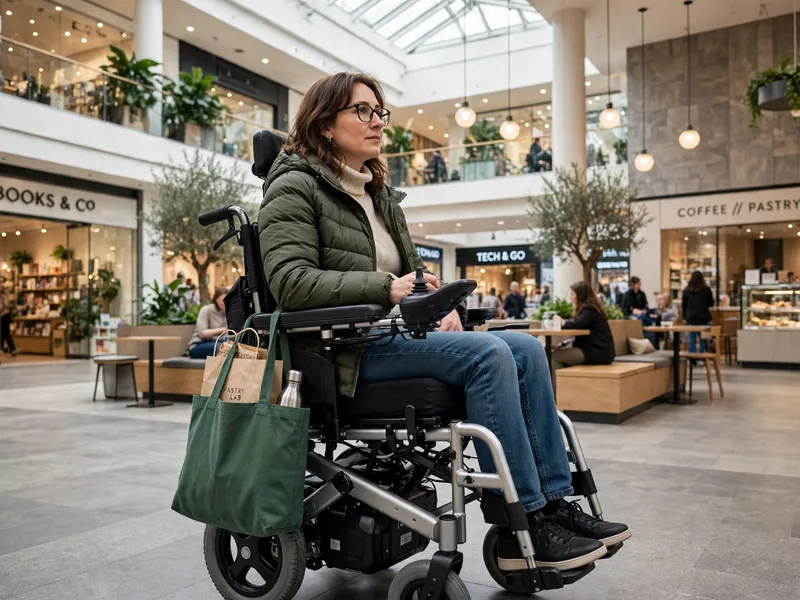
Electric Wheelchairs for Shopping Malls Buyers Guide
November 7, 2026
A shopping mall is one of the few public places where a visitor can spend half a day on their feet, and for some visitors that half day is simply not possible without a chair. This Electric Wheelchairs for Shopping Malls Buyers Guide is written for the mall team that has to turn that need into a working loan service: the right number of chairs, the right models, charging points that staff can actually manage, and a wear-and-cleaning routine that keeps the fleet presentable. You will come away with a practical plan you can hand to your operations manager and your supplier in the same meeting.
How Many Chairs Does a Shopping Mall Loan Fleet Need?
Start from your busiest day, not your average one. A mall loan fleet earns its keep on weekends, public holidays, and sale events, when footfall peaks and the chairs you have are all out at once. Therefore count how many visitors ask for a chair on a peak Saturday, then add a small buffer for chairs that are charging or being cleaned, and you have your starting fleet size. A small neighbourhood centre may begin with a handful of chairs, while a large multi-floor mall with several entrances may need a fleet spread across more than one loan point.
Your layout decides the split as much as your total does. If shoppers enter through two or three main doors, one central desk forces long walks for the very people the service exists for, so place chairs where visitors actually arrive. In addition, keep one or two spare chairs at the main desk for the moment a returned chair needs a quick check before it goes out again. The buffer is not waste; it is what keeps the service running while a chair is off the floor.
Key Takeaway: Size the fleet for your peak Saturday, spread it across your main entrances, and hold one or two spares so charging and cleaning never close the service.
Which Wheelchair Types Belong in a Mall Fleet?
A mall fleet works best as a mix, not a single model repeated. Compact folding chairs suit most shoppers because they turn easily in shop aisles, fit into lifts without blocking other passengers, and fold away when a visitor wants to sit in a restaurant chair or a cinema seat. Larger, sturdier chairs earn their place too, for visitors who need more seat width or more support over a long shopping trip, and they are worth having even if they go out less often. The mix matters because one model cannot cover every body and every trip.
Before you settle the mix, check the turning circle of each model against your narrowest real pinch point, not against the brochure figure alone. Our guide to turning radius explains how that measurement is taken and why it matters in tight spaces. Ask your supplier for the folded dimensions as well, since a chair that folds small is easier to store at a busy loan desk and easier to move between floors. Lightweight models also help your staff, who lift and reposition chairs many times a day.
Fleet role
Chair type
Why it fits a mall
Everyday loan chair
Compact folding electric wheelchair
Turns in shop aisles, fits lifts, folds at restaurants
Comfort option
Larger, wider-seat model
More support for long half-day trips
Spare and swap chair
Same as your everyday model
One battery and parts routine for the whole fleet
Key Takeaway: Build the fleet around compact folding chairs, add one or two wider models for longer trips, and keep spares identical to your main model so staff only learn one routine.
How Do Borrowed Wheelchairs Move Through a Mall?
A mall is a maze of thresholds, shop doorways, lift lobbies, and food-court seating, so walk the route yourself before you buy. Start at each entrance, roll through the main concourse, enter a lift, cross a food court, and note every spot where a chair must turn, reverse, or wait. Narrow gaps between display stands, tight corners at the end of a shop row, and lift doors that open onto a busy walkway are the places where a loan service succeeds or fails. If a route is awkward for a chair, it will be awkward for the shopper using it.
Escalators are the one part of the route a wheelchair must never use, so your loan briefing should point every borrower to the nearest lift and the staff should know the lift route by heart. Signage helps more than a verbal direction, especially when a visitor is new to the building, so mark the lift route from the loan desk with clear signs at each decision point. For the building rules behind accessible routes, the 2010 ADA Standards for Accessible Design show how one major market — the United States — sets out accessible routes, lifts, and clear floor space in public buildings; check your local building code for the rules that apply to your mall. Finally, check your floor surfaces: polished stone is fine, but thick carpet in a seating area or a raised threshold at a shop entrance can stop a small front wheel, so ask the tenant to keep thresholds low and walkways clear.
Key Takeaway: Test every loan route in a real chair before ordering, keep wheelchairs off escalators and on signed lift routes, and fix thresholds and pinch points before opening day.
Where Should a Mall Put Its Charging Points?
Charging points belong where staff can see them and where chairs are not in the way of shoppers. A back room behind the customer service desk works well, as does a marked bay beside the desk where returned chairs wait for their next borrower. What does not work is a socket in a public corridor, where cables cross a walkway and a chair blocks the route while it charges. Keep cables off the floor, keep sockets at a height staff can reach without bending over a chair, and keep the charging area dry and ventilated.
Think about power as part of the floor plan, not as an afterthought. Count the sockets you need for the whole fleet plus one spare, and confirm with your facilities team that the circuit can carry that load before you order chairs. If your mall has more than one loan point, each one needs its own charging setup, because moving a flat chair across the building to charge it is a job nobody will do on a busy Saturday. The airport approach to keeping a fleet moving is a useful parallel, and our airport buyers guide explains how a high-turnover fleet organises charging so chairs are never all flat at once.
Key Takeaway: Charge where staff can see the chairs, off public walkways, with one socket per chair plus a spare, and give every loan point its own charging setup.
How Do You Keep a Mall Fleet Charged Through a Weekend?
Weekend demand is lumpy: a rush of borrowers in the late morning, a quieter mid-afternoon, then another rush as evening shoppers arrive. The routine that survives this pattern is simple, and it depends on staff doing it every time rather than doing it perfectly once. When a chair comes back, plug it in before anything else, even if the next borrower is already waiting, because a chair that goes out half-charged is a chair that comes back early. A short top-up between loans is often enough for a shopping trip, and a full overnight charge resets the fleet for the next day.
Give each chair a number and a charging log, even a paper one, so staff can see at a glance which chairs are ready and which are still charging. Rotate the fleet so the same two chairs do not take every loan while the rest sit idle, since even wear across the fleet is easier to manage than one exhausted chair and five fresh ones. For the general charging habits that keep batteries healthy over months of daily use, the detailed routine is covered in our airport guide, so this guide only adds the mall-specific part: plan your top-ups around your own peak hours, keep a charged spare at the desk during the evening rush, and never let a chair leave the desk with a low battery warning showing.
Key Takeaway: Plug every returned chair in first, top up between loans, rotate chairs so wear stays even, and keep a fully charged spare ready for the evening rush.
What Wear Shows Up First on Mall Wheelchairs?
Mall wear is easy to recognise once you know where to look. Front castor wheels pick up hair, thread, and grit from shop floors and food courts, and a castor that stops turning freely makes the chair pull to one side. Armrests and seat edges scuff where chairs pass display stands and lift doors, footplates take knocks at thresholds and at the edge of the food court, and tyres wear faster on polished stone than on carpet. None of this is a fault in the chair; it is the normal cost of a fleet that works hard in a busy building.
Your defence is a short weekly check that staff can do without tools. Clear the castors, wipe the seat and armrests, check the tyres and the footplate fixings, and keep a small stock of the parts that wear first, such as castor wheels and armrest pads, organised the way our warehouse storage guide recommends. The airport guide lists the wear that appears first on a high-turnover fleet, and the pattern is the same in a mall, except that your damage happens at lift doors, display stands, and food-court thresholds. When a repair is beyond a weekly check, send the chair to your supplier or service partner and put a spare on the floor the same day.
Wear point
Where it happens in a mall
Weekly action
Front castor wheels
Shop floors, food court, lift lobbies
Clear hair and grit, check free turning
Armrests and seat edges
Display stands, lift doors
Wipe, check scuffs and fixings
Footplates
Thresholds, food-court seating
Check fixings, straighten or replace
Tyres
Polished stone concourses
Check tread and wear, note uneven wear
Key Takeaway: Castors, armrests, footplates, and tyres wear first in a mall; a short weekly check plus a small stock of the parts that wear first keeps chairs on the floor instead of in repair.
How Should a Mall Run Borrowing and Returns?
Borrowing should take minutes, not forms. A one-page loan record works well: borrower name, contact number, time out, chair number, and a note of any existing scuffs. Walk the borrower through the controls before they leave the desk, show them the lift route, and agree a return time and a return point. A short demonstration prevents most of the problems that bring chairs back damaged, because a borrower who knows how the speed control and the brakes work is far less likely to bump a display stand.
Returns deserve the same discipline in reverse, so do a quick check while the borrower is still there: controls respond, brakes hold, tyres look right, and no new damage is visible. If there is damage, note it on the loan record and discuss it calmly at the desk, since a clear record protects both sides and keeps the service trusted. Hotels run a similar loan service at the front desk — see our hotel buyers guide for how they organise it. Keep lost-property and damage rules short, written, and visible at the desk, so staff do not have to improvise them on a busy Saturday.
Key Takeaway: One page per loan, a short controls demonstration before departure, and a quick check with the borrower present at return keep the service fast, fair, and trusted.
What Should a Mall Ask Its Supplier Before Ordering?
Ask about the parts of ownership that only appear after delivery. Confirm the warranty in writing: the frame is covered for 36 months, the motor and the controller for 12 months each, and the battery for 6 months for lead-acid or 12 months for lithium. Ask how spare parts are ordered, how long they take to arrive, and which parts your own staff can fit without a service visit. A supplier who answers these questions clearly before the order is the supplier who will answer the phone when a chair is out of service on a Saturday.
Ask about storage and delivery too. Confirm the folded size of each chair against your loan-desk storage, confirm the gross weight and carton weight for delivery planning, and ask whether the chairs arrive assembled or need assembly at your site. All ZVCARE chairs run on a 24V system, so your charging setup and any spare batteries should match that system. Finally, ask for a named contact for after-sales support and a written route for warranty claims, because a loan fleet is a service your visitors rely on, and our guide to building an after-sales service network shows how distributors organise support so a fleet stays running.
Key Takeaway: Get the warranty, spare parts, delivery, and after-sales contact in writing before ordering, and confirm folded size and 24V charging match your storage and your sockets.
Conclusion
A mall loan fleet is a small service with an outsized effect on who can enjoy your building. This Electric Wheelchairs for Shopping Malls Buyers Guide has walked through the whole job: sizing the fleet for your peak day, mixing compact folding chairs with wider comfort models, testing every route in a real chair, placing charging points where staff can manage them, keeping chairs topped up through the weekend, checking the wear points every week, and running borrowing and returns on a single clear page. Get those pieces right and the service runs quietly in the background, which is exactly how a good mall service should feel. When you are ready to talk numbers, bring your peak-day counts, your floor plan, and this checklist to your supplier, and start with a small fleet you can grow once the routine is proven.
FAQ
How many electric wheelchairs should a shopping mall start with?
Start from your busiest day rather than your average one. Count how many visitors ask for a chair on a peak Saturday, add one or two spares for chairs that are charging or being cleaned, and split the fleet across your main entrances so borrowers do not have to walk far to reach a chair.
Can shoppers use a borrowed electric wheelchair on an escalator?
No, wheelchairs must never use escalators. Your loan briefing should direct every borrower to the nearest lift, and the lift route should be signposted from the loan desk so a first-time visitor can find it without asking.
How long does a borrowed wheelchair last on one charge in a mall?
It depends on the model, the battery, and how far the shopper travels, so ask your supplier for the expected range of the models you are considering. In practice, a chair that leaves the desk fully charged covers a normal half-day shopping trip, and a short top-up between loans keeps the fleet ready through a busy day.
Who pays if a borrowed wheelchair is damaged?
That depends on your mall’s loan terms, so write them down before the service opens. A one-page loan record that notes existing scuffs at handover, plus a short written damage policy displayed at the desk, keeps the question simple for staff and fair for borrowers.
What is the warranty on a mall loan fleet?
Confirm it in writing with your supplier before ordering. As a reference, the standard cover is 36 months for the frame, 12 months each for the motor and the controller, and 6 months for a lead-acid battery or 12 months for a lithium battery.
Founded in 2015, ZVCARE is an ISO 13485:2016 certified electric wheelchair manufacturer in China, providing OEM & ODM solutions for global distributors and medical stores.