Electric Wheelchair Trade Show Follow-Up for Distributors
November 7, 2026
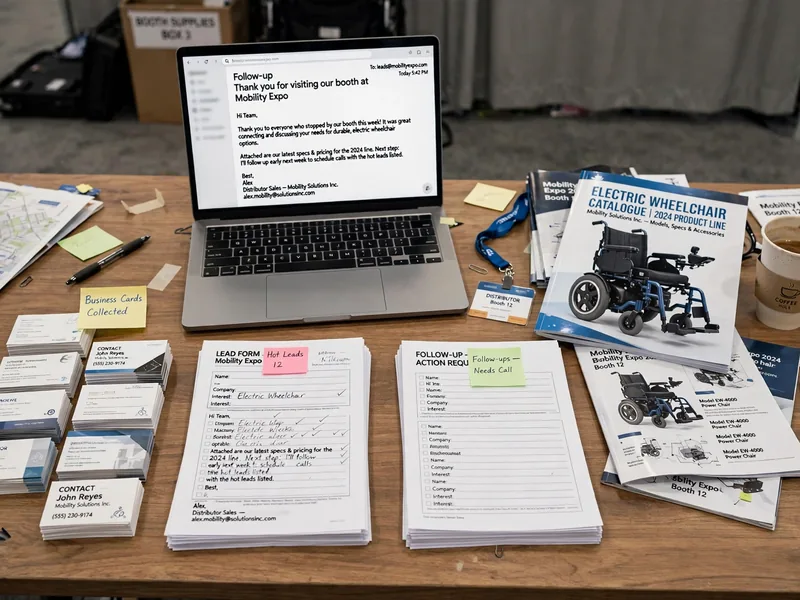
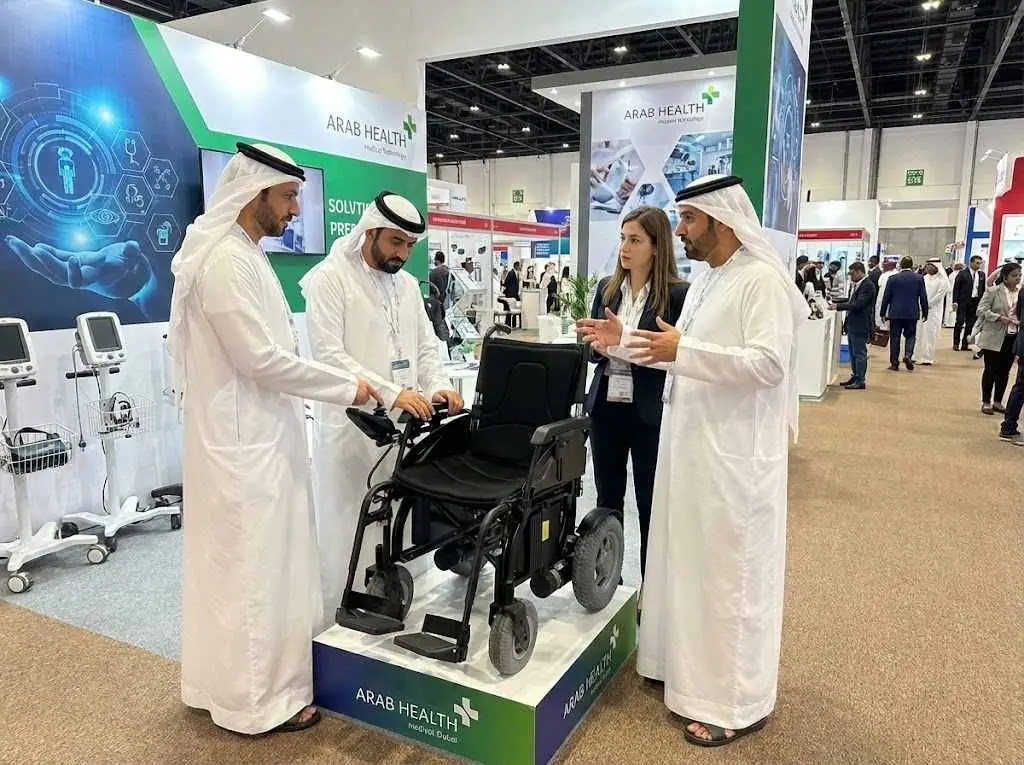
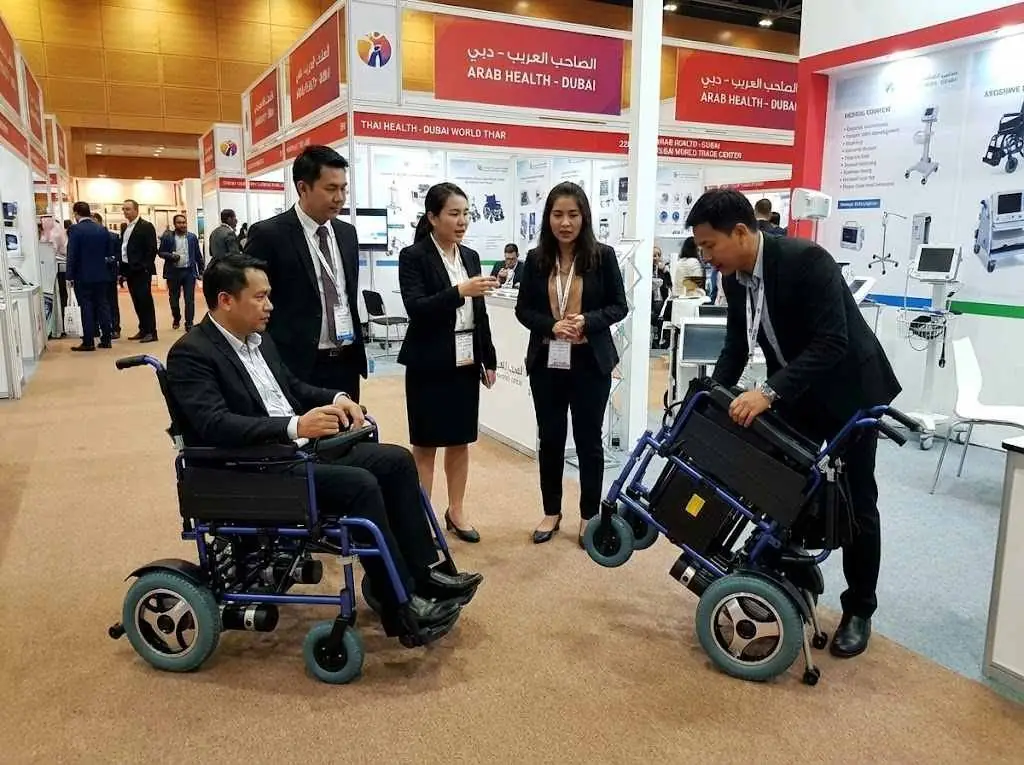
The stand is packed away, the crates are on their way home, and your real work is just starting: Electric Wheelchair Trade Show Follow-Up for Distributors is the system that turns a stack of business cards into orders, and many exhibitors lose the sale here, not on the show floor. At the show you met three kinds of people — buyers ready to talk numbers, buyers still comparing options, and visitors who were only collecting catalogues — and each group needs a different next step, on a different day. This guide gives you a simple way to sort them on the night the show closes, a day-by-day rhythm for the first month, and a clear path from sample to first order, so no good lead goes quiet because nobody owned the next step.
How Should You Sort Your Leads on the Night the Show Closes?
Sort your leads on the night the show closes, while you can still remember who said what. Give every lead one of three grades: A means you agreed a next step, such as a sample, a quotation, or a call on a set date; B means real interest but no date agreed; C means general interest, usually a catalogue taken and a card left. Write one line on each card — what they want, which model caught their eye, and when they need it — because a note written tonight is worth more than a perfect memory next week.
If you cannot remember the conversation at all, grade the lead down, not up. A pile of unsorted cards is not a pipeline, and a C lead treated like an A lead wastes the week you should have spent on buyers who were ready. Remember that the buyers on the other side of the aisle are running their own process — many follow a structured checklist for sourcing electric wheelchairs at the Canton Fair — so a warm conversation at your stand may already be one of three suppliers they are comparing by the time you write.
Key Takeaway: Sort on the night the show closes. If you wait until you are back in the office, the conversations blur together, and every lead looks the same.
Lead grade
What it means
First contact
How many touches
A
Next step agreed, with a date
Within one working day
Until the step happens, then follow the order
B
Real interest, no date agreed
Day 2–3
Three touches over about 30 days
C
General interest, catalogue only
One thank-you email in week one
One, then twice-a-year updates
Who Should You Contact First, and in What Order?
Contact your A leads first, in the order of the dates you agreed, not in the order the cards were collected. These buyers expect to hear from you, so a call works better than an email here: it confirms the next step still stands, and it tells you within a minute whether their timeline has moved. Work through your A leads’ day-one calls before you touch a single B lead, because your fastest window belongs to the people who already said yes to something.
Your B leads come next, on day two or three, with the specific thing they asked about — a price list, a photo of a model, or a specification sheet. Your C leads get one thank-you email in the first week and then join your regular updates, with no chasing. If you work the pile in the order you collected it, you spend your best days on your coldest leads, and your hottest leads hear from your competitors first.
Key Takeaway: Contact in grade order — A, then B, then C. The order you collected the cards is not a plan.
What Should Your Electric Wheelchair Trade Show Follow-Up Schedule Look Like in the First 30 Days?
Give every A and B lead a short schedule before you send the first message, and put the dates in your calendar the same day. A simple rhythm works: day one, a thank-you message that repeats the agreed next step; day three, the thing you promised, such as a quotation or a sample offer; day seven, a phone call; day fourteen, a second touch with something new; day thirty, a decision point where you either move the lead forward or close it politely. When a lead replies, the schedule resets around their reply, not around your calendar.
Every touch must add something new — a price, a photo, a delivery slot, or an answer to a question they raised at the stand. Never send the same “just checking in” message twice in a row, because the second one tells the buyer you have nothing new to say. If the conversation turns to how they will pay, our guide to payment terms with an electric wheelchair factory explains the options distributors usually agree, so you can answer without guessing.
Day
Who
What to send or do
Day 1
A leads
Thank-you message repeating the agreed next step
Day 2–3
B leads
The specific item they asked about
Day 3
A leads
The quotation, sample offer, or document you promised
Day 7
A and B leads
Phone call to confirm the next step
Day 14
Leads still open
Second touch with something new
Day 30
All open leads
Decision point: move forward or close politely
Key Takeaway: A follow-up schedule is a promise to yourself. If a date passes with no action, the lead does not wait — it cools.
What Should Your First Follow-Up Email Actually Say?
A good first email has three parts and nothing else. First, thank them and name one detail from the stand conversation — the model they tried, the market they serve, or the problem they described — because that detail proves you remember them. Second, repeat the next step you agreed, with a date. Third, ask one clear question or suggest one clear action, such as a call on Thursday or a sample shipment this week.
Keep the email short enough to read on a phone, and attach only what you promised, not your full catalogue. Use a subject line that names the show and the model, for example “Great meeting you at the show — EW1000 details as promised,” so the buyer knows in one glance why you are writing. If your lead is new to buying from China, our buyer’s guide to importing electric wheelchairs from China answers the questions they will ask next, and you can send it with your reply instead of writing the same answers yourself.
Key Takeaway: One detail from the conversation, one agreed next step, one clear action. If your email could have been sent to anyone at the show, rewrite it.
How Do You Keep a Conversation Moving When a Lead Goes Quiet?
Silence usually means the buyer is busy, not that they have said no. Reply with new information each time: a photo of the model in a colour their market prefers, a delivery slot that has just opened, or a straight answer to a question they raised at the stand. A buyer who ignored a generic message may well answer a message that solves their next problem, so each touch should give them a reason to reply that the last one did not.
After two unanswered emails, change the channel and make one phone call during their business hours. If there is still no reply, send a short message asking whether you should close this for now — it makes it easy for them to answer yes, no, or later, and a “later, in three months” is a far better result than silence. Never send the same message a third time and hope for a different result.
Key Takeaway: Every follow-up should carry something new. If you have nothing new to say, wait until you do, or pick up the phone.
How Do You Turn a Sample Request into a Real Order?
Agree the sample terms in writing before anything ships: which model, what the sample costs, who pays the freight, and what happens after they test it. Freight is charged on gross weight, so confirm the carton weight before you quote the freight cost, or the buyer will get a different number from the forwarder later. Put the warranty in writing with the sample terms as well — frame 36 months, motor and controller 12 months each, lead-acid battery 6 months, and lithium battery 12 months — so the buyer can show their own customers exactly what is covered.
When you ship the sample, agree a decision date on the spot, for example two weeks after it arrives, and put that date in your calendar before you pack the box. When the buyer calls back, ask what they tested and what their customers said, then move straight to a first order while the sample is still fresh in their mind. Your lead will judge your sample the same way you judge a factory sample, so our guide to how to evaluate electric wheelchair samples is a useful check on what they will be looking for.
Key Takeaway: A sample without a decision date is a gift. Agree the date before you ship, and the sample becomes a step toward an order.
How Should You Track Every Lead So Nothing Slips Through?
Keep one shared list that the whole team can see, with one owner named for every lead. Each row needs only seven fields: name, company, market, model of interest, grade, next action, and the date of that action. If a lead has no next-action date, it is not being followed up — it is only being stored. The UK government’s guidance for exhibitors makes the same point: get every new contact into your system and follow up as soon as possible.
Review the list twice a week for the first month, in a short session each time. Move a lead’s grade up or down only on evidence — a reply, a sample request, a question about price — not on hope. A short review like this catches the lead whose decision date passed yesterday, while there is still time to call.
Key Takeaway: One list, one owner per lead, one next-action date each. Anything without a date is a lead you have already lost track of.
When Should You Stop Chasing a Lead?
Stop when the sequence you agreed with yourself has run out with no reply — for example, three touches over about 30 days for a B lead, and one thank-you email for a C lead. Stopping is a decision, not giving up: your time is better spent on leads that answer, and a buyer who is chased too long remembers the pressure, not the product. Write the stop rule down before the show ends, so you follow it instead of debating it lead by lead.
Send one short close-out email: tell them you will close this for now, that they can reply any time, and that you will pick the conversation up where it left off. Then move them to a twice-a-year update list, so they still hear from you when you have something worth saying, such as a new model or a change in warranty support. Our guide to the electric wheelchair warranty claims process is the kind of practical information that gives a quiet lead a genuine reason to come back.
Key Takeaway: Every lead deserves a clear ending. A polite close keeps the door open; endless chasing closes it.
Conclusion
In the end, that is what Electric Wheelchair Trade Show Follow-Up for Distributors comes down to: sort fast, contact in grade order, add something new every time, and give every sample a decision date. The exhibitors who win orders after a show are rarely the ones with the biggest stand; they are the ones whose follow-up is the most organised. When a lead is ready to order, our first-order checklist for electric wheelchair distributors walks through the steps from confirmed order to delivery, so the work you did after the show turns into stock on their floor.
If you take one habit from this guide, make it the night-of-the-show sort. One evening of grading, one list with owners and dates, and a short rhythm for the first thirty days will do more for your next show’s return than any change you make to the stand itself. We build to order with a 1 pc MOQ and a 7-day lead time after payment, with spare parts support behind every model, so when your follow-up lands a new dealer, you can promise a first order with confidence.
FAQ
How fast should I follow up after a trade show?
Contact A leads within one working day, while the conversation at the stand is still fresh for both sides. B leads should hear from you on day two or three with the specific item they asked about, and C leads get one thank-you email in the first week. Speed matters most for A leads, because they agreed a next step and are waiting for you to keep it.
How many times should I follow up before I stop?
For a B lead, e.g. three touches over about 30 days — the item they asked for, a phone call, and a second touch with something new — is a fair sequence. A leads stay open until the agreed step happens or the buyer says otherwise, and C leads get one thank-you email and then twice-a-year updates. Write your stop rule down before the show, so you stop on a decision instead of drifting.
Should I call or email first?
Call your A leads first, because a call confirms the agreed next step still stands and tells you within a minute whether their timeline has moved. Email works better for B leads, where you need to send a document, a price, or a photo they can forward to a colleague. For C leads, one short thank-you email is enough.
What should I do if a lead asks for a sample but will not discuss price?
Agree the sample terms and a decision date in writing first, including who pays the freight and what happens after they test the sample. A sample without a decision date is a gift, not a step toward an order. Once the sample ships and the decision date is set, the price conversation has a natural moment — the call-back after they have tested it.
How do I follow up with leads who only left a business card and no notes?
Grade them C and send one short email that names the show, the model range you exhibited, and asks which model caught their eye. Keep it to three or four sentences and one question, so it is easy to answer on a phone. If they reply with a real interest, move them to B and start the normal rhythm; if they do not reply, leave them on your twice-a-year update list.
Founded in 2015, ZVCARE is an ISO 13485:2016 certified electric wheelchair manufacturer in China, providing OEM & ODM solutions for global distributors and medical stores.