How Distributors Build an After-Sales Service Network
October 30, 2026
A customer who cannot get a wheelchair fixed stops recommending you, however good the chair was on delivery day. That is why after-sales service deserves the same planning as sales: someone local who can look at the chair, a clear way to report a problem, and a route back to the factory when the local fix is not enough. This guide explains how distributors build an after-sales service network that covers those three things, without pretending that one phone number or one repair bench is a network.
A network is not a list of spare parts, and it is not a warranty claim form. Those matter, but they are separate jobs. A network is the people, the places, and the routine that connect a customer with a fault to a person who can help, and then to a recorded outcome. Build it in that order: places first, then people, then routine.
Where should you start: mapping where your customers actually are?
Start with a map, not with a hiring advert. Plot where your chairs already are, where your next orders are likely to come from, and how far a customer would have to travel today to get help. A plan that ignores that distance fails at the first repair, when a customer is asked to ship a whole chair back for a simple adjustment.
Talk to existing customers before you promise coverage. Ask where they are, who they call today when something goes wrong, and what stopped them from getting help last time. The answers are usually practical: nobody nearby knew the product, the customer could not describe the fault clearly, or the chair sat for weeks while everyone waited for a decision. Each answer points to a different gap: training, intake, or escalation.
Sketch the map in three layers: your own base, partner locations in towns you cannot reach yourself, and the factory behind everything else. A service corner inside a showroom is a natural starting point for the first layer, and the showroom guide explains how that corner fits alongside display and test-drive areas in how to set up an electric wheelchair showroom. Do not try to cover everywhere on day one. Pick the area where most of your chairs are, make service work well there, and add the next area once the routine is proven.
Who should be on the team: your own technicians or local partners?
Most distributors end up with a mix, and the mix should follow the map. Your own technicians handle the home area, train partners, and take the difficult cases. Local partners extend your reach into places where a full-time technician would not pay for itself. The factory supports both with product knowledge, documentation, and parts.
Role
Main job
What they need from you
In-house technician
Diagnose and repair in your home area, and coach partners
Training, tools, documentation, and time set aside for service
Local service partner
First response and straightforward repairs in their area
Clear scope, a named contact, parts supply, and a simple way to report cases
Factory support
Technical advice and parts for cases beyond local repair
Good case records: what was checked, what was tried, and clear photos or video
Hiring for attitude matters as much as hiring for existing skill. A technician who explains plainly, writes down what they found, and tells a customer honestly when a repair needs a part or factory advice will keep more customers than a faster technician who leaves no record. Service is a trust business: the customer is often elderly, or a family member is reporting the fault on their behalf, and a calm, clear explanation is part of the repair.
Size the team to the work you can see, not to the work you hope for. If most early cases are adjustments, charger checks, and controller settings, one trained technician plus one partner in the next town may be enough to start. As case records build up, the pattern of real faults will tell you whether to train a second technician or add a partner, and where.
How should technicians be trained so repairs stay consistent?
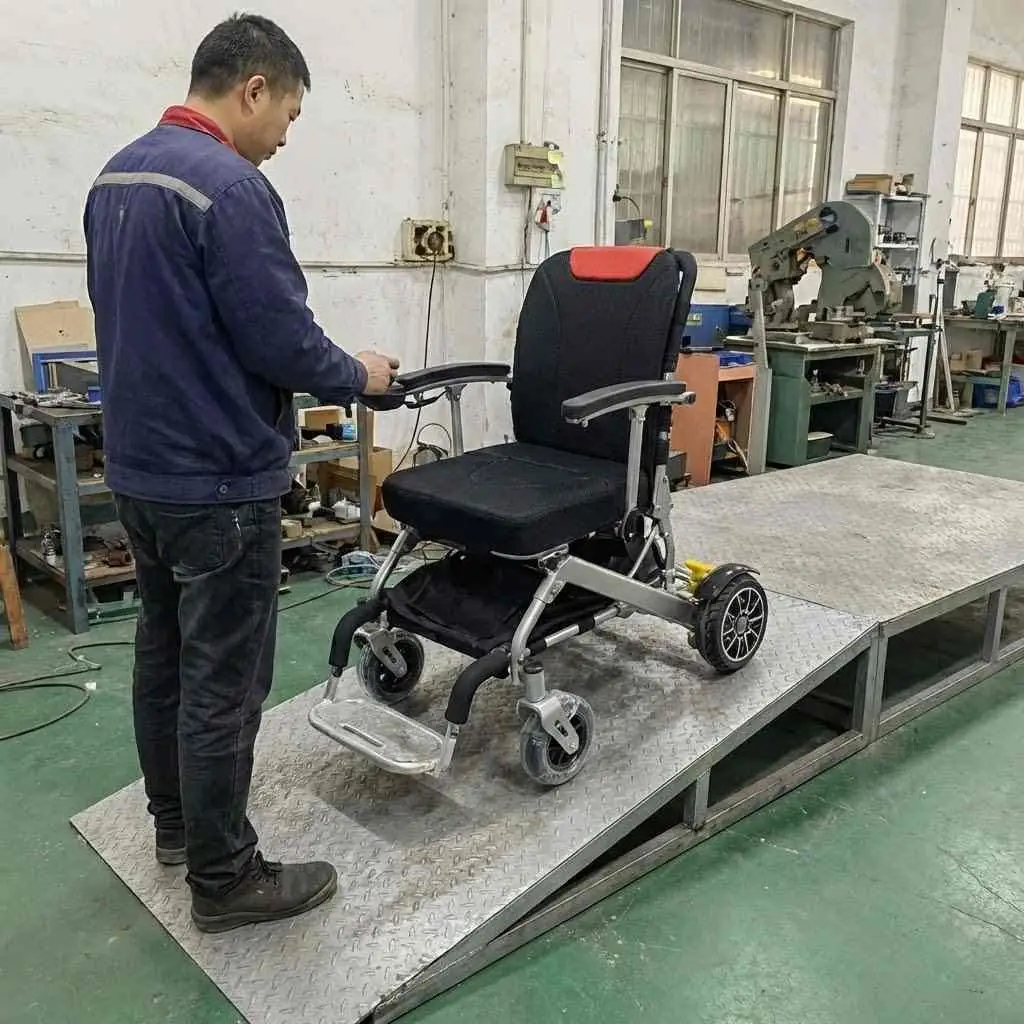
Training should start with the chair in front of them, not with a slide deck. A new technician should fold and unfold the chair, adjust the seat and footrest, drive it, charge it, and take off and refit the parts they will handle most often, before they ever visit a customer alone. Hands-on familiarity prevents the most common service failure: a technician who knows the theory but fumbles the chair in front of the customer.
Teach diagnosis as a habit: listen to what the customer noticed, look at the chair, test one thing at a time, and write down what changed. A technician who swaps parts at random may fix the chair by luck, but nobody learns anything, and the next identical case starts from zero again.
Chargers deserve their own training block, because a charger mistake is easy to make and hard to explain afterwards. ZVCARE chargers come in 2A and 5A versions, and in lead-acid and lithium versions, and those must never be mixed up. Train technicians to check the label on both the charger and the battery before plugging in, and to explain charging time in terms of battery capacity rather than promising one time for every chair.
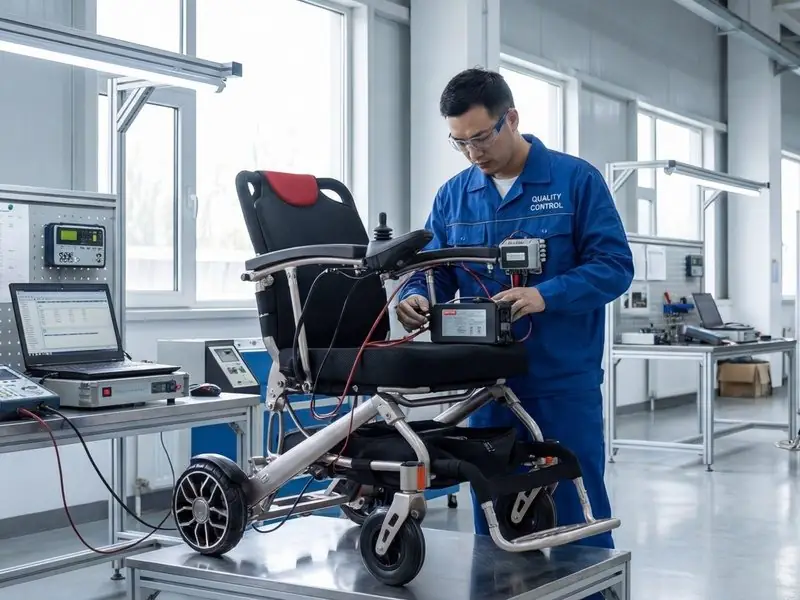
Controllers deserve the same care. A technician should know how the joystick feels when it is set correctly, how to adjust settings with the customer present, and when a controller problem needs factory advice. The controller selection guide is a useful reference here, because it explains the differences a technician will meet in the field in how to choose the right wheelchair joystick controller. Finally, train technicians to close a visit properly: test the chair with the customer, explain what was done in everyday words, and leave a short written note.
How do you choose and support a local service partner?
Choose partners the way you would choose a supplier: slowly, and on evidence. A good partner already repairs mobility equipment or similar powered products, has a workshop customers can visit, and is willing to learn your chairs rather than improvising on the first customer. Visit the workshop before you sign anything, and look at the bench, the tools, the storage, and how jobs are recorded. A tidy workshop with a job book is a better sign than a large signboard.
Agree the scope in writing before the first case, in plain language. For a clause-by-clause walkthrough, see our guide to reading a distributor agreement. The agreement does not need to be long, but it should settle the questions that cause arguments later: which repairs the partner handles and which come back to you, how parts are ordered and paid for, how cases are reported, and who talks to the customer at each stage. Agree in advance whether partners buy parts and invoice you, or draw on stock you hold, and whether labour is paid per job or under a retainer — leaving either open is what causes the argument later. A partner who only discovers the boundary during a live repair will either overreach or refuse the job, and both outcomes cost trust.
Support is what keeps a partner, not the signature. Give partners the same training your own technicians get, at least for the models they will see, and give them a named contact who answers. Start new partners with a trial period on straightforward cases, and review the first cases together: was the fault described clearly, was the customer told what would happen next, and did the case close with a note? Deciding what a partner holds on the shelf is a separate stocking question, covered in electric wheelchair spare parts stocking guide. For the network itself, the point is simpler: a partner without a way to get the right part quickly is not a service point, only an address.
What should happen from the first customer call to a closed case?
Customers judge a network by the first call, so design intake before you advertise service. One contact route, clearly published, beats three numbers that nobody answers. Whoever takes the call needs a short, calm script: who the customer is, which model they have, what changed, and when it started. A customer who has to repeat the story three times to three people has already decided the network does not work.
Triage is the next step, and it is a decision, not a delay. Sort cases into three groups: advice the customer can follow safely at home, a visit or workshop appointment, and a case that needs factory advice before anyone touches the chair. The person triaging needs the authority to book the appointment, not merely to pass a message along. A triage step that only collects messages is worse than no triage at all.
At the appointment, confirm the reported fault, check the chair, explain what you found, and agree the next step before doing it. If a part is needed, say so, and say what happens while it is on its way. If the chair cannot be used, discuss a loan or a temporary arrangement honestly. Escalation should be built into the routine, not treated as failure: the case moves to the factory with its record attached, including model, fault description, checks already done, and clear photos or video. Warranty paperwork is a separate track from the repair itself, and the warranty claims guide explains that track in electric wheelchair warranty claims process. Close every case deliberately: test the repair with the customer and record what was done.
How do you handle the chairs you cannot fix locally?
Some cases will always go beyond local repair, and planning for them is part of the network, not an exception to it. The usual reasons are a fault that needs factory diagnosis, a part that is not held locally, or damage that needs a workshop decision. What matters is that the customer hears one plan, not a series of guesses from different people.
The local technician's job in these cases is to produce a good handover, not to keep trying. A good handover states the model, the fault as the customer described it, the checks already done and their results, and clear photos or video of the problem area. That discipline saves the customer from repeated visits and saves the factory from asking for the same information twice.
Transport needs a practical rule agreed in advance. A whole chair is bulky, and freight is charged on gross or carton weight, not on net weight, so sending a chair back and forth for a small part is rarely the sensible option. Wherever possible, the part travels, not the chair: the factory advises, the part is shipped, and the local technician fits it. When the chair itself must travel, agree who arranges it, who pays for it, how it is packed, and what the customer uses in the meantime, before the chair leaves.
Warranty questions will surface in exactly these cases, so technicians and partners need the warranty in plain words. The frame is covered for 36 months, and the battery is covered for 6 months for lead-acid or 12 months for lithium, and the motor and controller are each covered for 12 months. Staff should be able to state that without adding promises the factory has not made. For the questions to ask a supplier before you commit, the warranty guide is a solid checklist in electric wheelchair warranty: what to ask your supplier.
What records should you keep, and how should you review them?
A service network runs on records, and the record can be simple. One entry per case is enough: customer and model, fault as reported, checks done, action taken, part used if any, and the closing note. The test of a record is whether a different technician could pick up the case a month later and understand it. If they cannot, the record failed, however detailed it looked.
Review the records together once a month, not as a performance punishment. Look at the cases that took longest, the faults that repeated, and the cases that had to be escalated. Patterns will appear quickly. A repeated fault may mean a training gap, a confusing instruction, or a batch of chairs that needs factory attention. Finding that pattern early is one of the main returns on building a network at all.
Use the review to improve the routine, not only to count cases. If customers keep describing the same fault badly, improve the intake questions. If technicians keep escalating the same check, add it to training. Many reported faults turn out to be care and adjustment issues rather than broken parts, and the maintenance guide explains the regular checks that prevent them in how to maintain a folding electric wheelchair. Case records contain names, addresses, and phone numbers, so agree who can see them and store them in one place rather than in personal message threads.
What does a sensible launch look like in the first months?
Launch in one area, with one clear offer you can keep: a published contact route, trained people, and a case routine tested before it meets a real customer. Test it with a staged case first. Have a colleague report a fault, and follow the case through intake, triage, appointment, repair, and closing, watching where the routine sticks. Fix the sticking points before launch, not after a customer has found them for you.
In the early months, keep the rhythm tight. Alongside the monthly record review, a short weekly check with technicians and partners catches small problems while they are still small: a part that is slow to arrive, a model that needs a training refresher, or a town where customers are waiting too long for a visit.
Plan the loan and demonstration fleet as part of the launch, not as an afterthought. A chair lent to a customer while theirs is repaired keeps that customer mobile and loyal. If a loan chair is damaged, or you want a second one for the fleet, replenishing it is straightforward at this scale: the minimum order is 1 unit, and the lead time is 7 days after payment, so a distributor can add a loan chair without committing to a large order. Check loan chairs on arrival with the same discipline as incoming stock, following the incoming inspection checklist in electric wheelchair QC checklist for incoming inspection. Finally, tell customers what the network is, in plain words, at the point of sale: who to call, what happens next, and what the warranty covers.
What do buyers ask most often?
Do I need my own technicians, or can I rely on partners alone?
You need at least one person of your own who understands the chairs deeply, even if partners do most of the visits. That person trains partners, reviews difficult cases, and talks to the factory with a proper record. A network run entirely through partners, with nobody in-house who can judge a diagnosis, drifts quickly.
How do I start if I only sell in one city?
If you only sell in one city, you may not need a partner at all at first — start with your own base, one contact route, and one case record. Add a partner in the nearest town only when customers there start waiting too long for a visit.
What should a service agreement with a partner cover?
Scope, parts ordering, case reporting, customer communication, and how difficult cases are escalated. Keep it short and plain, and review it after the first cases together. Both sides should be able to say, without checking, who does what when a customer calls.
Does a service network replace the factory warranty?
No. The network is how a customer reaches help and how a repair gets done; the warranty is the factory's cover for specified parts over specified periods. The frame is covered for 36 months, and the battery is covered for 6 months for lead-acid or 12 months for lithium, and the motor and controller are each covered for 12 months. Keep repair and warranty paperwork on separate tracks.
A distributor who maps demand honestly, trains a small core team well, supports partners properly, and runs a case routine from first call to recorded close has built something a customer can rely on, and that is the real test. This is how distributors build an after-sales service network that survives contact with real customers: not by announcing wide coverage, but by making the next repair, and the one after that, go well.
Key Takeaway: Start where your chairs are, train people before you advertise coverage, agree partner scope in writing, run every case from first call to recorded close, and let case reviews decide where the network grows next.
Founded in 2015, ZVCARE is an ISO 13485:2016 certified electric wheelchair manufacturer in China, providing OEM & ODM solutions for global distributors and medical stores.