Learning how to maintain a folding electric wheelchair is what separates a chair that lasts five years from one that starts failing in eighteen months. The folding mechanism, the battery, the joystick controller, and the brake system each ask for a small amount of regular attention — none of it complicated, all of it cheaper than a repair. This guide lays out that maintenance from the factory floor: what to check, how often, and which jobs belong to you versus your dealer.
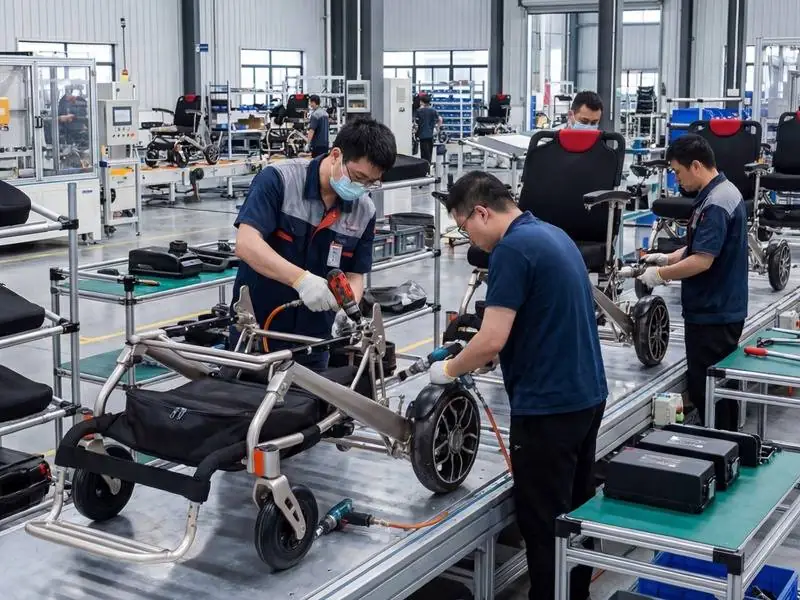
We build these chairs in Shenzhen and support distributors across Southeast Asia, the Middle East, and Europe, so we see the full lifecycle — including which “failures” were really just skipped maintenance. Everything below reflects how our own five models are designed to be cared for, and where our warranty terms draw the line between owner maintenance and a claim.
How Often Should You Maintain a Folding Electric Wheelchair?
A folding electric wheelchair used daily on outdoor routes needs more attention than one used indoors a few times a week — so treat any schedule as a starting point and adjust for real usage. The rhythm that works for most owners is simple: a 30-second check before each ride, a 10-minute look-over weekly, a deeper inspection monthly, and a professional service once or twice a year depending on how hard the chair works.
From our warranty desk, the pattern is unmistakable: the majority of early-life problems we investigate trace back to basic maintenance that was skipped — a folding joint never cleaned, a battery stored flat for months, a joystick boot torn and ignored until water got in. Maintenance does not void your warranty; neglect that causes damage can complicate a claim. Our terms are straightforward — frame 36 months, battery, motor, and controller 12 months each — and a chair with a documented maintenance habit is simply easier to support when something genuinely fails.
A schedule that actually gets followed
The best maintenance schedule is the one you will actually do. Daily checks should take under a minute: joystick springs back to center, battery gauge reads healthy, brakes hold on a gentle slope, nothing looks or sounds new. Weekly, wipe down the folding joints and check tire condition. Monthly, inspect fasteners, the joystick boot, the charging port, and run the two brake tests described later in this guide. Seasonally — or before any long trip — do the full pass: unfold and refold slowly, listening and feeling for anything stiff or gritty.
Maintenance versus warranty: who owns what
Owner maintenance covers cleaning, inspection, correct charging, and proper storage — everything in this guide. Warranty covers manufacturing defects in the frame, battery, motor, and controller within their respective periods. What sits in between is misuse: forcing a jammed folding mechanism until the hinge cracks, charging a lithium pack with a lead-acid charger, or pressure-washing the controller. Keep the distinction clear and you will never have an awkward conversation with your supplier.
Key Takeaway: Check briefly before every ride, inspect monthly, and service professionally once or twice a year. Maintenance never voids a warranty — but damage from neglected maintenance can complicate a claim.
How Do You Keep the Folding Mechanism Working Smoothly?
The folding mechanism is the defining feature of a folding electric wheelchair — and the part most often abused. Every fold cycles hinges, latches, and locking pins through load and release, and grit is their enemy. A joint that folds smoothly today will fold stiffly in six months if dust and debris are allowed to pack into it, and a stiff joint tempts owners into the single most damaging habit in wheelchair maintenance: forcing it.
Never force a folding frame. If the chair resists, something is wrong — a trapped object, a misaligned latch, debris in a hinge — and force converts a cleaning job into a cracked hinge or a bent latch. Stop, unfold, look, clear, and try again. If it still won’t fold, see what to check when your electric wheelchair won’t fold. Our EW100 folds down in seconds when its mechanism is clean; when it does not, the mechanism is telling you it needs attention, not muscle.
What to do when folding feels stiff
First, open the chair fully and inspect every hinge and latch point with a light — you are looking for packed dust, small stones, or anything wedged where it should not be. Wipe the joints with a dry cloth, then a slightly damp one, and work the mechanism slowly through two or three full fold cycles to feel whether the stiffness is gone. If a specific pivot still drags, a small amount of silicone-based lubricant on the non-electrical moving parts is appropriate; keep all lubricant away from electrical contacts, the joystick, and the charging port.
What never to do to a folding frame
Do not lubricate electrical components, do not adjust hinge bolts unless your manual describes the procedure, and do not fold the chair with the joystick, charger, or loose objects still attached or resting on the seat. Transport the chair folded with the frame lock engaged so road vibration does not work the joints. And if stiffness persists after cleaning, stop using the folding function and contact your dealer — a hinge that needs realignment is a technician’s job, and continuing to force it risks the frame.
Key Takeaway: Keep folding joints clean and never force the mechanism. Stiffness after cleaning means a dealer visit, not more force.
Symptom
Likely cause
First action
When to call the dealer
Stiff folding
Dust or debris in hinges
Clean joints, cycle slowly
Stiffness persists after cleaning
Grinding feel
Grit in a pivot or latch
Inspect with light, wipe out debris
Visible wear on hinge surfaces
Latch won’t catch
Misalignment or obstruction
Clear the latch area, realign
Latch or pin visibly bent
Frame wobbles when open
Loose fastener
Check and tighten per manual
Wobble remains after tightening
How Should You Look After the Battery Day to Day?
The battery is the most expensive replaceable part on a folding electric wheelchair, and also the part most affected by daily habits. We have written in depth about battery chemistry and lifespan — our guides to lithium versus lead-acid batteries and how long wheelchair batteries last cover the science — so here is the practical side: what to do every day to keep whichever battery you have healthy.
The non-negotiable rule is the charger. Use the charger specified for your battery — lithium and lead-acid chargers are not interchangeable, and our chairs ship with matched 2A or 5A chargers depending on the battery. Charging time depends on battery capacity, so follow your manual rather than a generic number you read online. Charge in a dry, ventilated spot, keep the charging port clean and dry, and unplug once charging completes rather than leaving the chair on the charger indefinitely.
Daily charging habits that extend battery life
Top up after use rather than running the battery flat — deep discharges age every chemistry faster. If the chair will sit unused, do not leave the battery fully depleted; check it every few weeks and give it a maintenance charge per your manual. Keep batteries away from extreme heat, which accelerates degradation far more than most owners expect — a chair stored in a sun-baked car trunk in summer is one of the fastest ways to shorten battery life.
What kills batteries early
Heat, deep discharge, the wrong charger, and physical damage — that is nearly the whole list. Water in the battery compartment, a charger with a damaged cable used anyway, or a battery dropped during removal all belong in the same category: preventable. If a battery swells, smells unusual, or gets hot during charging, stop using it immediately and contact your dealer; do not attempt to open or repair a battery pack yourself.
Key Takeaway: Match the charger to the battery chemistry, avoid deep discharges and heat, and store with charge — the three habits that add the most life cost nothing.
Habit
Why it matters
Applies to
Use the matched charger (2A/5A per spec)
Wrong charger damages cells or BMS
Lithium and lead-acid
Recharge after use, avoid full depletion
Deep cycles accelerate aging
All chemistries
Store away from extreme heat
Heat is the fastest ager of batteries
All chemistries
Check stored batteries every few weeks
Prevents deep self-discharge damage
Chairs unused 1+ months
How Do You Keep the Joystick Controller Reliable?
The joystick controller is the brain of the chair — on our models, the iV1 or iV2 units — and it is also the most exposed electronic component, sitting exactly where hands, rain, and bumps reach it. Controller failures are rarely sudden; they usually announce themselves weeks in advance through a joystick that stops centering crisply, a boot that tears, or intermittent response. The maintenance is almost entirely inspection plus one habit: keep it dry.
Water is the controller’s main enemy. The rubber boot around the joystick base exists to keep moisture out of the electronics — inspect it monthly for tears or looseness, and replace it promptly if damaged. After any ride in rain, dry the controller area with a cloth before folding the chair, and never direct water at the joystick when cleaning. Our controller specifications document how the iV1 and iV2 differ, but both reward the same care.
The 10-second controller check
Before the first drive of the day, push the joystick gently in each direction and release — it should spring back to center crisply every time, with no sticking, grinding, or dead spots. Check that speed settings respond and the battery gauge reads sensibly. This single check catches the majority of developing controller problems: a sticky joystick today is an unresponsive chair next month. If the joystick does not center reliably, stop driving the chair until it is inspected.
Moisture and the controller: what to do after rain
If the chair gets caught in rain, dry the joystick, the controller housing, and the charging port as soon as you are under cover. Do not use heat — no hair dryers, no radiators — just a dry cloth and time in a ventilated room. If water may have entered the controller housing, leave the chair powered off and let it dry thoroughly before the next use; powering up wet electronics is how minor exposure becomes a failed controller.
Key Takeaway: Inspect the joystick boot monthly, keep the controller dry, and do the 10-second centering check before every ride — most controller failures give weeks of warning.
Check
How
What it tells you
Joystick centering
Push and release in all directions
Sticking means wear or contamination
Boot condition
Visual inspection monthly
Tears let water reach electronics
Speed response
Cycle through speed settings
Dead spots mean developing faults
After rain
Dry controller and port, air-dry
Prevents corrosion and shorts
What Should You Check on Tires and Wheels?
Tires are consumables — they wear, and worn tires quietly degrade traction, braking distance, steering precision, and even driving range. A monthly 60-second inspection is enough: look for cuts, embedded glass or stones, uneven wear, and any deformation in solid tires. If the chair pulls to one side, vibrates at speed, or the braking feels longer than it used to, the tires are the first suspect, not the motor. If the pull persists after the tire checks, see why your electric wheelchair pulls to one side for the full diagnostic order.
The drive wheels get the attention, but the small front caster wheels deserve equal care — they collect hair, thread, and debris around their axles, which eventually makes them drag or seize. Once or twice a year, remove the casters if your manual describes the procedure, clear the hubs, and check that they spin freely. A dragging caster forces the motors to work harder and can mimic a battery or motor problem.
Tire inspection in 60 seconds
Walk around the chair and look at each tire’s contact surface: you want even wear with no flat spots, no cuts deep enough to see structure, and no embedded objects. Press solid tires firmly — they should feel uniformly resilient, not soft in patches. Check that each wheel spins without wobble or grinding when the chair is lifted, and listen: new noises from a wheel almost always mean something in or around it.
Caster wheels: the forgotten maintenance item
Because they are small and under the front of the chair, casters get ignored until they fail visibly. Hair wound around a caster axle is the classic cause — it builds up silently, adds rolling resistance, and eventually stops the wheel turning, which then gets dragged and flats-spotted. Clearing caster hubs is a five-minute job that prevents a surprising share of “the chair feels sluggish” complaints.
Key Takeaway: Inspect tires monthly for wear and embedded objects, and clear caster hubs of hair and debris — the two cheapest maintenance jobs with the biggest effect on how the chair drives.
Here is the most important thing to understand about the drive motors on a modern folding electric wheelchair: they are sealed units, and “motor maintenance” means inspection, not repair. Our chairs use DR-series motors matched to each model — you do not open them, lubricate them, or adjust them. What you do is listen and look: new whining, grinding, or clicking under load, or a motor that runs noticeably hotter than its pair, means a dealer visit. Everything else is keeping the area around the motors clean and the cable connections secure and undamaged.
The brakes are different — they need active testing, because a brake that has degraded gives no dashboard warning. Every chair we build uses electromagnetic brakes: release the joystick and the chair stops; cut the power and the brake holds. Two simple tests, done monthly in a safe open area, verify both behaviors. Our safety features guide explains the engineering; here is the owner’s version.
The two brake tests every owner should know
Test one, release-to-stop: at low speed on flat ground, simply release the joystick. The chair should stop promptly and smoothly — no coasting, no jerking to one side. Test two, power-off hold: on a gentle slope, stop the chair, power it off, and confirm it stays put. If either test fails — the chair coasts, pulls, or creeps with power off — stop using the chair and contact your dealer. The brake-effectiveness methods in ISO 7176-3:2012 are the formal version of what these two tests check informally: that the chair stops when told and stays stopped.
When the motor needs a technician, not a wrench
If a motor develops a new noise, loses power on one side, or its cable shows damage, the correct maintenance action is to stop and call your dealer — not to open the housing. Sealed motors keep dust and moisture out precisely because they are never opened in the field; breaking that seal in a home workshop voids the protection the design provides. Note which side is affected and when the symptom appears (cold start, under load, after rain) — that information makes the technician’s diagnosis faster and your downtime shorter.
Key Takeaway: Motors are sealed — inspect and listen, never open. Brakes need monthly active testing: release-to-stop and power-off hold. A failed brake test means the chair parks until a technician sees it.
Test
How to do it
Pass looks like
Fail means
Release-to-stop
Release joystick at low speed, flat ground
Prompt smooth stop, straight line
Dealer inspection before next ride
Power-off hold
Stop on gentle slope, power off
Chair stays exactly put
Do not use on slopes; dealer now
Motor listen
Drive slowly, note new noises
Quiet consistent hum both sides
New grinding/whining = technician
Cable check
Visual, monthly
Intact insulation, secure connectors
Damaged cable = dealer replacement
How Do You Clean a Folding Electric Wheelchair Properly?
Cleaning is maintenance, not cosmetics — dirt holds moisture against the frame, grit works into folding joints, and residue on electrical contacts causes exactly the intermittent faults that are hardest to diagnose. The method matters more than the frequency: a damp cloth used regularly beats an aggressive wash twice a year. The rule our service team repeats most often is the simplest — never use a hose, a pressure washer, or running water on the chair.
Water forced into the joystick, the controller housing, the charging port, or the battery compartment does damage that may not appear for weeks, as corrosion grows on contacts. Wipe the frame, seat, armrests, and wheels with a damp cloth and mild soap, then dry everything — especially around the folding joints, the joystick base, and the charging port. After rides in rain or on wet ground, dry the chair before folding it for storage; folding a wet chair traps moisture exactly where you least want it.
The right way to clean electronics
The joystick, controller housing, charging port, and battery contacts get a barely-damp cloth only — no soap pooling, no drips, no spray cleaners aimed at seams. Check the charging port for dust and pocket lint periodically; a blocked port causes poor charging contact that mimics a failing battery. If contacts look dull or corroded, that is a dealer job — do not abrade battery terminals yourself.
Upholstery and frame: what to use
Seat fabric, backrest covers, and armrest pads usually tolerate mild soap and water — remove washable covers where your manual allows and launder them separately. For the frame, the same damp cloth is enough; avoid solvents or abrasive cleaners that can damage paint and protective coatings, particularly on aluminum and carbon fiber frames. A clean frame is also an inspectable frame — you will spot cracks, loose fasteners, and wear far sooner on a chair you wipe down weekly.
Key Takeaway: Damp cloth regularly, never a hose or pressure washer. Dry the chair — especially joints, joystick, and charging port — before folding it away.
Part
Clean with
Avoid
Frame and wheels
Damp cloth, mild soap
Pressure washer, solvents, abrasives
Joystick and controller
Barely-damp cloth
Spray cleaners, water near seams
Charging port
Dry cloth, visual check
Metal tools, moisture
Seat covers
Remove and launder per manual
Harsh detergents on padding
How Should You Store a Folding Electric Wheelchair Long-Term?
A folding electric wheelchair stores compactly — that is the point — but “folded in the corner” still needs the right corner. Store indoors, in a dry place with moderate temperature, away from direct sun and freezing conditions. Damp garages and sun-baked sheds age every part of the chair faster: batteries, upholstery, electronics, and frame coatings alike. If the chair will sit for a month or more, a little preparation pays off.
For the battery, follow your manual’s storage guidance — the key points are universal: do not store it fully depleted, keep it in moderate temperatures, and check its charge every few weeks, giving it a maintenance charge when needed. Leave the chair unfolded or partially open if space allows, so folding joints are not held under tension for months; if it must stay folded, unfold it fully every month or two, cycle the mechanism, and check that everything still moves freely.
The storage spot checklist
Dry, ventilated, out of direct sunlight, with stable moderate temperature — that covers nearly every storage mistake we see. Keep the chair off bare concrete if the floor sweats, and cover it loosely with a breathable cover rather than sealing it in plastic, which traps condensation. Disconnect nothing unless your manual says to; modern chairs draw negligible standby current, and the bigger risk is a connector damaged by repeated unplugging.
Bringing a stored chair back into service
Do not just unfold and drive. Charge the battery fully first, then run the full pre-ride check: joystick centering, brake hold, tire condition, folding mechanism through two slow cycles. Pay extra attention to anything rubber — tires can flat-spot and joystick boots can stiffen after months idle. If the battery was stored correctly it should recover fully; if it was left flat for many months, expect reduced capacity and have it tested before relying on it.
Key Takeaway: Store indoors, dry, and temperate; never store the battery depleted. Before reuse, charge fully and run every check in this guide — stored chairs deserve a recommissioning, not just an unfold.
Storage step
Why
How often
Check battery charge
Prevents deep self-discharge
Every few weeks
Cycle the folding mechanism
Keeps joints free, reveals stiffness
Every 1–2 months
Inspect storage spot
Catches leaks, damp, heat early
Each visit
Full recommissioning check
Verifies brakes, tires, electronics
Before first ride after storage
What Spare Parts Should Distributors Keep on Hand?
This is the B2B angle most maintenance guides miss: every wearable part on a folding electric wheelchair is also a spare part your customers will eventually need, and stocking the fast movers turns after-sales from a cost center into a revenue line. Distributors who keep basic consumables on the shelf resolve most service requests in days; those who order per incident wait weeks and absorb the customer’s frustration. If you sell our chairs, talk to us about a starter spares kit matched to the models you carry.
The parts that move fastest are the ones this guide keeps mentioning: tires and caster wheels, joystick controllers and their protective boots, batteries and matched chargers, and brake components. None of these are exotic — they are the predictable consumables of daily wheelchair use — which is exactly why running out of them hurts. A customer waiting three weeks for a tire is a customer reconsidering their supplier.
The consumables that move fastest
Tires and casters wear with mileage; joystick boots tear with use; batteries age with cycles and calendar time; chargers get damaged by travel. These four categories cover the large majority of spare-part requests we see from distributors. Stocking them is also the cheapest warranty insurance you can buy: when a customer reports an issue, being able to swap a suspect part immediately tells you within minutes whether you are looking at a defective component or a maintenance problem — and that distinction is what keeps warranty discussions factual.
How stocking spares protects your warranty position
Our warranty terms — frame 36 months, battery, motor, and controller 12 months each — work best when part condition is documented. Distributors who photograph incoming shipments, log maintenance advice given to end users, and can show that a failed part was genuinely defective rather than abused get faster, smoother claim resolutions. Spare parts on the shelf plus records of what was fitted and when: that is the professional after-sales operation, and it is entirely built on the maintenance habits in this guide.
Key Takeaway: Stock the predictable consumables — tires, casters, joystick boots, batteries, chargers — and document what you fit. Fast spares plus good records turn after-sales into an advantage instead of a dispute.
Part
Typical replacement trigger
Worth stocking?
Tires and caster wheels
Wear, cuts, flat spots
Yes — highest turnover
Joystick boot
Tears, looseness
Yes — cheap, prevents controller damage
Joystick controller (iV1/iV2)
Sticking, dead spots, water damage
Yes — model-matched
Battery and matched charger
Capacity loss, damage
Yes — longest lead time if ordered late
Brake components
Failed brake tests
On request — technician-fitted
Conclusion
Maintaining a folding electric wheelchair comes down to habits, not expertise: keep the folding joints clean and never force them, match the charger to the battery and avoid heat and deep discharges, inspect the joystick boot and do the centering check, look at the tires monthly, test the brakes actively, clean with a damp cloth instead of a hose, and store the chair — and its battery — properly. None of these jobs needs a technician; together they prevent the large majority of premature failures we see come through warranty channels.
For distributors, there is a second layer: the same maintenance story is your after-sales story. Customers whose chairs last are customers who reorder, and a shelf of fast-moving spares plus documented maintenance advice is what makes your service operation credible. We build our chairs in Shenzhen for exactly this kind of long-term partnership — 1pc MOQ, 7-day lead time after payment, and factory-direct spare parts support for every model we sell. If you are evaluating a supplier for the long haul, start the conversation at alice@zvcare.com — and ask us what is in our recommended spares kit for the models you carry.
Frequently Asked Questions
How often should a folding electric wheelchair be professionally serviced?
It depends on usage, but once or twice a year covers most owners — annually for light indoor use, every six months for daily outdoor use or commercial settings. Between services, the owner-level checks in this guide (daily 30-second check, monthly inspection) catch nearly everything early. If your supplier offers a service plan, ask exactly what it covers before assuming it replaces your own checks.
Can I wash my electric wheelchair with a hose?
No. Never use a hose, pressure washer, or running water on an electric wheelchair. Forced water reaches the joystick electronics, controller housing, charging port, and battery compartment, causing corrosion that may not show up for weeks. Use a damp cloth with mild soap, and dry the chair — especially the folding joints and electronics — before storing it.
What should I do if the folding mechanism gets stiff?
Stop, unfold the chair, and inspect every hinge and latch for trapped debris — then clean the joints with a dry cloth followed by a slightly damp one, and cycle the mechanism slowly. Never force it. If stiffness persists after cleaning, or if you see wear or bending on hinge surfaces, contact your dealer; continued forcing can crack hinges or bend latches.
How long do consumable parts like tires and joysticks last?
There is no fixed lifespan — it depends on mileage, terrain, user weight, and maintenance. Tires on daily outdoor use wear visibly within a year or two; joystick boots last until they tear, which is why monthly inspection matters. Rather than watching the calendar, watch the parts: the inspection routines in this guide tell you when replacement is due.
Do you supply spare parts for maintenance and repair?
Yes. As the factory, we supply spare parts for every model we build — tires, caster wheels, joystick controllers (iV1/iV2), batteries with matched chargers, brake components, and more. Distributors can order a spares kit matched to the models they carry. Contact us at alice@zvcare.com with your model list and we will recommend what to stock.
—
About Our Company
Since 2015, our company has focused on electric wheelchairs, building practical mobility solutions for distributors and medical stores worldwide.
Our specialized focus has led to collaborations with industry leaders and experts to develop products that truly understand and meet the needs of our discerning clients.