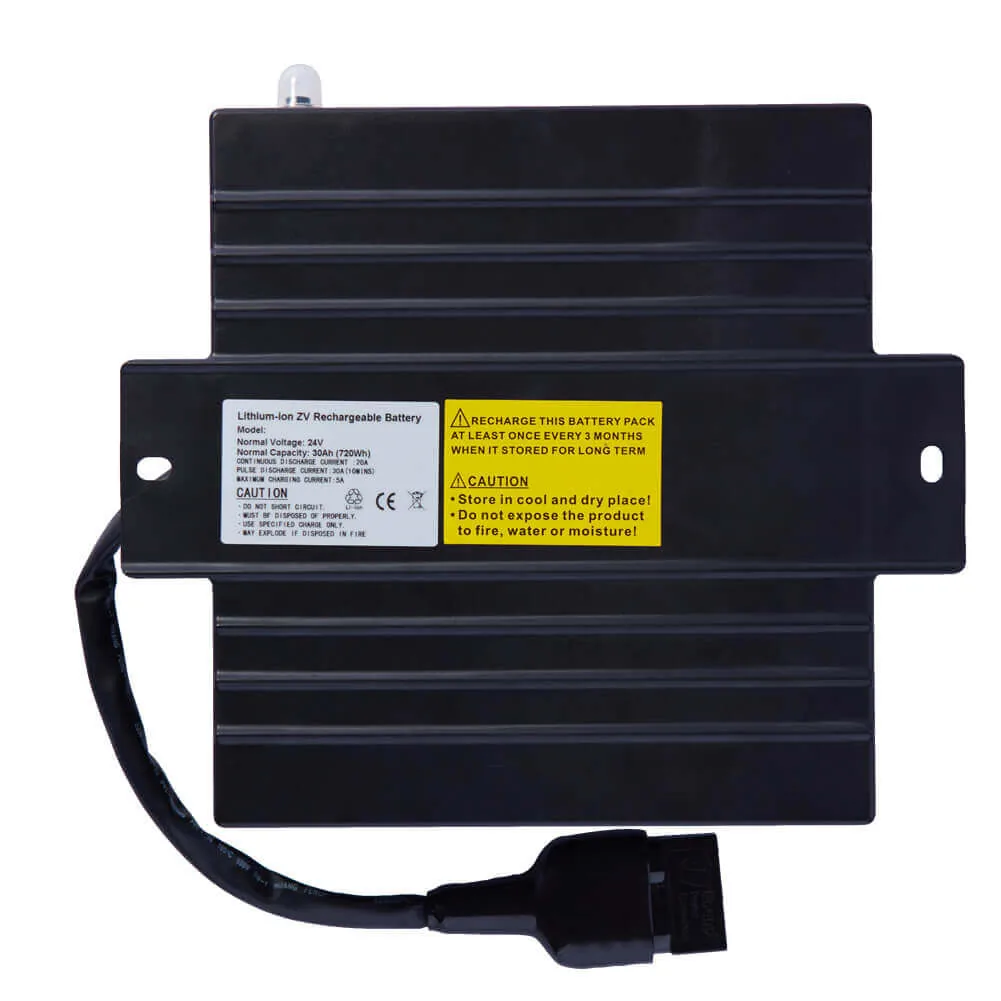
If you’re speccing wheelchairs for a catalog or a fleet, “how long do electric wheelchair batteries last” is really three questions in one: how far the chair goes per charge, how many years the battery survives, and when to budget for a replacement. The short answer: a quality lithium pack typically delivers 800–1,000+ charge cycles — roughly 3–5 years of daily use — while a lead-acid set manages 300–500 cycles, about 1–2 years. This guide unpacks those numbers into decisions your buyers can act on.
What Does “How Long a Wheelchair Battery Lasts” Actually Mean?
Buyers use the phrase loosely, and the confusion costs money. “Lasts” can mean range per charge, service life before replacement, or charge cycles — a battery that “lasts all day” in a showroom demo may still need replacing after 18 months of daily discharge. Answer with all three numbers: range per charge, calendar life for their usage pattern, and the cycle rating of the chemistry.
Why do buyers confuse range with lifespan?
Range answers “will it get me through the day”; lifespan answers “when do I buy the next one.” End users care about the first; distributors and fleet managers must care about both. Train your sales team to separate them in conversation and most battery complaints disappear.
Which number should you quote first in a catalog?
Lead with range per charge — the number buyers compare — and put lifespan in the specifications table beside it. Our model pages carry both. For how battery weight and capacity shape range, see our folding wheelchair weight guide.
Key Takeaway
Three numbers, not one: range per charge, calendar life, cycle life. Quote all three or the buyer fills the gaps with guesses.
Measure
What it answers
Lithium typical
Lead-acid typical
Range per charge
Will it last the day?
15±3 km (EW1000)
Varies by model
Calendar life
When do I replace it?
3–5 years
1–2 years
Cycle life
How many recharges?
800–1,000+
300–500
How Many Charge Cycles Does Each Wheelchair Battery Chemistry Give You?
One “cycle” means one full discharge-and-recharge; partial top-ups count proportionally, so two 50%-to-full charges equal roughly one cycle. Quality lithium packs deliver 800–1,000+ cycles before capacity fades noticeably; lead-acid sets manage 300–500 under the same daily use. Charged once daily, that is 3–5 years for lithium and 1–2 for lead-acid — lighter use stretches both.
Cell quality, balancing electronics, and charger profile all move the number: a lithium pack with proper balancing and a matched charger reaches the top of the range; a no-name pack on a generic charger falls short. Our lithium vs lead-acid comparison breaks down where each chemistry earns its keep.
Do partial charges use up cycles faster?
No — lithium prefers partial charges: topping up from 60% to full costs roughly half a cycle. Lead-acid is the opposite and wants a full recharge after every use to fight sulfation. The habit that suits one chemistry punishes the other.
Why do same-chemistry batteries last differently?
Cell quality, balancing electronics, and charger profile. This is why we ship matched chargers — 2A and 5A versions for each chemistry — with every model instead of leaving the pairing to chance.
Key Takeaway
Quote cycles, not just years: 800–1,000+ for lithium, 300–500 for lead-acid. Then translate into calendar life using the buyer’s actual usage frequency.
Battery type
Cycle life
Daily-use life
Light-use life
Lithium-ion
800–1,000+ cycles
3–5 years
5+ years
Lead-acid
300–500 cycles
1–2 years
2–3 years
How Long Will the Battery Last Per Charge on a Full Day Out?
Range per charge is what end users feel, and the number most distorted by optimistic marketing. Our EW1000 is rated 15±3 km on its 24V 10Ah lithium pack — rider weight, terrain, speed, and temperature all move the real figure. A 100 kg rider on winter ramps gets less than a 60 kg rider on flat mall floors; both are honest readings of the same battery.
The practical test: will it cover a full day of the customer’s routine? Map the chair against a typical day and check the round trip against rated range with a 20–30% margin. Anything tighter produces “battery doesn’t last” complaints that are really range-planning failures.
What drains range fastest in real use?
Hills and heavy riders cost the most, then speed, then cold weather. When a buyer says range is short, ask about terrain before blaming the battery.
How should you test range before committing to an order?
Run one unit through your own worst-case day, not the showroom loop. Load it to rated capacity, drive your actual routes, and log distance against the gauge. One honest test day tells you more than any brochure figure.
Key Takeaway
Treat rated range as a centerline with a ±20% band, and plan the buyer’s day inside the lower edge. Margin is what makes a battery “last the day.”
Factor
Effect on range
Who feels it most
Rider weight near capacity
−15–25%
Heavy-duty users
Hills and ramps
−20–30%
Hilly-city buyers
Cold weather
−10–20%
Northern markets
High cruising speed
−10–15%
Outdoor users
What Kills a Wheelchair Battery Before Its Time?
Most premature battery deaths are habit problems. Deep discharge is the classic killer: running lead-acid flat repeatedly can halve its already shorter life, since sulfation begins within hours. Lithium tolerates partial discharge better but ages fast when stored fully charged in heat.
The charger is the other silent killer. A lead-acid charger on a lithium pack — or vice versa — applies the wrong voltage profile and damages cells with every use; it also voids the warranty, which covers the pack as shipped with its matched charger. As Battery University’s lithium guide explains, keeping lithium away from full-charge storage and heat is the single biggest lever on its lifespan (Battery University: How to Prolong Lithium-based Batteries).
Which mistake do distributors see most often?
Demo chairs left discharged after exhibitions, and stock units sitting unsold for months without a maintenance charge. Both are preventable with one rule: no chair sits more than 60–90 days without a charge check. A dead-on-arrival battery is a warehouse routine failure wearing a warranty claim’s clothes.
Within the battery’s rated current, no. A 5A charger on a pack rated for it refills in about 2 hours without penalty — charging time is simply capacity divided by current. Damage comes from exceeding the rated current or using the wrong chemistry profile. Our battery chargers come in matched 2A and 5A versions for each chemistry precisely to remove this failure mode.
Key Takeaway
Batteries rarely die of old age; they die of neglect. Deep discharge, heat, wrong chargers, and forgotten stock account for most early failures.
Killer
Hurts lithium
Hurts lead-acid
Prevention
Deep discharge
Moderate
Severe — sulfation
Recharge after every use
Heat + full-charge storage
Severe
Moderate
Store cool, lithium at ~50%
Wrong charger chemistry
Severe
Severe
Matched charger only
Neglected stock for months
Severe
Severe
Charge check every 60–90 days
How Can You Make a Wheelchair Battery Last Longer?
The good habits are boring, which is why they work. Lithium: recharge after use, don’t obsess over 100% — partial charges are fine and gentler — and keep the pack out of heat. Lead-acid: full recharge after every use, terminals clean and tight, never discharged overnight. One sentence per chemistry on a card in the box saves more warranty money than any engineering tweak.
Temperature deserves its own line in buyer guidance: both chemistries lose usable capacity in the cold and age faster in heat. On the heat side specifically, see how heat affects electric wheelchair batteries. A chair in an unventilated container yard in summer is aging its battery whether used or not — hot-climate distributors should rotate stock faster and store packs indoors.
What is the one habit worth teaching every end user?
“Plug it in when you get home” — charge after every outing, don’t wait for red. That one routine adds months to lead-acid and years to lithium.
Should buyers carry a spare battery?
For travel and heavy daily users, yes — a genuine upsell, not a gimmick. A spare removable lithium pack doubles the day’s range and removes range anxiety, which is why our travel models use removable packs. For fleets, spares also smooth the charging rotation: one set charges while the other works. Our spare parts program stocks packs and matched chargers at the same terms as chairs — 1pc MOQ, 7-day lead time after payment.
Key Takeaway
Longevity is a routine, not a feature: charge after use, respect temperature, match the charger. Teach it once and it pays for years.
Habit
Lithium effect
Lead-acid effect
Effort
Charge after every use
Extends cycles
Prevents sulfation
Plug in daily
Avoid heat storage
Major life gain
Moderate gain
Store indoors
Matched charger always
Required
Required
Ship pairs together
Spare pack for heavy users
Doubles range
Doubles range
Stock one extra
How Should You Store Wheelchair Batteries Between Uses?
Storage is where most batteries die prematurely, and it is the part of battery life distributors control most directly. Store lithium at 40–60% charge in a cool, dry place, checking every couple of months. Store lead-acid fully charged and top it up regularly — never leave it discharged, since sulfation starts within hours.
Demo and stock units deserve the same discipline: a simple log and rotation so no chair sits 60–90 days without a charge check. A demo chair with a faded battery sells against itself.
What about seasonal storage for end users?
Same rules, scaled down. Before a season of non-use: charge to the right level (half for lithium, full for lead-acid), disconnect if the chair allows it, and set a reminder to check every 6–8 weeks. Two minutes per check is the entire cost of avoiding a dead battery in spring.
Do batteries self-discharge in storage?
Yes — a few percent per month for lithium, faster for lead-acid. That is why “store and forget” fails: a pack at 50% in autumn can drift into deep-discharge territory by spring. The check schedule is the whole game.
Key Takeaway
Storage discipline is a distributor’s cheapest warranty insurance: right charge level, cool location, logged checks every 60–90 days.
Storage rule
Lithium-ion
Lead-acid
Check rhythm
Charge level
40–60%
100%
At storage time
Location
Cool, dry, indoors
Cool, dry, indoors
—
Top-up
Every 2–3 months
Monthly
Logged
Max idle without check
90 days
60 days
Strict
When Is It Time to Replace a Wheelchair Battery?
Range fade is the first and most reliable signal: the chair that ran a full day now needs a midday top-up. Next come longer charging times and the gauge dropping suddenly from half to red. The industry’s standard replacement threshold: a 20% drop in range against the original figure.
Fleet buyers should log range per charge quarterly — a simple spreadsheet turns replacement from an emergency into a scheduled purchase. For individual buyers: if the chair no longer covers its normal day, the battery is done, regardless of the calendar. Age alone is a poor trigger; usage is what counts.
Can a fading battery be revived?
Rarely, and never reliably. Equalization can recover a little from mildly sulfated lead-acid; a calibration cycle sometimes resets a confused lithium gauge — but neither restores lost cycles. Spend the money on the replacement instead, and recycle the old pack.
Should you replace both batteries in a pair at once?
Yes — always replace lead-acid sets as a matched pair. Mixing old and new forces the new one to compensate, dragging both down. Lithium packs are single units in our chairs, so the question doesn’t arise.
Key Takeaway
Replace on the 20% range-drop signal, not on age. Log range quarterly and replacement becomes a planned purchase, not a crisis.
Signal
What you see
Action
Range down ~20%
Midday top-ups needed
Order replacement
Gauge drops suddenly
Half to red in minutes
Replace soon
Charging takes much longer
Overnight no longer enough
Replace soon
Swelling or damage
Visible pack deformation
Stop use, replace now
How Does Battery Lifespan Affect Your Total Cost of Ownership?
This is where lifespan becomes a purchasing argument. Lead-acid costs less upfront — but two to three replacements over five years plus swap labor flips the lifetime cost. Lithium: higher initial outlay, then years of near-zero maintenance with no mid-life replacement.
Quote three numbers, not one: the battery price, the expected replacement count over the chair’s service life, and the labor or downtime per swap. On cost per year of service, lithium typically breaks even around year two to three in daily use. Our heavy-duty models offer both chemistries factory-fitted so buyers can run this math against their own use case.
Where does lead-acid still win the cost argument?
Light, occasional use — a few hours a week — where the battery ages out before it cycles out. It also wins where buyers replace batteries themselves from local stock: no shipping, no waiting. For budget fleets with in-house maintenance, that simplicity has genuine value.
How do you present this to a price-sensitive buyer?
Don’t argue against their budget — segment it. Show the five-year number beside the unit price: lead-acid is cheaper to buy, lithium is cheaper to own. An informed choice means fewer disputes later.
Key Takeaway
The five-year number closes deals the unit price can’t: one lithium pack outlasts two to three lead-acid sets, and the crossover usually lands in year two or three.
Cost view
Lead-acid (5 years)
Lithium (5 years)
Winner
Battery purchases
2–3 sets
0–1 packs
Lithium
Maintenance labor
Regular checks
Near zero
Lithium
Downtime per swap
Repeated
Rare
Lithium
5-year total, daily use
Higher
Lower
Lithium
What Should Distributors Tell Buyers About Battery Lifespan?
Tell the truth in the buyer’s language and the battery becomes a trust-builder, not a complaint source. “Rated for about 1,000 charges — roughly four years of daily use — and here’s how to get all of it” beats any chemistry lecture; for lead-acid: “about 400 charges, plan one replacement in year two, cheap and easy to swap locally.” Put it in writing with every order: a one-page care sheet in the box, replacement-rhythm numbers in your quotes. Also flag the travel paperwork: lithium packs fly with UN38.3 documentation — ours ship with it — and our models are designed for air travel with the standard caveat that airline approval is always required, per our airplane guide.
How do you handle the “battery died in 8 months” complaint?
Ask three questions first: what charger was used, how was it stored, how deeply was it discharged? The answers usually reveal the cause — and your care sheet proves the guidance was given. Warranty covers manufacturing defects for 12 months; it cannot cover neglect.
What should your first battery-related order include?
Spare packs and matched chargers with your first container — batteries are the highest-turnover spare part in this industry, and shelf stock is a service advantage competitors can’t copy overnight.
Key Takeaway
Document lifespan honestly — care sheet in the box, replacement rhythm in the quote — and the battery stops being a risk and starts being a reorder driver.
Buyer type
What to promise
What to document
Daily home users
Lithium 3–5 yrs; lead-acid 1–2 yrs
Care sheet in the box
Travel retail
Removable pack + UN38.3 docs
Airline approval caveat
Rental fleets
Cycle counts + spare rotation
Quarterly range logs
Budget / institutional
Low upfront + local replacement
Replacement budget line
Conclusion
How long do electric wheelchair batteries last? Lithium: 800–1,000+ cycles, three to five years of daily service. Lead-acid: 300–500 cycles, one to two years. But the spec-sheet number is only the starting point — charging habits, storage discipline, temperature, and the right matched charger decide how much of that lifespan your buyers actually get.
We build for the full picture: lithium standard on travel and premium models like the EW1000 and EW100, both chemistries factory-fitted on heavy-duty models, matched 2A/5A chargers for each, and every battery covered by a 12-month warranty. Building a wheelchair catalog for 2026? Tell us your buyers’ usage patterns — we’ll spec the battery life to match, at 1pc MOQ and 7-day lead time after payment.
Frequently Asked Questions
How often should I charge my electric wheelchair battery?
After every use — don’t wait for the gauge to go red. Lithium handles partial top-ups happily; lead-acid needs a full recharge after each outing to prevent sulfation.
Can I leave my wheelchair battery on the charger overnight?
With the correct matched charger, yes — modern chargers taper or cut off when full. The risk isn’t overnight charging; it’s the wrong charger or a damaged pack.
Why does my wheelchair battery die faster in winter?
Cold temporarily reduces usable capacity — expect 10–20% less range on cold days. It isn’t permanent damage; capacity returns as the battery warms. Charge and store indoors in winter.
How do I dispose of an old wheelchair battery?
Through proper battery recycling — never household waste. Most battery shops take back lead-acid; lithium packs go to e-waste or battery recyclers.
Do ZVCARE wheelchair batteries come with a warranty?
Yes — every battery, lithium or lead-acid, carries a 12-month warranty across all models, covering manufacturing defects.
About Our Company
Since 2015, our company has focused on electric wheelchairs, building practical mobility solutions for distributors and medical stores worldwide.
Our specialized focus has led to collaborations with industry leaders and experts to develop products that truly understand and meet the needs of our discerning clients.