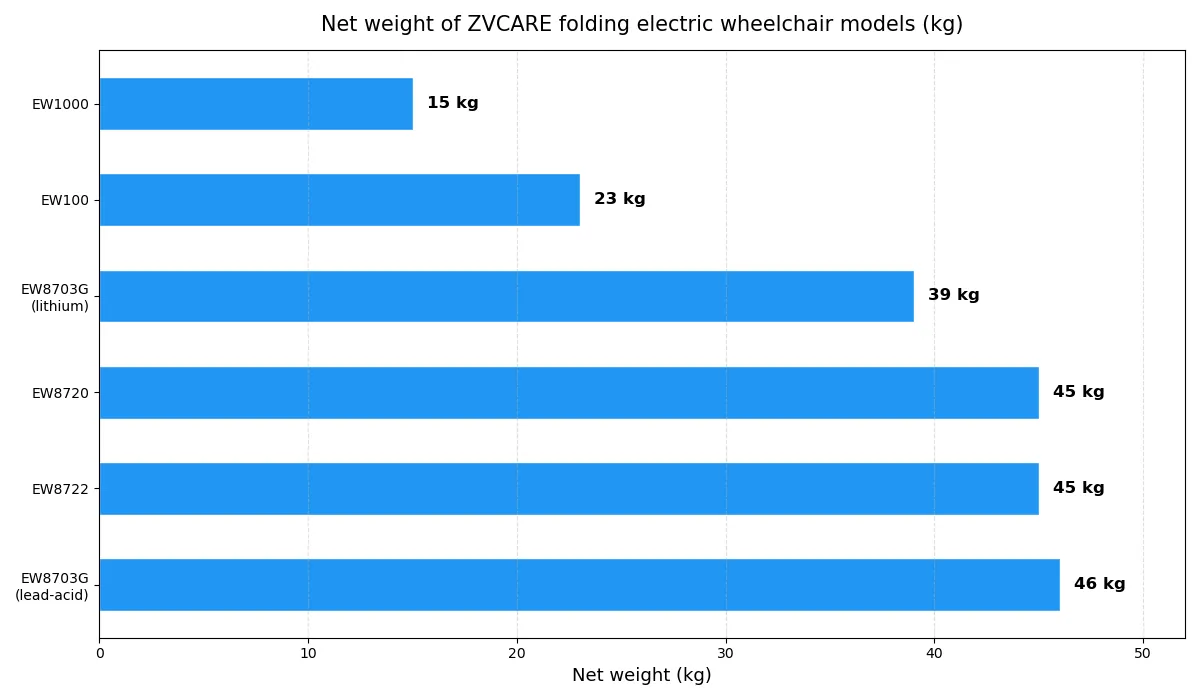
If you’re asking how much does a folding electric wheelchair weigh, here’s the honest range: 15 to 46 kg (33 to 101 lbs), depending on frame material, battery type, and comfort hardware. That spread decides freight cost, liftability, and market segment for each model.
How Much Does a Folding Electric Wheelchair Weigh? The Short Answer
A folding electric wheelchair typically weighs 15 to 46 kg net — carbon-fiber travel models like our EW1000 at 15 kg including the battery at the light end, full-featured comfort models at 39–46 kg at the heavy end. Most of the market falls into three clear bands.
However, the number on the spec sheet is only half the story. Two chairs can both claim “lightweight” while differing by 8 kg — a full carry-on bag. Therefore, always read weight together with what’s included and what the chair is built to do.
What counts as ultralight in 2026?
In this segment, ultralight means 15–20 kg net — a carbon-fiber frame with a compact lithium pack. Our EW1000 hits 15 kg including the battery, so one adult can lift the folded chair into a car trunk without help.
Where does the middle of the market sit?
The mainstream travel band is 20–28 kg — typically aluminum frames with lithium batteries, like our EW100 at 23 kg, balancing price, durability, and portability. Above 35 kg you’re in comfort territory: bigger seats, stronger motors, and suspension.
Key Takeaway
Pin every model to one of the three weight bands before comparing prices — a “cheap” 45 kg chair and a “cheap” 23 kg chair are not competing products.
| Weight band | Typical net weight | Example | Best for |
|---|---|---|---|
| Ultralight | 15–20 kg | EW1000 (15 kg) | Travel retail, airline-friendly catalogs |
| Travel mainstream | 20–28 kg | EW100 (23 kg) | General distributors, rental fleets |
| Full-featured comfort | 38–46 kg | EW8703G / EW8720 / EW8722 | Comfort-first buyers, longer daily use |
Why Do Folding Electric Wheelchair Weights Vary So Much?
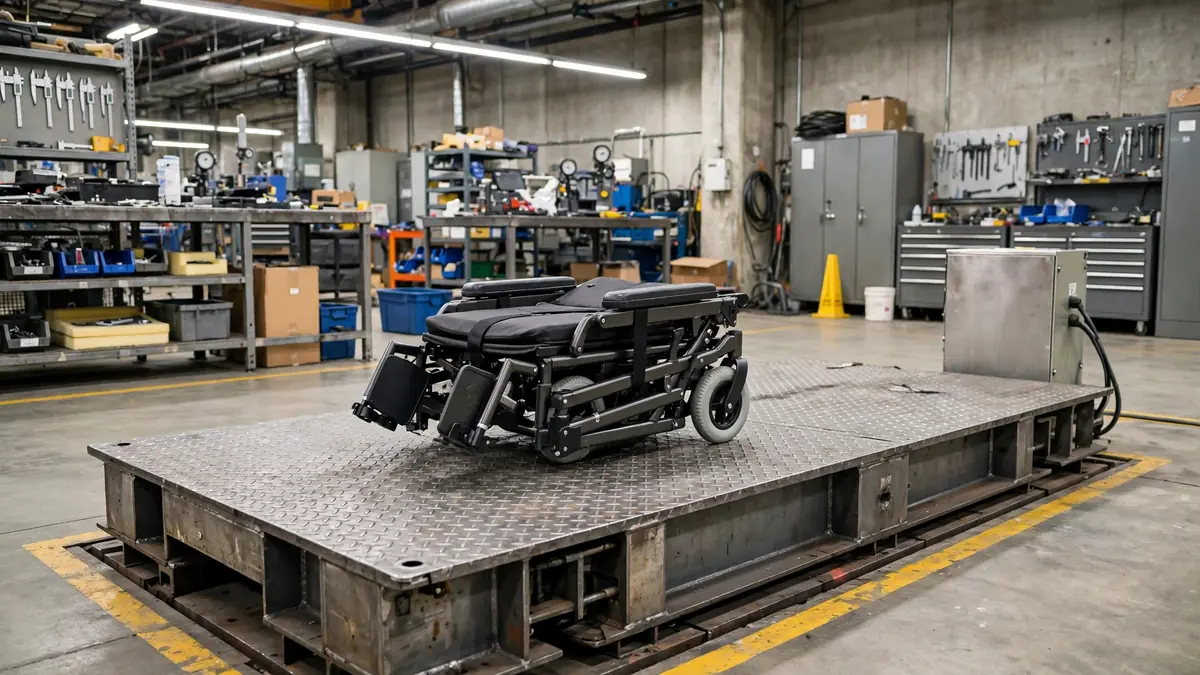
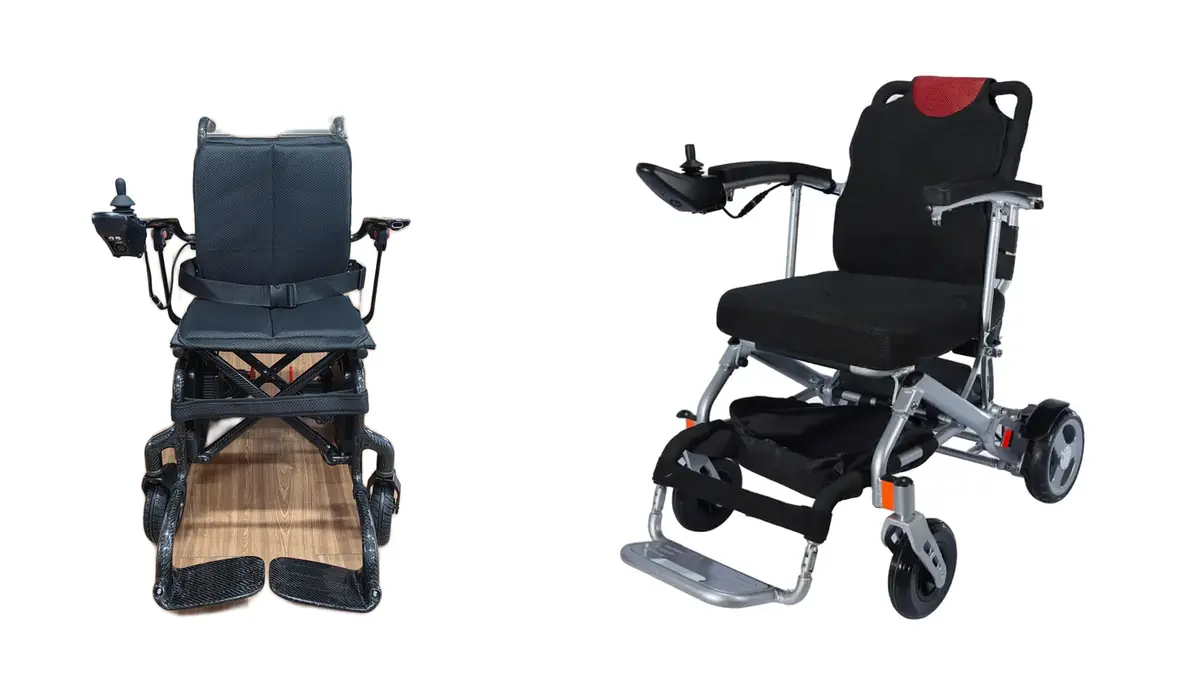
Frame material is the single biggest lever: the carbon-fiber EW1000 weighs 15 kg while the aluminum EW100 weighs 23 kg — an 8 kg gap from the frame alone. Our carbon fiber vs aluminum comparison breaks down cost, feel, and durability side by side.
Beyond the frame, the drive system and comfort hardware make up the rest: dual 250W motors, controller, wiring, and battery pack form a fixed baseline, then seating, armrests, suspension, and larger wheels stack on top to reach 45 kg.
How much weight does frame material actually save?
Switching from aluminum to carbon fiber typically saves 6–8 kg — the difference between a one-person and a two-person lift. Steel frames, still common in budget models, add another 5–10 kg over aluminum.
What else adds kilos besides the frame?
After the frame, motors and batteries contribute the most, followed by seating — a padded captain’s seat with adjustable armrests can weigh twice as much as a basic sling seat. In addition, suspension, larger rear wheels, and anti-tip hardware each add a little, and “a little” five times over becomes the gap between 23 and 45 kg.
Key Takeaway
When two quotes differ wildly on weight, compare frame material first, comfort hardware second — the truth is in those two spec-sheet lines.
| Frame material | Typical chair weight | Trade-off |
|---|---|---|
| Carbon fiber | 15–20 kg | Lightest; higher unit cost |
| Aluminum alloy | 20–28 kg | Best balance of weight, cost, durability |
| Steel / comfort builds | 38–46 kg | Heaviest; most seating comfort, lowest frame cost |
How Much Weight Does the Battery Add to an Electric Wheelchair?
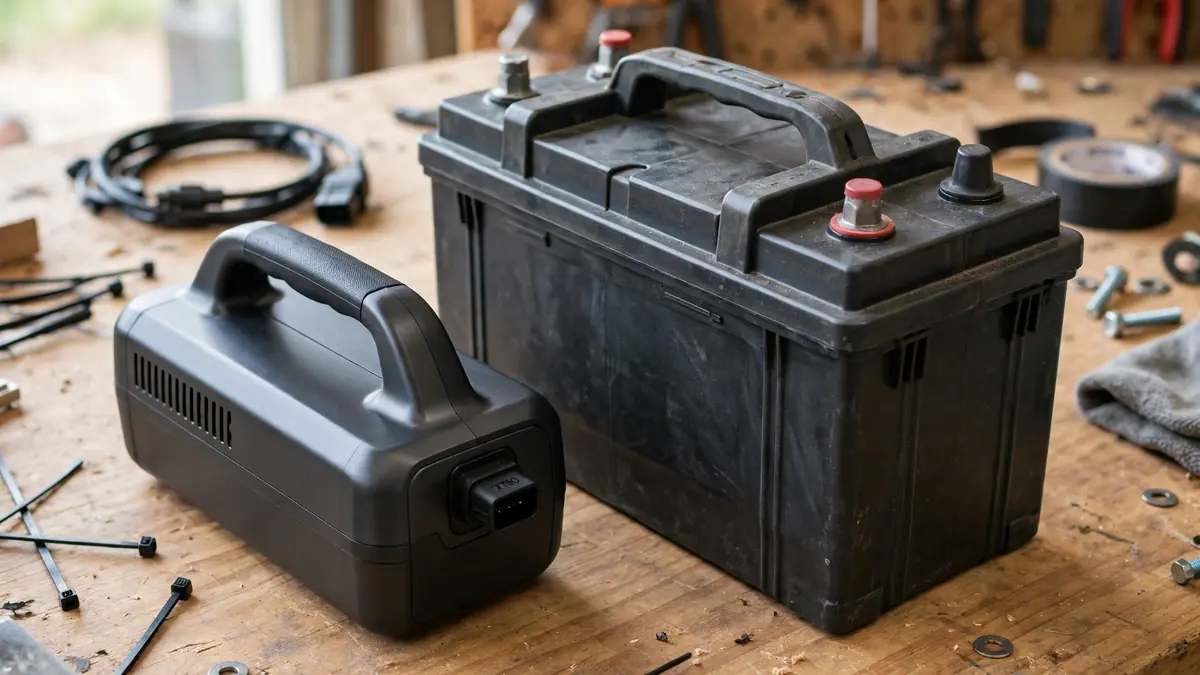
The battery is the second-biggest weight lever after the frame, and the one buyers most often underestimate. Proof from our own lineup: the EW8703G weighs 46 kg with lead-acid batteries and 39 kg with the optional lithium pack — 7 kg from battery chemistry alone.
In addition, battery weight shapes daily use, not just the spec sheet. A removable lithium pack lets your customer lift the battery out for charging instead of moving the whole chair to a socket — one detail that cuts “too heavy to use” complaints significantly.
Why do two batteries of the same voltage weigh so differently?
Lead-acid and lithium packs can deliver the same 24V while weighing several times apart — it’s pure chemistry. Lead-acid is mature, cheap, and heavy; lithium-ion packs far more energy per kilogram, which is why every serious travel model ships with lithium as standard.
When does lead-acid still make sense for your buyers?
Nevertheless, lead-acid still wins where replacement cost and local availability matter more than portability — cheaper to replace and widely stocked, suiting budget fleets and regions with limited lithium servicing.
Key Takeaway
If a model’s weight surprises you, check the battery line first — on the EW8703G, that one line is worth 7 kg.
| Battery type | Weight impact | Cost & availability | Travel note |
|---|---|---|---|
| Lithium-ion | Light; removable packs | Higher upfront, long cycle life | Standard for travel models |
| Lead-acid | Heavy (+7 kg on EW8703G) | Cheaper replacements, widely stocked | Fine for local-use fleets |
Net Weight vs Gross Weight: Which Number Should You Trust on a Spec Sheet?
Net weight is the product as your customer uses it; gross weight is the product packed for shipping — 23 kg versus 26 kg on our EW100, the 3 kg gap being carton, foam, and accessories box. Mixing them up is a common quoting mistake among new buyers.
Therefore, use net weight for end-customer lifting claims and gross weight for freight quotes — first confirming whether the net figure includes the battery (ours do: every published net weight is measured with the battery installed).
What does “net weight” actually include?
In principle, net weight means the complete chair, ready to ride: frame, motors, controller, seating, and battery. Some suppliers quietly exclude the battery or armrests to print a lower number — if the net weight looks too good for the feature list, something was left out.
Why does gross weight matter more for freight quotes?
Forwarders price air freight on chargeable weight and sea freight partly on volume — both start from the packed unit. Quoting freight on net weight understates landed cost by the packaging weight on every unit: on 100 units, that “small” 3 kg gap becomes 300 kg of unbudgeted freight.
Key Takeaway
Net weight sells the chair; gross weight prices the shipment. Get both in writing before you sign anything.
| Model | Net weight | Gross weight | Use net for | Use gross for |
|---|---|---|---|---|
| EW1000 | 15 kg | — | Customer lifting, airline handling | Ask us for packed specs |
| EW100 | 23 kg | 26 kg | Portability claims | Freight quotes |
| EW8722 / EW8720 | 45 kg | 48 kg | Handling guidance | Freight quotes |
How Does Wheelchair Weight Affect Your Shipping Costs?
Weight drives the freight bill directly whenever you fly goods. Air freight is priced per chargeable kilogram, so a 15 kg chair costs roughly a third of a 45 kg chair to air-ship — a difference that can decide whether air freight is viable at all. For sea freight the math shifts: forwarders care more about folded carton volume, though weight still matters for port handling and inland trucking.
In practice, smart buyers get two numbers from the factory before quoting customers: gross weight and folded carton dimensions — enough for a forwarder to price air, sea, and courier accurately. Our lightweight model range exists because distributors who run this math find lighter chairs unlock cheaper, faster shipping.
When does weight drive the freight bill?
Specifically, anytime you ship by air or express courier, weight is the dominant cost factor — samples, urgent restocks, and spare-parts-plus-unit combos almost always fly, and that’s where a 15 kg model earns its premium. For full-container sea shipments, folded size usually matters more, so compare carton dimensions first.
How do smart buyers quote freight on heavier models?
They quote on gross weight and packed volume together, get the exact carton spec before committing to a retail price, and check whether the battery ships installed or separately — dangerous-goods handling can add surcharges.
Key Takeaway
For air shipments, every kilogram saved is money saved per unit — weight is a freight strategy, not just a product feature.
| Shipping mode | How weight affects cost | What to ask the factory |
|---|---|---|
| Air / express | Directly per kg | Gross weight per carton |
| Sea (FCL) | Secondary to volume | Folded carton dimensions |
| Last-mile courier | Dimensional + actual weight | Single-unit packed specs |
Can Your Customer Actually Lift a Folding Electric Wheelchair?
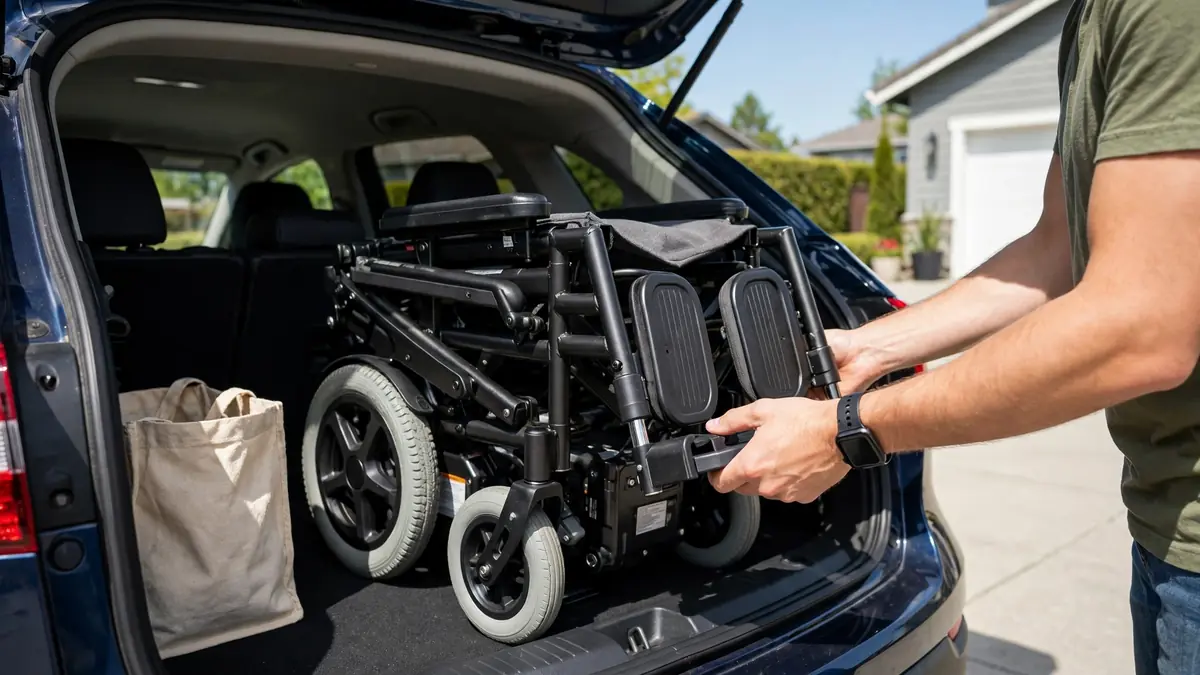
This is the question your retail customer asks in the showroom. As a practical rule: up to 20 kg, one adult can lift a folded chair into a car trunk; 20–30 kg needs two people or a strong caregiver for short lifts; at 39–46 kg, plan for a ramp or vehicle lift — not laboratory figures, but what actually happens in parking lots.
Weight also matters at the airport, where handlers lift the chair — our EW1000 and EW100 are designed for air travel (airline approval required), and the lighter the chair, the smoother that goes. Per the US Department of Transportation, assistive devices don’t count toward baggage limits, though large powered chairs typically ride in the cargo hold; our airplane travel guide covers the battery rules in detail.
What can one person realistically handle?
One adult can comfortably handle a folded chair up to about 20 kg — our 15 kg EW1000 is the textbook case. Between 20 and 30 kg, most people manage short lifts but won’t enjoy doing it daily. Be honest with buyers: a chair that’s technically “liftable” but unpleasant to lift generates returns.
When should you plan for a vehicle lift instead?
At 39 kg and above, plan around ramps or vehicle lifts instead of lifting. The 45 kg comfort models are bought for seating and ride quality, not trunk portability — fine, as long as your customer knows it before ordering. Matching handling expectations to the weight tier prevents the most common post-sale complaint in this category.
Key Takeaway
Sell the lifting reality, not the brochure number — a customer who knows what to expect keeps the chair; one who doesn’t sends it back.
| Weight tier | Handling reality | Typical buyer scenario |
|---|---|---|
| 15–20 kg | One-person lift into a trunk | Travel retail, elderly users with cars |
| 20–30 kg | Two-person or strong single lift | General home use, rental fleets |
| 39–46 kg | Ramp or vehicle lift recommended | Comfort-first buyers, facility use |
Does a Lighter Folding Electric Wheelchair Carry Less Weight?
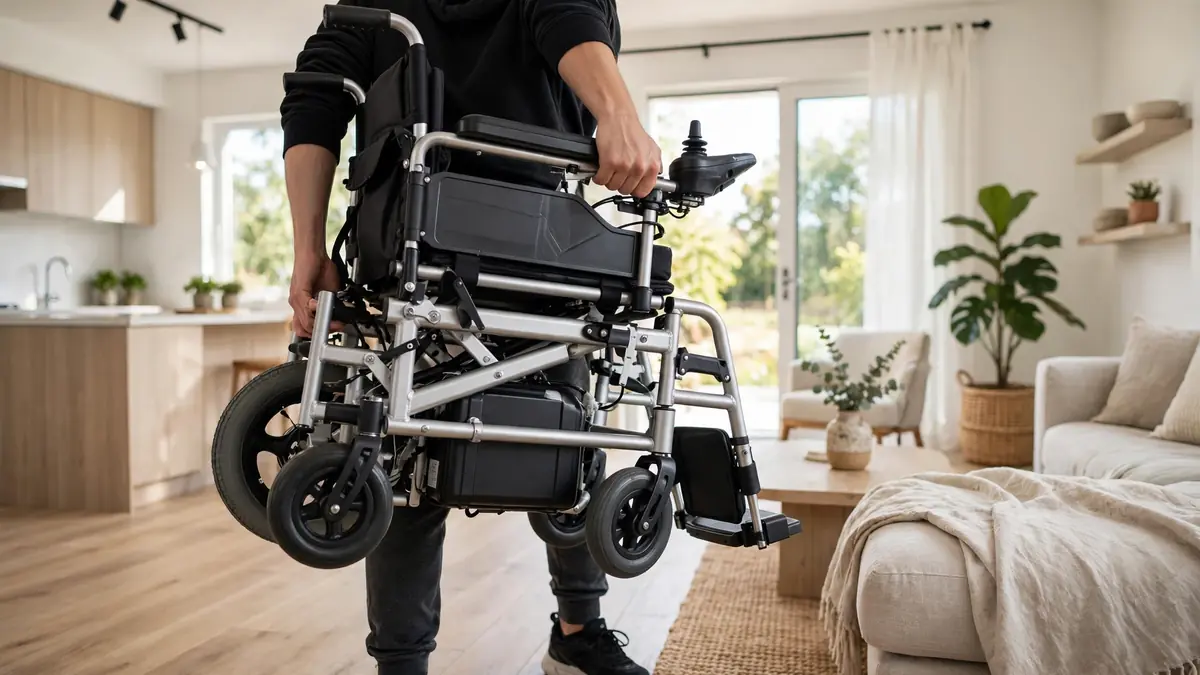
Honestly, yes — a real trade-off worth knowing precisely. Our 15 kg EW1000 supports up to 100 kg of user weight; the 45 kg comfort models support up to 125 kg. The lighter frame carries slightly less, because the engineering that removes kilos also removes some structural margin.
Nevertheless, “lighter” doesn’t mean “weak” — 100 kg covers the large majority of adult users, and every model is tested to its rated load. The trade-off only matters at the margins: if your market skews toward larger users, the heavier model’s extra 25 kg of capacity is worth more than the portability you’d give up.
How much user weight can a 15 kg chair support?
For example, our EW1000 is rated for 100 kg maximum user weight — tested, not estimated, covering most adult users worldwide. The carbon frame is engineered for that rating with margin, with the same 12-month battery, motor, and controller warranty as the rest of the range.
When is the heavier model the right call?
Choose the 45 kg class when buyers prioritize seating comfort, higher capacity, or all-day durability — the EW8722 at 45 kg / 125 kg is built for exactly that customer. Honest positioning as “the comfort choice, not the travel choice” sells more than pretending it’s light.
Key Takeaway
Match the chair’s rated capacity to your market’s users first; chase lower weight second. A chair that’s too light for its user is a warranty claim waiting to happen.
| Model | Net weight | Max user load | Frame |
|---|---|---|---|
| EW1000 | 15 kg | 100 kg | Carbon fiber |
| EW100 | 23 kg | 100 kg | Aluminum alloy |
| EW8703G (lithium) | 39 kg | 125 kg | Steel / comfort build |
| EW8720 | 45 kg | 125 kg | Steel / comfort build |
| EW8722 | 45 kg | 125 kg | Steel / comfort build |
How Do You Verify a Supplier’s Weight Claim Before You Order?
Weight is one of the easiest specs to fudge and one of the easiest to verify — a perfect honesty test for a new supplier. Ask for three things: a video of the actual unit on a calibrated scale, net weight (battery included) in the proforma invoice, and a sample you weigh yourself on arrival. A serious factory does all three without hesitation.
Watch how the supplier answers, not just what they claim. Precise answers with conditions (“23 kg net including battery, 26 kg gross”) signal a factory that measures; vague ones (“about 20 kilos”) signal one that doesn’t — or hopes you won’t check.
What should the proforma invoice say about weight?
The PI should state net and gross weight per unit, confirm whether the battery is included in the net figure, and give packed carton dimensions. These four lines protect both sides — and if a supplier resists putting weight in writing, treat that as your answer.
What does an honest factory show you?
An honest factory shows you the scale — literally. A short video of the folded chair on a floor scale, the battery beside it, and the packed carton on the same scale takes two minutes and settles every question. We do this routinely, because a verified 23 kg beats a promised 18 kg every time.
Key Takeaway
Never place a volume order on a weight claim you haven’t verified. The scale video costs the supplier two minutes; an unverified claim can cost you a container of unsellable stock.
| Green flag | Red flag |
|---|---|
| Weight stated with battery included/excluded | “About 20 kg” with no conditions |
| Scale video provided on request | Refuses to film or weigh a sample |
| Net + gross + carton size in the PI | Only one unexplained weight figure |
Which ZVCARE Model Matches Your Weight Target?
Here’s the quick picker from our verified spec sheets. For pure portability, the EW1000 at 15 kg is the lightest folding power chair we build. The aluminum EW100 at 23 kg is the volume seller for the best weight-to-price balance. For comfort over portability, the 39–46 kg models deliver bigger seating and 125 kg capacity.
In short, all five models fold and ship from our Shenzhen facility at 1 pc MOQ with 7-day lead time — weight simply decides which customer each fits. Browse the full lightweight electric wheelchair range to compare specs side by side.
Which model wins on pure portability?
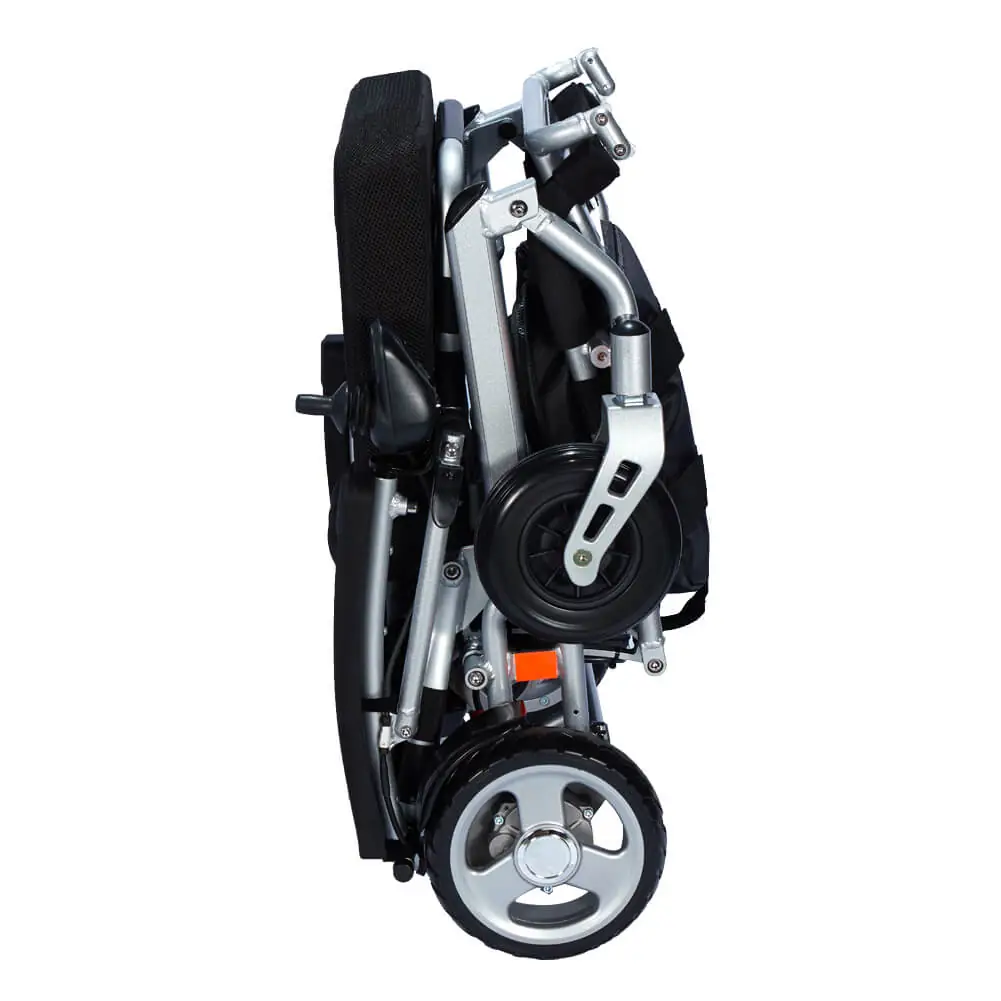
The EW1000, without contest: 15 kg including the battery, folding to 73×39×71 cm — the pick when customers fly often or lift the chair daily. The carbon frame costs more, but for travel-focused retail it’s the easiest sale in the catalog.
Which model fits comfort-first buyers?
The EW8720 and EW8722 at 45 kg, or the EW8703G at 46 kg lead-acid / 39 kg lithium — chairs for buyers who spend all day seated and rank cushioning, stability, and capacity above trunk portability. Positioned that way, the weight becomes a feature (“built solid”) instead of an objection.
Key Takeaway
Start from your customer’s lifting reality and work backward. The right weight tier chooses itself once you know who lifts the chair.
| Your priority | Model | Net weight | Why it fits |
|---|---|---|---|
| Lightest possible | EW1000 | 15 kg | One-person lift, travel retail |
| Best value portable | EW100 | 23 kg | Aluminum, 7-day lead time |
| Comfort + capacity | EW8703G | 39–46 kg | Battery choice, 125 kg load |
| Premium comfort | EW8720 / EW8722 | 45 kg | Full seating, 125 kg load |
Weight is only half the portability story — also check the folded dimensions, because a light chair that folds bulky can still miss the trunk.
Conclusion
How much does a folding electric wheelchair weigh? Between 15 and 46 kg — and now you know what moves a model up or down that range: frame material, battery chemistry, comfort hardware, in that order. You also know which number to use when (net for customers, gross for freight), how to verify a supplier’s claim, and which weight tier fits which buyer.
If you’re building your next order around weight, start with a sample: 1 pc MOQ, 7-day lead time, 36-month frame warranty plus 12 months on battery, motor, and controller. Tell us your customers’ lifting reality — we’ll match the model to it, scale video included — and our spare parts support keeps the chair you stock serviceable for years.
Frequently Asked Questions
What is a good weight for a folding electric wheelchair?
For travel and daily car transport, 15–25 kg is the sweet spot — light enough for one or two people to handle; above 35 kg, plan for ramps or vehicle lifts. Match the tier to how customers actually move the chair, not to the brochure.
Is a 15 kg electric wheelchair strong enough for daily use?
Yes, if it’s engineered for it: our 15 kg EW1000 carries a rated 100 kg user load on a carbon-fiber frame with dual 250W motors. The light weight comes from the material, not skipped structure — check the rated max load rather than judging strength by weight.
Should I advertise net weight or gross weight to my customers?
Advertise net weight (with battery) to end customers — that’s the chair they’ll lift. Use gross weight for freight quotes and landed-cost math. Publishing both, clearly labeled, is what serious B2B listings do.
How much heavier is a lead-acid battery than a lithium one?
Same chair, different battery: our EW8703G weighs 46 kg with lead-acid versus 39 kg with lithium — 7 kg from battery type alone. Lithium costs more upfront but saves weight on every lift, flight, and freight bill.
Does a heavier wheelchair last longer?
Not necessarily. Durability comes from frame engineering, component quality, and warranty backing — not from kilos. A well-built 23 kg aluminum chair outlasts a poorly built 45 kg one. Compare warranty terms (we offer 36 months on frames) instead of assuming heavier means tougher.
—