Airlines can refuse batteries above the limit. If your chair uses a larger pack, ask the manufacturer whether a smaller, travel-compliant battery option exists — many folding models offer interchangeable packs for exactly this reason.
Can I use my electric wheelchair inside the airport terminal?
Yes. You normally keep your own wheelchair through check-in and security, riding it to the gate. Airport staff provide an aisle chair for boarding, and your wheelchair is returned at the aircraft door or baggage claim on arrival.
Quick Checklist Before You Book
- Battery is lithium-ion, removable, 300 Wh or less (or 2 × 160 Wh)
- Airline notified 48+ hours ahead, confirmation saved
- Folded dimensions and weight noted
- Joystick protected, battery at 30–50% charge
- User manual packed in carry-on
Flying with a folding electric wheelchair is not a special favor airlines grant — it is a standard procedure they handle daily. The travelers who run into trouble are the ones who discover the battery rules at the check-in counter. Now you will not be one of them.
Looking for folding wheelchairs designed for air travel (airline approval required) for your market? Contact ZVCARE — we manufacture lightweight folding electric wheelchairs (carbon fiber and aluminum) with quick-release lithium batteries, available for OEM/ODM from 1 unit.
For lithium-ion batteries, no — the battery must be removed and carried into the cabin by the passenger. Sealed lead-acid (dry/gel) batteries may remain installed. Spillable wet batteries follow a separate airline handling procedure.
What if my wheelchair battery is over 300 Wh?
Airlines can refuse batteries above the limit. If your chair uses a larger pack, ask the manufacturer whether a smaller, travel-compliant battery option exists — many folding models offer interchangeable packs for exactly this reason.
Can I use my electric wheelchair inside the airport terminal?
Yes. You normally keep your own wheelchair through check-in and security, riding it to the gate. Airport staff provide an aisle chair for boarding, and your wheelchair is returned at the aircraft door or baggage claim on arrival.
Quick Checklist Before You Book
- Battery is lithium-ion, removable, 300 Wh or less (or 2 × 160 Wh)
- Airline notified 48+ hours ahead, confirmation saved
- Folded dimensions and weight noted
- Joystick protected, battery at 30–50% charge
- User manual packed in carry-on
Flying with a folding electric wheelchair is not a special favor airlines grant — it is a standard procedure they handle daily. The travelers who run into trouble are the ones who discover the battery rules at the check-in counter. Now you will not be one of them.
Looking for folding wheelchairs designed for air travel (airline approval required) for your market? Contact ZVCARE — we manufacture lightweight folding electric wheelchairs (carbon fiber and aluminum) with quick-release lithium batteries, available for OEM/ODM from 1 unit.
No. Airlines carry wheelchairs and mobility aids free of charge, in addition to your normal baggage allowance. This applies to both manual and electric wheelchairs on virtually all commercial airlines.
Can the battery stay in the wheelchair during the flight?
For lithium-ion batteries, no — the battery must be removed and carried into the cabin by the passenger. Sealed lead-acid (dry/gel) batteries may remain installed. Spillable wet batteries follow a separate airline handling procedure.
What if my wheelchair battery is over 300 Wh?
Airlines can refuse batteries above the limit. If your chair uses a larger pack, ask the manufacturer whether a smaller, travel-compliant battery option exists — many folding models offer interchangeable packs for exactly this reason.
Can I use my electric wheelchair inside the airport terminal?
Yes. You normally keep your own wheelchair through check-in and security, riding it to the gate. Airport staff provide an aisle chair for boarding, and your wheelchair is returned at the aircraft door or baggage claim on arrival.
Quick Checklist Before You Book
- Battery is lithium-ion, removable, 300 Wh or less (or 2 × 160 Wh)
- Airline notified 48+ hours ahead, confirmation saved
- Folded dimensions and weight noted
- Joystick protected, battery at 30–50% charge
- User manual packed in carry-on
Flying with a folding electric wheelchair is not a special favor airlines grant — it is a standard procedure they handle daily. The travelers who run into trouble are the ones who discover the battery rules at the check-in counter. Now you will not be one of them.
Looking for folding wheelchairs designed for air travel (airline approval required) for your market? Contact ZVCARE — we manufacture lightweight folding electric wheelchairs (carbon fiber and aluminum) with quick-release lithium batteries, available for OEM/ODM from 1 unit.
Yes — you can take a folding electric wheelchair on an airplane. Airlines accept battery-powered wheelchairs as checked mobility aids on almost every commercial flight. The part that decides whether your trip goes smoothly is not the chair itself, but the battery: its chemistry, its watt-hour rating, and whether you can remove it and carry it into the cabin. Get those three right, and flying with a folding power wheelchair is routine.
This guide covers the airline rules that actually matter, how to prepare your chair before you fly, and what to expect at the airport — whether you are a wheelchair user planning a trip, or a distributor whose customers keep asking this question.
What Do Airlines Actually Require?
Airlines follow the IATA Dangerous Goods Regulations, so the rules are broadly the same worldwide. The wheelchair itself travels in the cargo hold as checked baggage — it does not count against your normal luggage allowance, and there is no extra charge for a mobility aid. What the airline cares about is:
- Battery type. Lithium-ion, sealed lead-acid (dry/gel), and spillable lead-acid (wet) batteries each have different handling rules.
- Battery size. For lithium-ion, the limit is normally 300 watt-hours (Wh) for a single battery, or two batteries up to 160 Wh each.
- Advance notice. Most airlines ask you to declare a battery-powered wheelchair at least 48 hours before departure, so ground staff can prepare.
If your battery exceeds the limit or cannot be removed when required, the airline can refuse it. That is rare with modern folding wheelchairs — most use compact lithium packs well under 300 Wh — but it is the single most common reason for problems at check-in. The transport-safety testing behind these rules is UN38.3 — see what distributors need to know about UN38.3 for wheelchair batteries.
Lithium Battery Rules You Must Know
Lithium-ion is the standard battery in folding electric wheelchairs today, and it has the strictest — but clearest — rules:
- Remove the battery and carry it into the cabin. Lithium batteries must travel as carry-on, never in checked baggage. The terminals should be protected against short circuits (most packs have built-in covers; otherwise use tape or the original packaging).
- One battery up to 300 Wh is allowed. If your chair uses two packs, each must be 160 Wh or less.
- Check the Wh rating before you fly. It is printed on the battery label as “Wh”. If only voltage (V) and amp-hours (Ah) are shown, multiply them: V × Ah = Wh. A 24V 12Ah pack, for example, is 288 Wh — within the limit.
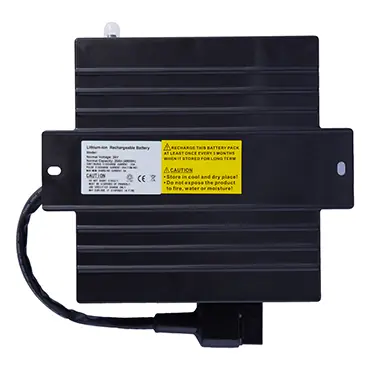
Sealed lead-acid (dry cell/gel) batteries may stay installed in the chair, and spillable wet batteries require the airline’s special handling procedure. If you are unsure which type you have, ask your supplier — this is a question distributors should be able to answer for every model they sell.
How to Prepare Your Wheelchair for a Flight
Do this the day before, not at the airport:
- Confirm the battery Wh rating and photograph the label — ground staff sometimes ask to see it.
- Practice removing and reinstalling the battery. You will do this at check-in and again on arrival; it should take under a minute.
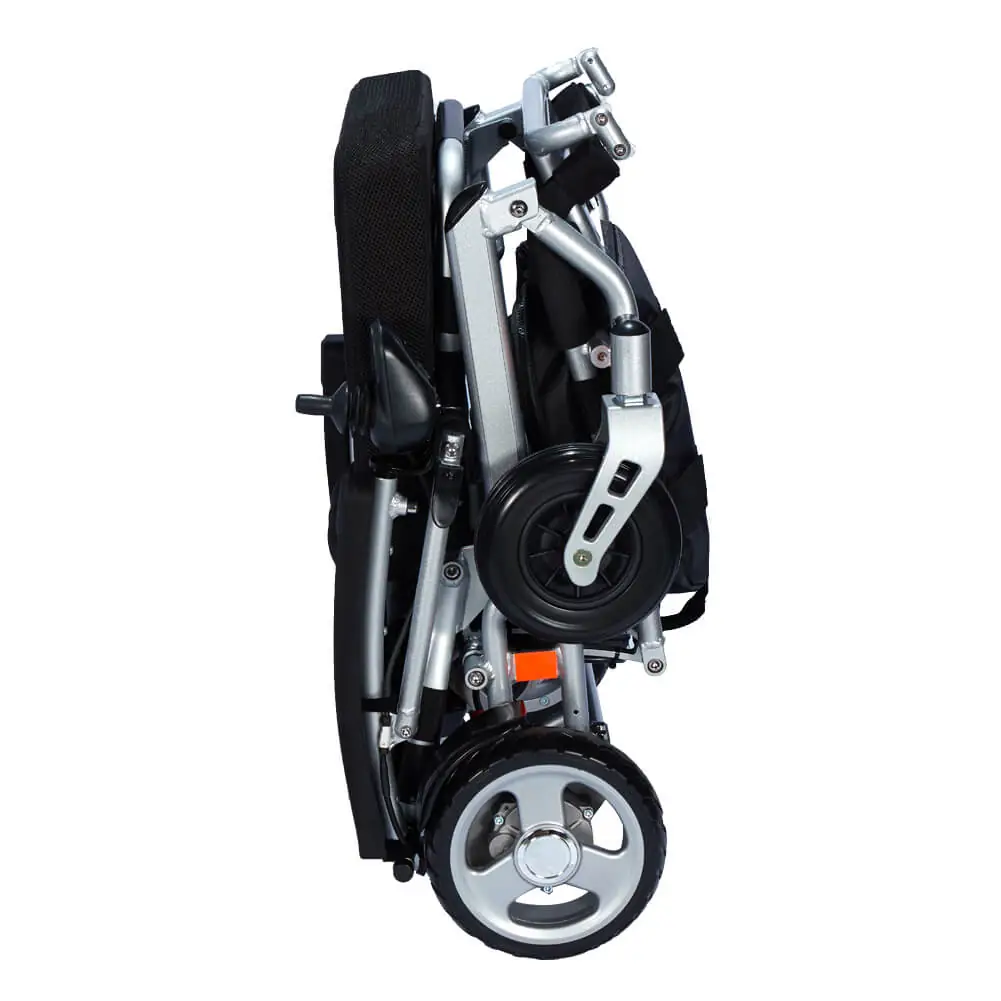
- Fold the chair and measure it. Note the folded dimensions and weight; the airline may ask when you declare it.
- Protect the joystick and armrests. A folded towel or bubble wrap prevents the most common transit damage.
- Charge the battery to 30–50%. Airlines and IATA recommend against fully charged or fully drained packs for air transport.
- Bring the user manual. It answers the ground crew’s technical questions faster than you can.
What to Tell the Airline Before You Fly
Contact the airline at least 48 hours ahead — by phone is more reliable than the booking website’s checkbox. Have this information ready:
- Wheelchair make and model, folded dimensions, and total weight
- Battery type (lithium-ion / sealed lead-acid) and Wh rating
- Whether the battery is removable (for lithium, the answer should be yes)
- Whether you need an aisle chair or assistance boarding
Ask for written confirmation — an email or a note on your booking reference. Policies are consistent under IATA, but individual staff interpretation varies, and a paper trail settles disagreements fast.
At the Airport: What Happens to Your Wheelchair
Arrive earlier than usual. At check-in, staff will tag the wheelchair, verify the battery, and confirm it is switched off with the drive disengaged. You keep the lithium battery with you through security (it goes through the X-ray in a tray, like a laptop).
You will typically stay in your own chair until the gate, then transfer to an airport aisle chair for boarding. Your wheelchair is loaded last into the cargo hold and unloaded first on arrival — in practice, allow extra time at both ends and check the chair for damage before leaving the airport. Report any issue immediately; airlines are liable for mobility equipment damaged in their care.
Which Wheelchairs Are Easiest to Fly With?
Three features make a folding electric wheelchair genuinely travel-friendly:
- Light total weight. A 15–23 kg chair is manageable for everyone involved — you, the ground crew, and the cargo loader. Carbon fiber models like the EW1000 (15 kg including battery) are built for exactly this.
- Quick-release battery. If removing the pack needs tools, every flight becomes a chore. Look for a one-motion release.
- Compact fold. The smaller the folded package, the less exposure to handling damage — and the easier it fits in a car trunk at the other end.
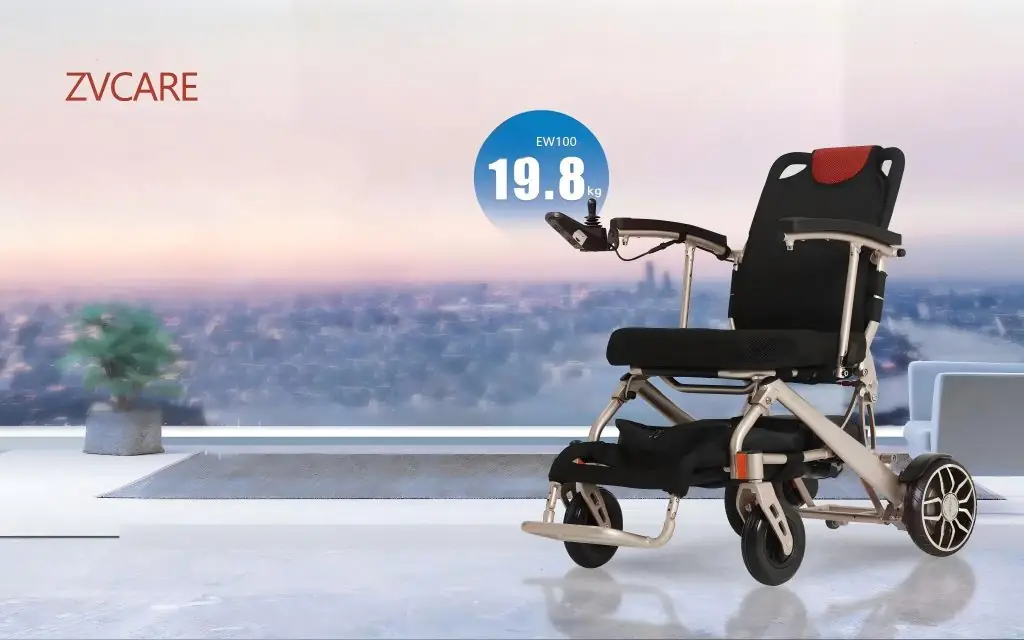
For distributors, “designed for air travel (airline approval required)” is one of the strongest selling points a folding wheelchair can have — it answers the first question many end users ask. If you stock chairs for travel-oriented customers, verify the battery Wh rating and removability for every model in your lineup, and keep that information on the product page. It prevents the exact support tickets nobody wants.
And if your customer drives to the airport, here is how to transport a folding electric wheelchair in a car.
Frequently Asked Questions
Do I need to pay extra to bring an electric wheelchair on a plane?
No. Airlines carry wheelchairs and mobility aids free of charge, in addition to your normal baggage allowance. This applies to both manual and electric wheelchairs on virtually all commercial airlines.
Can the battery stay in the wheelchair during the flight?
For lithium-ion batteries, no — the battery must be removed and carried into the cabin by the passenger. Sealed lead-acid (dry/gel) batteries may remain installed. Spillable wet batteries follow a separate airline handling procedure.
What if my wheelchair battery is over 300 Wh?
Airlines can refuse batteries above the limit. If your chair uses a larger pack, ask the manufacturer whether a smaller, travel-compliant battery option exists — many folding models offer interchangeable packs for exactly this reason.
Can I use my electric wheelchair inside the airport terminal?
Yes. You normally keep your own wheelchair through check-in and security, riding it to the gate. Airport staff provide an aisle chair for boarding, and your wheelchair is returned at the aircraft door or baggage claim on arrival.
Quick Checklist Before You Book
- Battery is lithium-ion, removable, 300 Wh or less (or 2 × 160 Wh)
- Airline notified 48+ hours ahead, confirmation saved
- Folded dimensions and weight noted
- Joystick protected, battery at 30–50% charge
- User manual packed in carry-on
Flying with a folding electric wheelchair is not a special favor airlines grant — it is a standard procedure they handle daily. The travelers who run into trouble are the ones who discover the battery rules at the check-in counter. Now you will not be one of them.
Looking for folding wheelchairs designed for air travel (airline approval required) for your market? Contact ZVCARE — we manufacture lightweight folding electric wheelchairs (carbon fiber and aluminum) with quick-release lithium batteries, available for OEM/ODM from 1 unit.