Both fly. The airline rules concern the battery (removable lithium, 300 Wh or less), not the frame material. The carbon fiber chair simply makes the whole trip easier because it is 8 kg lighter to lift at check-in and on arrival.
Can a carbon fiber wheelchair frame be repaired?
Cosmetic chips can be touched up. Structural damage to a carbon frame generally means replacing the affected part rather than welding it back — unlike aluminum, which a workshop can often straighten or re-weld. This is one practical reason rental operators usually choose aluminum.
The Bottom Line
Carbon fiber buys you lightness; aluminum buys you value and forgiveness. Neither is “better” in the abstract — the right frame is the one that matches how the chair will actually be used. If you are choosing for your product lineup rather than for yourself, the safest move is to offer both and let the customer’s use case decide.
Sourcing carbon fiber or aluminum folding wheelchairs? Contact ZVCARE — we manufacture both (EW1000 carbon fiber, EW100 aluminum alloy) with OEM/ODM customization, 1 pc MOQ, and 7-day lead time.
No. A properly built carbon frame does not snap in normal use — it handles the same rated loads as an aluminum frame. What it does not like is sharp point impacts, which can chip the surface. Treat it like a good bicycle frame, not like glass.
Which is better for air travel, carbon fiber or aluminum?
Both fly. The airline rules concern the battery (removable lithium, 300 Wh or less), not the frame material. The carbon fiber chair simply makes the whole trip easier because it is 8 kg lighter to lift at check-in and on arrival.
Can a carbon fiber wheelchair frame be repaired?
Cosmetic chips can be touched up. Structural damage to a carbon frame generally means replacing the affected part rather than welding it back — unlike aluminum, which a workshop can often straighten or re-weld. This is one practical reason rental operators usually choose aluminum.
The Bottom Line
Carbon fiber buys you lightness; aluminum buys you value and forgiveness. Neither is “better” in the abstract — the right frame is the one that matches how the chair will actually be used. If you are choosing for your product lineup rather than for yourself, the safest move is to offer both and let the customer’s use case decide.
Sourcing carbon fiber or aluminum folding wheelchairs? Contact ZVCARE — we manufacture both (EW1000 carbon fiber, EW100 aluminum alloy) with OEM/ODM customization, 1 pc MOQ, and 7-day lead time.
Pound for pound, yes — carbon fiber has a higher strength-to-weight ratio, which is how the EW1000 gets to 15 kg. But “stronger” in daily use also means surviving knocks and scratches, where aluminum’s dent-instead-of-crack behavior is more forgiving. Both frames are load-tested and carry a 36-month frame warranty.
Does a carbon fiber wheelchair break easily?
No. A properly built carbon frame does not snap in normal use — it handles the same rated loads as an aluminum frame. What it does not like is sharp point impacts, which can chip the surface. Treat it like a good bicycle frame, not like glass.
Which is better for air travel, carbon fiber or aluminum?
Both fly. The airline rules concern the battery (removable lithium, 300 Wh or less), not the frame material. The carbon fiber chair simply makes the whole trip easier because it is 8 kg lighter to lift at check-in and on arrival.
Can a carbon fiber wheelchair frame be repaired?
Cosmetic chips can be touched up. Structural damage to a carbon frame generally means replacing the affected part rather than welding it back — unlike aluminum, which a workshop can often straighten or re-weld. This is one practical reason rental operators usually choose aluminum.
The Bottom Line
Carbon fiber buys you lightness; aluminum buys you value and forgiveness. Neither is “better” in the abstract — the right frame is the one that matches how the chair will actually be used. If you are choosing for your product lineup rather than for yourself, the safest move is to offer both and let the customer’s use case decide.
Sourcing carbon fiber or aluminum folding wheelchairs? Contact ZVCARE — we manufacture both (EW1000 carbon fiber, EW100 aluminum alloy) with OEM/ODM customization, 1 pc MOQ, and 7-day lead time.
If you want the lightest chair possible, pick carbon fiber. If you want the best value and the least worry about daily knocks, pick aluminum. That is the honest answer in one sentence. The real numbers: our carbon fiber EW1000 weighs 15 kg including battery, while our aluminum alloy EW100 weighs 23 kg. That 8 kg gap drives almost every other difference between the two — price, who each one suits, and how dealers should sell them.
This guide compares the two frame materials side by side with real specifications, explains what actually matters in daily use, and helps you — or your customers — make the right choice the first time.
Carbon Fiber vs Aluminum: The Quick Comparison
| Carbon fiber (EW1000) | Aluminum alloy (EW100) | |
|---|---|---|
| Net weight (battery included) | 15 kg | 23 kg |
| Frame feel | Very stiff, almost no flex | Solid, slightly more give |
| Corrosion | Does not rust | Does not rust like steel |
| Damage behavior | Hard knocks can chip the surface | Dents rather than cracks |
| Price level | Higher | Lower |
| Best for | Travel, frequent car loading | Daily use, best value |
The Weight Difference Is the Real Difference
Frame material debates often drift into engineering theory. In practice, buyers feel exactly one thing: weight. Lifting a folded wheelchair into a car trunk, handing it to airport ground staff, carrying it up a few steps — 8 kg is the difference between doing it one-handed and needing help.
Carbon fiber earns its reputation here. It has one of the highest strength-to-weight ratios of any frame material, which is why the EW1000 reaches 15 kg including its lithium battery pack — light enough for many users to lift and load themselves. Aluminum is no heavyweight either: at 23 kg, the EW100 is still far lighter than a traditional steel power chair, and it folds to the same compact package.
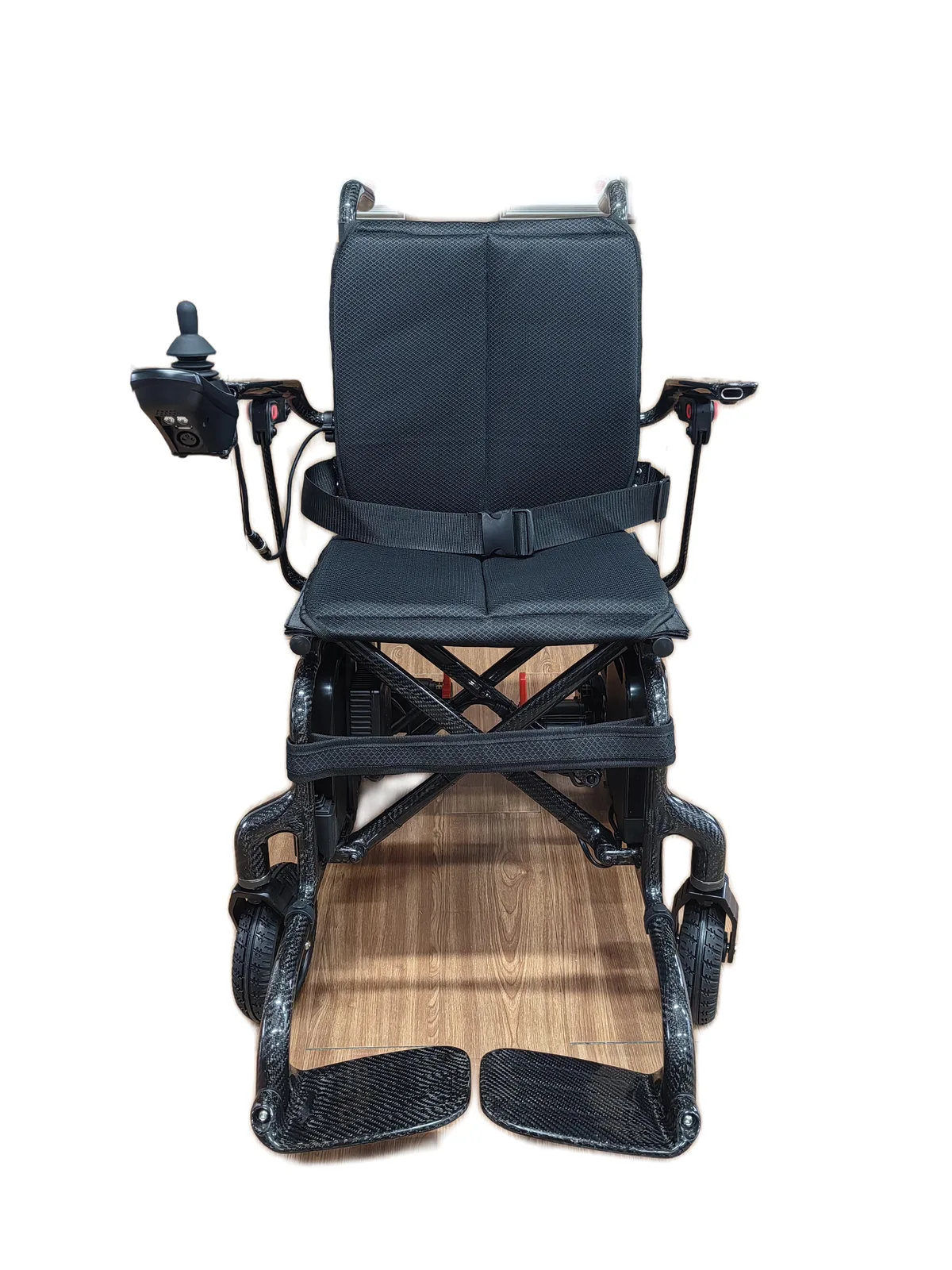
For distributors, weight is the first specification customers ask about and the easiest to demonstrate. Put both chairs side by side at a trade show and let visitors lift them — the 8 kg gap sells itself faster than any brochure.
Strength and Durability: What Actually Breaks
Both materials are more than strong enough for a wheelchair frame. Every model we ship — carbon or aluminum — is load-tested to its rated capacity before it leaves the factory, and both carry the same warranty: 36 months on the frame, 12 months each on battery, motor, and controller. The difference is not whether they hold up, but how they age.
Carbon fiber is laid up in molds and cured under heat and pressure. The result is extremely stiff — no flex, no creaks — and it never rusts. Its weakness is surface damage: a hard knock against a doorframe can chip the clear coat. That is usually cosmetic, but deep structural damage to a carbon frame normally means replacing the part, not patching it.
Aluminum alloy frames are cut, bent, and welded. Aluminum dents where carbon might chip, and a dented tube usually keeps working fine. Damage is easy to see and easy to judge, which is why rental fleets and shared-use settings tend to prefer aluminum — staff can inspect a chair in seconds.
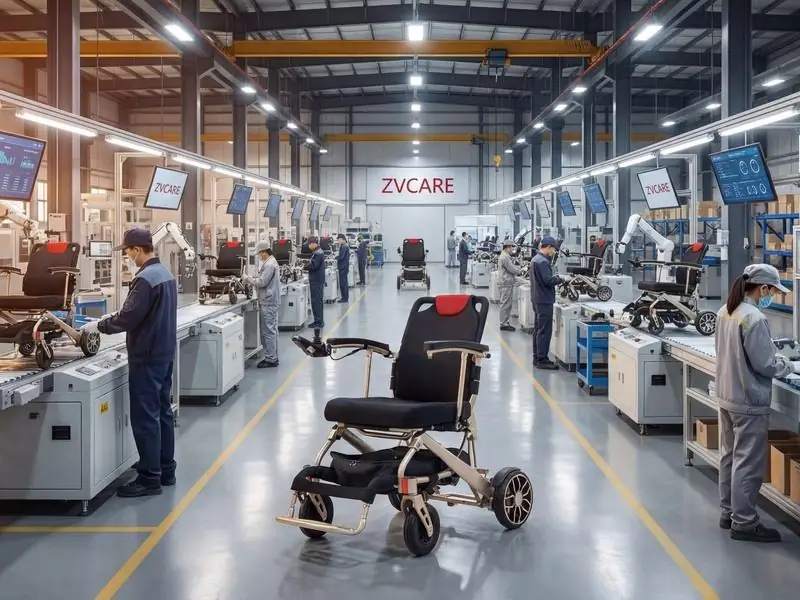
Neither material rusts the way steel does, so both are fine for humid climates and coastal markets — worth mentioning if you sell into Southeast Asia or the Middle East.
Why Carbon Fiber Costs More
There is no mystery here: carbon fiber raw material costs more than aluminum, each frame design needs its own molds, and layup is skilled manual work. Aluminum extrusion and welding are mature, fast, highly automated processes. So a carbon fiber wheelchair will always sit at a higher price point than its aluminum equivalent.
Whether that premium is worth it depends on the buyer. For an end user who flies several times a year or loads the chair into a car daily, the lighter chair pays for itself in convenience. For a dealer, the honest pitch is this: stock carbon fiber for the travel and premium segment, stock aluminum for the volume segment. Both are available from us as OEM/ODM from 1 unit MOQ with 7-day lead time after payment, so you can test both in your market without committing to container quantities.
Which One Should You Choose?
Choose carbon fiber (EW1000) if:
- You or your customer lifts the chair into a car or onto transport daily — every kilo matters.
- Air travel is frequent. Both models fly (removable lithium battery, airline-compliant), but the lighter chair is easier at every step: check-in, transfers, and loading.
- The buyer wants the premium option and understands the price.
Choose aluminum (EW100) if:
- Budget is the deciding factor — you get a folding chair designed for air travel (airline approval required) for noticeably less.
- The chair will see rough handling: rental fleets, institutions, shared family use.
- It mostly stays in one car or at home, where 8 kg makes little practical difference.
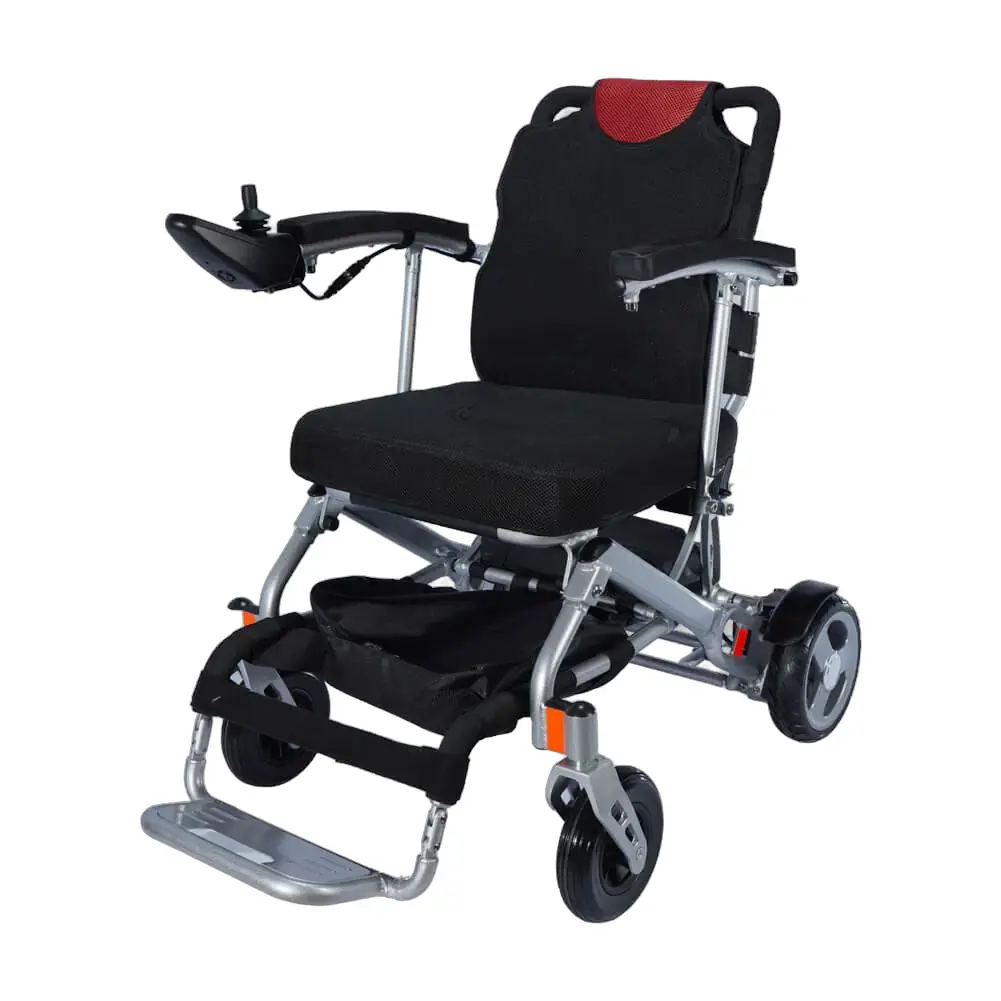
One thing both share: they are designed to fold in seconds and travel. The main difference between the two models really is the frame material — same folding concept, same removable-battery approach designed for air travel (airline approval required), same factory warranty.
Frequently Asked Questions
Is carbon fiber stronger than aluminum in a wheelchair?
Pound for pound, yes — carbon fiber has a higher strength-to-weight ratio, which is how the EW1000 gets to 15 kg. But “stronger” in daily use also means surviving knocks and scratches, where aluminum’s dent-instead-of-crack behavior is more forgiving. Both frames are load-tested and carry a 36-month frame warranty.
Does a carbon fiber wheelchair break easily?
No. A properly built carbon frame does not snap in normal use — it handles the same rated loads as an aluminum frame. What it does not like is sharp point impacts, which can chip the surface. Treat it like a good bicycle frame, not like glass.
Which is better for air travel, carbon fiber or aluminum?
Both fly. The airline rules concern the battery (removable lithium, 300 Wh or less), not the frame material. The carbon fiber chair simply makes the whole trip easier because it is 8 kg lighter to lift at check-in and on arrival.
Can a carbon fiber wheelchair frame be repaired?
Cosmetic chips can be touched up. Structural damage to a carbon frame generally means replacing the affected part rather than welding it back — unlike aluminum, which a workshop can often straighten or re-weld. This is one practical reason rental operators usually choose aluminum.
The Bottom Line
Carbon fiber buys you lightness; aluminum buys you value and forgiveness. Neither is “better” in the abstract — the right frame is the one that matches how the chair will actually be used. If you are choosing for your product lineup rather than for yourself, the safest move is to offer both and let the customer’s use case decide.
Sourcing carbon fiber or aluminum folding wheelchairs? Contact ZVCARE — we manufacture both (EW1000 carbon fiber, EW100 aluminum alloy) with OEM/ODM customization, 1 pc MOQ, and 7-day lead time.