Electric Wheelchair Accessories Distributors Should Stock
October 30, 2026
A distributor’s accessories shelf is where after-sales promises either hold up or fall apart. When a customer calls with a dead charger or a damaged joystick cable, the answer they want is a replacement on the way, not a weeks-long wait for a part to be ordered from overseas. This guide lays out a practical way to build that shelf: which electric wheelchair accessories distributors should stock, how to set sensible levels without tying up cash in slow movers, and how to check compatibility before an order is placed, so the parts you hold actually fit the chairs your customers run.
What Belongs on a Distributor’s Accessories Shelf?
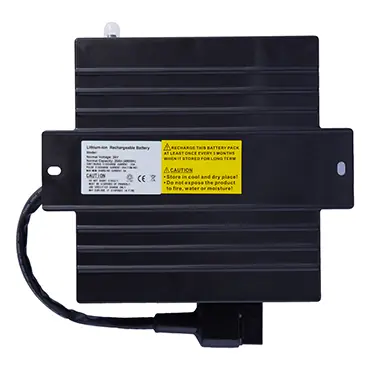
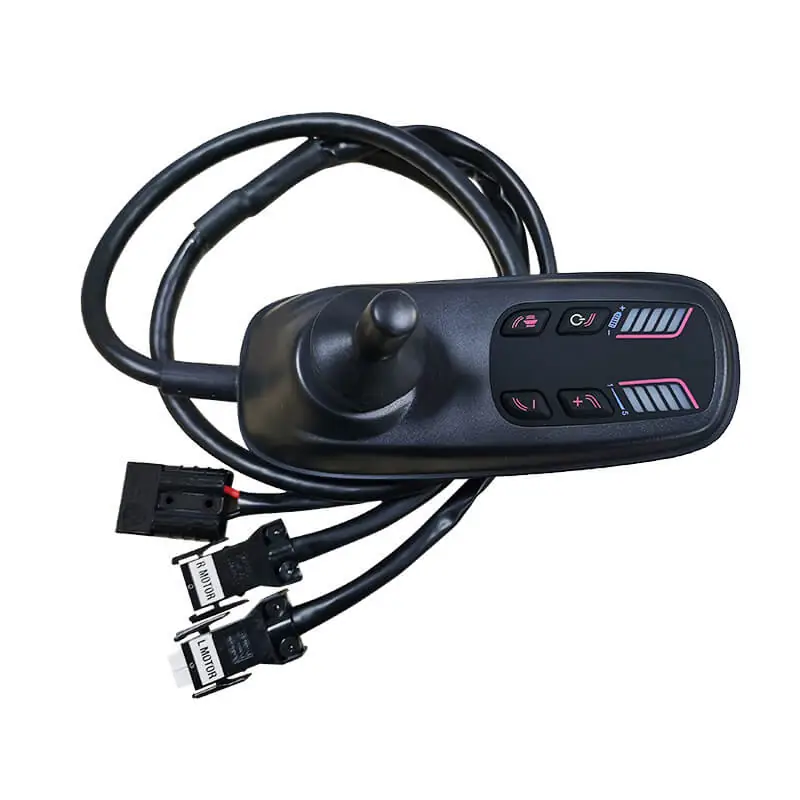
Start with the parts that stop a chair when they fail. Chargers come first, because a chair without a working charger does not move, and chargers are also among the items customers most often lose or damage. Controllers and their cables come next: the joystick unit is handled every day, its cable flexes every time the chair folds, and a fault there takes the whole chair out of service. Batteries follow, since capacity fades with use and a tired battery is a common reason a chair’s range starts to disappoint. Around that core, add the consumables that wear with daily use: tires and wheels, armrest and footrest parts, and the cables and connectors that link the parts together.
Then add the everyday add-ons that customers ask for at the point of sale and after it: storage bags, cup holders, and similar practical fittings. These do not stop a chair when they are missing, but they are easy to demonstrate in a showroom and are commonly requested at the point of sale. Keep the two groups separate in your mind and on your shelf: the core group exists to keep chairs running, and the add-on group exists to make chairs more useful. Mixing them up is how a shelf ends up full of bags while a customer waits for a controller.
One more category earns its place: the small parts that make repairs possible without replacing a whole unit. A bracket, a connector, or a cable can turn a repair that would take a chair off the road into a same-day fix. If you already carry a spare-parts range for repairs, this guide is the companion to it: the earlier piece covers what repair parts are, while this one covers the stocking decision itself, meaning what to hold, how much, and how to verify fit before you buy. For the repair-side view, see our guide to electric wheelchair spare parts.
How Do You Decide What to Stock First?
Rank by three questions, in this order. First, does the part stop the chair? A charger, a controller, or a battery does, so those lead the list. Second, how often does it fail or go missing? Cables and chargers score high here because they are handled, coiled, unplugged, and transported every day. Third, how long would a customer wait without it? If a part takes a long time to reorder and ship, holding it locally matters more.
Apply those questions to your own sales history rather than to a generic list. Look at the last few months of after-sales requests: which parts did customers ask for, which faults came up more than once, and which requests left a customer waiting? That record is worth more than any supplier’s suggested list, because it reflects the chairs you actually sold and the way your customers actually use them.
Also weigh compatibility breadth: a part that fits across several models you sell earns shelf space faster than a part tied to a single model, because one unit of stock covers more customers.
How Much of Each Item Should You Hold?
Think in terms of a floor and a ceiling, not a fixed number. The floor is the level at which you reorder: when stock falls to the floor, you place an order. The ceiling is the level you do not go above, because anything beyond it is cash sitting on a shelf. Set the floor by lead time: how long does a replenishment order take from payment to delivery, and how many requests for that part would you expect during that window? In practice, floor = expected requests during the replenishment window + a small buffer for stop-the-chair parts; fill in both numbers from your own after-sales record, not from a generic list. Set the floor a little higher for stop-the-chair parts and a little lower for add-ons.
The ceiling comes from demand and shelf life. Batteries deserve special attention here: they lose charge and condition in storage, so order them in smaller, more frequent batches, and rotate them so the oldest stock ships first. For chargers and controllers, which store well, a higher ceiling is less risky, but still check regularly: an item that has not moved in a long time is telling you something, either that your customers do not need it or that your sales team does not know it is there.
Review the range on a fixed rhythm, for example once a quarter. For each item, ask three things: did it move, did it run out, and did it cause a complaint while it was out of stock? Items that moved steadily stay. Items that ran out get a higher floor. Items that never moved get a decision: promote them, bundle them with a chair sale, or drop them and free the shelf for something that earns its place. Our guide to replenishment planning goes deeper into setting those review cycles.
How Do You Check Compatibility Before You Order?
Compatibility checking is the step that saves the most money, because a wrong part costs twice: once when you buy it and again when you ship a replacement. Work through a short checklist for every item before it goes on a purchase order, and keep the answers on file so the next order does not start from scratch.
First, match the electrical basics. For controllers, confirm whether the chair uses a brushed or brushless system: the iV1 controller pairs with brushed motors and the iV2 with brushless motors, and the controller range covers DC 20–30V with electromagnetic braking. The iV1 comes in a 70A/1680W version or a 50A/1200W version, while the iV2 is a 50A/1200W unit. Those figures describe the controller range, so still confirm against the chair’s own specification before ordering. For batteries and chargers, confirm chemistry first: the charger range covers 2A and 5A versions, with separate versions for lead-acid and lithium batteries, and charging time depends on battery capacity.
Second, match the physical fit. Check the connector shape and pin layout, the cable length, and the mounting points. A controller with the right electronics and the wrong plug is still the wrong controller. Before a first bulk order of any new part, fit one unit to a sample chair and run it. That single test catches plug mismatches, mounting problems, and cable-length issues that no specification sheet will show you. Keep a note of the result with the item record, including which chair the sample was fitted to.
Third, record what you checked. A simple compatibility card per item is enough, and the table below shows the fields worth keeping. Fill it in when the item first arrives, and update it whenever a new chair model joins your range or a mismatch is found.
Compatibility card field
What to write
Example entry
Fits which chairs
Chair models the part has been tested on
e.g. tested on sample chair in showroom
Electrical match
Voltage range, brushed or brushless, battery chemistry
When a delivery of accessories arrives, count it against the order, check the labels against the compatibility cards, and look over the packaging for transit damage. Then test before the parts go onto the shelf: plug a charger into a sample battery, fit a controller cable to a sample chair, and check that a battery’s connector matches the chairs it is meant for. A part that fails on the bench costs you a return to the supplier; a part that fails in a customer’s home costs you the customer.
Pay attention to paperwork at the same time. As a general guide, the frame of a wheelchair carries a 36-month warranty, while the battery carries 6 months for lead-acid or 12 months for lithium, and the motor and controller each carry 12 months. Confirm what warranty your supplier offers on each accessory line, and keep that information with the item record, so your team can answer a warranty question without guessing. When a warranty claim does arise, a clear process helps both sides; see our guide to the electric wheelchair warranty claims process for how to handle one cleanly.
Also think about freight while the shipment is in front of you. Freight is charged on gross weight and carton weight, not on the net weight of the chair alone, so when you cost a replenishment order, work from the packed weight your supplier quotes — even for lightweight chairs such as the EW1000 (net weight 15 kg including its battery) and the EW100 (23 kg), it is the carton weight that the freight bill will show.
How Do Batteries and Chargers Fit Into the Plan?
Batteries and chargers should be planned as pairs, not as separate lines.
Every battery chemistry in your range needs its matching charger on the shelf. As noted in the compatibility check above, the charger range covers 2A and 5A versions, with separate versions for lead-acid and lithium batteries, so a shelf that holds lithium batteries but only lead-acid chargers has a gap in it. Check the pairing for each battery line you carry, and fill the gaps before they become customer complaints.
Storage matters more for batteries than for any other accessory. Keep them in a cool, dry place, keep them away from damage and short circuits, and rotate stock so the oldest ships first. If you sell chairs that customers take on trips, remind buyers that lithium battery packs for travel are designed for air travel (airline approval required). For the hands-on side of battery replacement, see our guide on how to replace an electric wheelchair battery.
Chargers deserve a note on handling too. A charger is the accessory most likely to be coiled tightly, yanked by its cable, or left in a damp place, and those are the failures customers report. When you hand over a charger, a one-minute explanation of how to coil the cable loosely and store the charger dry will prevent more returns than any warranty policy. Our detailed electric wheelchair chargers guide explains the 2A versus 5A choice in full.
How Do You Keep the Accessories Range Tidy Over Time?
A range that is never reviewed will drift. New chair models arrive, older ones retire, and parts that once fitted everything gradually fit nothing you sell. Tie the accessories review to the chair range review: whenever a model is added or dropped, check which accessories gain or lose a fit, and update the compatibility cards at the same time.
Watch for two warning signs. The first is a part that keeps being ordered in small emergency batches: that is a part whose floor is set too low, and the fix is a higher reorder level, not another emergency order. The second is a part that sits untouched while customers ask for something similar but slightly different: that is a sign the range has drifted away from demand, and the fix is to ask customers what they actually wanted, then adjust.
Finally, keep the supplier relationship in good shape. A supplier that answers a compatibility question quickly, confirms stock before you promise a customer, and ships within its stated lead time is worth more than a slightly cheaper one that leaves you guessing. For storage practice behind the shelf itself, see our guide to storing electric wheelchairs in your warehouse.
What Does a Good Stocking Decision Look Like in Practice?
Picture a distributor who sells a small range of folding chairs and gets a call about a faulty joystick cable. Because the controller range is on the shelf, the cable is tested against the compatibility card, fitted to a sample chair on the bench, and shipped the same day. The customer is back on the road, the stock level for that cable drops to its floor, and a replenishment order goes in before the next customer calls. Nothing dramatic happened, and that is the point: good stocking is invisible. Customers notice it only when it is missing.
Contrast that with the distributor who stocks by guesswork: a shelf full of parts for chairs no longer sold, a gap where the charger should be, and a hurried overseas order that costs more in freight than the part is worth. The difference between the two is not budget, it is method: a core list ranked by need, floors and ceilings set by lead time and demand, compatibility checked before ordering, and a regular review that keeps the range honest.
If you are starting from scratch, begin with the core: chargers in the chemistries and currents your range needs, one controller line you have test-fitted, batteries to match, and the cables that connect them. Add consumables next, then add-ons. After one quarter of review, the range will start to shape itself around your real customers, and the second quarter’s orders will be easier than the first.
In short, the electric wheelchair accessories distributors should stock are the ones that keep chairs running, fit the chairs they actually sell, and can be verified before they are ordered. Build the core first, set reorder floors by lead time, check every new part against a sample chair, and review the range regularly so it follows your customers rather than your guesses. If you would like help matching accessories to your chair range, or a compatibility list for the models you carry, contact us at alice@zvcare.com and we will work through it with you. We are Shenzhen Zhiwei Health Technology Co., Ltd., based in Longgang District, Shenzhen, with two production facilities totaling more than 3,000 square meters.
Key Takeaway: Stock the parts that stop a chair first, verify fit with a sample test before every first order, and review the range regularly so it follows real customer demand.
What Do Distributors Ask Most About Stocking Accessories?
Should a small distributor stock accessories at all, or just order on demand?
Start with the core parts that stop a chair: chargers, controllers, batteries, and their cables. Ordering those on demand leaves your customer waiting exactly when they most need help, while holding a small core range turns most after-sales calls into same-day fixes. Add-ons can stay on-demand until demand proves itself.
How do I avoid ordering a controller that does not fit?
Confirm the system type first, brushed or brushless, then the voltage range, then the connector shape and cable length, and finally fit one sample unit to a sample chair before placing a larger order. Keep the result on the item’s compatibility card so the next order does not repeat the detective work.
Do batteries and chargers need to be ordered together?
Plan them as pairs. Each battery chemistry in your range needs its matching charger on the shelf, and charging time depends on battery capacity, so check the pairing for every battery line you carry rather than assuming one charger covers everything.
What is the most common stocking mistake?
Stocking by guesswork instead of by record — see the review rhythm above: check what moved, what ran out, and what never moved, once a quarter.
Founded in 2015, ZVCARE is an ISO 13485:2016 certified electric wheelchair manufacturer in China, providing OEM & ODM solutions for global distributors and medical stores.