Europe rewards suppliers who arrive prepared and punishes suppliers who arrive in a hurry. Buyers here usually work through established dealers, they expect to see and try a wheelchair before they commit, and they judge a new supplier as much on service and follow-through as on the product itself. That is the backdrop for this guide. If you are planning on selling electric wheelchairs in Europe, the useful question is not how quickly you can ship a first container. It is which country you will start in, which route to market fits that country, and what local support you will have in place when the first customer needs help.
This guide is written for a distributor entering Europe for the first time. It works through how buyers find suppliers, which sales route to start with, how to localise the offer without rebuilding the product, what a first shipment should include, and how repeat orders are actually earned. By the end, you should have a practical plan for one country, not a vague ambition to cover a continent.
How do European buyers actually find a supplier?
In most European markets, the first conversation does not start with a website enquiry. It starts with a recommendation: a dealer who already supplies mobility equipment, a visitor met at a trade show, or a buyer who has seen a product demonstrated somewhere and asks who supplies it. Online search matters, but it usually supports a decision that is already forming, rather than creating it from nothing. A distributor who only invests in online listings, and never meets dealers or demonstrates the product in person, will find progress slow.
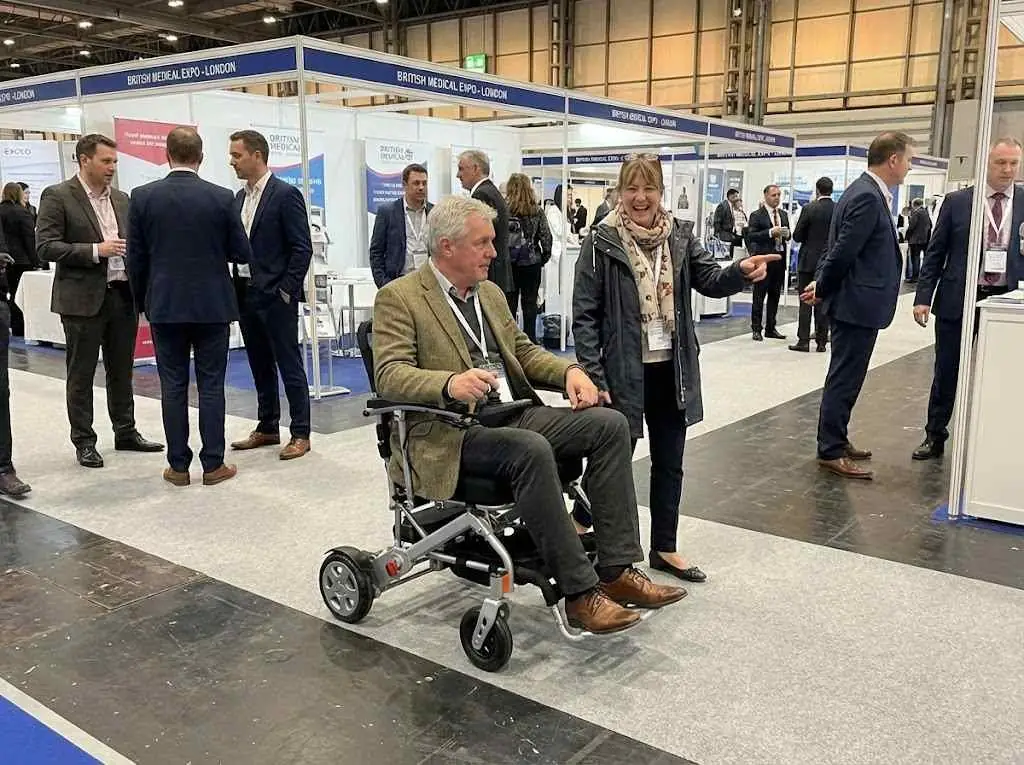
Demonstration is central to how buying works here. End users want to sit in the chair, fold it, lift it, and try the controls. Dealers want the same experience before they put their name behind a product, because they are the ones who will answer the customer when something goes wrong. That means demonstration stock is not a nice extra. It is the main selling tool, and a supplier who cannot put chairs in front of dealers and end users will struggle no matter how good the brochure looks.
Decision-making also tends to be slower and more deliberate than a first-time exporter expects. A dealer may want to compare two or three models, check service arrangements, and talk to existing customers before placing a first order. That patience is not rejection. It is how a dealer protects a reputation built over years. The supplier's job during that period is to answer questions plainly, provide documentation promptly, and avoid pushing for a large order before the dealer is ready. Starting narrow is a discipline: prove the model in one country before adding the next.
Which sales route should you start with when selling electric wheelchairs in Europe?
There are three practical routes into a European market, and the right one depends on what you already have: local relationships, retail space, technical capacity, or a team that can travel. The first route is a local dealer partner. The dealer already has customers, a showroom, and service experience, and you supply product, training, and spare parts support. This is usually the fastest route for a first-time entrant, but it also means sharing control, so the agreement needs to state plainly who handles import, who holds spare parts, who trains technicians, and who answers warranty claims.
The second route is selling directly, through your own showroom, your own online presence, or a combination of the two. Direct selling keeps more control and more customer contact, but it also puts every job on your own team: demonstration, delivery, service, and after-sales support. It suits a distributor who already has premises and technical staff in the market, and it is a heavy lift for someone starting from abroad with no local base.
The third route is trade-show-led entry: exhibit, demonstrate, collect serious dealer enquiries, and follow up with visits and trial stock. Trade shows do not close sales by themselves, but they compress months of introductions into a few days, and they let dealers compare your chairs against everything else on the market in person.
The comparison below is a starting point for discussion, not a ranking, because the right route changes with the country and with the partner.
How do you localise the offer without rebuilding the product?
Localisation in Europe is mostly about language, paperwork, and service, not about redesigning the wheelchair. The product itself can stay the same while everything around it is adapted to the market. Start with language. Manuals, labels, warranty cards, and charger instructions need to be in the language customers in that country actually read. Agree that language list in writing for the first country before production — e.g., which customer-facing documents ship in that country's language, and who signs off the translation — rather than assuming one version covers the next market. A manual in the wrong language does not just look careless; it creates service calls that a correct translation would have prevented. Ask the local partner to check every customer-facing document before the first shipment, not after customers start asking questions.
Localisation also means confirming the order details before production, not after goods have shipped. Next, confirm the practical details of the order with the factory before production. Charger versions are available in 2A and 5A, in lead-acid and lithium versions, and charging time depends on battery capacity, so the right combination for each model should be confirmed for the market rather than assumed. Packaging and branding can also be adapted: colours, logo placement, and packaging are all available as OEM customisation, but changes should be agreed before production, not requested after goods have shipped. A local contact point matters too. Customers and dealers need to know who to call in their own country, in their own language, when they have a question. A factory email address alone is not a local service presence.
Import and registration requirements must also be confirmed country by country, through the local partner or the relevant local authority, and confirmed in writing before a delivery date is promised. For wider background on why provision differs so much from one market to the next, the WHO assistive technology fact sheet is a useful reference. Requirements vary, they can change, and paperwork accepted in one country cannot be assumed to work in the next. The factory can supply product documentation, but the distributor and the local partner are the ones who must confirm what the destination market actually requires on arrival. The import guide sets out the steps to work through with a forwarder and a local partner, and it is worth reading alongside this guide before the first order is placed.
What should the first shipment include?
A sensible first shipment is built around selling and supporting, not just around filling a container. It starts with demonstration stock: chairs that dealers and end users can try, in the models the local partner expects to sell. Alongside the chairs, include a starter set of spare parts agreed with the partner, covering the parts local technicians expect to need first, such as controllers, batteries, chargers, and commonly worn items. The exact list should come from the models actually sold and from the partner's service experience, not from a generic list drawn up overseas.
Product choice for that first shipment should follow local use, not brochure order. The EW1000 weighs 15 kilograms including its battery, which suits buyers who need to lift and transport the chair often. The EW100 is a 23 kilogram aluminium model, a practical middle ground between portability and sturdiness. For buyers who prioritise stability and comfort over lifting weight, ask the partner to nominate the heavier models in the range to test alongside the EW1000 and EW100, rather than fixing that shortlist overseas. Let the partner test that shortlist with real customers, talking about folding, handling, charging, and everyday use, and let that feedback narrow the range before larger stock is committed.
Freight and pricing need the same discipline as product choice. Freight is calculated on gross and carton weight, so ask the factory for carton dimensions and gross weight for the models you plan to order, and build the landed-cost estimate from those figures rather than from net product weight. A price quoted before those costs are known is one of the easiest ways for a first order to lose money. The landed-cost guide explains how to build that calculation without missing the charges that appear after the goods land.
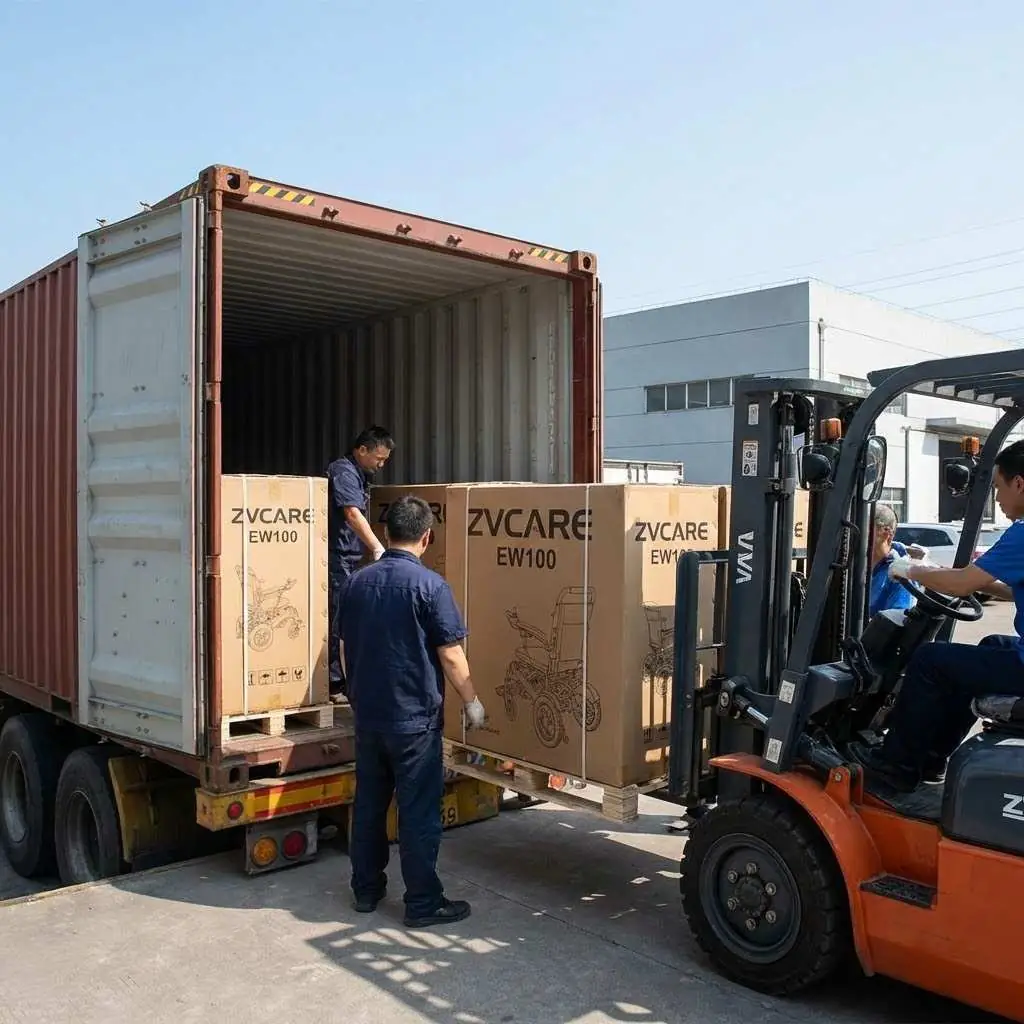
Shipping itself should be planned with the forwarder well before the order ships, including documents, handover points, and who clears the goods on arrival. The shipping guide explains how wheelchairs move from China to the buyer, and it is a useful checklist to work through with the forwarder.
A small trial is workable: the minimum order quantity is one unit, and the lead time is seven days after payment. The practical question is not whether a small order is allowed, but what quantity gives the partner enough demonstration stock, saleable stock, and spare parts to launch properly, and that answer should come from the partner's local plan.
How do you earn repeat orders after the first sale?
Repeat orders in Europe are earned by service, not by follow-up emails. A wheelchair is not a one-off sale: batteries age, tyres wear, controllers need attention, and customers remember how quickly a problem was solved. Dealers remember it too, and a dealer who cannot get a fast, clear answer on a repair will quietly move the next order to a supplier who can. That is why the service agreement matters as much as the price list, and why it should be written down before the first sale, not improvised after the first breakdown.
Technician training is the foundation. The partner's team should be able to carry out basic checks on the motor and controller, advise on battery care, and demonstrate folding and handling, before they are asked to support paying customers. Video calls and written fault guides help, but they do not replace hands-on training, and a training visit before launch is money better spent than a series of emergency calls afterwards. Spare parts stock is the other half of the plan: agree which parts will be held locally, in what quantity, and who pays for that stock, so that everyday repairs do not wait for an overseas shipment. The spare parts stocking guide helps work through that list model by model.
Warranty terms should be explained to customers in plain language at the point of sale. ZVCARE's warranty covers the frame for 36 months and the battery for 6 months for lead-acid or 12 months for lithium, and the motor and controller for 12 months each. The distributor agreement should state clearly who receives a claim, who inspects the chair, who supplies the replacement part, and how the customer is kept informed at each step. The warranty claims guide sets out how that process works in practice, and it is worth reading before promising a customer a turnaround time you cannot meet.
Finally, keep the relationship with the factory active after launch. If ZVCARE is your factory partner, that feedback goes to alice@zvcare.com; ZVCARE is Shenzhen Zhiwei Health Technology Co., Ltd., based in Longgang District, Shenzhen, with two production facilities totalling more than 3,000 square metres. Share honest feedback from dealers and end users: which models sell, which questions come up repeatedly, and which spare parts move fastest. That feedback improves the next order far more than a generic sales report, and it is what turns a first shipment into a lasting distribution relationship.
Start with the models that fit how your customers actually travel and how they will transport the chair. The lighter, folding EW1000 and EW100 suit buyers who need to lift and carry the chair often, while heavier models may suit buyers who prioritise sturdiness and comfort. Start from the EW1000/EW100 shortlist above, and let local dealer feedback decide which models earn larger stock — do not expand the range before that feedback comes in.
Who handles repairs and warranty claims?
That should be agreed between the factory and the local partner before the first sale, and explained to the customer at the point of sale. As set out above: frame 36 months, battery 6 months for lead-acid or 12 months for lithium, motor and controller 12 months each. What the customer must hear at the point of sale is the local part — who they call, who inspects the chair, and who holds the spare part. A clear local process protects both the distributor and the buyer.
Can I start with a small trial order?
Yes — one unit and seven days after payment, as above. The real decision is not whether a trial is allowed, but what quantity gives the partner enough demonstration stock, saleable stock, and spare parts to launch properly. Agree that quantity with the partner based on their showroom, service capacity, and first sales plan.
For a first-time distributor, selling electric wheelchairs in Europe works best when the entry is kept narrow: one country, one reliable partner, demonstration stock customers can actually try, and service and spare parts in place before sales scale.
Key Takeaway: Start with one country and one partner, localise language and service before you ship, and let dealer and customer feedback, not assumptions, decide the range you scale.
Founded in 2015, ZVCARE is an ISO 13485:2016 certified electric wheelchair manufacturer in China, providing OEM & ODM solutions for global distributors and medical stores.