Selling Electric Wheelchairs in the United Kingdom
November 2, 2026
Selling Electric Wheelchairs in the United Kingdom takes more than a good chair: the product is only half the job. The other half is local: a dealer who can demonstrate the chair properly, a clear point of contact when something goes wrong, and a first order that teaches you what British buyers actually want before you commit to a large stock holding. This guide covers who buys, which channels work, how to prepare for local sale, how to set up after-sales support, and how to shape a first order that keeps risk low.
Who buys electric wheelchairs in the United Kingdom, and how do they decide?
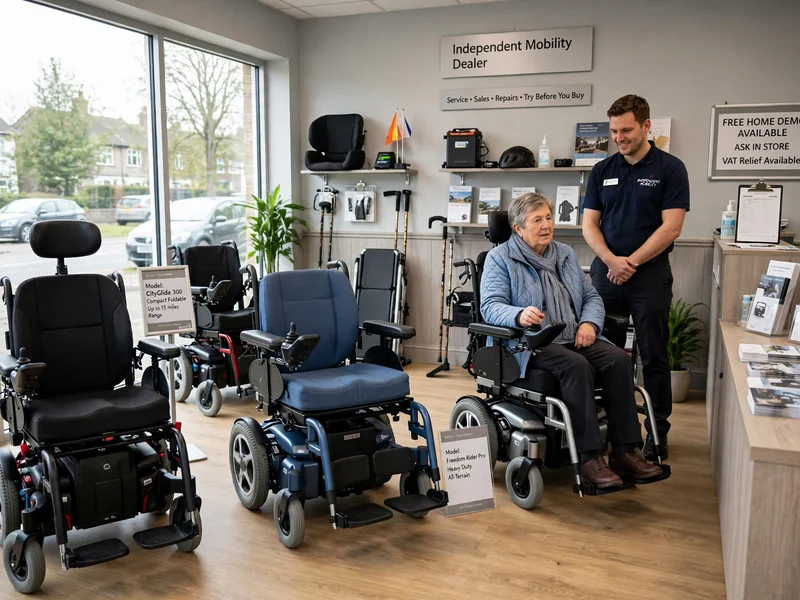
Most sales in the United Kingdom go through a local seller rather than directly from a factory to the end user. Independent mobility dealers are the backbone of this trade. They run showrooms, visit customers at home, arrange demonstrations, help with fitting, and remain the first call when a chair needs attention. A buyer who has never used a powered chair before will often trust the dealer’s judgement more than any brochure, so the dealer’s confidence in your product matters as much as the buyer’s.
Care homes and care providers are another important buyer group. They may buy chairs for residents, recommend a model to families, or work with a dealer on assessment and delivery. Their questions are practical: Is the chair easy for staff to operate and charge? Is it comfortable for long periods of sitting? What happens if it stops working on a weekend? Occupational therapists and other rehabilitation professionals also influence decisions, even when they do not buy directly. They want to know that the chair is reliable, that the seat and controls suit the user, and that local support exists after delivery.
Online buyers form a third group. They often start with research, compare models and prices, and then look for a seller who can answer questions clearly and arrange a demonstration. Many still want a phone conversation or a home visit before they commit, so treat the online enquiry as the start of a relationship, not as a finished sale.
That range of buyers changes how you should present your offer. An end user asks about comfort, folding, and everyday use. A dealer or care provider asks about reliability, parts availability, and warranty terms. Answer both levels: show the chair, let people try it, and back it up with a written warranty and a spare parts plan.
Key Takeaway: Sell to the dealer and the care provider as well as the end user, because their trust in your service is what turns a first sale into repeat orders.
Which sales channels work best for a new entrant?
A showroom still earns its keep, even as more research moves online. People want to sit in a chair, practise folding it, check how it handles a doorway or a kerb, and see how it fits into a car boot. If you do not have a showroom yet, partner with an existing dealer, or arrange demonstration days with mobility retailers and care providers in your area. A chair that has been tried is far easier to sell than a chair that has only been described.
Home demonstrations deserve a place of their own in a UK plan. Many buyers prefer to try a chair in their own home, where doorways, ramps, storage space, and daily routines are real rather than imagined. A home visit also lets you spot practical issues early, such as a narrow hallway or a charging point that is awkward to reach, and suggest the right model before a sale rather than after a return.
Online channels work best as support for that local presence, not as a replacement for it. A clear website with honest specifications, real photographs, and a simple enquiry form brings in buyers who are already comparing options. Follow up promptly, offer a demonstration or a video call, and explain delivery, warranty, and after-sales support in plain language. Buyers here are often deciding for a parent, a partner, or a resident, so patience and clear information count for as much as price.
Partnerships with care providers and rehabilitation professionals can bring steady enquiries, but they take time to build. These partners need to trust that you will look after their clients after the sale, so start with a small number of strong local relationships rather than trying to cover the whole country at once.
Key Takeaway: Combine a place to try the chair, home demonstrations where they help, clear online information, and a few strong local partnerships, and let each channel support the others.
What should your opening range look like?
A new entrant does not need every model on the market. A focused opening range is easier to explain, easier to stock parts for, and easier for your staff and dealers to learn. A useful shape is e.g. one lightweight folding model for travel and everyday use, one practical everyday model, and one heavier, more durable model for users who need extra stability. That spread covers most enquiries without tying up cash in slow-moving stock.
The table below sets out that shape in buyer terms, using only confirmed figures for the ZVCARE range, so you can see where each type of chair fits.
Opening type
Who it suits
How to talk about it
Lightweight folding model
Travel and everyday use, buyers who lift a chair into a car
EW1000 weighs 15 kg including battery, folded 73×39×71 cm, range 15±3 km
Everyday folding model
Daily use with easy folding and storage
EW100 weighs 23 kg, folded 73×55.5×31 cm
Heavier, durable model
Users who prioritise stability over lifting weight
Ask about the buyer’s daily routine first, then match the model to it
Lightweight models have a clear story for buyers who travel or need to lift a chair into a vehicle. The EW1000, for example, weighs 15 kg including the battery, and lightweight models in this range are designed for air travel (airline approval required). Heavier models suit buyers who prioritise stability over lifting weight. Explain that trade-off plainly, let the buyer try both where possible, and let their daily routine decide. You can compare the broader choice on the lightweight electric wheelchair models and heavy-duty electric wheelchair models pages.
Keep your first range narrow enough that your team can answer questions about every model you sell.
Key Takeaway: Start narrow, cover travel, everyday, and durable use, and let real local enquiries shape your second order.
How do you prepare a shipment for local sale in the United Kingdom?
Local preparation is where a new entrant either looks professional or looks imported in a hurry. Start with language. UK buyers expect clear English materials written in UK spelling, with no awkward translation left in manuals, safety notes, warranty terms, or quick-start guides. Check model names, specifications, and warranty wording line by line against the supplier’s approved English text, and ask a UK dealer or service technician to read the finished text before you print or publish it. A confusing instruction in a manual creates service calls that a careful proofread would have avoided.
Next, give buyers a local point of contact. A UK phone number or a named local contact on quotations, invoices, manuals, and your website tells a buyer that help is close at hand. If you are still setting up local cover, say plainly who answers enquiries and what happens if a fault is reported.
Demonstration units are part of preparation, not an afterthought. Dealers sell far more confidently after they have handled a chair themselves, folded it, charged it, and answered a customer’s awkward questions with it in front of them. Agree with your supplier how demonstration units are supplied, what condition they arrive in, and whether they are part of your first order or sent ahead of it. A dealer who has only seen photographs will hesitate; a dealer who has driven the chair will recommend it.
Packaging deserves the same attention. OEM customisation is available for colour, logo placement, and packaging, so agree those details before production rather than trying to fix them after delivery, and check that nothing in the packaging contradicts your English materials.
Finally, plan delivery in plain terms. Agree in writing with your supplier and your freight forwarder what is included in the price, how goods are packed, what documents you will receive, and who handles each step after the goods leave the factory. Freight is normally quoted on gross weight or carton weight, not on the net weight of the chair alone, so use carton dimensions and gross weight when you ask for a quote, and confirm current requirements for your shipment with your forwarder or broker.
Key Takeaway: Localise language, contact details, demonstration units, and packaging before your first sale, and confirm current delivery requirements for your own shipment instead of assuming them.
How do you set up after-sales service that UK buyers will trust?
After-sales service is where a UK distributor earns or loses a reputation. A buyer who waits weeks for a simple part will not recommend you, however good the chair itself is. Before your first sale, decide who answers service calls, who carries out repairs, and how quickly a buyer can expect a reply, and share that simple written process with every dealer you supply. A one-page service note, given at delivery, prevents most of the misunderstandings that later become complaints.
Stock the parts that fail or wear first, and build that list from the parts your models actually use rather than from guesswork. Controllers, motors, chargers, and batteries are the obvious starting point, because a fault in any of them takes a chair out of use. Keep a small stock of fast-moving items, and agree a restocking route with your supplier so low stock triggers a reorder instead of a long wait. You can plan that first stock list around the current range of electric wheelchair spare parts.
Warranty terms should be stated in plain language on every quotation and invoice. For the ZVCARE range, the frame is covered for 36 months, and the battery is covered for 6 months for lead-acid or 12 months for lithium, and the motor and controller are each covered for 12 months. Explain what the customer should do if a fault appears, what information you need from them, and how a claim is handled. A clear process protects both sides and stops small faults from turning into disputes.
Training completes the setup. Offer your dealers a short, practical session on setup, basic fault-finding, and battery care, with a simple checklist they can use on a service visit. The same applies to care home staff: a brief, hands-on introduction at delivery reduces calls later.
Key Takeaway: Treat service as part of the sale, stock the parts that stop a chair working, put warranty and repair steps in writing, and train the people who will actually use and maintain the chair.
What should your first order look like?
Your first order should be a learning order, not a warehouse-filling order. The minimum order is 1 unit, so you can start small, but a single unit rarely teaches you enough about dealer response, delivery, and service. A more useful first step is e.g. a small mixed order: a demonstration unit for dealer visits, plus a small number of units for your first dealers or care partners, so you can test demand and practise your service process before you scale up.
Use the first order to answer questions you cannot answer from a catalogue: which model do dealers ask about first, which model do buyers buy after trying it, and what questions come up in demonstrations that your materials do not yet answer? Keep notes from every dealer conversation, and use them to shape your second order.
Agree the commercial basics in writing before you pay. Confirm the minimum order, the lead time of 7 days after payment, warranty terms, spare parts supply, and how faults are handled when a chair is already with a customer. Ask who your contact is if a shipment arrives damaged or incomplete, and what checks happen before a chair ships. A supplier who answers these questions clearly, in writing, is easier to plan around than one who only talks about product features.
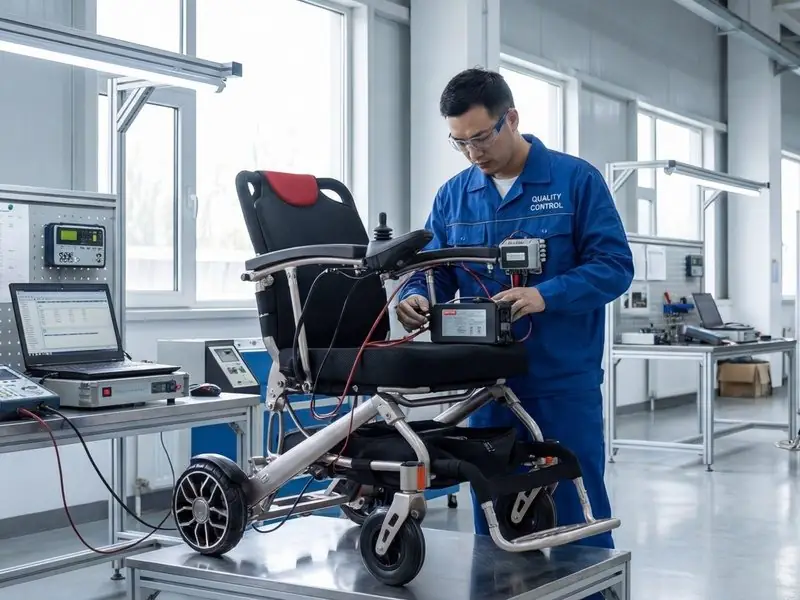
Also check the supplier’s background for yourself. Look at their about page and their product range on the products page, and compare what you read there with what you are told in conversation. Shenzhen Zhiwei Health Technology Co., Ltd., trading as ZVCARE, produces from two facilities totalling more than 3,000 square metres, and consistent information across the website, quotation, and warranty terms is a good sign. If the story changes between those sources, ask why before you commit.
Finally, judge your first order by more than units sold. A successful first order is one where dealers can demonstrate the chair confidently, buyers know who to call, parts are available, and you finish with a clear idea of what to order next.
Key Takeaway: Make the first order small, mixed, and instructive, confirm the commercial basics in writing, and judge it by what you learn as well as by what you sell.
Conclusion
Selling electric wheelchairs in the United Kingdom rewards distributors who do the unglamorous work well: listening to dealers, offering a focused range, preparing English materials and local contact details properly, and standing behind the chair after the sale. You do not need the largest catalogue to succeed. You need a range you understand, partners who trust you, and a service plan that holds up when a customer actually needs help.
If you are ready to explore a supplier relationship, start a conversation through the contact page. You can begin with a minimum order of 1 unit, with a lead time of 7 days after payment. Warranty cover is 36 months for the frame and 6 months for the lead-acid battery, 12 months for the lithium battery, and 12 months each for the motor and controller, and production comes from two facilities totalling more than 3,000 square metres. Bring your questions about models, demonstration units, parts, and local support, and judge from the answers whether the range fits your buyers.
FAQ
Do I need a showroom to start selling electric wheelchairs in the United Kingdom?
No, but buyers need somewhere to try the chair. If you do not have a showroom, partner with an existing dealer, arrange demonstration days, or offer home demonstrations. A chair that has been tried sells far more easily than one that has only been described online.
What should my first order include?
Start with a small, mixed order rather than a large single-model stock holding. A useful shape is e.g. a demonstration unit plus a small number of units for your first dealers or care partners, covering lightweight, everyday, and durable use. That mix lets you test demand and practise your service process before you scale up.
How long does it take to get stock after I place an order?
The factory lead time is 7 days after payment, but that is only the first part of the journey. International transit and delivery take additional time, so ask your freight forwarder for a realistic total timescale for your shipment. Give your customers that full picture rather than a date that only covers production.
What spare parts should I keep on hand first?
Start with the parts that take a chair out of use when they fail: controllers, motors, chargers, and batteries, plus a small stock of fast-moving service items for the models you sell. Agree a restocking route with your supplier before your first sale, so low stock triggers a reorder instead of a long wait.
Can a customer take a lightweight electric wheelchair on a plane?
Lightweight folding models in this range are designed for air travel (airline approval required). That approval is the airline’s decision for each trip, so advise customers to confirm with their airline before travel.
What warranty cover applies to the ZVCARE range?
The frame is covered for 36 months, and the battery is covered for 6 months for lead-acid or 12 months for lithium, and the motor and controller are each covered for 12 months. State those terms in plain language on every quotation and invoice, and explain what the customer should do if a fault appears, so a small fault does not turn into a dispute.
Founded in 2015, ZVCARE is an ISO 13485:2016 certified electric wheelchair manufacturer in China, providing OEM & ODM solutions for global distributors and medical stores.