How to Pay a Chinese Electric Wheelchair Factory Safely
November 2, 2026
If you are buying in bulk from overseas, learning how to pay a Chinese electric wheelchair factory safely matters as much as choosing the right model. Payment safety is not about finding a clever trick; it is about checking the factory, reading the paperwork, and keeping control of your money until the goods match what you ordered. This guide walks through those checks in the order a careful buyer would use them.
How Do I Check That a Chinese Electric Wheelchair Factory Is Real Before I Pay?
Start with identity, not with price. A supplier willing to share its factory background openly is easier to check than one that keeps basic details vague. Ask for the full registered company name, the business licence, and the factory address, and check that the same name appears on the quotation, the contract, and the bank account details. If the name changes from one document to another, stop and ask why. A real manufacturer should be comfortable with that checking, because it is normal practice for an overseas order.
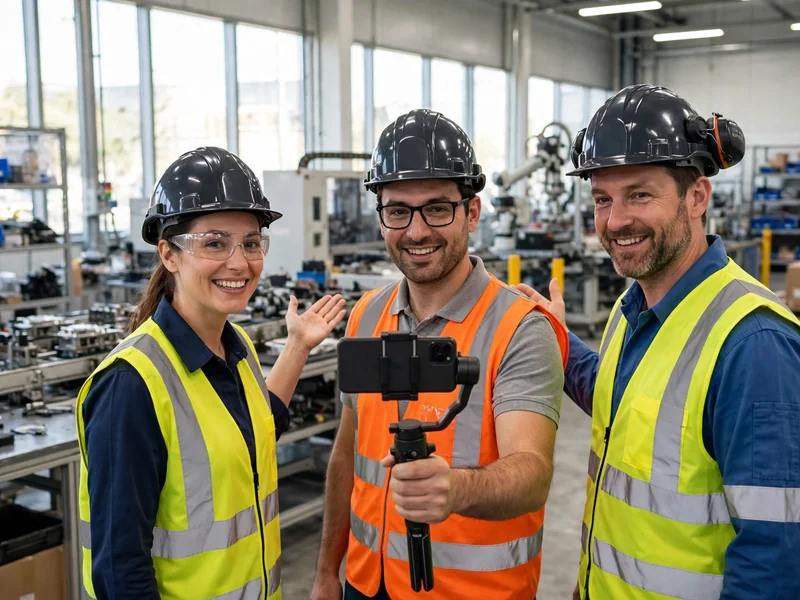
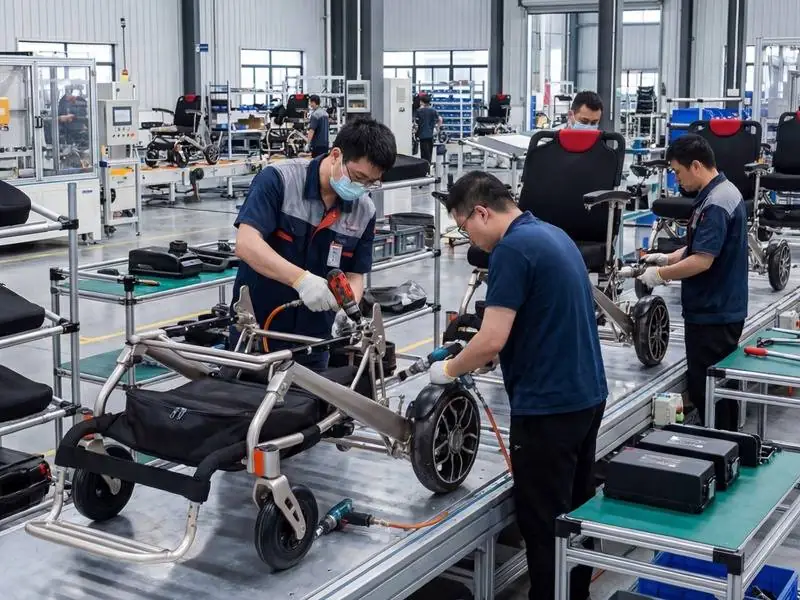
Next, ask for proof that the place exists and makes what it sells. A live video tour is more useful than polished photos, because you can ask the host to walk to the production area, show the warehouse, and point the camera at work in progress. Ask what models are being assembled that day, where finished chairs are stored, and how batteries and controllers are checked before packing. Vague answers or a refusal to show the floor are reasons to slow down.
You can also cross-check through a third party, for example by asking a local inspection company to confirm the address and scale of the operation, or by contacting references from buyers in markets similar to yours. What matters is not the size itself, but whether the claim and the evidence line up.
Finally, look at how the factory communicates. Clear answers, consistent product information, and a willingness to put details in writing are good signs. Pressure, secrecy, or a different story every time you ask the same question are not, and the payment stage should come only after the identity stage feels solid.
Key Takeaway: Verify the company name, address, and production site first, and only move to payment once the documents and the live evidence agree.
What Red Flags Should Make Me Pause Before Sending Money?
Some warning signs are easy to miss when a quotation looks attractive. The first is a price far below the rest of the market with no clear explanation. A lower price can have a fair reason, such as a simpler configuration, but the supplier should explain it in plain terms. If the explanation keeps shifting, or the low price is used to rush you into paying quickly, treat that as a risk, not a bargain.
The second red flag is an address or a company identity you cannot verify. Be cautious if the factory will not share a full address, if the address on the licence does not match the address on the quotation, or if searches turn up nothing at all under that company name. A genuine business leaves traces, such as a website, a catalogue, or buyers who can confirm they have ordered. Total invisibility alone does not prove fraud, but it is a reason to ask for stronger evidence before you pay.
The third red flag is a request to pay into a personal bank account. Business orders should go to a company account under the registered company name, and any change of bank details should arrive through a verified channel, not only through a chat message. If someone asks you to pay an individual, a different company name, or an account in an unrelated country without a clear, documented reason, pause and verify through a contact route you already trust.
Other signals include a supplier who avoids a written contract, will not confirm the model and configuration in writing, or keeps asking for payment before basic questions are answered. Together they tell you the deal is not ready for money yet.
Key Takeaway: Pause when the price cannot be explained, the identity cannot be verified, or the payment account does not match the registered company.
How Should I Compare Payment Methods From a Safety Point of View?
Payment methods differ mainly in who holds the risk, and when. A direct bank transfer leaves timing with the buyer, but once the money has left the account it is hard to recover if the goods never arrive or do not match the order. That does not make bank transfer wrong; it means the checks before payment and before the final payment carry more weight.
A letter of credit works through banks and ties payment to documents rather than to trust alone. In principle, the seller is paid when the required documents are presented and match the terms, which can protect both sides when the paperwork is written carefully. In practice, documents can be correct on paper while the goods still disappoint, so inspection and clear product terms still matter.
Escrow-type or other guarantee arrangements aim to hold the money with a neutral party until agreed conditions are met. The safety of such an arrangement depends entirely on who holds the money, what triggers release, and what happens if the two sides disagree. A guarantee from an unknown platform, or one whose release conditions are vague, may offer less protection than it appears to offer.
The table below sums up the principle behind each approach, without turning any of them into a recommendation for every order.
Arrangement
Safety principle
Main risk to watch
Direct bank transfer
Buyer controls timing, but recovery after payment is difficult
Paying before identity, contract, and inspection terms are settled
Letter of credit
Payment is tied to documents through banks
Documents that look correct while the goods still fall short
Guarantee arrangement
Money is held until agreed conditions are met
Unclear holder, release trigger, or dispute route
Whichever route you choose, agree the product, the inspection step, and the dispute route in writing before money moves, and keep every payment instruction in a form you can prove later. A safe method cannot rescue a vague order.
Key Takeaway: Judge a payment method by who holds the risk and what triggers release, and never let the method replace written product and inspection terms.
What Should I Check on the Contract and Proforma Invoice Before I Pay?
The contract and the proforma invoice are your safety net, so read them as a buyer, not as a formality. First, confirm that the seller, the buyer, the model, and the configuration are all named exactly. A model name alone is not enough: the configuration should cover the battery type, controller, seating, colour, and any spare parts included. If you have agreed on spare parts for ongoing service, make sure they are listed with quantities in words that both sides understand, rather than left as a vague promise to supply parts later.
Second, confirm the commercial terms in plain language: the total order value, what is included, the delivery term, the packing, and the lead time after payment. The lead time should be written as a commitment, not as a casual estimate in a chat message. For the same reason, the folded size, weight including the battery, and driving range should match the model you discussed. As a reference, the EW1000 weighs 15 kg including the battery, folds to 73×39×71 cm, and offers a range of 15±3 km, while the EW100 weighs 23 kg, folds to 73×55.5×31 cm, and offers a range of 12±5 km. If the figures on your invoice differ from the figures you were sold, ask for a correction before you pay, because that correction is far harder to get after payment.
Third, check the inspection and final payment logic in the contract: what will be inspected, who will inspect it, what happens if the goods fail, how disagreements will be handled, and which documents count as proof. You need clear sentences both sides would read the same way, not complex legal language.
For the payment terms themselves, see the guide to payment terms from an electric wheelchair factory.
Key Takeaway: Pay only against a contract and invoice that name the exact model, configuration, commercial terms, and inspection route in writing.
How Can Inspection Protect My Final Payment?
Inspection turns a promise into evidence, and it is most powerful before the final payment. An independent inspector checks the goods against the order, and you release the remaining money only when that check passes. The value comes from independence, a clear checklist, and photos or video you can review yourself.
Agree the checklist before production finishes, not after the goods are packed. It should cover quantity, model and configuration, appearance, folding and unfolding, basic functions, battery and charger, labelling, and packing, plus shipping marks and carton details, because freight is charged on gross weight and carton weight, not on net weight alone. When the inspector finds a problem, the report should describe it plainly and show it in photos, so the factory can fix it and you can verify the fix.
Photos and video from the factory can support inspection, but they should not replace it for a first or larger order. A factory video can show a chair working, yet it cannot prove every carton contains the same chair. Third-party inspection fills that gap: the inspector samples cartons, checks the goods inside, and reports what was actually seen. If the report and the factory photos disagree, trust the independent report before you pay the balance.
Keep the inspection report with your contract, invoice, and payment records. Together they form the record you will need if a problem appears after delivery, and they make the final payment decision calm and factual. A supplier who welcomes inspection is showing confidence; one who resists it is telling you something too.
Key Takeaway: Tie the final payment to an independent inspection report with photos, and do not approve it until the goods match the written order.
Should I Start With a Sample Order Before a Larger Order?
For most first-time buyers, the answer is yes. A sample order lets you test the product, the packing, the documents, and the communication in real conditions before you commit a larger amount of money. You will learn things no catalogue can tell you: how the chair feels, how it folds, how it arrives, and how quickly the factory responds to a question.
Treat the sample as a trial of the whole supplier, not only of the chair. Note how accurately the quotation matches the invoice, how clearly the factory confirms the configuration, and how the goods are packed. When you review the full product range for a later order, that sample experience will tell you far more than a second round of sales messages. If the sample arrives with a different configuration, damaged packing, or missing documents, you have learned something valuable at a smaller scale.
A sample also gives you material for your own market. You can show the chair to customers and confirm that the folded size and weight work for your storage and delivery plans. Better to learn that a chair is awkward to store or demonstrate from one unit than from a full container.
None of this means a sample guarantees a perfect larger order. Production can still vary, and that is why inspection still matters for later shipments. What a sample does is reduce the unknown: you move from trusting a description to judging a real product from a real supplier, and your later payments rest on evidence rather than hope.
Key Takeaway: Use a sample order to test the product, packing, documents, and supplier behaviour before you risk a larger payment.
What Should I Do If Something Goes Wrong After Payment?
Problems after payment feel stressful, but a calm, evidence-first response protects you better than a hasty message. Start by gathering the full chain: the quotation, contract, proforma invoice, payment record showing the company account you paid, inspection report, and photos or video of the goods received. Write down what was promised, what arrived, and where the two differ, using the factory’s own words from the contract wherever you can. That comparison moves the conversation from opinion to record.
Next, raise the problem in writing with the factory, with a clear description, dated photos, and a specific request that fits the contract, such as repair or replacement. Keep the tone firm and factual, and keep every reply in the same thread so the history stays complete. Many problems are solved at this stage, especially when the evidence is clear and the request is reasonable.
If direct discussion stalls, use the route the contract already names. A third-party inspection report from before shipment carries weight here, because it shows what was checked and what passed. Your bank may also advise on options for the payment method you used, but do not assume a payment can simply be reversed; ask early, in writing, and keep the answer with your records.
Finally, learn from the case before the next order. Note which check failed: was the factory insufficiently verified, was the contract vague, was inspection skipped, or was the final payment released too early. Fix that step so the next order does not repeat the same gap.
Key Takeaway: Respond with the full evidence chain in writing, follow the contract’s dispute route, and fix the failed check before your next order.
Conclusion
Payment safety is a sequence, not a single decision. Verify the factory, watch for red flags, choose a payment route whose risks you understand, lock the details into a contract and invoice, inspect before the final payment, and start with a sample when the supplier is new. In short, how to pay a Chinese electric wheelchair factory safely comes down to keeping evidence at every step and releasing money only when that evidence matches what you ordered.
That discipline also protects the relationship: a genuine factory will welcome clear terms and independent checks, because they remove doubt on both sides. If you are ready to discuss a specific model or order, contact the factory team with your quantity, configuration, and delivery needs. Orders start from a minimum order quantity of 1 unit, with a 7-day lead time after payment, a 36-month frame warranty, and a warranty of 6 months for the lead-acid battery or 12 months for the lithium battery, and 12 months each for the motor and controller, from a manufacturer with two production facilities totalling more than 3,000 square metres.
FAQ
Is it safe to pay a supplier I have only met online?
It can be, provided you do not rely on online contact alone. Verify the registered company name, ask for a live video tour, and consider a third-party check of the address before you send money. Online contact is a starting point, not proof by itself.
Should I ever pay into a personal bank account?
No, not for a business order. Payment should go to a company account under the registered company name, and any change of bank details should be verified through a trusted contact route before you act on it. A request to pay an individual is a strong reason to pause and verify.
What documents should I keep after I pay?
Keep the quotation, contract, proforma invoice, payment record, inspection report, and photos or video of the goods received. Together they show what was promised, what was paid, and what arrived.
Can a video call prove a factory is real?
A video call is strong supporting evidence, but it works best alongside documents and, where possible, a third-party check. Ask the host to show live production and storage areas and to answer specific questions, rather than accepting a short, pre-recorded tour.
What should I check before I approve the final payment?
Check the inspection report, the photos, the quantity, the model and configuration, and the packing against your contract. If anything differs, ask for a fix and a re-check before you release the money. Approving the final payment is your last point of control, so use it deliberately.
Founded in 2015, ZVCARE is an ISO 13485:2016 certified electric wheelchair manufacturer in China, providing OEM & ODM solutions for global distributors and medical stores.