How Cold Weather Affects Electric Wheelchair Batteries
November 2, 2026
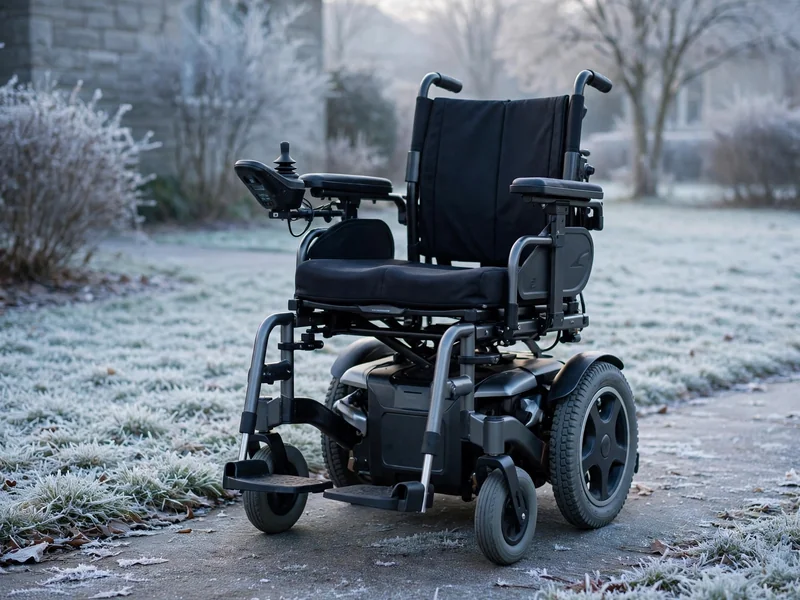
Winter changes the way your customers use their wheelchairs. If you sell, distribute, or support electric wheelchairs, understanding how cold weather affects electric wheelchair batteries will help you answer those questions honestly, set realistic expectations, and keep your customers moving safely through the season.
Why Does Cold Weather Reduce the Usable Range of an Electric Wheelchair?
A battery does not simply hold less charge because it is cold. What changes is how easily that charge can be delivered. In cold conditions, the chemical reactions inside the battery slow down, and the battery finds it harder to release energy when the motor asks for it. The result is a familiar winter pattern: the chair still works, but the usable range feels shorter, the battery gauge drops faster under load, and hills or rough ground drain the remaining charge more quickly than they did in mild weather.
This is why a customer can be convinced their battery is failing when it is really just cold. The gauge is telling the truth about the moment: under a heavy load in cold air, voltage falls sooner, so the display shows less remaining range. Once the battery warms up indoors, some of that apparent loss recovers, because the chemistry can work normally again. That recovery is the clearest sign that cold, rather than a faulty battery, was the main cause.
For your customers, the practical message is simple. Plan winter trips with more margin than summer trips. A journey that was comfortable before may need a charging stop, a shorter route, or a top-up before setting out. Encourage customers to think in terms of what the chair can reliably do on a cold day, not what it could do on its best day, and they will be far less likely to run low far from home.
Key Takeaway: Cold slows the battery chemistry, so usable range drops on cold days even when the battery itself is healthy, and some of that range returns once the battery warms up.
Does Cold Weather Damage the Battery, or Only Reduce Its Performance for the Day?
Most of what your customers notice in winter is temporary. A cold battery delivers less, but it is not necessarily damaged. Damage becomes more likely when cold is combined with poor habits repeated over a whole season, such as leaving a chair unused for weeks in an unheated space, or repeatedly running a cold battery flat before recharging it.
The habit to warn against is judging the battery on its worst day. If a customer tests range on the coldest morning of the year and concludes the battery is finished, they may replace a battery that still has plenty of life in it. A fairer check is to bring the chair indoors, let the battery reach normal indoor temperature, charge it fully, and then see how it performs. If performance is still poor in mild conditions, that is the time to investigate further.
Heat, by contrast, is the opposite problem, and it ages a battery in a different way. If you also serve customers in hot climates, our companion guide on how heat affects electric wheelchair batteries explains that side of the story. Cold is mainly a performance problem on the day; the long-term risk comes from neglect through the winter, not from a single cold trip.
Key Takeaway: A cold day alone rarely ruins a battery, but a winter of cold storage and deep discharges will shorten its life, so judge battery health after warming and charging, not on the coldest morning.
Should You Charge an Electric Wheelchair Battery in the Cold?
Charging is where good winter habits matter most. A battery that has just come in from the cold should be allowed to warm up indoors before charging begins. Charging a very cold battery straight away is less efficient, and it can leave the battery showing a full charge before it has really taken one. Letting it settle at indoor temperature first gives a more complete, more reliable charge.
Charge indoors, in a dry place, using the charger supplied for that chair. Keep the charging area clear and dry, and check the cable and plug for damage before winter sets in, since a worn cable is easy to overlook until it is needed every day. Avoid charging outdoors in rain or snow, and avoid leaving the chair charging in a damp, unheated outbuilding when an indoor spot is available. The charger itself is not a heater, and it cannot make up for a battery that is still cold through.
It also helps to charge before the battery is completely empty. Winter trips use energy faster, so a customer who waits until the gauge is nearly flat has less margin if the weather turns or the route takes longer than expected. A routine of topping up after use, rather than running the battery down, keeps the chair ready and reduces the strain of deep discharges in cold weather.
Key Takeaway: Bring the battery indoors, let it warm up, and then charge it fully with the correct charger, rather than charging a cold battery outdoors or straight after a freezing trip.
How Should You Store an Electric Wheelchair Battery in Winter?
Many winter problems start with storage, not with use. A chair left for weeks in a cold garage or a damp shed will greet spring with a flat battery and a frustrated owner. If the chair will not be used for a while, store it indoors where the temperature is stable and the air is dry. Remove any snow or damp from the frame and seat before bringing it in, so moisture does not sit on the chair through the winter.
Do not store the battery completely empty. A battery left flat for a long period is far harder to revive than one stored with charge in it, and in some cases it may not recover at all. Check the charge from time to time during a long break, and top it up when needed, so the battery stays in a healthy middle state rather than drifting down to empty unnoticed. If your customer owns a folding model, this is much easier to manage, because the chair can be brought into a hallway or spare room instead of being left outside. Our lightweight electric wheelchair models include folding chairs designed to be stored indoors without taking over the room, such as the EW1000 at 15 kg including the battery, folding to 73×39×71 cm, and the EW100 at 23 kg, folding to 73×55.5×31 cm.
For distributors, storage advice is also a sales conversation. Customers who understand winter storage before they buy are less likely to blame the product in spring. A short storage note in the handover pack, or a reminder message at the start of winter, costs almost nothing and prevents the most common seasonal complaint you will hear.
Key Takeaway: Store the chair indoors, dry and with charge in the battery, and check it during long breaks instead of leaving it flat in a cold, damp space all winter.
What Happens to the Controller and Display in Cold Weather?
Batteries get most of the attention in winter, but the controller and display feel the cold too. Screens can respond more slowly, buttons can feel stiff, and a joystick that is smooth indoors may feel less precise on a freezing morning. None of this necessarily means a fault. Electronics, like batteries, simply work less willingly when they are cold.
The sensible response is the same as for the battery: keep the chair indoors overnight when possible, and give it a short time to warm up before judging how it behaves. Wipe away snow and moisture before it melts into controls and connectors, and keep the joystick and display dry. If a display behaves oddly in the cold but returns to normal indoors, cold is the likely explanation. If the problem persists in mild conditions, that is when it is worth looking deeper.
This is also worth explaining to customers before they ride. A rider who expects the chair to feel exactly the same in winter as in summer may push harder, drive faster, or assume something is broken.
Key Takeaway: Controllers and displays can feel slow or stiff in the cold, so warm the chair indoors, keep controls dry, and only treat a problem as a fault if it persists in mild conditions.
How Does Snow and Ice Change Grip and Safe Driving?
Cold affects the ground as much as the machine. Snow, ice, and wet leaves all reduce grip, and a chair that stops confidently on dry pavement needs more room to stop on a slippery surface. Your customers should slow down, take corners gently, and avoid sudden starts and stops. On an icy slope, even a small loss of grip can turn a routine trip into a slide, so the safest choice is often to wait, take a gritted route, or ask for help rather than push through.
Tyres deserve a check before winter, not after the first fall. Worn tread grips far less on wet and icy ground, and a tyre that was acceptable in summer may be the weak point in winter. Check the tread, look for cracks or damage, and make sure the tyres are in good condition before the season starts. After driving through snow, clear packed snow and ice from around the wheels and frame, since build-up can affect steering and add drag that drains the battery further.
Route planning matters as much as the chair itself. Encourage customers to favour cleared, level paths in winter, to allow extra time, and to carry a phone so they can call for help if conditions change. For customers who regularly travel outdoors in winter, heavier outdoor models may suit their daily routes better than a chair chosen mainly for indoor use, and our heavy-duty electric wheelchair models are worth discussing with them. The honest point is that no wheelchair grips ice like it grips dry ground, and the best winter safety feature is a rider who respects that.
Key Takeaway: Snow and ice cut grip and lengthen stopping distances, so check tyres before winter, drive slowly and smoothly, and choose cleared routes rather than trusting the chair to grip like it does on dry ground.
What Does a Practical Winter Maintenance Routine Look Like?
Winter maintenance does not need to be complicated. It needs to be regular. A short routine, done consistently, will catch most seasonal problems before they become breakdowns. The table below gives your customers a routine they can actually follow, without tools or technical knowledge.
Check
When to do it
What to look for
Battery charge
After each trip, and during long breaks
Charge remaining, and any sudden drop in range
Tyres
Before winter, and after icy trips
Worn tread, cracks, damage, or packed snow
Frame and seat
After wet or snowy trips
Damp, dirt, or snow left sitting on the chair
Charger and cable
Before winter sets in
Frayed cable, loose plug, or damaged casing
Controls
On cold mornings
Stiff buttons, slow display, or moisture around the joystick
Beyond the table, two habits make the biggest difference. First, dry the chair after wet trips. Moisture left on the frame, seat, and controls causes more winter wear than cold alone. Second, keep a simple record of range. If a customer notes how far the chair goes on a typical trip, they will notice a genuine decline early, instead of guessing from memory months later.
Key Takeaway: A short, regular winter routine — charge, tyres, drying, and controls — prevents most seasonal breakdowns and gives you real information when something genuinely changes.
What Should Distributors Tell Customers, and Stock, Before Winter?
Winter is a customer-service season as much as a sales season. The distributors who do best in winter are the ones whose customers are not surprised by it. Before the cold arrives, send a short winter note to your customers: expect shorter range, charge indoors after warming up, store the chair inside, check tyres, and drive gently on ice. Customers who hear this from you first will trust you more than customers who discover it alone on a cold road.
Your winter stock should match that advice. Spare batteries, chargers, and tyres are the items customers ask for when winter bites, and having them on hand turns a stressful breakdown into a quick solution. Keep your electric wheelchair spare parts range visible to customers before winter, and make sure your team can explain which part fits which model without guessing. A customer who gets the right charger or tyre quickly will remember that service long after winter ends.
Range expectations also shape which model you recommend. Customers who travel outdoors every day through winter need a chair with enough range margin for cold days, not just enough for mild ones. Our heavier models, the EW8722, EW8703G, and EW8720, offer a range of 18–22 km, so matching the model to the customer’s real winter routine matters more than matching it to their best summer day. Browse the full product range with your customer, talk through their winter routes honestly, and recommend the model that still works for them on a cold morning.
Key Takeaway: Tell customers what winter will change before it happens, stock the spares they will actually need, and recommend models with enough cold-day range margin for their real winter routes.
Conclusion
Winter does not have to mean a season of complaints, flat batteries, and surprised customers. Once you understand how cold weather affects electric wheelchair batteries, the advice almost writes itself: keep the battery warm, charge it indoors, store the chair dry with charge in it, check the tyres, and drive with winter in mind. Pass that advice on early, and your customers will get through winter with fewer breakdowns and more confidence in both the chair and your service.
If you are planning winter stock or advising a customer on the right model, we can help you match the chair to the customer’s real winter routine. Contact us to discuss your order, with a minimum order of 1 unit, delivery 7 days after payment is received, a 36-month warranty on the frame, and 6 months on the lead-acid battery, 12 months on the lithium battery, and 12 months each on the motor and controller, backed by two production facilities totalling more than 3,000 square metres.
FAQ
Will my electric wheelchair go as far in winter as it does in summer?
Usually not. Cold slows the battery chemistry, so the usable range on a cold day is shorter than on a mild day, even when the battery is healthy. Plan winter trips with extra margin, charge before you set out, and judge the battery after it has warmed up and charged indoors, not on the coldest morning.
Can I leave my electric wheelchair in a cold garage all winter?
It is much better not to. A cold, damp garage is the worst place for a battery through a long break, because the battery can drift down to empty unnoticed. Store the chair indoors, dry and with charge in the battery, and check the charge from time to time during the break.
Should I charge the battery straight after coming in from the cold?
Let it warm up indoors first. Charging a very cold battery straight away is less efficient and can leave it showing full before it has really taken a proper charge. Once it has reached indoor temperature, charge it fully with the correct charger in a dry indoor spot.
Why does my battery gauge drop faster in cold weather?
Under a heavy load in cold air, the battery voltage falls sooner, so the gauge shows less remaining range than it would in mild weather. This is normal winter behaviour. If the gauge recovers after warming and charging, cold was the cause. If range stays poor in mild conditions, the battery is worth investigating further.
What should I tell a customer who thinks their battery is faulty in winter?
Ask them to warm the chair indoors, charge it fully, and then test it in mild conditions before concluding anything. Explain that shorter winter range, a faster-dropping gauge, and slower controls are all normal in the cold. That simple check separates a cold-weather effect from a genuine fault, and it saves an unnecessary replacement.
Founded in 2015, ZVCARE is an ISO 13485:2016 certified electric wheelchair manufacturer in China, providing OEM & ODM solutions for global distributors and medical stores.