France rewards distributors who do the groundwork before they chase volume. Selling Electric Wheelchairs in France means building three things in the right order: a channel that reaches end users where they already shop for mobility equipment, French-language materials that a local buyer can trust, and an after-sales setup that answers the phone when a chair stops working. This guide walks through each of those three steps in plain terms, so you can judge whether the French market fits your business before you place your first order.
How Do Distributors in France Usually Sell Electric Wheelchairs?
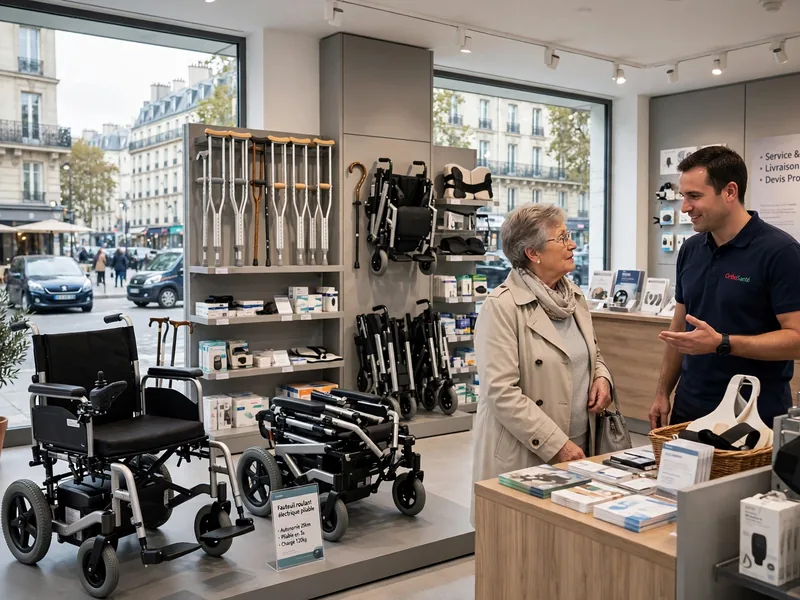
Most electric wheelchairs in France reach end users through specialist medical equipment shops, known locally as magasins de matériel médical. These shops sit at the centre of the market because buyers want to sit in a chair, try the controls, and ask questions before they spend. Home-care providers and pharmacies that carry medical equipment form a second route, while online shops and institutional buyers such as nursing homes add further volume once a brand is known. No single channel covers the whole country, so a distributor who relies on only one route usually finds growth slows quickly.
The practical move is to start narrow: one region, one main channel, and a small range of models you can support well. A regional equipment shop that already serves elderly customers will teach you more about French buyers in a month than a nationwide launch ever could. Our overview of selling electric wheelchairs in Europe explains how the French market fits into the wider European picture, and why a country-by-country approach works better than treating Europe as one market. Once your first channel runs smoothly, you can add a second one from a position of strength rather than guesswork.
Channel
What it does well
What to watch
Medical equipment shop
Hands-on trials, fitting advice, local trust
Needs demo stock and staff training
Home-care provider
Reaches users at home, repeat contact
Longer decision cycle, service expectations
Pharmacy with medical devices
High street visibility, walk-in traffic
Limited floor space for large models
Online shop
Wide reach, easy comparison
Buyers still want phone support and clear returns
Institutions and nursing homes
Steady repeat orders
Formal purchasing process, needs patience
Key Takeaway: Start with one French channel and one region, prove the setup works, and only then add a second channel.
What Should You Look for in a French Distribution Partner?
A good French partner already talks to your end users every week. Look for a business with a real customer base in mobility equipment, a showroom or at least space for a demo chair, and someone on the team who can answer technical questions in French. A partner who also has a technician, or a close working link to one, is worth far more than a partner who only promises sales volume. Ask how they handle a customer whose chair stops working, and listen carefully to the answer, because that answer is your after-sales service in France.
Before you commit, agree on the basics in writing: which region the partner covers, what demo stock they will hold, how warranty claims are handled, and what happens if either side wants to end the arrangement. A short trial period with a small first order protects both sides while you learn how the partnership works in practice. In short, treat the first order as a test of the relationship, not just a sale, and judge your partner on communication and follow-through as much as on order size.
Key Takeaway: Choose a French partner for their customers, their showroom, and their technician — not for the volume they promise.
How Do Medical Equipment Shops in France Work as a Channel?
A medical equipment shop in France is an advice-first business, not a self-service store. Customers usually arrive with a family member, sit in several chairs, and ask the staff which model suits their home, their car, and their daily routine. The shop earns its margin by guiding that choice, so the staff need to understand your chairs well enough to recommend the right one with confidence. If your model is new to them, a short hands-on training session and a clear French specification sheet will do more for sales than any brochure.
Shops also expect practical support from their supplier. They want a demo unit they can keep on the floor, point-of-sale material in French, and a straight answer when they call about a spare part or a repair. In addition, they want to know that a replacement chair or part will arrive without a long wait, because a customer who cannot use their chair will not wait quietly. The German market works in a similar shop-led way, as our guide to selling electric wheelchairs in Germany shows. In France, buyers place great weight on the personal advice they receive in the shop, so winning the trust of the shop staff carries your brand further than any advertisement.
Key Takeaway: In France, the shop staff are your real sales team, so train them, equip them with French materials, and keep a demo chair on their floor.
What Does Selling Electric Wheelchairs Online in France Require?
An online shop in France needs the same thing a physical shop needs: clear, honest information in French. Your product pages should show real photos, full specifications in metric units, folded dimensions, weight including the battery, and a short video of the chair folding and unfolding. French buyers compare carefully before they buy, and a page that hides the weight or the folded size will lose them. If you list a folding model as suitable for travel, describe it as designed for air travel (airline approval required), and say plainly that the airline must confirm each booking.
Online sales work best in France when they support, rather than replace, personal contact. A French phone number, a reply to emails in French within one working day, and a returns process explained in plain French will convert far more buyers than a lower price alone. Many buyers will still want to try a chair before they commit, so link your online shop to a local partner or showroom wherever you can. Our look at selling electric wheelchairs in Japan shows the same pattern in another market where buyers value careful, personal service alongside online convenience — in short, your website opens the door, and your French-speaking support closes the sale.
Key Takeaway: Sell online in France with full French product pages, real photos, and French-speaking phone support — the website alone is not enough.
What Localisation Work Must You Do Before You Sell in France?
Localisation starts with the documents your customer actually reads: the user manual, the quick-start guide, the warranty card, and the safety warnings. All of them must be in French, written clearly, and checked by a native French speaker who understands technical text. A machine translation that gets a safety instruction wrong is worse than no translation at all, because it puts the user at risk and damages your name. Use metric units throughout, keep the layout simple, and make sure the folded dimensions and the weight including the battery are easy to find.
Your marketing needs the same treatment: product names can stay in English, but descriptions, web pages, and customer emails should speak to French buyers in their own language and reflect how they actually live — small lifts, narrow doorways, and cars with limited boot space are everyday realities, not edge cases. A local marketing approach makes this far easier, and on the compliance side France follows the same European CE framework as its neighbours, so the general rules in our guide to CE marking for electric wheelchairs still apply.
For the full legal text behind those rules, the official source is the EU Medical Device Regulation (EU) 2017/745 on EUR-Lex. Do the translation work before your first shipment, not after, because fixing French documents under pressure is slow and expensive.
Key Takeaway: Translate the manual, the quick-start guide, and the warranty card into proper French before your first shipment — localisation is a pre-sale job, not a fix.
How Do You Set Up After-Sales Service in France?
After-sales service in France starts with one simple question: when a chair breaks down, who goes to the customer, and how fast? Most distributors answer it with a local repair point — either their partner’s workshop or a trained technician who covers a region. The repair point needs the common spare parts on the shelf, the tools for the job, and a direct line to your factory for the problems it cannot solve. A customer who waits weeks for a repair will not buy from you again, and will tell their friends why.
Set a response promise you can actually keep, and write it down in French for your customers: a clear promise, for example a callback within one working day and a repair visit within a few working days, builds more trust than a vague claim of fast service. In addition, keep a simple record of every repair — the model, the fault, the part used, and the time it took — because that record shows you which parts fail most often and where your training needs to improve. Building this kind of network takes time, and our guide on how distributors build an after-sales service network walks through the same steps for other markets, so start with one repair point in your first region, learn from the first few repairs, and then extend the network region by region.
Key Takeaway: One working repair point, honest response times in writing, and a repair record are the foundation of after-sales service in France.
Which Spare Parts Should You Stock Locally in France?
The parts that matter most are the ones that stop a chair from working: joysticks and controllers, chargers, batteries, tyres, and the small fittings that wear out with daily use. Keep these on the shelf in France, because a customer who cannot drive their chair cannot wait for a part to cross the world. Less urgent items, such as cosmetic covers or optional accessories, can be ordered from your factory as needed. Your stock list should match the models you actually sell, not every model in the catalogue, so review it each time you add or drop a model.
Batteries deserve special attention. All ZVCARE chairs run on a 24V system, and the warranty on a battery is 6 months for lead-acid and 12 months for lithium, so your stock and your promises to customers must reflect those terms. When you order parts from China, remember that freight is charged on gross weight, so check the carton weight before you confirm a shipment, not after. Our electric wheelchair spare parts stocking guide gives a practical framework for deciding how much of each part to hold.
Spare part
Why stock it locally
Priority
Joystick and controller
A fault stops the chair completely
High
Charger
Easy to lose or damage, quick to replace
High
Battery, 24V
Heavy to ship, needed urgently when it fails
High
Tyres and inner tubes
Wear out with daily use
Medium
Armrest pads and fittings
Common wear items, cheap to hold
Medium
Cosmetic covers
Do not stop the chair, order as needed
Low
Key Takeaway: Stock the parts that stop a chair from working — joystick, charger, and battery first — and let cosmetic items come from the factory on demand.
How Do You Handle Warranty Claims with a Supplier in China?
A warranty claim works smoothly when the terms are clear before anything breaks. On ZVCARE chairs, the frame carries 36 months, the motor and the controller carry 12 months each, and the battery carries 6 months for lead-acid and 12 months for lithium. Write these terms into your French warranty card in plain language, so your customer knows exactly what is covered and for how long. When a claim comes in, ask for photos or a short video of the fault first, because a clear picture often shows whether the problem is a part, a setting, or damage from use, and our guide on electric wheelchair warranty: what to ask your supplier explains which questions to settle with your supplier before you start selling.
Once the fault is confirmed, your supplier should send the replacement part promptly, and your repair point should fit it without delay. Keep a small buffer of the most common parts in France so a straightforward repair never waits on an international shipment, and with a 1 pc MOQ and a 7-day lead time after payment, topping up that buffer is a small, regular order rather than a large commitment. Finally, keep the claim paperwork simple — one French form, one contact person, and a written note to the customer when the repair is done — because a claim handled well often creates a more loyal customer than a sale that never had a problem.
Key Takeaway: Clear French warranty terms, photos of the fault first, and a small local parts buffer turn warranty claims from a problem into a reason customers trust you.
Conclusion
Selling Electric Wheelchairs in France is a job of preparation, not promotion. The distributors who succeed are the ones who choose one channel and one region first, put French manuals and French-speaking support in place before the first shipment, and set up a repair point with the parts that matter on the shelf. None of that work is dramatic, and all of it is what French buyers notice when they compare you with a competitor.
If France is your next market, start with the three-step checklist in this guide: channel, localisation, and after-sales. Talk to one or two potential partners, translate your key documents, and agree your warranty terms in writing with your supplier. ZVCARE supports distributors with a 1 pc MOQ, a 7-day lead time after payment, and spare parts supply, so you can start small in France and grow the business one region at a time.
FAQ
Do I need a local partner to sell electric wheelchairs in France?
There is no general legal requirement for a local partner, but in practice a local partner makes the market far easier to enter. A French partner brings a showroom, local customers, and someone who can answer the phone in French when a chair needs repair. If you sell online only, you will still need a repair point and French-speaking support, so most distributors find a partner is the simplest way to provide both.
Must the user manual be in French?
Yes. Your French customers must be able to read the manual, the quick-start guide, and the safety warnings in French, and the translation must be checked by a native speaker. A clear French manual is not only a matter of trust; it also prevents misuse, reduces support calls, and shows that you take the market seriously.
What warranty should I offer French customers?
Offer the warranty your supplier stands behind, and write it plainly in French. On ZVCARE chairs, the frame carries 36 months, the motor and the controller carry 12 months each, and the battery carries 6 months for lead-acid and 12 months for lithium. Do not promise longer terms than your supplier covers, because every extra month comes out of your own pocket.
Can I sell electric wheelchairs in France through my own website only?
You can, but an online-only setup still needs French product pages, French-speaking phone support, and a repair point for breakdowns and returns. Many French buyers want to try a chair before they buy, so a website without any local presence converts slowly. A small local partner or showroom alongside your website usually brings better results than a website alone.
How do I start with a first order for the French market?
Start small and specific: pick one region, one channel, and one or two models that fit French homes and cars. Translate your manual and warranty card into French, agree the warranty terms with your supplier, and set up one repair point before the chairs arrive. With a 1 pc MOQ, you can place a trial order, learn from your first customers, and then scale up with confidence.
Founded in 2015, ZVCARE is an ISO 13485:2016 certified electric wheelchair manufacturer in China, providing OEM & ODM solutions for global distributors and medical stores.