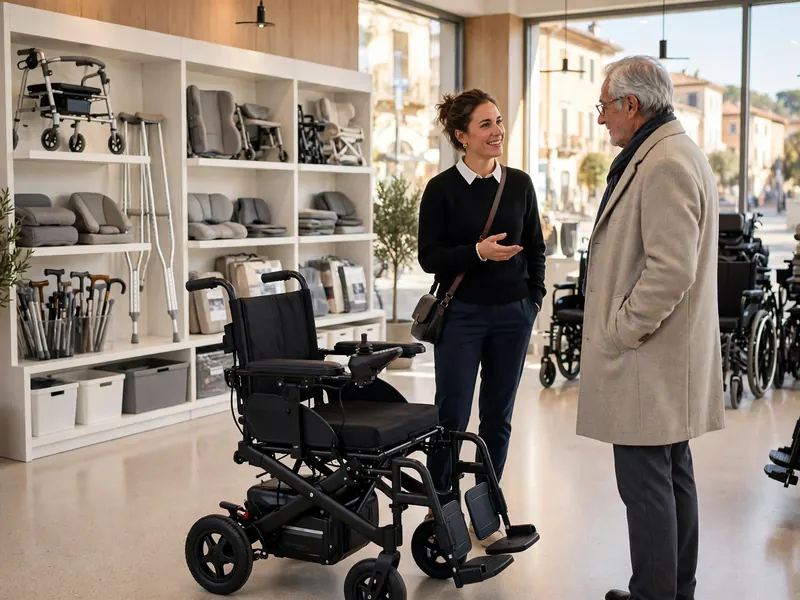
Selling Electric Wheelchairs in Italy starts with a simple truth: Italy is not one market, but many small ones. A distributor in Milan sells differently from a shop in Palermo, and a customer buying for an elderly parent has different questions from a care home ordering several chairs at once. If you plan for that variety from the start, your first year in Italy will be far smoother than if you treat the country as a single shop window.
Italy rewards distributors who do the groundwork. The buyers are practical, the shops are often family-run, and trust is built face to face. A good product still matters most, but how you present it, who sells it for you, and how fast you fix it when something goes wrong matter almost as much. This guide walks through the channels, the partner setup, the localisation, and the after-sales work that turn a first shipment into a steady business.
How do distributors in Italy usually sell electric wheelchairs?
Most electric wheelchairs in Italy reach the end user through local specialist shops, medical supply stores, and pharmacies that carry mobility aids. These shops are the front line: the customer tries the chair, asks questions in Italian, and expects someone nearby to help if a problem appears later. A distributor who supplies these shops is really selling two things at once, the chair itself and the confidence that support is close by.
Online sales also play a role, and many buyers research online before they visit a shop. But a wheelchair is a personal purchase, and most customers still want to sit in it before they decide. That makes a mixed approach the practical choice for most new sellers: a clear website and product pages in Italian for research, backed by local shops where customers can try the chair and get advice. Our earlier guide to selling electric wheelchairs in Europe covers the same pattern across the region, and Italy follows it closely.
Channel
What it does well
What to watch
Specialist mobility shops
Customers try the chair; staff give advice in person
Needs trained staff and demo stock
Medical supply stores and pharmacies
Trusted local presence; repeat foot traffic
Smaller display space; slower decisions
Online shop with local pickup
Reaches buyers who research first
Customers still want a trial before paying
Care homes and institutions
Larger orders; steady repeat business
Longer sales cycles; needs a service plan
Key Takeaway: Sell through local shops where customers can try the chair, and use your Italian website to support that decision rather than replace it.
What should you look for in an Italian sales partner?
A good Italian partner knows their local area the way no catalogue ever will. They know which towns have an ageing population, which shops already sell mobility aids, and which care homes are looking for new equipment. When you talk to a possible partner, ask how they already reach those customers and what they already sell alongside a wheelchair. A partner with a real customer base will always outperform one with only a warehouse.
Reliability matters more than size. Ask how the partner handles a customer complaint, how quickly they answer the phone, and whether they have someone who can carry out basic repairs. Agree the basics in writing before the first order: who handles warranty claims, who keeps spare parts, and how you share the cost when a chair needs a repair under warranty.
Language is part of the partnership too. Your partner should be comfortable explaining the chair in Italian, including the controls, the battery, and the folding steps. If they cannot explain it clearly, the customer will not buy it, however good the chair is. The experience of distributors in nearby markets is similar, as our guide to selling electric wheelchairs in Germany shows.
Key Takeaway: Choose a partner with real local customers, a named person for repairs, and clear written terms on warranty and spare parts before you ship anything.
Which wheelchair models fit the Italian market best?
Start with a small range, not a full catalogue. Three models cover most Italian buyers: a lightweight folding chair for travel and everyday use, a comfortable small-wheel chair for daily life at home, and a premium model for customers who want more comfort and a longer list of features. A tight range keeps your demo stock affordable, your staff training simple, and your spare parts list short.
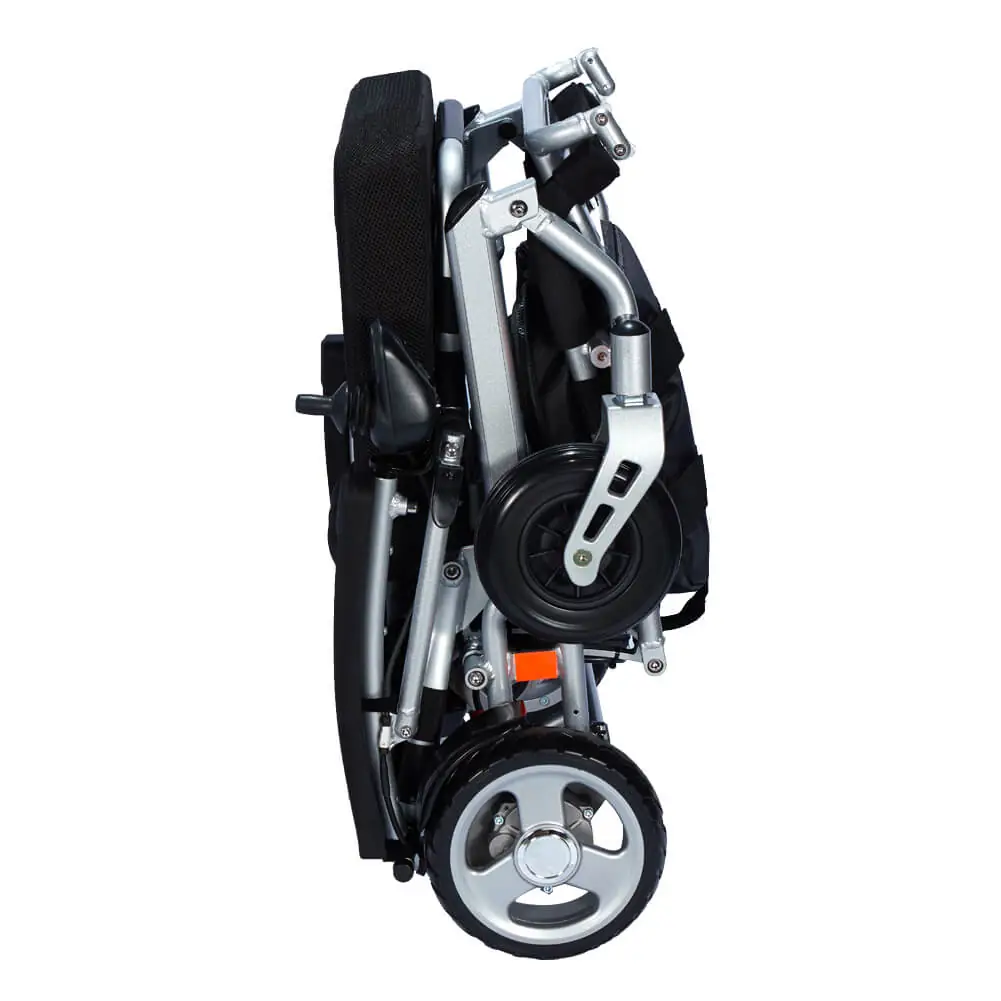
Weight and folding size matter a great deal in Italy, where many customers live in apartments and travel by car or train. The EW100 weighs 23 kg and folds to 73×55.5×31 cm, which makes it easy to lift into a car boot and store in a hallway. The EW1000 is lighter still at 15 kg including the battery, with a range of 15±3 km, while the EW100 offers a range of 12±5 km for shorter daily trips. These are the practical details customers ask about first, so make sure your partner can answer them without checking a manual.
Talk about travel honestly. Both chairs are designed for air travel (airline approval required), and you should always tell customers to check with their airline before they fly. That single sentence avoids disappointment at the airport and builds trust. You can see the full current range on our electric wheelchair product pages, and the lightweight options in particular on the lightweight electric wheelchair models page.
Key Takeaway: Offer three models that cover travel, daily use, and premium comfort, and lead with weight, folded size, and range, because those are the questions Italian customers ask first.
How should you localise your product pages and manuals for Italy?
Localisation means more than translation. A direct translation of an English page often reads stiffly and misses the words Italian customers actually use when they search. Work with a native Italian speaker who knows the mobility market, and ask them to rewrite the key pages rather than translate them word for word. Product names can stay in English, but the descriptions, the questions customers ask, and the calls to action should read like natural Italian.
Manuals and labels deserve the same care. A customer who cannot follow the folding steps or the charging instructions in Italian will call your partner, and your partner will call you. Clear Italian instructions, with photos showing each step, prevent most of those calls. The same applies to the warranty card: state the warranty plainly, with the frame covered for 36 months, the motor and controller for 12 months each, and the battery for 6 months for lead-acid or 12 months for lithium.
Our guide to selling electric wheelchairs in France covers a similar approach to localisation, and the lesson is the same in both countries: natural local wording beats a literal translation every time.
Key Takeaway: Have a native speaker rewrite your Italian pages and manuals in natural local wording, with clear photos for folding and charging, and a plainly stated warranty.
What should the first order include?
A first order should be big enough to sell from and small enough to learn from. That usually means a few chairs from each of your three launch models, plus the parts and accessories customers ask for in the first weeks. Ordering this way lets your partner put a chair in the shop window, keep one for home demonstrations, and still have stock when the first customer says yes.
Spare parts are not an optional extra. Include the items that wear out or break most often, such as a spare battery, a charger, a controller, and a set of tyres, so your partner can fix a chair the same week instead of waiting for a shipment. Our factory keeps spare parts available for the models we supply, and we inspect every chair with 100% visual inspection before it leaves the factory. That check catches the small faults that would otherwise become your partner’s first complaint.
Use the checklist below when you plan the order, and talk it through with your partner before you confirm it. A short call at this stage saves a long exchange of emails later.
First-order item
Why it matters
Demo chair for each launch model
Customers try before they buy
Selling stock for each model
No waiting time after the first sale
Spare battery and charger
The most common urgent replacement
Spare controller and tyres
Fixes most day-to-day faults locally
Italian manuals and warranty cards
Customers can use the chair from day one
Display and point-of-sale material
Helps a small shop present the range well
Key Takeaway: Order demo chairs, selling stock, and the common spare parts together, so your partner can show, sell, and repair from the first week.
How do you set up after-sales service and spare parts in Italy?
After-sales service is where a distributor earns repeat business in Italy. Customers remember how fast a fault was fixed far longer than they remember the price they paid. Set up the service plan before the first sale, not after the first complaint. Name one person at your partner who handles repairs, agree how quickly they respond, and make sure they have the spare parts on the shelf to do the job.
Training is the other half of the plan. A short training session, in person or by video call, should cover the checks a shop can do itself: battery charging, controller settings, tyre changes, and the folding mechanism. Our factory supports this with clear manuals and spare parts supply, and the same approach works in other markets, as our guide to selling electric wheelchairs in the United Kingdom explains. A partner who can solve small problems locally will call you less and sell more.
Keep a simple record of every repair: the model, the fault, the part used, and how long the fix took. Over a few months this record shows you which parts to stock more of and which problems need a better explanation in the manual.
Key Takeaway: Name a repair contact, train them on the common fixes, stock the common parts locally, and keep a simple repair record so your service gets better every month.
What paperwork should you prepare before the first shipment?
Paperwork is not the exciting part of selling in Italy, but it is the part that delays shipments when it is missing. Before the first order leaves the factory, confirm the product documents your partner needs, the shipping documents, and the customs classification. Electric wheelchairs ship under a specific HS code, and our guide to what HS code electric wheelchairs ship under explains how that classification works for export orders.
For the product itself, the EU medical device rules set the framework that applies across member states, including Italy. The full text of the regulation is published by the EU, and you can read Regulation (EU) 2017/745 on medical devices on EUR-Lex. Your factory should be able to provide the conformity documents for the models you order, so ask for them early and keep copies with the shipment file.
Local rules can change, and the details that apply to a sale in Italy may differ from those in another EU country. Confirm current local rules with your partner or the relevant authority before you commit to a sales plan, and do not rely on a general guide for the specifics. A short check with your partner at this stage is far cheaper than sorting out a problem after the chairs have arrived.
Key Takeaway: Gather the conformity documents, the shipping documents, and the HS code before you ship, and confirm current local rules with your partner or the relevant authority.
How do you grow from a first order to a steady Italy business?
Growth in Italy is usually gradual, and that is a strength rather than a weakness. After the first order, visit your partner, watch customers try the chairs, and listen to the questions they ask. Those questions tell you which model to promote next, which accessory to add, and which page on your website needs a clearer answer.
Add one thing at a time. A second shop in a nearby town, a care-home customer, or a new premium model are each a manageable step. Each step should come with the same groundwork as the first: demo stock, trained staff, spare parts, and Italian material. The experience from our other European markets follows the same pattern, and the same step-by-step approach works in very different markets too, as our guide to selling electric wheelchairs in Japan shows.
Keep in touch with your factory as you grow. Share the repair record, the questions customers ask, and the models that sell best. A factory that hears this feedback can adjust the range, the packaging, and the spare parts list to fit your market. That two-way flow is what turns a supplier into a partner, and a first order into a steady business.
Key Takeaway: Grow one step at a time, guided by what customers ask and what your repair record shows, and share that feedback with your factory so the range keeps fitting Italy.
Conclusion
Selling Electric Wheelchairs in Italy is a practical business, not a gamble. Choose local shops where customers can try the chair, pick a partner who answers the phone and can carry out repairs, and start with three models that cover travel, daily use, and premium comfort. Localise your pages and manuals in natural Italian, order the spare parts with the first chairs, and set up the service plan before the first sale. Confirm current local rules with your partner or the relevant authority, and grow step by step on the evidence of what customers ask for.
If you are ready to start, ZVCARE can help you take the first step. We are a Shenzhen electric wheelchair manufacturer working with 50+ global partners, with 100% visual inspection on every chair before shipment. Our minimum order is 1 pc, our lead time is 7 days after payment, and spare parts are available for the models we supply. Tell us which three models you want to start with, and we will prepare your first Italy order with Italian manuals and the documents your partner needs.
FAQ
What should a distributor check before the first Italy order?
Check that you have a local partner with real customers, a named person for repairs, Italian manuals and warranty cards, and the common spare parts on the shelf. Confirm the shipping documents and the HS code with your factory, and confirm current local rules with your partner or the relevant authority before you commit.
Which electric wheelchair models should a distributor start with in Italy?
Start with three models: a lightweight folding chair for travel and everyday use, a comfortable small-wheel chair for daily life, and a premium model for customers who want more comfort. This keeps demo stock affordable, training simple, and the spare parts list short while covering most buyers.
How important is after-sales service when selling electric wheelchairs in Italy?
It is one of the most important parts of the business. Customers remember how fast a fault was fixed, and a partner who can repair a chair locally will sell more than one who has to wait for parts. Set up the repair contact, the training, and the spare parts before the first sale.
Do customers in Italy need to try the chair before they buy?
Most do. A wheelchair is a personal purchase, and customers want to sit in it, test the controls, and check the folding size before they decide. That is why local shops with demo stock matter, even when customers first find your products online.
How does a distributor order electric wheelchairs from ZVCARE?
Contact us with the models and quantities you want to start with. Our minimum order is 1 pc, our lead time is 7 days after payment, and spare parts are available for the models we supply. We can also prepare Italian manuals and the product documents your partner needs for the shipment.
Founded in 2015, ZVCARE is an ISO 13485:2016 certified electric wheelchair manufacturer in China, providing OEM & ODM solutions for global distributors and medical stores.