Every commercial invoice for an electric wheelchair shipment carries a short string of digits that decides how customs treats the goods at both ends of the journey. Get it right and the shipment clears as routine cargo. Get it wrong and the same chairs can sit at the port while someone re-examines the paperwork, re-calculates the duty, or asks why the code on the invoice does not match the code the broker filed. For distributors importing electric wheelchairs, one question matters more than it looks: what HS code do electric wheelchairs ship under? Knowing the answer is not customs trivia — it is part of buying correctly.
This guide explains the classification logic for electric wheelchairs, shows you exactly where to confirm it for your market, and gives you a short script for settling the question with your freight forwarder before the goods ever leave the factory.
What Is an HS Code, and Why Should a Wheelchair Buyer Care?
The Harmonized System (HS) is the international standard for classifying traded goods, maintained by the World Customs Organization (WCO). The first six digits are the same in every country that uses the system — which is nearly all of them. Each country then adds its own extra digits for national tariff lines, but the 6-digit core is the common language that exporters, importers, forwarders, and customs officers all read.
For a wheelchair buyer, the code matters in four concrete ways. First, it determines how the destination country’s tariff schedule treats the goods, which feeds directly into duty calculations. Second, customs clearance software and officers use the code to decide which inspections, permits, or additional documents apply. Third, the code must be consistent across the commercial invoice, packing list, and the broker’s entry filing — a mismatch can get a shipment flagged for review. Fourth, trade statistics are compiled by code, so the right classification keeps your import records clean if you ever need them for audits or duty-drawback claims.
None of this means you need to become a classification expert. It means you need to know the right code for your product, print it consistently on your documents, and confirm the destination-country details with your customs broker. Our import guide for electric wheelchairs walks through the full document flow from RFQ to delivery, and the HS code is one of the fields that flow touches at every step.
Key Takeaway: The HS code is the 6-digit international classification on your commercial invoice. It drives duty treatment, clearance checks, and document consistency — know it, print it the same everywhere, and let your broker confirm the national extension.
What HS Code Do Electric Wheelchairs Ship Under? Start With Heading 8713
Electric wheelchairs fall under HS heading 8713: “Carriages for disabled persons, whether or not motorised or otherwise mechanically propelled.” That heading splits into exactly two subheadings, and the split is the whole point of this article:
– 8713.10 — not mechanically propelled. This is the manual wheelchair: pushed by hand or propelled by the user working the wheels directly.
– 8713.90 — other. This is where motorized wheelchairs live — chairs fitted with mechanical propulsion, typically driven by a light electric motor.
So the short answer: an electric wheelchair ships under 8713.90 at the 6-digit international level. A manual wheelchair ships under 8713.10. The distinction is the motor, not the brand, the price, or the frame material.
This is not just textbook reading. In a 2025 US Customs ruling (NY N349420), US Customs and Border Protection confirmed that three models of electric wheelchairs imported from China classify under 8713.90.0060 in the US tariff schedule — and in the same ruling confirmed that the manual wheelchair in the shipment belongs under 8713.10. You can read the full text of CBP ruling NY N349420 to see exactly how customs reasons through the classification. Rulings like this are the closest thing to a worked example that exists in public.
One boundary worth knowing: the heading covers vehicles specially designed for the transport of disabled persons. A normal vehicle merely adapted for a disabled driver — a car with hand controls, for example — does not belong here. For a factory-built electric wheelchair, though, there is no ambiguity about which side of that line the product sits on.
Key Takeaway: Electric wheelchairs classify under HS 8713.90 (motorized); manual wheelchairs under 8713.10. The motor is the deciding factor, and a published US Customs ruling on electric wheelchairs from China confirms the 8713.90 treatment.
What Do the Digits After 8713.90 Mean?
The 6-digit code is where international agreement ends and national detail begins. Each country extends the code with its own digits for its tariff schedule:
Digits
Level
What it is
87
Chapter
Vehicles and associated transport equipment
8713
Heading
Carriages for disabled persons
8713.90
Subheading (HS, 6 digits)
Other — motorized
8713.90.0060
US HTS (10 digits)
The US import line confirmed in CBP ruling NY N349420
The EU uses an 8-digit Combined Nomenclature, China uses its own national extensions for export declarations, and other markets each have their own versions. The practical division of labor: the factory declares the export classification (built on the 6-digit core) on the commercial invoice and export paperwork; your customs broker at destination determines the full national code for the import entry.
This is exactly where buyers get into trouble by guessing. Do not invent the destination country’s full code yourself, and do not copy a code from a competitor’s invoice without checking. The 6-digit core (8713.90) is stable worldwide; everything after it is your broker’s job to confirm. If your broker has never cleared electric wheelchairs before, send them the product description, the motor specification, and photos of the chair — and ask them to confirm the classification in writing before the shipment sails.
Key Takeaway: 8713.90 is the worldwide 6-digit core; each country adds its own digits after it. The factory handles the export side of the code — your customs broker confirms the destination country’s full version. Never guess the extension yourself.
What Happens When the Wrong Code Goes on the Documents?
Misclassification rarely produces a dramatic seizure; it produces the slow, expensive kind of problem. Here is what the wrong code typically costs, in the order distributors usually encounter it:
1. Clearance delays. A code that does not match the goods description triggers examination. While the shipment waits, storage charges accumulate at the port — and the delay, not the duty, is usually what hurts most.
2. Re-classification and duty adjustments. If customs re-classifies the goods, the duty is recalculated under the corrected code, and the difference is billed with interest in many jurisdictions.
3. Document inconsistency flags. When the commercial invoice shows one code, the packing list shows another, and the broker files a third, the inconsistency itself becomes the reason for a deeper review — even if any single one of the codes would have been defensible.
4. Penalty exposure. Repeated or careless misclassification can draw fines in some markets. The exposure grows if the error systematically understates duty.
5. Record problems later. Import records feed into everything from duty-drawback claims to compliance audits. A wrong code on file is a wrong foundation for all of them.
None of these require bad intent — most misclassification is copy-paste: someone reuses the code from a manual wheelchair shipment, or from a mobility scooter, or from a previous supplier’s invoice, without checking. The fix is procedural, not legal: one verified code, printed identically on every document, confirmed with your broker before shipping. Keep your product certificates and test reports consistent with the same product description, too — our guide to CE marking for electric wheelchairs explains what Class I documentation should accompany the goods.
Key Takeaway: The wrong code costs you in delays, re-calculated duty, and document flags — not in drama, but in money and time. One verified code, identical on every document, confirmed before shipment.
How Do You Confirm the Right Code With Your Forwarder?
This is the part you can do on your next shipment. Classification is ultimately the importer’s responsibility at destination, so the confirmation conversation happens between you and your forwarder or customs broker — not between you and the factory alone. Here is a script that works:
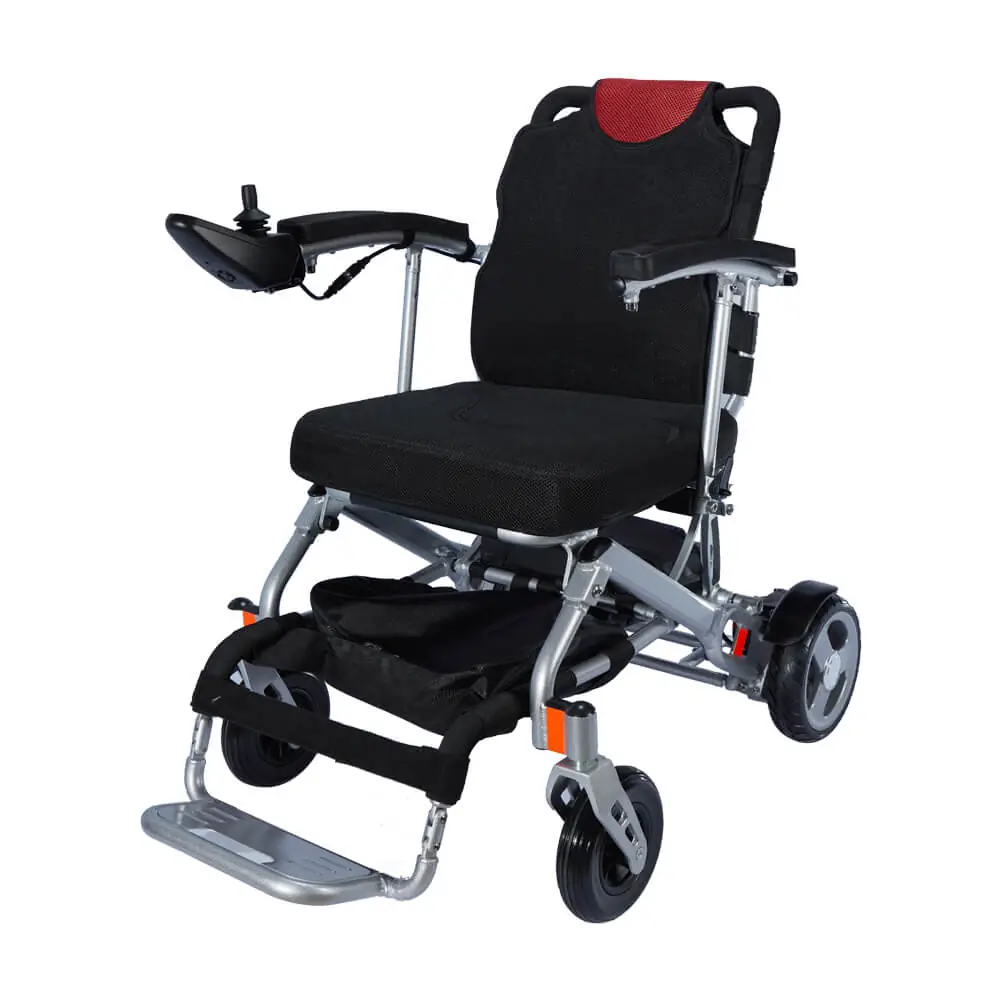
Send the broker three things: a one-paragraph product description (“folding electric wheelchair, 24V lithium battery, joystick-controlled, designed for persons with mobility impairments”), the specification sheet, and two or three photos of the chair. This is the same packet you would assemble for any serious product question.
Ask these questions, in writing:
– “Which 6-digit HS code do you file for electric wheelchairs imported from China?”
– “What is the full national tariff code at our destination, and is there anything beyond the standard import entry — permits, inspections, additional declarations?”
– “If the shipment includes spare parts (controllers, motors) or the batteries ship separately, do those need their own codes?”
– “Can you confirm the classification in writing before we book the shipment?”
The spare-parts question deserves emphasis: a replacement controller, a drive motor, or a lithium battery pack will often classify under a different heading than the complete wheelchair. Batteries in particular travel with their own documentation — UN38.3 test reports and MSDS — which your forwarder will ask for regardless of the code. Our UN38.3 guide for wheelchair batteries covers what that paperwork contains.
And if you are still choosing between transport modes for the shipment, our shipping modes guide explains how sea, air, and express each handle the documentation differently.
Get the broker’s written confirmation, save it with the shipment file, and use the same code on the next identical shipment. That paper trail is what turns classification from a recurring question into a settled fact.
Key Takeaway: Send the broker a product description, spec sheet, and photos; ask for the 6-digit code, the full national code, and written confirmation before booking. Spare parts and batteries often need their own codes — ask about those too.
Does the HS Code Affect Your Landed Cost?
Yes — directly. Import duty is calculated against the classified tariff line, so the code is one of the inputs to your landed cost, alongside freight, insurance, and local charges. Two shipments of identical chairs can land at different total costs if they clear under different classifications or in different markets.
This is also why the code question belongs early in your buying process, not the week the goods arrive. When you are comparing suppliers, the honest comparison is total landed cost per unit — not the FOB price on the quote. Our landed cost guide for distributors shows how to build that calculation line by line, with duty as one of the line items your broker fills in.
A practical note on responsibility: the factory quotes you the product price and handles export clearance; the import duty at your end is between you, your broker, and your customs authority. A factory that declares the correct export classification on the commercial invoice has done its part — the rest of the landed-cost math is yours to own with your broker’s help.
Key Takeaway: Duty follows the classification, so the HS code is a landed-cost input. Build the full landed-cost calculation with your broker early — compare suppliers on landed cost per unit, not on FOB price alone.
Frequently Asked Questions
Do electric and manual wheelchairs share the same HS code?
No. They share the heading (8713) but not the subheading. Manual wheelchairs — not mechanically propelled — classify under 8713.10. Electric wheelchairs, being motorized, classify under 8713.90. If your product line includes both, they need separate lines on the commercial invoice with their respective codes.
Who decides the final classification — the factory or the importer?
Both, at different ends. The factory declares the export classification on the commercial invoice and export declaration, built on the international 6-digit code. The importer (through the customs broker) determines the full national tariff code for the import entry at destination. When the two ends disagree, destination customs wins — which is why the broker’s written confirmation matters more than any code printed on a quote.
Do spare parts and batteries use the same code as the wheelchair?
Often not. A complete electric wheelchair is 8713.90, but a replacement controller, a drive motor, or a lithium battery pack shipped on its own will typically fall under different headings for electrical parts or batteries. If your shipment mixes complete chairs with spares, itemize them as separate lines with separate codes — and confirm each one with your broker rather than extending the wheelchair code to the parts.
Can one shipment contain goods under multiple HS codes?
Yes, and it routinely does. A container with electric wheelchairs, spare controllers, and chargers will list each product line with its own code on the commercial invoice. What customs does not accept is one code stretched to cover goods it does not describe. Itemize honestly; it clears faster than a single convenient code.
What documents should show the HS code?
At minimum, the commercial invoice — that is the document customs reads first. Keep the same code on the packing list and make sure your broker files the matching classification on the import entry. Consistency across all three is what keeps a routine shipment routine.
Conclusion
The classification question has a short answer and a careful process. The short answer to what HS code do electric wheelchairs ship under is 8713.90 — the international 6-digit code for motorized carriages for disabled persons, confirmed by published customs rulings on electric wheelchairs imported from China. The careful process is everything around it: confirming the destination country’s full code with your customs broker, printing one consistent code across every document, and treating spare parts and batteries as separate classification questions.
Get those two things right — the code and the confirmation — and classification stops being a risk and becomes routine paperwork. At ZVCARE, every export shipment leaves with the correct classification declared on the commercial invoice, the battery documents your forwarder needs, and the product paperwork to match. With 1-unit MOQ and 7-day lead time after payment, you can run a single trial chair through your broker’s clearance process before committing to a container. Contact the ZVCARE team to start with a trial order.
Founded in 2015, ZVCARE is an ISO 13485:2016 certified electric wheelchair manufacturer in China, providing OEM & ODM solutions for global distributors and medical stores.