Selling Electric Wheelchairs in the Netherlands is a practical next step for a distributor who already knows the European market, because the country is compact, well connected, and used to buying mobility equipment through a mix of specialist shops, care providers, and online stores. The work is not about finding one magic channel. It is about choosing the right channels, localising your offer in Dutch, and building after-sales service that Dutch buyers can rely on. This guide walks through each of those steps in the order you will actually do them.
How Do Distributors in the Netherlands Usually Sell Electric Wheelchairs?
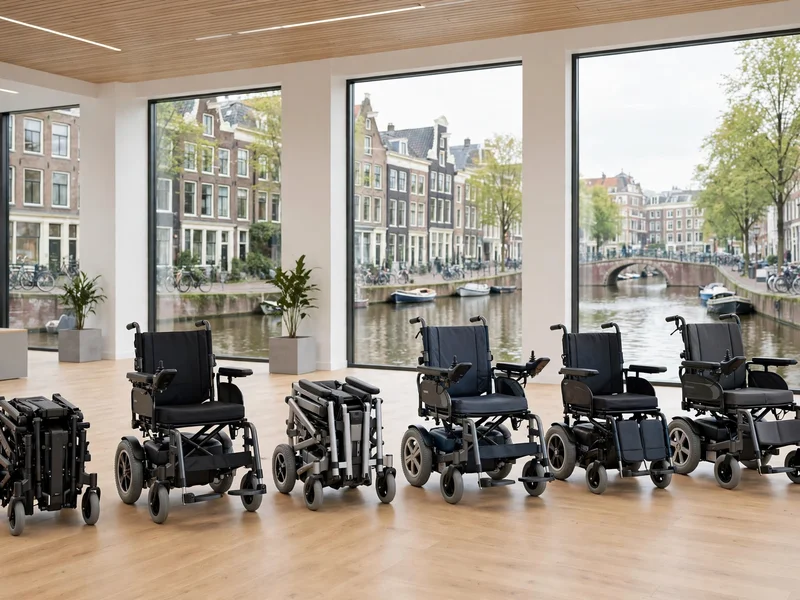
Most electric wheelchairs in the Netherlands reach buyers through specialist mobility shops and medical equipment retailers, rather than through general stores. These shops keep demo chairs on the floor, let customers try them, and handle the fitting and handover in person. For a new distributor, that makes the specialist shop your most important channel, because the shop already has the trust of local buyers and the space to show what a chair can do.
Alongside the shops, many distributors also sell through care organisations, rehabilitation centres, and online listings that point back to a local service address. Online sales work best when the listing is honest about folded size, weight, and range, and when a buyer can still book a test drive or a phone call before ordering. A listing that only shows a price and a photo will attract questions you cannot answer well from a distance, so treat the online channel as a way to start conversations, not as a way to skip them.
Key Takeaway: In the Netherlands, specialist mobility shops lead the sale, and online listings work best when they lead buyers back to a demo or a conversation.
Which Sales Channels Work Best When You Are New to the Dutch Market?
When you are new to the Dutch market, start with two or three channels you can serve well, rather than trying to be everywhere at once. A small network of mobility shops gives you local presence and feedback, while a clear online listing gives buyers a way to find you and compare models. If you add a third channel, make it a care provider or a rehabilitation contact who can recommend your chairs to people who need them, because a recommendation from a care professional carries real weight.
Each channel needs a different kind of support from you. Shops need demo chairs, printed material in Dutch, and a fast answer when a customer asks a technical question. Online buyers need clear specifications, real photos, and a plain explanation of delivery and warranty. Care contacts need a short, honest summary they can pass on, not a sales brochure. Therefore, before you sign up a new channel, ask yourself whether you can support it properly, because a channel you cannot serve will cost you more in lost trust than it earns in orders.
Channel
How it works
Best for
What to watch
Specialist mobility shop
Demo, fitting, and handover in store
First-time buyers who want to try before they buy
Shops need demo stock and quick technical answers
Online listing
Buyer compares models and contacts you
Buyers who already know what they need
Listings must be accurate and lead to a real contact
Care provider or rehab centre
Professional recommends your chair
Buyers who trust a care referral
Keep the summary short, honest, and easy to pass on
Local agent or sub-distributor
Agent sells in a region you do not cover
Reaching towns outside your own area
Agree the territory and the service split in writing
Key Takeaway: Start with two or three channels you can support properly, and add more only when the first ones are running smoothly.
What Should You Look for in a Dutch Distribution Partner?
A good Dutch partner knows the local buyers, speaks their language, and already has a place where customers can try a chair. Look for a partner who runs a real showroom or a service workshop, not just a website, because fitting and after-sales work cannot be done from a warehouse alone. Ask how many demo chairs they keep, who answers customer questions, and how they handle a chair that comes back with a fault.
You should also check that the partner is comfortable with the practical side of the business. That means they can store a small stock of spare parts, run a simple warranty process, and keep records for each chair they sell. If you are comparing partners across Europe, the same checks apply in our guide to selling electric wheelchairs in Spain, where the first question is always whether the partner can support the product after the sale. Finally, agree the basics in writing before the first order: territory, order sizes, payment terms, and who handles warranty. Our guide on how to read an electric wheelchair distributor agreement explains the clauses that cause the most disputes, so use it as a checklist before you sign.
Key Takeaway: Choose a Dutch partner with a real showroom, a service habit, and a written agreement that spells out territory, orders, and warranty.
Which Electric Wheelchair Models Fit Dutch Buyers Best?
Dutch buyers value chairs that fold small, travel easily, and fit through the doors of compact homes. That is why lightweight folding models usually lead the range. The EW1000 is a carbon fiber folding chair at 15 kg including the battery, with a folded size of 73×39×71 cm and a range of 15±3 km, which makes it easy to lift into a car and simple to store at home. The EW100 is the aluminum alloy alternative, folding to 73×55.5×31 cm with a range of 12±5 km, and it suits buyers who want a light, practical chair for everyday use.
For buyers who need a sturdier daily chair, the EW8722 adds comfort and durability at 45 kg, with a range of 18–22 km and a folded size of 80×39×74 cm. It is a better fit for regular daily use than for frequent lifting in and out of a car. The EW8703G, our big-wheel model, suits buyers who spend more time outdoors and want a steadier ride on uneven ground. All four models are designed for air travel (airline approval required), which matters to Dutch buyers who travel, but always remind customers to confirm approval with their airline before they fly.
Model
Folded size
Weight
Range
Best for
EW1000
73×39×71 cm
15 kg incl. battery
15±3 km
Travel and easy lifting into a car
EW100
73×55.5×31 cm
23 kg
12±5 km
Everyday folding use at home
EW8722
80×39×74 cm
45 kg
18–22 km
Comfortable daily use
EW8703G
89×43×76 cm
46 kg
18–22 km
Outdoor use and uneven ground
Key Takeaway: Lead with lightweight folding models for travel and compact homes, and keep a sturdier daily model in the range for buyers who use their chair all day.
How Should You Localise Your Listings and Manuals for Dutch Buyers?
Localisation starts with the Dutch language. Product pages, manuals, and warranty cards should be available in Dutch, because most buyers want to read safety instructions and charging guidance in their own language before they trust a chair. English is widely spoken in the Netherlands, but a listing that is only in English still looks like an import, while a Dutch listing looks like a product that belongs in the country. If a full Dutch manual is not ready for the first order, provide a Dutch quick-start guide and a clear note that the full manual follows.
Beyond language, check the details that Dutch buyers actually read. Show folded size in centimeters, weight in kilograms, and range in kilometers, and show a photo of the folded chair next to an everyday object so the size is easy to judge. Use real photos of the exact model you sell, not a generic image, and name the battery type plainly so buyers know what they are charging at home. The same localisation habit applies across Europe, as our guide to selling electric wheelchairs in Italy shows, because buyers in every market trust listings that speak their language and show the real product.
Key Takeaway: Translate your listings and quick-start guide into Dutch, show folded size and weight in metric units, and use real photos of the exact model.
What Should Your First Order for the Netherlands Include?
A sensible first order for the Netherlands is small enough to manage and wide enough to learn from. Start with a mix of models rather than a single chair: a few lightweight folding chairs for travel buyers, and a few sturdier chairs for daily use. With a minimum order quantity of 1 unit and a lead time of 7 days after payment, you can start small and reorder once you see which models your shops actually sell. That keeps your cash in stock that moves, not in stock that sits.
Your first order should also include the items that make the sale work: a demo chair for each shop, spare controllers, motors, and chargers, and Dutch printed material for the showroom. Ask your supplier to confirm the paperwork for the shipment in writing before it leaves the factory, and keep the commercial invoice, packing list, and battery documents together so nothing is chased later. Electric wheelchairs are medical devices under the EU Medical Devices Regulation, Regulation (EU) 2017/745, and the exact paperwork for your shipment should be confirmed with your supplier, because requirements can differ by model and battery type. You can read the regulation itself on EUR-Lex, Regulation (EU) 2017/745. If a shipment ever gets held, our guide on how distributors clear electric wheelchair shipments walks through the first steps to take.
Key Takeaway: Keep the first order small and mixed, add demo chairs and key spares, and confirm all shipment paperwork with your supplier in writing before dispatch.
How Do You Set Up After-Sales Service and Spare Parts in the Netherlands?
After-sales service is where a Dutch business is won or lost, because buyers judge you on the second visit, not the first. Set up a simple service point before your first sale, even if it is one trained technician and a bench in the back of a shop. That technician should be able to check a controller, swap a motor, test a charger, and run a basic safety check after any repair. Keep a written record for each chair, with the model, serial number, and any part you changed, so a repeat fault is easy to trace.
Stock the parts that fail most often and that stop a chair from being used: controllers, motors, chargers, joysticks, and batteries. You do not need a large warehouse to start, but you do need the common parts on the shelf, because a buyer who waits weeks for a basic part will not recommend you. Agree response times with your supplier in writing, and know the warranty terms by heart: frame 36 months, motor and controller 12 months each, and battery 6 months for lead-acid or 12 months for lithium. Every chair also passes a 100% visual inspection before it leaves our facility, so a fault you find on arrival is something to report with photos, not something to fix quietly on your own.
Key Takeaway: Open a small service point before the first sale, stock controllers, motors, chargers, and batteries, and keep a written record for every chair.
How Do You Grow From a First Order to a Steady Dutch Business?
Growth in the Netherlands comes from repeat orders and referrals, not from one large first shipment. After the first order lands, visit each shop, ask what sold and what customers asked about, and adjust the next order to match. If the lightweight folding chairs moved fast and the sturdier chairs moved slowly, shift the mix. If buyers kept asking about travel, make sure your listings and your shop staff both explain the airline step clearly, using the wording designed for air travel (airline approval required), and never promising what an airline has not confirmed.
Keep in touch with the buyers who already own a chair, because they are your best source of honest feedback and your best source of new customers. A short follow-up call after delivery, a reminder about battery care, and a quick answer when something goes wrong will do more for your reputation than any advertisement. As the business grows, add shops one at a time, keep the same service standard in each one, and keep your range tight: a few models you know well will always beat a long list you cannot support. Our Europe overview on selling electric wheelchairs in Europe puts the Netherlands in the wider picture, and the same rule applies there: grow by serving the customers you already have, then add the next town.
Key Takeaway: Grow by reordering what sold, following up with existing buyers, and adding new shops one at a time while keeping the same service standard.
Conclusion
Selling Electric Wheelchairs in the Netherlands comes down to three things you can control: the right channels, a properly localised offer, and after-sales service that buyers can rely on. Start with a few specialist shops and a clear online listing, translate your material into Dutch, and open a small service point before the first sale. Order a small mixed range, confirm the paperwork with your supplier, and let the first sales tell you what to reorder. If you want a supplier who works the same way, ZVCARE offers a minimum order quantity of 1 unit, a lead time of 7 days after payment, spare parts support, and a range built around folding travel chairs and sturdy daily models. Contact us to discuss your first order for the Netherlands, and we will help you put the range, the paperwork, and the service plan together.
FAQ
Do I need a Dutch company to sell electric wheelchairs in the Netherlands?
You do not need to set up a Dutch company to make your first sales, because many distributors start by working with a local partner who already has a showroom and a service point. What you do need is a partner who can handle demos, fitting, and after-sales in Dutch, plus a written agreement that says who does what. If sales grow, you can then decide whether your own local presence makes sense.
Which electric wheelchair sells best in the Netherlands?
Lightweight folding models usually lead, because Dutch buyers travel often and live in compact homes where a small folded size matters. The EW1000, at 15 kg including the battery with a folded size of 73×39×71 cm, is a strong opening model, while the EW100 suits buyers who want an aluminum alloy chair for everyday use. Keep a sturdier model such as the EW8722 in the range for daily use, and let your first sales tell you how to adjust the mix.
Do my product pages and manuals need to be in Dutch?
Yes, your product pages and at least a quick-start guide should be in Dutch before you sell. Buyers want to read safety and charging instructions in their own language, and a Dutch listing signals that the product is properly supported in the country. English-only material is understood by many buyers, but it still looks like an import, and it will cost you trust at the point of decision.
What paperwork should I confirm before my first shipment to the Netherlands?
Confirm the commercial invoice, packing list, battery documents, and any medical device paperwork with your supplier in writing before the shipment leaves the factory. Electric wheelchairs fall under the EU Medical Devices Regulation, Regulation (EU) 2017/745, so ask your supplier exactly which documents apply to your models and batteries, and keep the full set together with the shipment.
How do I handle warranty claims for Dutch customers?
Set up a small service point first, so a claim starts with an inspection, not a phone argument. Record the model, serial number, and the failed part, then check the warranty term: frame 36 months, motor and controller 12 months each, and battery 6 months for lead-acid or 12 months for lithium. Send the supplier photos and the service record, and agree response times in writing before the first order so neither side is guessing.
Founded in 2015, ZVCARE is an ISO 13485:2016 certified electric wheelchair manufacturer in China, providing OEM & ODM solutions for global distributors and medical stores.