How Distributors Choose Electric Wheelchair Trade Shows
November 9, 2026
How Distributors Choose Electric Wheelchair Trade Shows is a question that comes up every year when the exhibition calendar fills up and the invitations start arriving. A distributor cannot attend every show, and a wrong choice costs far more than the time spent on the road, because the chairs, the staff, and the follow-up work all travel with you. The right show puts your team in front of the buyers who actually place orders, while the wrong one leaves you talking to visitors who were never going to buy.
Who Actually Walks the Aisles at This Show?
Key Takeaway: Choose a show for the buyers who walk its aisles, not for the size of its name.
A show is only as useful as the people who attend it, so start by asking who the organiser expects through the door. Some shows draw hospital procurement teams and rehabilitation centres, others draw retail shop owners, and others draw importers and wholesalers looking for a factory partner. Each group buys in a different way, so a show full of the wrong audience will feel busy while producing very little real business.
Ask the organiser for the visitor profile from the last edition, and read it the way a buyer would. Look for the job titles of past visitors, the type of organisation they came from, and the reason they said they attended. If the organiser cannot describe the audience in plain terms, that silence is itself an answer.
Talk to other exhibitors before you book, especially distributors who sell in your market. Ask them who stopped at their stand, what those visitors wanted, and whether any of those conversations turned into orders. When the audience matches the customers you already serve, the show deserves a closer look.
Is This Show About Rehabilitation, Retail, or Something Else?
Key Takeaway: A show with a clear focus brings you the right conversations, while a general show spreads your effort thin.
Every trade show has a theme, and that theme decides what visitors expect to find. A rehabilitation show attracts therapists, clinics, and care providers who want to see how a chair works for a real user, how it folds, and how it handles everyday use. A retail show attracts shop owners who want to know about margins, display, and after-sales support. A sourcing show attracts buyers who want to meet factories, compare build quality, and talk about private label and long-term supply.
Your stand, your demo, and your team all change with the theme, so a mismatch wastes preparation. A rehabilitation audience will sit in the chair and test the controls, while a sourcing buyer will look at the frame, the motor, and the battery. Match the show to the part of your business you want to grow, and be honest about which part that is this year.
Real show names help here, because the established rehabilitation and medical exhibitions are well known in the trade. REHACARE in Germany is one of the best-known rehabilitation trade shows, and its official site, REHACARE, shows how a focused rehabilitation event presents itself, from its exhibitor list to its visitor programme. Compare that focus with a broad medical exhibition such as MEDICA, or a large sourcing event such as CMEF in China, and the difference in audience becomes clear.
How Big Should the Show Be for a Distributor Like You?
Key Takeaway: A smaller show with the right buyers beats a large show where your stand gets lost.
Big shows look impressive, but a large hall also means more competition for attention, longer days, and a higher cost of standing out. A smaller, focused show can be a better fit for a distributor who wants real conversations rather than foot traffic, because visitors there have come with a purpose. Size is a factor, but it is never the deciding factor on its own.
Think about how many meaningful conversations your team can actually hold in a day. A stand that is busy all day with casual visitors can still end the show with no serious leads, while a quiet stand that hosts a handful of long talks with real buyers can justify the trip. A show that matches your capacity is a better investment than one that overwhelms it.
Location matters as much as size, because travel shapes who attends. A show in your home market brings the retailers and care providers you already know, while a show abroad brings new contacts but also adds freight, travel, and time away from the office. If you cannot support customers in that region after the show, meeting them there creates a promise you cannot keep.
What Kind of Demo Space Do You Really Need?
Key Takeaway: Visitors need room to sit in the chair and drive it, not just look at it from behind a rope.
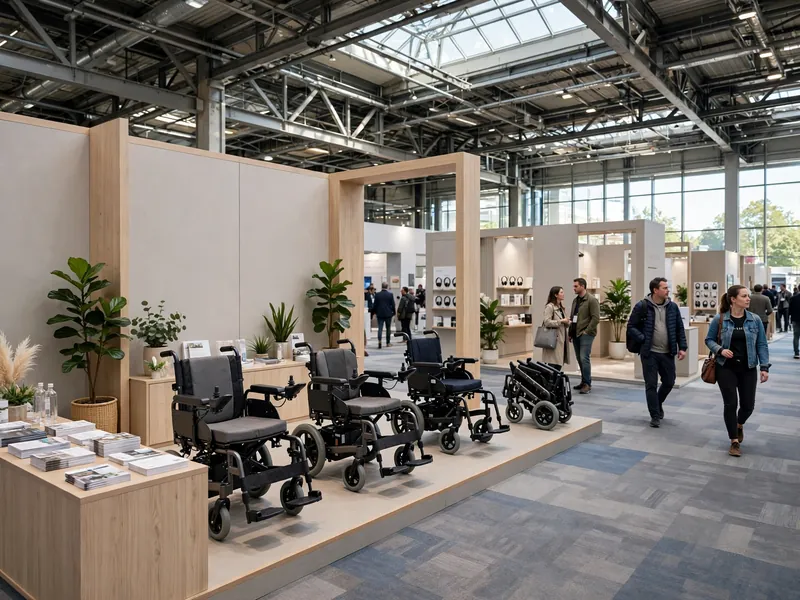
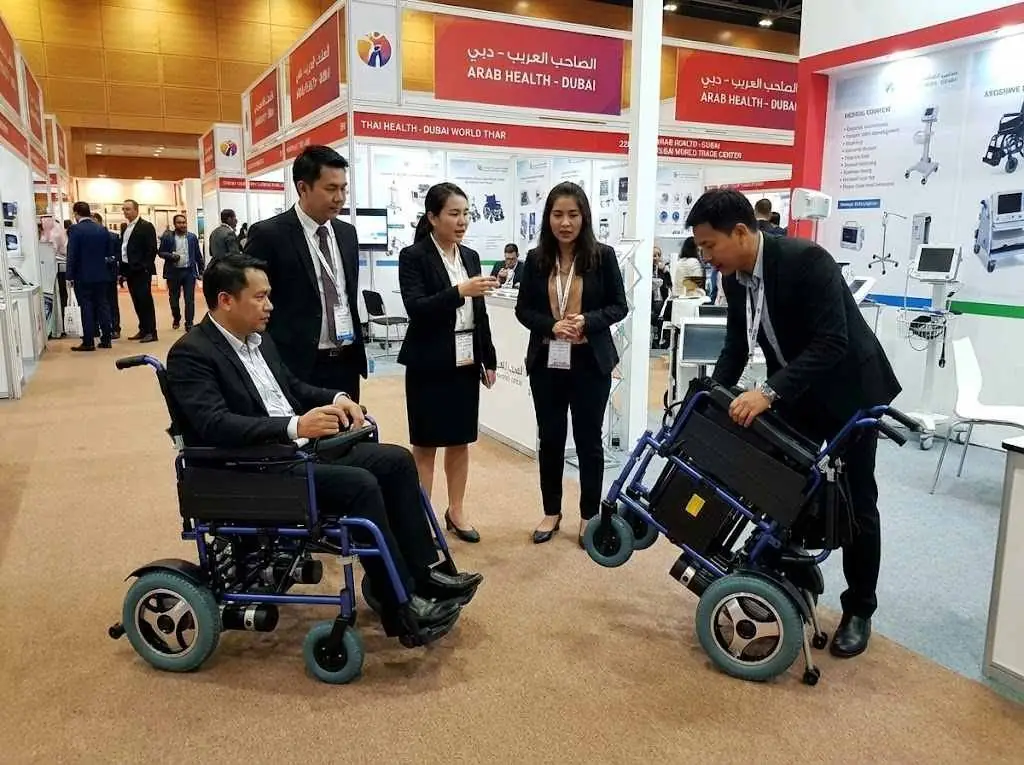
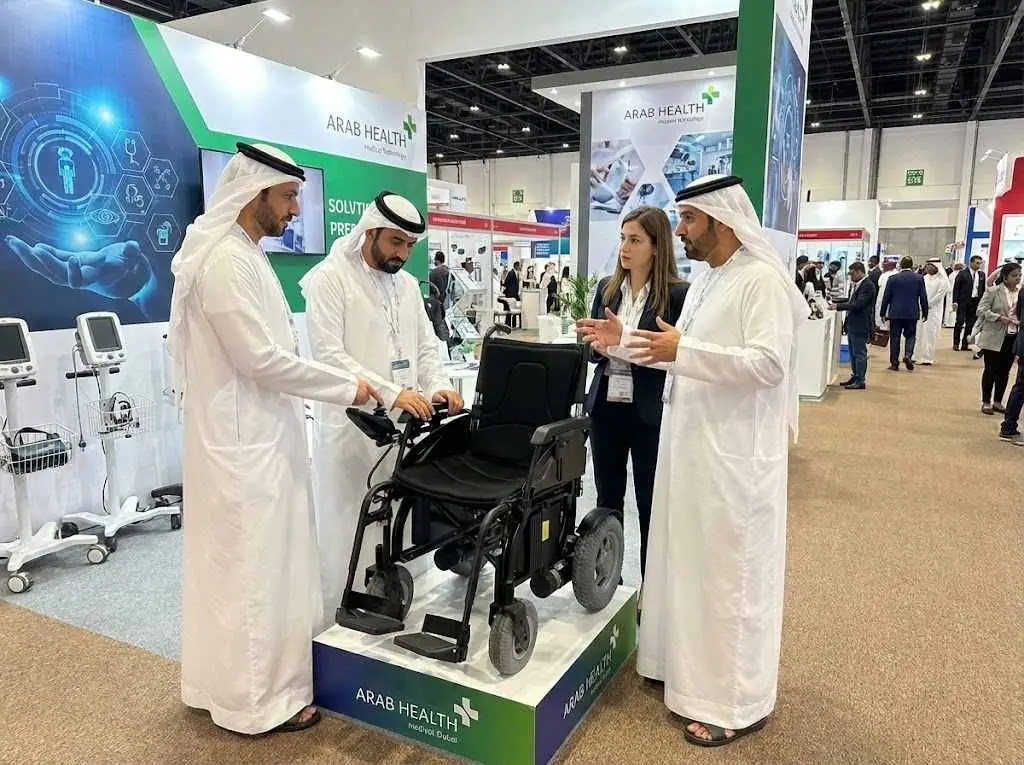
An electric wheelchair is a product people buy by trying, so demo space is not a luxury. Visitors want to sit down, reach the joystick, fold the chair, and feel how it moves, and they cannot do any of that if your stand is a narrow strip with chairs lined up against a wall.
Ask the organiser what the floor is like, whether there is a test area, and whether visitors can drive a chair beyond your stand. Some halls provide a shared demo track, while others leave every test drive to the exhibitor. Also check the practical details: is there power nearby for charging, is the floor level and smooth, and is there somewhere to store folded chairs out of the way.
Your team also needs room to work. A stand with no place to talk privately pushes every conversation into the aisle, where it gets interrupted. A small meeting corner at the back of the stand lets a serious buyer sit down and talk without shouting over the hall. What you learn from the demo also feeds straight into how to exhibit electric wheelchairs at a trade show, which covers the exhibiting itself once you are there.
Which Models Should You Bring, and How Many?
Key Takeaway: Bring a short range that shows your spread, and let visitors compare the models side by side.
A distributor does not need to bring the whole catalogue to a show. A short range that shows the spread of your offer works better, because visitors can compare the models in front of them and understand where each one fits. Bring a lightweight model for travel, a comfortable model for daily use, and a heavier-duty model for users who need more support, and you cover most conversations without crowding the stand.
Choose models that visitors can tell apart at a glance. The EW1000 carbon fiber electric wheelchair weighs 15 kg including the battery and offers a range of 15±3 km, which makes it a natural talking point for buyers who serve travellers. The EW100 lightweight aluminum electric wheelchair folds to 73×55.5×31 cm and offers a range of 12±5 km, and it is designed for air travel (airline approval required), which matters to buyers whose customers fly. The EW8722 durable folding electric wheelchair weighs 45 kg, folds to 80×39×74 cm, and offers a range of 18–22 km, which suits buyers who need a sturdy chair for daily use.
Keep the number of chairs small enough that your team can keep them charged, clean, and ready to demo all day. A chair with a flat battery tells a visitor more about your operation than any brochure does, so plan charging into the day and rotate the demo chairs. If a visitor wants a model you did not bring, show it in your catalogue and arrange a trial after the show through how distributors run an electric wheelchair trial fleet, rather than overloading the stand. You can also point buyers to the full products range.
How Do You Get the Chairs There — and Back — Without Damage?
Key Takeaway: Freight and packing deserve the same planning as the stand itself, because a damaged chair cannot be demoed.
Freight is the part of show planning that distributors most often leave too late. Chairs need packing that survives loading, unloading, and the trip back, and batteries need paperwork that matches the transport rules for the route. Ask your freight partner early what the shipment needs and what documents travel with the batteries, so you are not chasing paperwork on the day the truck is due to leave.
Pack each chair as if it will be handled more than once, because it will be. Remove anything that can snap off in transit, protect the joystick and the controls, and label the cartons clearly so the stand team knows which box holds which model. Take spare parts for the small things that break most often, and carry the tools your team needs to assemble a chair on site.
Plan the return journey before you leave, not after the show closes. Decide which chairs go back to stock, which stay with a local partner for trials, and which go straight to a customer who ordered at the show. A clear return plan stops chairs from sitting in a hall warehouse while the team flies home. If a show is in a market where you already have a showroom, consider whether the demo chairs should go there instead of travelling home, and read how to set up an electric wheelchair showroom for how that space should work.
What Does Attending Really Cost When You Add Everything Up?
Key Takeaway: Add up the full cost of attending before you book, and compare shows on that total rather than on the stand fee alone.
The stand fee is only the first line of the cost of attending a show. Travel, hotels, freight in both directions, stand furniture, power, insurance, and staff time all add to the total, and a show that looks cheap on the stand fee can become expensive once the rest is counted. Sit down before you book and list every cost you can think of, then compare shows on that full total.
Cost area
What to check before you book
Stand and space
Stand fee, power, furniture, and what the organiser provides
Freight and logistics
Packing, shipping both ways, battery paperwork, and insurance
Travel and stay
Flights, hotels, meals, and time away from the office
Staff and follow-up
Team time on the stand and the work needed after the show
Watch out for costs that only appear after you arrive. Some halls charge separately for power, internet, or cleaning, and some charge for forklift help or storage during the show. Ask the organiser for a full list of extras in writing, so there are no surprises on the invoice. Also check the cancellation terms before you sign, because a show that no longer fits your plans should not lock you into a fee you cannot recover.
Compare the total cost against what the show can realistically return. A show is not a purchase, it is an investment in meetings, and the return comes from the orders and partnerships that follow. If the full cost is higher than the business you can reasonably expect from the audience, the show is the wrong choice, however attractive its name.
How Do You Decide After the Show Whether It Was Worth It?
Key Takeaway: Judge a show by the orders and partnerships that follow it, not by how busy your stand looked.
The busiest stand at a show is not always the most successful one, because foot traffic is not business. Judge a show after it ends by what happened next: how many serious conversations turned into sample requests, how many sample requests turned into trial orders, and how many trial orders became regular business. That chain takes time, so give it time before you decide.
Write down your judgement while the show is still fresh, and keep it somewhere you will find it next year. Note who you met, what they wanted, what the stand cost in full, and what came out of it over the following months. A short note like that stops you from rebooking a show out of habit. When the follow-up work begins, electric wheelchair trade show follow-up for distributors covers the routine in detail, so this post does not repeat it here.
Decide in advance what would make you return. A clear test, agreed before the show, keeps the decision honest: if the show brings the kind of buyers you serve and the conversations lead to real orders, it earns a place on next year’s calendar. If it does not, drop it and try a different event, even if you have attended it for years.
Show type
Who you meet there
Best for a distributor who wants
Rehabilitation show
Therapists, clinics, and care providers
Deep product conversations and user feedback
General medical show
Hospital buyers and a wide trade audience
Broad exposure across medical buyers
Retail and dealer show
Shop owners and local dealers
New retail channels and shelf space
Sourcing and OEM show
Importers and factory buyers
Factory partnerships and private label business
Conclusion
Choosing a trade show is a business decision, and it deserves the same care as choosing a supplier or a product range. Start with the audience, check the focus, weigh the size and the demo space, plan the freight, add up the full cost, and judge the result by the business that follows. A show that fits your buyers and your capacity will repay the effort.
ZVCARE works with 50+ global partners, supplies with a MOQ of 1 unit and a lead time of 7 days after payment, and backs its chairs with a warranty split of frame 36 months, motor and controller 12 months each, and battery lead-acid 6 months and lithium 12 months, with 100% visual inspection before shipment. If you are weighing which shows to attend next, talk to your supplier early, share your shortlist, and ask which models and what support would help your stand. You can also explore the wider solutions on offer and plan the year around the shows that bring you the buyers you actually serve.
FAQ
How far ahead should a distributor start planning for a trade show?
Start planning as early as you can, because the useful choices disappear first. Good stand positions, sensible freight dates, and hotel rooms near the hall all go early. Early planning also gives you time to talk to other exhibitors, check the visitor profile, and prepare the demo chairs properly.
Should a small distributor attend a large international show?
A small distributor can attend a large show, but only when the audience matches the customers they serve and the full cost makes sense. A large show brings more competition for attention and a higher total cost, so a smaller focused show is often the better first step. If you do choose a large show, go with a clear goal and a short model range, rather than trying to cover the whole hall.
What should a distributor ask the organiser before booking a stand?
Ask who attended the last edition, what kind of organisations they came from, and why they came. Ask what the stand includes, what costs extra, what the demo space allows, and what the cancellation terms are. An organiser who answers plainly is a good sign, while vague answers are a reason to pause.
How many electric wheelchair models should a distributor bring to a show?
Bring a short range that shows your spread, with one model for each kind of buyer you expect to meet. A lightweight model, a comfortable daily-use model, and a sturdy model cover most conversations, and visitors can compare them side by side. Keep the number small enough that every chair stays charged, clean, and ready to demo, and use your catalogue and trial fleet for the models you left behind.
How does a distributor know whether a trade show was worth attending?
Judge the show by what follows it, not by how busy the stand looked. Track how many serious conversations turned into sample requests, how many samples turned into trial orders, and how many trials became regular business. Give that chain time to run, and compare it with the full cost of attending before you decide whether to return.
Founded in 2015, ZVCARE is an ISO 13485:2016 certified electric wheelchair manufacturer in China, providing OEM & ODM solutions for global distributors and medical stores.