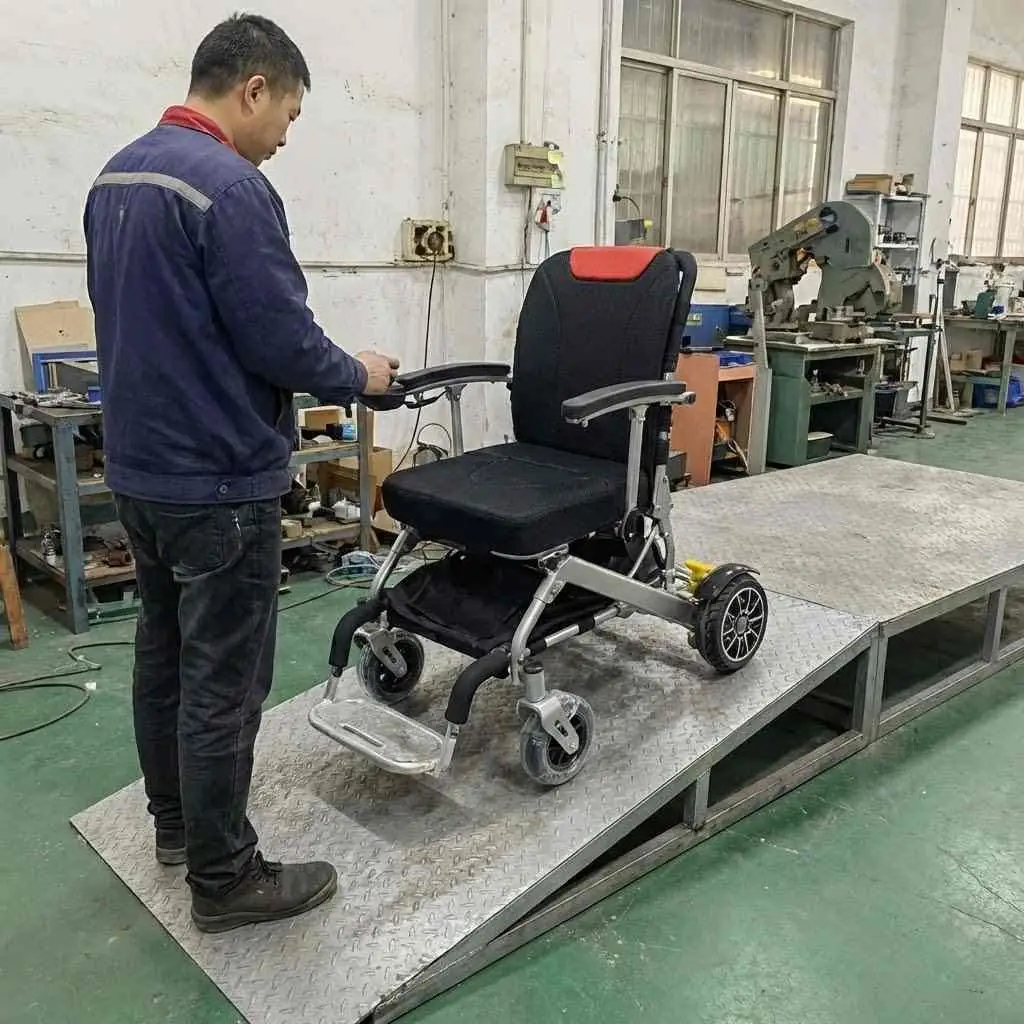
How Distributors Run an Electric Wheelchair Trial Fleet
November 1, 2026
A trial chair does more selling than any brochure. A care home manager who has driven a chair around her own corridors for a week stops guessing and starts deciding. That is why many distributors keep a small set of chairs that go out on loan instead of sitting in stock. This guide explains How Distributors Run an Electric Wheelchair Trial Fleet, from choosing the chairs to getting them back in good shape and turning a good trial into an order.
First, a clarification. A trial fleet is chairs lent to customers for days or weeks, used in their own homes, shops, or care facilities, then returned. It is not an airport fleet serving passengers inside a terminal, not a fixed showroom display that never leaves the shop floor, not a demonstration unit carried to a trade show, and not a factory sample sent for one buyer to evaluate before a first order. Those are different jobs. A trial fleet lives in the middle: the chairs belong to you, they travel, they come back, and they go out again.
What Should a Trial Fleet Contain?
Start small and cover the real buying situations, not every model in your catalogue. Three tiers are usually enough: one lightweight folding chair that is easy to lift into a car, one comfortable everyday chair for indoor and neighbourhood use, and one sturdier chair with larger wheels for outdoor ground. A fleet of, e.g., six to nine chairs — two or three of each tier — lets you run several trials at once without tying up too much capital.
Choose the chairs your customers actually ask about, not the ones that look most impressive. If most of your buyers are families choosing a first chair, weight and folding size matter more than top speed. If you sell to care homes, seat comfort, turning space in corridors, and simple controls matter more. Keep one spare battery and one spare charger per tier if you can, because a flat battery is the most common reason a trial stalls. Keep the fleet separate from your saleable stock in your records, even if the chairs share a warehouse shelf: a trial chair sold by mistake leaves a borrower without a chair and you without a fleet.
Think about weight and size too. A chair light enough for one person to lift is a different trial from one needing two people and a ramp, and your staff should know which is which before they promise a loan. For a fuller discussion of which models to hold, see this lightweight electric wheelchair stocking guide.
How Long Should a Trial Last, and Who Gets Which Chair?
A trial needs to be long enough for real life to happen and short enough that the chair comes back. For most distributors, e.g., seven to fourteen days works well: long enough to cover daily routines, a trip out, and a charge cycle or two. Shorter trials of two or three days suit a dealer who only needs to check size and folding; longer trials of three or four weeks suit a care home testing a chair across shifts. Put the standard length in writing, and treat anything longer as an extension you approve, not something that just drifts.
Match the chair to the borrower, not to whatever happens to be free. Before a loan, ask four questions: where will the chair be used most, who will lift it and into what vehicle, what is the user’s approximate weight and seating need, and is there a doorway, threshold, or slope that could be a problem? A chair too wide for the bathroom door fails the trial through no fault of the chair. A short home visit or a video call to check door widths and car boot space saves a wasted loan and a disappointed borrower.
Write down who is eligible for a trial and who is not. A simple rule — e.g., trials for registered dealers, care institutions, and customers with a confirmed purchase discussion — keeps the fleet for serious buyers instead of casual borrowers. It also protects your staff: when anyone can borrow, saying no becomes a personal decision. When the rule is written, saying no is just the policy.
What Should the Loan Record Capture at Handover?
Every loan needs a record, made at handover, not reconstructed later from memory. A one-page loan form or a simple spreadsheet row is enough, provided it always captures the same fields:
Field
Why it matters
Borrower name, organisation, and phone number
So you can reach them about the return, not just the sale
Chair model, serial number, and battery number
So you know exactly which chair and battery went out
Condition notes and dated photos at handover
So return damage is a comparison, not an argument
Loan start date and agreed return date
So an overdue chair is visible at a glance
Charger, cushion, and accessories included
So missing items are noticed, not discovered months later
Borrower signature
So the borrower has accepted the terms, not just heard them
Take dated photos at handover: overall view, seat and armrests, wheels and tyres, controller, and battery. Store them with the loan record. This takes two minutes and prevents most disputes, because both sides can look at the same pictures instead of relying on memory. Give the borrower a copy of the form, including the return date and the contact for problems during the trial.
Set expectations about use. State plainly what the chair is for — normal daily use in the agreed setting — and what it is not for, such as lending it on to someone else, using it on ground it was not built for, or attempting repairs. Plain sentences, agreed at handover, work better than a long document nobody reads.
How Do You Check a Chair When It Comes Back?
The return check is where a trial fleet either stays in good shape or slowly falls apart. Do it the same day the chair comes back, while the borrower is still reachable, and use the same checklist every time: frame and folding mechanism, seat and backrest fabric, armrests and footrest, wheels and tyres, joystick and controller, battery and charger, and brakes. For routine care between loans, this guide to maintaining a folding electric wheelchair covers the checks worth repeating on every return.
Test, do not just look. Fold and unfold the chair, drive it a short distance, turn in both directions, and check that the brakes hold on a gentle slope. Run the battery through a charge and note how it behaves. A chair that looks fine but pulls to one side or folds stiffly is not ready for the next borrower, and finding that out during the return check is far cheaper than finding it out during the next trial.
Grade the result in plain terms: ready to lend again, needs cleaning or a small fix first, or needs repair before any further loan. Record the grade with the date and the name of the person who checked it. If something is damaged, photograph it before anything is repaired, and tell the borrower the same day. A damage report sent three weeks after return reads like an afterthought; one sent the same afternoon reads like a process.
How Do You Keep Trial Chairs Charged, Clean, and Ready?
A trial chair should be ready to go out the day it is requested. That means a fixed bay for the fleet, with each chair labelled by model and status: available, on loan, charging, cleaning, or under repair. A whiteboard or a shared spreadsheet works; the tool matters less than the habit of updating it at every handover and return. The most common fleet failure is not damage but confusion — nobody knows which chairs are actually available.
Charging needs a routine, not good intentions. Returned chairs go on charge the same day, and batteries are stored at a reasonable charge rather than left flat for weeks. Follow your supplier’s guidance on storage charge and temperature, keep batteries away from damp floors and direct heat, and label each charger with the chair it belongs to.
Cleaning is part of the return check, not an extra. Wipe down the frame, seat, and armrests, clean the wheels of hair and grit, and check the cushion cover. A dirty chair tells the next borrower the fleet is not cared for, and hides damage under grime. Keep a small kit in the fleet bay — cloths, a brush, tyre cleaner, and basic tools — so cleaning and small adjustments happen in one place.
Who Pays When a Trial Chair Comes Back Damaged?
Damage is a matter of when, not if, and the answer should be agreed before the loan, not negotiated after. The fairest split is simple: normal wear from proper use is your cost of running the fleet, while damage from misuse, accidents, or unauthorised repair is the borrower’s responsibility up to an agreed limit. Write that split into the loan form in plain words, with examples: worn tyres after weeks of daily use are wear; a cracked armrest from a fall, or a controller damaged by water, is not.
Set a damage deposit or a signed liability limit for higher-value chairs, especially for longer loans. The amount does not need to cover the full chair — e.g., a deposit covering common repairs such as a tyre, armrest, or controller is enough to make borrowers careful without scaring serious buyers away.
When damage happens, follow the same steps every time: photograph it, get a repair quote, tell the borrower promptly, and keep the chair out of circulation until it is fixed. Do not lend a damaged chair to the next borrower and hope they will not notice — they will, and the damage will then be argued over twice. If the damage falls under warranty, know that process before the fleet starts. This guide to electric wheelchair warranty claims explains how to document a claim so it is accepted the first time.
How Do You Rotate the Fleet So No Chair Sits Idle?
An untracked fleet develops two problems at once: one chair does all the work and wears out early, while another sits in a corner for months with a flat battery. Rotation prevents both. Keep a log showing each chair’s loan count and last loan date, reviewed weekly. When a new trial request comes in, offer the available chair of the right tier with the lowest recent use, not the one nearest the door.
Watch for chairs that never get requested. A chair that sits idle usually has a reason: an unpopular model, poor condition, or staff simply forgetting it exists. Each has a different fix — swap the model at the next restock, repair and clean it, or put it at the front of the bay with its status visible. A quarterly fleet review is enough: which chairs earned trials, which sat idle, what broke, and what borrowers asked for that you did not have. That review is your buying signal for the next fleet refresh, grounded in real demand.
Retire chairs on a rule, not a feeling. When repair costs keep rising, or the battery no longer holds a useful charge after a proper check, move the chair out of the trial fleet. It can still serve as a workshop training unit or parts donor, but not go to another borrower: a bad trial costs more than the chair is worth.
How Do You Turn a Trial Into an Order Without Pushing?
The follow-up is where trials pay for themselves, and the tone matters. Contact the borrower within a day or two of return, while the experience is fresh, and ask what worked and what did not. Listen for the real objection: sometimes it is price, but often it is seat comfort, car boot fit, or a feature the borrower did not know how to use. A short call that solves a small problem — e.g., showing the borrower how to adjust the armrest height — closes more sales than a discount offered too early.
Keep a simple follow-up record against each loan: returned date, borrower feedback, objection if any, and next step with a date. If the borrower is not ready, agree a next step rather than leaving it open: a second trial with a different tier, a visit with a family member present, or a call in a month. If the borrower buys, note which chair they bought and whether it matched the trial chair — that tells you whether your fleet mix is right.
Do not let a trial drift into an indefinite loan. If the return date passes, call that day, not a week later. A polite reminder — the chair is booked for another borrower, or due for its service check — works better than a complaint, and keeps the fleet moving.
What Does a Trial Fleet Cost to Run?
Be honest about the costs before you start. The visible costs are the chairs, spare batteries and chargers, and the space they occupy. The running costs are staff time for handovers, return checks, cleaning, and follow-up calls, plus cleaning supplies, replacement tyres and armrests, and repairs. Together they are real, and a fleet that is not budgeted for slowly stops being maintained.
Set the fleet budget as part of your sales cost, not as a warehouse overhead. A simple way to judge it is trials per order: if, e.g., ten trials lead to four orders, the fleet is doing its job even after repair costs. If twenty trials lead to one order, something is wrong — the wrong chairs, the wrong borrowers, or a follow-up that never happens. Track that ratio monthly, and it will tell you more about the fleet than any single success story. Trial feedback also tells you which spare parts wear out first, so keep those parts on hand; see this spare parts stocking guide for a practical list of what to hold alongside your chairs.
What Do Distributors Ask Most About Trial Fleets?
Can I lend a trial chair to anyone who asks?
You can, but you will regret it. Trials work best for buyers with a real purchase discussion underway — dealers, care institutions, or families choosing a chair. A written eligibility rule keeps the fleet available for serious borrowers.
What if a borrower wants to keep the chair longer than agreed?
Treat it as an extension you approve, not an automatic right. Ask why more time is needed, check whether another borrower is waiting, and set a new return date in writing. A short extension for a genuine reason is good service; an open-ended one is how a trial chair quietly becomes a free long-term loan.
Should trial chairs be new, or can they be ex-display models?
Either works, provided the chair is in good working order and honestly presented. Ex-display chairs make good trial units because they are already run in. What matters is condition and honesty: a trial chair should never be presented as new, and its wear should be noted on the handover record.
How do I handle a borrower who damages a chair and disputes it?
Go back to the handover record: the dated photos, the condition notes, and the signed form. Show the before and after pictures, share the repair quote, and keep the conversation factual and calm. Most disputes settle once both sides look at the same evidence. If the borrower still disputes it, decide whether the amount is worth the relationship — sometimes absorbing a small repair keeps a dealer.
A well-run trial fleet is a quiet sales machine: the right chairs, lent to the right people, checked properly on return, and followed up promptly. It needs no complicated software — a loan form, a status board, a charging routine, and a weekly review will carry most distributors a long way. The distributors who get the most from their fleets are the ones whose borrowers trust the process, because every handover was clear, every return was checked fairly, and every follow-up came on time. That trust is what turns a trial into an order. Done consistently, How Distributors Run an Electric Wheelchair Trial Fleet becomes less a question and more a routine your team can repeat with confidence.
Key Takeaway: Start with three tiers, record every loan with photos, check every return the same day, and follow up within two days — a small, well-run fleet converts better than a large, untracked one.
Founded in 2015, ZVCARE is an ISO 13485:2016 certified electric wheelchair manufacturer in China, providing OEM & ODM solutions for global distributors and medical stores.