The moment a customer takes a wheelchair home is the moment your service is judged. The chair may be perfect, but if the customer leaves unsure how to charge it, fold it, or stop it safely, that uncertainty follows them home and turns into phone calls, returns, and bad reviews. A written Electric Wheelchair Delivery Handover Checklist turns that risky moment into a calm, repeatable routine. It protects the customer, it protects your team, and it gives you a signed record of exactly what was checked, shown, and agreed on the day the chair changed hands.
This guide is for dealers and distributors handing chairs to end users, in a showroom, at a care facility, or at the customer's home. It is not about receiving a shipment from a supplier or inspecting chairs at the factory. This guide starts where one specific chair, with one serial number, is about to belong to one specific person.
Why Does a Formal Handover Beat a Quick Goodbye?
A quick goodbye feels friendly, but it leaves too much unsaid. The customer may nod along while you talk, then forget half of it by the time they reach the car park. They may not know which charger belongs to which battery, how the brake behaves on a slope, or who to call when a warning light appears. A formal handover slows that moment down just enough for the important things to stick.
It also protects your business. If a customer later says a scratch was already there, a part was missing, or nobody explained the brake, a signed checklist with notes and photos settles the question in minutes. Without it, the same conversation becomes memory against memory, and nobody wins that argument cleanly.
A good handover does not need to feel bureaucratic. Think of it as a short, friendly walkthrough with a form underneath it. The customer talks, tries things, and asks questions. Your staff member ticks boxes, writes down the serial number, and notes anything unusual. At the end, both sides sign the same page. The whole process usually takes 20 to 40 minutes for a standard chair, and that time is well spent because it prevents far longer conversations later.
What Should You Check Before the Customer Arrives?
Preparation is what separates a smooth handover from a scramble. Before the appointment, pull the order and confirm the model, colour, battery type, charger type, and any accessories the customer paid for, such as a spare battery, a cushion, or a bag. Lay everything out on one trolley or table so nothing is hunted for in front of the customer.
Charge the battery fully before the appointment, and check that the charger in the box matches the battery. A lithium battery and a lead-acid battery do not use the same charger, so do not assume the charger in the carton is the right one just because it was in the carton. Check the label, check the plug, and check that it fits the charging port without force.
Prepare the paperwork in advance: the order form, the warranty card or registration form, the user manual where available, and the handover sheet itself. Fill in everything you already know, including the model, the order number, and the date. If your showroom has a test area, clear a path for a short drive, a turn, and a stop, and keep the floor dry and free of boxes.
How Do You Check the Carton, Model, and Serial Number Together?
Open the carton with the customer present whenever possible. If the chair was already unboxed for your pre-check, say so plainly and walk through the carton contents together anyway, so the customer sees everything that came with the chair. Check the carton label against the order first, then check the chair itself, because a label can be right while the chair inside is wrong, and the other way round.
Go through the contents one item at a time: the chair, the battery or batteries, the charger, the joystick controller if it is packed separately, the user manual, any tools supplied, and every paid accessory. Tick each item off on the sheet as you go, and note anything missing immediately rather than promising to send it later without writing it down. A missing item written on the signed sheet with a promised date is a commitment you can track. A missing item mentioned only in conversation is easy to forget on both sides.
Then verify identity. Read the model name from the chair's label and compare it with the order. Read the serial number aloud, digit by digit, and have the customer or a second staff member confirm it against the sheet. Take a clear photo of the label for your records, and write the number on the warranty registration at the same time, not later from memory. Serial numbers are long, and one wrong digit can cause real trouble when a warranty claim is filed months later.
Look over the chair together in good light. Check the frame for scratches or dents, the seat and backrest for tears or stains, the tyres for cuts or flat spots, the armrests and footrests for looseness, and the joystick for damage. Note any mark, however small, on the handover sheet and, where useful, photograph it with the customer present. Customers accept an honest note about a small mark far more easily than they accept discovering it at home.
This joint inspection differs from checking a whole shipment at your warehouse, which is about counting cartons, spotting transit damage, and deciding whether to accept a delivery. For that inbound side, see this guide to handling freight damage on arrival. The check here is narrower: one chair, one customer, and agreement on condition before the chair leaves your care.
How Do You Demonstrate Charging and the Controller Without Rushing?
Charging is one of the topics customers get wrong most often, so give it real time. Show the customer where the charging port is, how the plug fits, and what the charger indicator lights mean. Plug it in together and let them see the light change, rather than only describing it. Explain in plain words how long a full charge takes according to the manual, and what to do if the charger feels hot, smells unusual, or shows no light at all: unplug it and call you, rather than trying another charger they happen to have at home.
Explain the battery in practical terms. Tell the customer whether the battery can be removed for charging, how to remove and refit it if it can, and how to store it if the chair will not be used for a while. If the chair has a battery level indicator on the controller, show them what each level means and what to do when the level runs low. Many first-time users keep driving until the chair stops, which is stressful and avoidable once they know the warning signs.
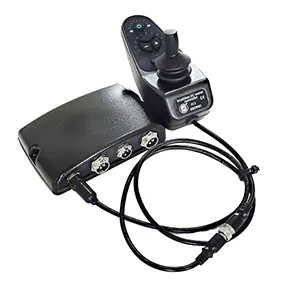
Then move to the controller. Let the customer hold the joystick and feel how little movement it takes. Show them how to switch the chair on and off, how to adjust the speed setting, and how the horn works. Drive the chair a short distance together in your test area, with your staff member walking beside it, and practise stopping, turning in both directions, and reversing slowly. Demonstrate the slowest speed mode first and let the customer build confidence before trying a faster one.
How Do You Test the Brakes, Folding, and Driving in the Room?
Brakes deserve their own moment in the handover, not a passing mention. Show the customer how the chair stops when the joystick is released, and explain that this is normal: an electric wheelchair is designed to stop when you let go, rather than rolling on. Then demonstrate the manual brake release or freewheel lever if the chair has one, and explain clearly when it should and should not be used. A chair in freewheel mode can roll on a slope, so make sure the customer understands that this lever is for pushing the chair by hand when the power is off, not for everyday driving.
Test the brakes in a safe, flat area. Ask the customer to drive at the slowest speed, release the joystick, and notice how the chair stops. Then try a gentle turn and a stop on a slight slope if your showroom has a ramp, with your staff member close by. If anything feels wrong, such as a delay, a pull to one side, or an unusual noise, stop the test, note it on the sheet, and do not hand the chair over until it is checked. A brake concern is never a minor note to deal with later.
Next, demonstrate folding and unfolding, because this is where many customers struggle at home. Fold the chair step by step, naming each step as you do it: remove the battery if the design requires it, fold the footrest, release the folding lock, and fold the frame. Then unfold it again and let the customer try both directions while you watch. Repeat any step they hesitate on, and show them how the chair should look and feel when it is fully locked open. A chair that is not fully locked is not ready to sit in.
What Should You Record for Warranty and After-Sales Support?
The warranty conversation is short, but it should be specific. Write the warranty terms on the handover sheet in plain language: what is covered, for how long, and what the customer should do if something goes wrong. As a general reference for ZVCARE chairs, the frame warranty is 36 months and the battery is covered for 6 months for lead-acid or 12 months for lithium, and the motor and controller are each covered for 12 months, but always confirm the terms for the exact model and order in front of you, because terms can vary by model or agreement. Do not promise a longer period, a free replacement, or a repair time you cannot guarantee.
Record the details that a future claim will need: the model, the serial number, the delivery date, the customer's name and contact details, the dealer or staff member who handled the handover, and the battery serial number if the battery carries its own number. Complete the warranty registration during the appointment, or give the customer a filled-in form with clear instructions and a deadline, and keep a copy yourself. A registration completed months late, or with a wrong serial number, can turn a simple claim into a dispute.
Explain the first point of contact: tell the customer whether to call your shop, the distributor, or the manufacturer first, and give a phone number and email address in writing, not only spoken aloud. Ask them to include the serial number, a short description of the problem, and a photo or short video where possible, as explained in this guide to the warranty claims process.
Also set expectations about consumables: tyres, cushions, and batteries wear with use, and accidental damage is not the same as a manufacturing fault. Offer the spare parts customers most often need, and note any purchase on the sheet. A short list is covered in this guide to accessories distributors should stock.
Finally, agree on after-sales support: tell the customer when your shop is open, how quickly you normally respond, and what happens if the chair needs to come back for repair. If you offer a loan chair, a home visit, or a courier collection, say so in writing; if not, say that too. This guide to building an after-sales service network is a useful next read for dealers planning beyond single deliveries.
How Do You Close the Handover and Get a Clear Signature?
Before anyone signs, read the sheet back together, out loud, covering the model and serial number, the items included, any marks or missing items noted, the warranty terms, and the contact details for support. Ask the customer directly whether anything is unclear or missing. This is their last easy chance to raise a concern while the chair and your staff are in the same room, so do not rush past it.
Then sign in two places if your form allows it: one confirming the condition and contents of the chair, and one confirming that the charging, driving, brake, and folding demonstrations were given and understood. Both the customer and your staff member sign both, with the date and time written in full. If the customer is not the end user, note that relationship on the sheet and arrange a second short demonstration for the actual user where possible.
Give the customer their copy before they leave, together with the manual, the warranty card or registration proof, and your contact card. Put your shop's phone number on the handover sheet itself, not only on a card that can be lost. Photograph or scan the signed sheet the same day, and file it under the serial number so it can be found in seconds during a future claim.
If the handover happens at the customer's home, add two steps: check that the chair fits through the front door and into the room where it will be used, and practise the route the customer will actually take, including any threshold, ramp, or tight turn. Note the home layout on the sheet, and if a problem appears, agree on the next step before you leave.
Electric Wheelchair Delivery Handover Checklist: What Do Customers Ask Most?
How long does the battery take to charge, and can I leave it charging overnight?
Follow the manual for the exact model, and show the customer the charger indicator lights during the demonstration. Charge in a dry, ventilated place, use only the charger supplied for that battery, and unplug it once the indicator shows a full charge. If the manual advises against overnight charging, say so plainly.
What should I do if the chair stops suddenly or a warning light comes on?
Stay calm, switch the chair off and on again once, and check the battery level and whether anything is caught in a wheel. If the problem repeats, or if a warning light stays on, stop using the chair and contact your dealer with the serial number, a description of what happened, and a photo of the indicator if possible. Do not open the controller or the battery pack yourself.
How do I fold the chair for the car, and should the battery come out first?
Follow the steps demonstrated at handover, in the same order, and check that the folding lock is fully engaged before lifting. Removing the battery first often makes the chair lighter and easier to handle, but only do this if the model is designed for battery removal. If you are unsure, check the manual or call your dealer before forcing anything.
Who do I call first if something breaks, and what information will they need?
Call the dealer or distributor named on your handover sheet first, not the manufacturer directly, unless your sheet says otherwise. Have the model, the serial number, the delivery date, and a short description of the problem ready, plus a photo or short video where possible.
Can I wash the chair, and how should I look after the tyres and seat?
Wipe the frame and seat with a damp cloth and dry it afterwards, and keep water away from the controller, the charging port, and the battery connections. Check the tyres regularly for cuts and embedded objects, and report any wobble, pull to one side, or unusual noise promptly rather than waiting for a scheduled service.
What Makes a Handover Feel Professional?
A professional handover is not about fancy forms or formal language. It is about the customer leaving with a chair they understand, a sheet they can refer to, and a name and number they trust. The dealer who checks the serial number aloud, demonstrates the brake, and writes down a small scratch honestly will be remembered very differently from the dealer who waves goodbye at the door.
If you run a showroom, start by printing this routine and trying it on your next three deliveries, adjusting the wording to fit your models and team. For ideas on laying out your test area, see this guide to setting up an electric wheelchair showroom.
An Electric Wheelchair Delivery Handover Checklist is, in the end, a simple promise kept in writing: the right chair, checked together, demonstrated properly, and signed by both sides. Keep that promise on every delivery, and the chair will not be the only thing your customers recommend.
Key Takeaway: Prepare before the customer arrives, inspect and demonstrate the chair together, record the serial number and warranty details, and close with a signed sheet both sides keep.
Founded in 2015, ZVCARE is an ISO 13485:2016 certified electric wheelchair manufacturer in China, providing OEM & ODM solutions for global distributors and medical stores.