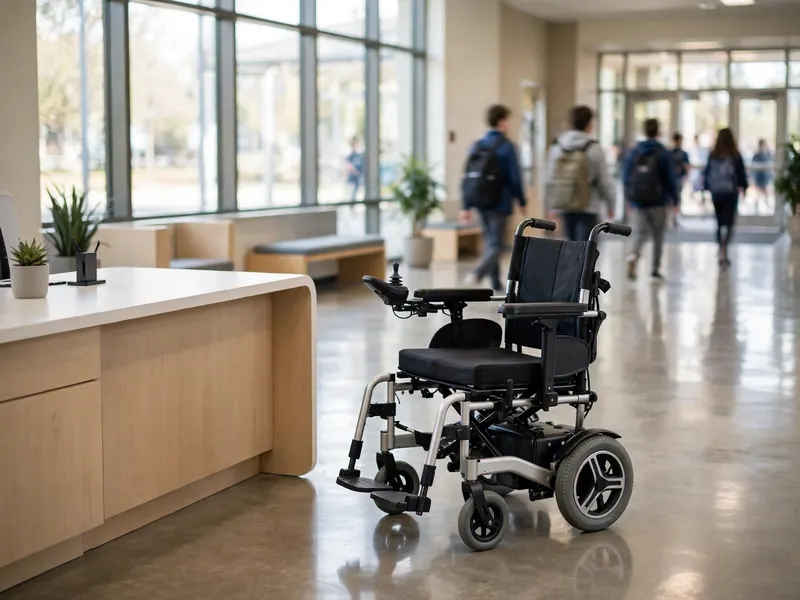
A school is a busy place, and every day someone on campus needs a little help getting from one building to another. A student with a sprained ankle, a visitor with limited mobility, a member of staff recovering from surgery — each of them still has lessons to attend, meetings to reach, and a library to use. This Electric Wheelchairs for Schools Buyers Guide is written for the person who has to solve that problem: the facilities manager or procurement lead who needs to buy a small fleet of chairs, keep them charged and in good order, and make sure they are there when someone asks for one.
You are not buying a chair for one person. You are buying a shared resource that many different people will use for short trips around campus, often with no notice. That changes what matters. Comfort for a single user gives way to simple controls, easy folding, tough build quality, and a charging routine that fits around the school day.
What Does a School Actually Need Electric Wheelchairs For?
Start by listing the trips your campus asks people to make. Most schools have a main entrance, a reception area, classroom blocks, a sports hall, a library, and a dining hall, and the distances between them add up over a school day. A loan chair at reception covers the most common need: someone arrives, finds walking painful or tiring, and borrows a chair for the visit. The same chair can then move a student between lessons or take a visitor across the site for a parents’ evening.
Think about who will ask for a chair and when. Open days, sports fixtures, concerts, and parents’ evenings bring large numbers of visitors onto campus at once. Term time brings its own pattern: short-term injuries, staff returning after operations, and students who need support for a few weeks.
A small fleet gives you cover for all of this without tying up a member of staff to push a manual chair across campus. The wider point is well established: the World Health Organization notes that appropriate wheelchairs improve access to education, and a campus loan fleet is a practical way for a school to put that into practice.
Key Takeaway: Map the trips people actually make on your campus first, then buy chairs to cover those trips — reception loans, building-to-building moves, and busy visitor days.
How Many Chairs Should a School Start With?
The honest answer is to start small and grow from what your loan records tell you. A practical starting point is one chair per main building entrance, so a chair is always close to where someone asks for it. Keep a simple loan book at reception — date, time out, time back, and where the chair went — and after a term you will have real evidence of demand instead of guesswork.
Resist the urge to buy a large fleet in one go. Chairs that sit unused in a cupboard still need charging, checking, and storage space, and your needs will become clearer once staff get used to offering the loan service. If your loan book shows chairs are out most of the day, or that two events clash, that is your signal to add another chair. Buy in stages, and each new chair will match a proven need rather than a hunch.
Key Takeaway: Start with one chair per main building entrance and scale up from loan records, so every extra chair answers a demand you have already measured.
Which Type of Electric Wheelchair Suits a School Campus?
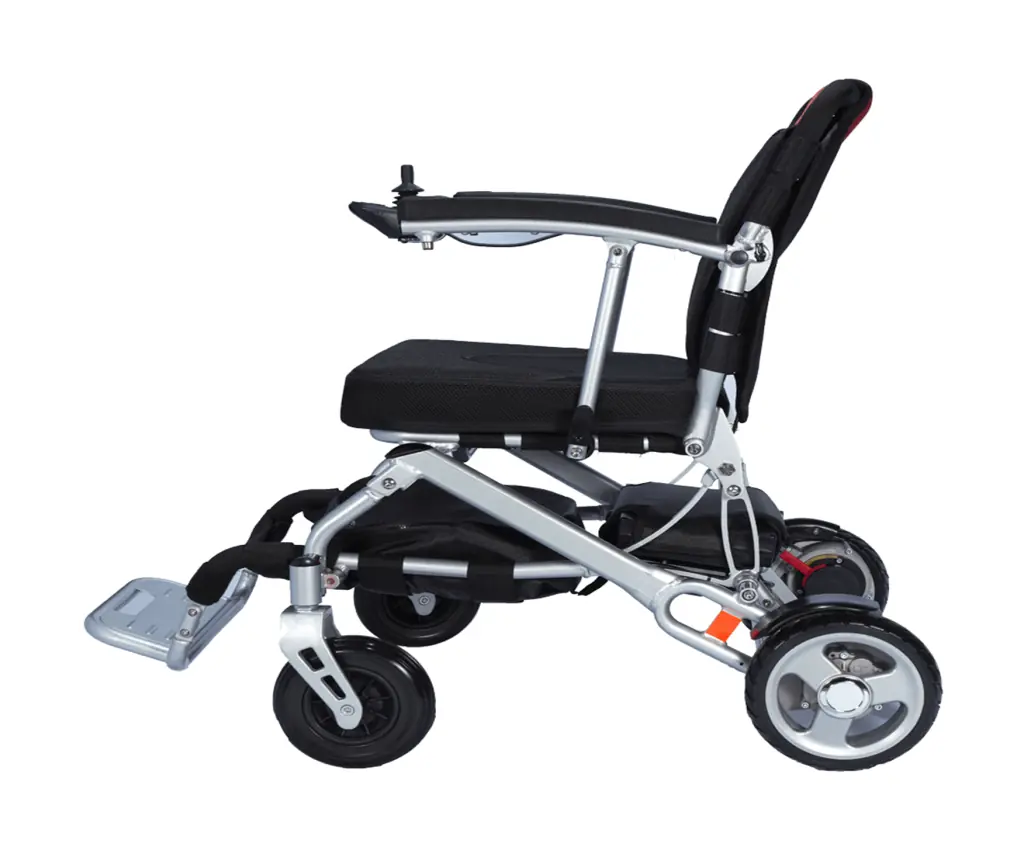
A campus chair needs to be light enough to fold and carry, simple enough for a first-time user to drive after a short explanation, and tough enough to survive daily use by many different people. Lightweight folding models fit this brief best. They fold down for storage in a cupboard or a car boot, they are easy for caretakers to lift, and their simple joystick controls are quick to explain at a reception desk.
The table below compares two lightweight models that suit school use, alongside a heavier-duty option for campuses where chairs see constant daily use. Use it as a starting point for your specification, and always ask the supplier for the full specification sheet before you order, so you are comparing like with like.
Model
Weight
Folded size
Range per charge
Good for
EW100
23 kg
73 × 55.5 × 31 cm
12 ± 5 km
Reception loan chair, folding into a cupboard or car boot
EW1000
15 kg incl. battery
73 × 39 × 71 cm
15 ± 3 km
Lighter lifting, longer days, and frequent moves between buildings
EW8722 durable model
45 kg
80 × 39 × 74 cm
18–22 km
Heavier daily use where a sturdier frame earns its keep
Weight matters more than it first appears. A chair that folds is only useful if the person folding it can lift it, and a lighter chair is easier to load into a minibus for an away fixture. Range matters too: a chair that covers a full school day of short trips without a midday charge keeps your loan service simple.
Key Takeaway: Choose a lightweight folding model with simple controls, and let weight, folded size, and range per charge — not brand names — drive the comparison.
What Should You Check Before Choosing a Model?
Before you sign anything, ask to see the chair in use on a surface like your own campus. A smooth showroom floor tells you very little about how a chair handles a playground, a gravel path, or a ramp in the rain. Ask for a trial on your site, and let your caretakers and reception staff drive it themselves. They are the people who will fold it, charge it, and hand it over, so their view of the controls and the weight counts for a lot.
Check the practical details that cause trouble later. How easy is it to fold and unfold with one person? Can the battery be removed for charging, or must the whole chair sit next to a socket?
Are the tyres solid or pneumatic, and who changes them when they wear? Is there a clear user guide you can keep at reception, and does the supplier offer spare parts for the parts that wear first — tyres, armrest pads, batteries, and joysticks? The answers to these questions tell you more about total cost than the headline specification ever will.
The same thinking that shapes a fleet for a hotel or a shopping mall applies here, as our guides for electric wheelchairs for hotels and electric wheelchairs for shopping malls show — the lessons from shared-use fleets in busy public buildings transfer directly to a school.
Key Takeaway: Trial the chair on your own campus, check folding, charging, and spare parts in person, and only then compare suppliers on equal terms.
How Do You Store and Charge a Small Fleet?
A fleet is only useful if the chairs are charged, clean, and easy to reach when someone asks for one. Give the fleet a home near reception or the main entrance — a cupboard, a small store room, or a marked bay in a corridor wide enough to keep the route clear. Each chair needs a nearby power socket, because a chair that must be wheeled to a distant socket for charging will spend half its life out of service.
Build charging into the school day rather than leaving it to chance. A simple rule works best: chairs go back on charge at the end of the school day, and the person who locks up checks the charging lights. Removable batteries make this easier, since a battery can charge on a shelf while the chair stays folded in its bay.
Keep the charger with its own chair and label both, so a charger never goes missing during a busy week. Schools planning larger shared fleets can borrow ideas from our guide to electric wheelchairs for airports, where charging routines keep large numbers of chairs ready around the clock.
Key Takeaway: Store chairs near reception with a socket for each one, and make end-of-day charging part of the lock-up routine, not an afterthought.
Who Looks After the Chairs Day to Day?
A small fleet needs a named owner, even if the job takes only a few minutes a day. In most schools that person is a caretaker or a member of the reception team. Their daily tasks are simple: check the tyres and brakes, wipe down the seat and joystick, confirm the battery is charged, and note anything that feels wrong. A short weekly check — folding mechanism, loose bolts, unusual noises — catches small problems before they become breakdowns.
Keep a logbook with each chair, or one shared log for the fleet. Date, chair number, who checked it, and any fault found is enough. The logbook does two useful jobs: it shows a pattern if one chair keeps failing, and it proves the school has looked after its equipment if a warranty question ever comes up.
Train two or three staff members, not just one, so the fleet is still covered when someone is away. A short handover note for new reception staff — where the chairs live, how to fold one, who to call if a fault appears — keeps the service running through staff changes.
The start of term is the right moment to get the fleet ready. Run a short checklist in the last week of the holidays, when corridors are quiet and there is time to order any part that is needed. Adapt the names and dates to your own school, and pin the list inside the storage cupboard where the person doing the work can see it.
Task
When
Who
Check tyres, brakes, and folding mechanism on every chair
Last week of the holidays
Caretaker
Charge every battery fully and note any that no longer holds a charge
Last week of the holidays
Caretaker
Wipe down seats, armrests, and joysticks; replace worn pads
Last week of the holidays
Caretaker or cleaner
Update the loan book and the handover note for reception staff
First day of term
Reception lead
Order spare parts flagged during the check
First week of term
Facilities manager
Brief new staff on where chairs live and how to fold one
First week of term
Fleet owner
Rehabilitation centres run a similar routine for their shared chairs, as described in our guide to electric wheelchairs for rehabilitation centers, and the principle is identical: a short check at a quiet moment prevents a breakdown at a busy one.
Key Takeaway: Name one person to own the fleet, keep a short logbook, train two or three staff members, and run a pre-term checklist so the chairs are ready on the first day back.
What Does a School Fleet Cost to Run Over Time?
The purchase price is only the first part of the cost. Over several years, batteries, tyres, and the occasional repair add up, and a cheap chair with no spare parts can cost more than a well-supported one. Ask every supplier for a spare parts list with availability before you buy, and check how long parts stay available after the model changes. A supplier who stocks electric wheelchair spare parts and answers support calls in plain language will save your caretaker hours of frustration.
Warranty terms deserve a careful read. Look for how long each part is covered, what counts as normal wear, and how a claim is handled — do you send the chair back, or does the supplier send the part? At ZVCARE, the frame is covered for 36 months, the motor and controller for 12 months each, and the battery for 6 months for lead-acid or 12 months for lithium. Remember too that every chair we ship passes a 100% visual inspection before it leaves the factory, which is your first line of defence against faults arriving on day one.
Key Takeaway: Compare suppliers on spare parts availability and written warranty terms, not on purchase price alone — the running cost is where the real difference shows.
How Do You Order and What Should the Supplier Provide?
Ordering a small fleet should be straightforward. Send the supplier your specification — number of chairs, model, any accessories such as spare batteries or rain covers, and your delivery address — and ask for a written quotation that lists each item separately. Confirm the lead time in writing, and agree a delivery date that avoids the first week of term, so staff have time to set up the charging bay before the campus gets busy.
A good supplier does more than ship boxes. Look for a supplier who confirms the order in writing, packs each chair with its charger and user guide, and offers a contact person for questions after delivery. With a 1 pc MOQ and a 7-day lead time after payment, a school can start with a single chair, test it in real use, and add more chairs as the loan book proves the need.
That staged approach keeps the budget under control and avoids a cupboard full of chairs nobody asked for. You can see the full range of models on our products page, and the lightweight range in detail on our lightweight electric wheelchair models page.
Key Takeaway: Order in writing with a confirmed lead time, start with a small number, and choose a supplier who stays reachable after delivery.
Conclusion
A school fleet of electric wheelchairs is a simple idea done well: a few reliable chairs, kept near reception, charged each evening, and looked after by named staff with a short logbook. Start with one chair per main building entrance, choose a lightweight folding model with simple controls, and grow the fleet from your loan records rather than from guesswork. Check warranty terms and spare parts before you buy, and trial the chair on your own campus before you commit.
If you are planning a fleet for your school, we can help. ZVCARE is a Shenzhen electric wheelchair manufacturer working with 50+ global partners, with every chair passing a 100% visual inspection before shipment. We offer a 1 pc MOQ, a 7-day lead time after payment, and spare parts support after delivery, so you can start with a single chair and build from there. Get in touch with your specification and we will send a written quotation.
FAQ
How many electric wheelchairs does a school need to start with?
Start with one chair per main building entrance, so a chair is always close to where someone asks for it. Keep a loan book at reception for a term, then add chairs where the records show real demand, rather than buying a large fleet before you know how it will be used.
Can one model serve the whole campus?
In most schools, yes — a single lightweight folding model keeps training, charging, and spare parts simple. The exception is a campus where chairs see constant daily use, where a sturdier model may earn its keep alongside the lighter chairs. Either way, standardise on as few models as you can, so staff only need to learn one folding routine and one charging routine.
Where should a school store and charge loan chairs?
Near reception or the main entrance, in a cupboard, store room, or marked bay with a power socket for each chair. Chairs should go back on charge at the end of the school day, and the person who locks up should check the charging lights as part of the routine.
What happens if a chair breaks down during term time?
Take the chair out of service, note the fault in the logbook, and contact the supplier with the model, the fault, and the chair number. This is why spare parts availability and written warranty terms matter before you buy — a supplier who stocks common parts can usually get a chair back in service quickly.
How long do school electric wheelchairs last?
That depends on how heavily the chairs are used and how well they are looked after. A fleet that is charged properly, checked each term, and repaired with genuine spare parts will serve a school for years. The frame warranty of 36 months, with 12 months each for the motor and controller, tells you how long the factory stands behind the main components — a useful reference when you compare suppliers, but not a promise of how long a chair will last.
Founded in 2015, ZVCARE is an ISO 13485:2016 certified electric wheelchair manufacturer in China, providing OEM & ODM solutions for global distributors and medical stores.