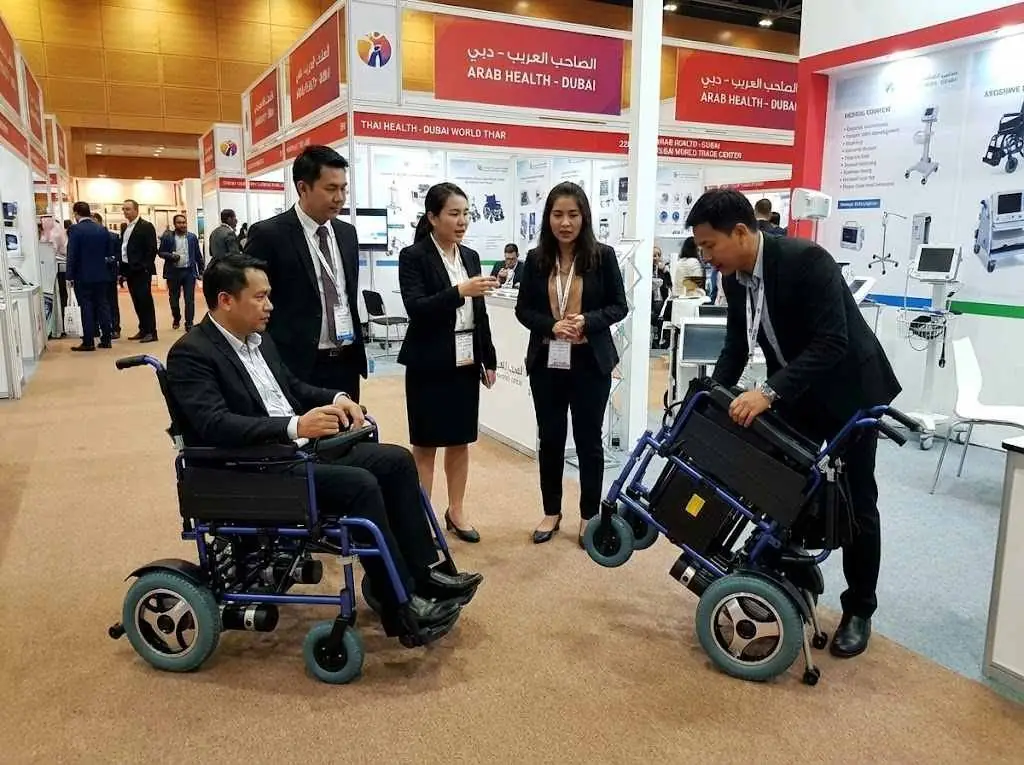
Learning how distributors build a dealer network is the step that turns a single warehouse into a business that covers a whole country. A dealer network is a group of independent local sellers who stock, demonstrate, and sell your chairs in their own towns, while you stay in charge of supply, training, and the brand. This is a sales network, and it is a different thing from an after-sales service network, which is about technicians, repairs, and records. The two networks support each other, but they are built and managed in different ways, and mixing them up is one of the first mistakes new distributors make.
This guide walks through the whole job in order: recruiting, territories, agreements, demo units, training, margins, and performance review. It builds on the starting point covered in our guide to becoming an electric wheelchair distributor, and it assumes you already have a factory partner you can rely on. At ZVCARE, for example, distributors work with a manufacturer that supplies more than 50 global partners, offers a 1 unit MOQ, ships with a 7-day lead time after payment, and runs a 100% visual inspection before dispatch. A network is only as strong as the supply behind it, so keep that foundation in mind as you read.
What Does a Dealer Network Actually Do for a Distributor?
A dealer network puts your chairs where customers actually shop. Most buyers of electric wheelchairs want to sit in the chair, try the controller, and fold it themselves before they spend money. They trust a local shop they can visit again, and they ask questions in their own language. A good dealer gives them that experience in their own town, while you supply the chairs, the spare parts, and the product knowledge behind the sale.
Your job as the distributor is to stay in charge of the things only you can do well. You hold the factory relationship, you manage stock and reorders, you set the pricing guardrails, and you train every dealer team. The dealer handles the local customer: the greeting, the test drive, the follow-up, and the day-to-day relationship. When that split is clear, both sides know what they are responsible for, and the customer gets a better experience than either side could deliver alone.
Key Takeaway: A dealer network extends your reach into towns you cannot serve yourself, while you keep control of supply, pricing, and training.
How Do You Find and Recruit the Right Dealers?
Start by looking where wheelchair buyers already go. Mobility equipment shops, rehabilitation equipment retailers, and established medical supply stores are the most natural fit, because they already talk to your customers every day. A wheelchair repair shop with a good local reputation can also make a strong dealer, since it already has the trust of people who use power chairs. Trade shows are another good hunting ground, because you can watch how a potential dealer talks to visitors before you ever sit down together.
Before you invite anyone in, check the basics in person. Does the shop have floor space for at least two or three display chairs and a clear area for a test drive? Is the owner willing to keep demo units charged and ready, and to send staff to training? Does the business have a clean record with its own customers? Start with a small number of dealers in your strongest region, give them a trial period with clear expectations, and only expand once the first group is selling steadily. A network built slowly on the right partners will outlast one built quickly on whoever said yes first.
Key Takeaway: Recruit dealers where your buyers already shop, check their space and commitment in person, and start small before you expand.
How Should You Draw Dealer Territories Without Creating Conflicts?
A territory is a promise, so draw it before you sign anyone, not after a dispute starts. The simplest approach is to divide your market by geography: a city, a region, or a set of postal areas that one dealer can realistically serve with visits and test drives. Put the boundaries in writing, name the towns or areas on both sides of the line, and agree what happens when a customer from one territory walks into another dealer’s shop. That conversation is easy before anyone is selling, and painful after.
There are a few common ways to structure territories, and each one suits a different stage of growth. An exclusive territory gives one dealer the sole right to sell in an area, which encourages investment in showroom space and demo stock. A shared territory lets two or more dealers sell in the same area, which can work in a large city but needs clear rules. An open territory sets no boundaries at all, which is simple at the start but invites price fights later. Most distributors begin with exclusive territories in their core regions and keep the arrangement under review as the network grows.
Territory model
How it works
Best for
Exclusive territory
One dealer sells in a defined area
Core regions where you want real investment
Shared territory
Two or more dealers sell in the same area
Large cities with room for more than one shop
Open territory
No boundaries, any dealer may sell anywhere
A very early network with few dealers
Key Takeaway: Put territory boundaries in writing before you sign, name the areas on both sides of the line, and agree how cross-border customers are handled.
What Should a Dealer Agreement Cover Before Anyone Signs?
The dealer agreement is the document that turns a handshake into a working relationship, and it deserves a careful read from both sides. It should spell out the territory, the term, the models the dealer will carry, and what each side is expected to do. It should also cover how orders are placed, how demo units are supplied and returned, how warranty claims are handled, and what happens when either side wants to end the arrangement. Our guide to reading an electric wheelchair distributor agreement walks through these clauses one by one, and it is worth reading before your first signing meeting.
Two points deserve special attention. First, the agreement should state the pricing and discount rules in plain language, so no dealer discovers a different price by accident. Second, it should include a review and renewal clause, so the relationship is judged on results rather than left to drift. For background on how distribution agreements are treated under competition rules, the European Commission publishes guidance on vertical agreements and distribution. This article is general business guidance, not legal advice, so have a local lawyer review your agreement before you sign it.
Key Takeaway: A good dealer agreement puts territory, pricing rules, demo units, warranty handling, and renewal in writing before the first order.
How Do You Set Up Demo Units So Dealers Can Sell, Not Just Display?
A demo unit that sits in a corner with a flat battery sells nothing. Choose the demo range the same way you would choose a showroom range: cover the buyers your dealers actually meet. The EW1000, at 15 kg including the battery and folding to 73×39×71 cm with a range of 15±3 km, is the chair to show travel-minded buyers, and it is designed for air travel (airline approval required). The EW100 folds to 73×55.5×31 cm with a range of 12±5 km, which suits buyers who want the lightest chair they can lift into a car. The EW8722, at 45 kg with a range of 18–22 km and folding to 80×39×74 cm, is the chair for buyers who want a comfortable daily-use model.
Agree in writing who owns each demo unit, who pays if it is damaged, and when it rotates back for a fresh one. A demo chair should be kept clean, charged, and ready for a test drive at any time, and it should never be sold as new without a clear agreement about its condition. Check the demo fleet on your regular dealer visits, and treat a neglected demo unit as a warning sign. Our guide to setting up an electric wheelchair showroom covers the layout and test-drive area that make demo units work hardest.
Key Takeaway: Place demo units that match real local buyers, keep them charged and ready, and agree ownership and rotation in writing.
How Do You Train Dealer Staff to Demo and Sell With Confidence?
A dealer can only sell what their staff understands, so training is not a one-time event but a routine part of running the network. Start with the basics every salesperson needs: how to ask about the buyer’s daily use, weight needs, and transport situation before recommending a model. Then cover the hands-on skills: the pre-demo safety check, folding and unfolding, the controller, charging, and what to do if a chair stops responding. Staff should also know the warranty terms by heart, because the frame carries 36 months, the motor and controller carry 12 months each, and the battery carries 6 months for lead-acid and 12 months for lithium.
Good training also covers what not to do. Staff should never promise a range figure as a guarantee, never claim a chair fits a flight without checking, and never guess at a specification they have not verified. Our guide to distributor staff training for electric wheelchair demos gives a full training structure you can adapt, including how to test staff after training and keep them improving. Run a refresher whenever a new model arrives, and train new dealer staff before their first solo demo, not after.
Key Takeaway: Train dealer staff on needs assessment, hands-on demos, and warranty terms, and refresh training whenever a new model arrives.
How Do You Keep Margins Disciplined Across the Whole Network?
Margin discipline is what keeps a dealer network alive. If one dealer discounts heavily to win a sale, every other dealer feels the pressure, and the network slowly turns into a price war that nobody wins. The fix is a written pricing policy that every dealer signs: a clear price list, rules about when discounts are allowed, and a simple process for approving anything outside the list. Dealers who hold the line on price protect the service behind the sale, because warranty support, spare parts, and demo units all need margin to exist.
Discipline also means being honest about costs with your dealers. A selling price has to cover freight, import costs, the warranty reserve, and the dealer’s own time, so explain the build-up instead of just handing over a number. Our guide to how distributors price electric wheelchairs breaks down what a price has to cover. When a dealer asks for a lower price, talk about volume and commitment rather than cutting the rate on a single order. And when online sellers undercut the network, remind dealers that a test drive, a local handover, and a person to call are worth more than a slightly lower price with no support.
Key Takeaway: A written pricing policy, signed by every dealer, protects margins, service, and trust across the whole network.
How Do You Review Dealer Performance and Decide Who Stays?
A dealer network needs regular review, or it quietly drifts. Review each dealer on a set cycle, and look at more than sales alone. Check how the demo units are kept, how quickly the dealer follows up with customers, how warranty cases are handled, and whether orders and stock records are tidy. A dealer who sells well but leaves customers waiting after delivery is a problem you will hear about eventually, so measure the service as well as the sales.
Use the review to make a fair decision about each dealer. The dealers who invest, train their staff, and look after customers deserve more support: first call on new models, help with local marketing, and a longer territory commitment. Dealers who keep missing the basics deserve a clear conversation, a written improvement plan, and a deadline. If nothing changes, it is better to end the relationship cleanly than to let one weak dealer damage the brand for everyone else. The review is also the natural moment to talk about renewal, and our guide to how distributors renew electric wheelchair agreements explains how to turn a review into a fair renewal decision.
What to review
What good looks like
What to do if it slips
Sales activity
Steady enquiries and test drives
Ask what is blocking sales and help fix it
Demo unit care
Clean, charged, and ready to drive
Set a standard and check it on visits
Customer follow-up
Every buyer contacted after delivery
Agree a follow-up routine and track it
Warranty handling
Claims filed promptly with clear records
Retrain staff on the claims process
Ordering discipline
Orders placed before stock runs out
Review stock levels together each cycle
Key Takeaway: Review every dealer on sales and service together, support the strong ones, give strugglers a written plan, and let the review feed the renewal decision.
Conclusion
Building a dealer network is slow work, and that is exactly why it lasts. Recruit dealers where your buyers already shop, draw territories in writing, sign agreements that cover pricing and renewal, place demo units that match real buyers, train the people who meet customers, hold the line on margins, and review every dealer on sales and service together. If you are learning how distributors build a dealer network, remember that the network is a promise to your dealers as much as to your customers: steady supply, honest support, and a brand worth representing.
If you are ready to start, talk to a factory partner that can back the network. ZVCARE works with more than 50 global partners, offers a 1 unit MOQ and a 7-day lead time after payment, and supports distributors with spare parts, training material, and a 100% visual inspection on every chair before dispatch. Start with a small group of dealers in your strongest region, prove the model, and then grow the network one good partner at a time.
FAQ
How many dealers should a new distributor start with?
Start with a small number of dealers in your strongest region, where you already have customer demand and can visit easily. Prove that the first group can sell, demo, and support the chairs well, then add new territories one at a time. A small network you can train and visit properly will outperform a large one you cannot keep up with.
Should dealers be exclusive to one territory?
Exclusivity works well when a dealer invests in showroom space, demo stock, and trained staff, because it protects that investment from a neighbour undercutting them. In a large city, a shared territory can also work if the rules are clear. Whatever you choose, put it in the agreement and review it at renewal rather than promising exclusivity in a conversation.
Who owns the demo units, the distributor or the dealer?
Either arrangement can work, but it must be agreed in writing before the units ship. The agreement should say who owns each demo chair, who pays for damage, when the unit rotates back, and whether a demo chair may ever be sold and on what terms. Unclear ownership is one of the most common sources of argument between distributors and dealers.
How do you stop dealers from undercutting each other on price?
Use a written pricing policy that every dealer signs, with a clear price list and rules for when discounts are allowed. Give dealers something better than a discount to compete on, such as a strong demo experience, local service, and fast follow-up. If a dealer keeps breaking the policy, treat it as a performance issue in the regular review.
What happens to a dealer’s territory when the agreement is renewed?
Renewal is the moment to look at the territory again. A dealer who has invested and performed well can keep or even extend their area, while a dealer who has not covered their territory may see it reduced or shared. Our guide to renewing distributor agreements explains how to have that conversation fairly and in good time.
Founded in 2015, ZVCARE is an ISO 13485:2016 certified electric wheelchair manufacturer in China, providing OEM & ODM solutions for global distributors and medical stores.