How Distributors Sell Electric Wheelchairs on Social Media
November 10, 2026
How Distributors Sell Electric Wheelchairs on Social Media starts with a simple shift in thinking: social media is not a shop window, it is a conversation that begins long before a buyer walks into your showroom. A short video of a chair folding in seconds, a plain answer to a question about battery range, or a photo of a real customer trying a chair in your showroom can do more than a polished brochure. This guide walks through the process step by step, from filming your first demo clip to turning a comment into a booked visit, so your social pages bring in enquiries you can actually follow up.
What Does Selling on Social Media Actually Mean for a Wheelchair Distributor?
Selling on social media does not mean taking orders in a comment thread. For a wheelchair distributor, it means using short posts and videos to help a buyer feel confident enough to contact you, visit your showroom, or ask for a quotation. The chair itself is a considered purchase, so nobody buys one from a single post. Your job is to shorten the distance between first sight and first conversation.
That is why social selling works best when it supports your local marketing rather than replacing it. A buyer may see your demo video on a Tuesday, check your listing later in the week, and walk into your showroom on Saturday. Each step matters, and the video is only the first one. Our guide to how distributors market electric wheelchairs locally covers listings, partnerships, and community presence, and social media fits alongside those channels as the place where buyers first meet your team and your chairs.
Key Takeaway: Social media selling means starting conversations that end in showroom visits and quotations, not taking orders in a comment thread.
Which Social Platforms Fit Electric Wheelchair Sales Best?
Not every platform suits a wheelchair business, and you do not need to be on all of them. Short video platforms are strong for demos because folding, driving, and turning a chair are easier to show than to describe. Community groups and local pages work well for trust, because buyers can see that real people in their area know your business. A business page on a mainstream network is useful as a home base where your opening hours, address, and contact details stay easy to find.
The table below compares the main options by what each one does best for a distributor. Pick one platform to do well first, and add a second only when the first one runs smoothly.
Platform type
Best for
What to post
Short video platforms
Showing folding, driving, and controls
Demo clips under a minute
Local community groups
Building trust in your area
Showroom news and customer stories
Mainstream business pages
Contact details and opening hours
Service updates and event notices
Messaging apps
Private follow-up
Answers, photos, and visit bookings
A platform is only worth your time if your buyers actually use it. Ask your last ten customers where they first heard about you, and let their answers decide where you post. A quiet page on the right platform beats a busy page where your buyers never look.
Key Takeaway: Choose one platform where your buyers already spend time, post demo clips there, and add a second platform only when the first one runs well.
What Should a Short Demo Video Show in Under a Minute?
A good demo video answers the three questions every buyer asks first: how heavy is it, how does it fold, and how does it drive. Start with the chair in its normal state, then fold it, lift it, and unfold it again, all in one continuous shot. A cut in the middle makes buyers wonder what you are hiding. Then show a short drive across the showroom floor, a turn in a tight space, and the controller in a real hand.
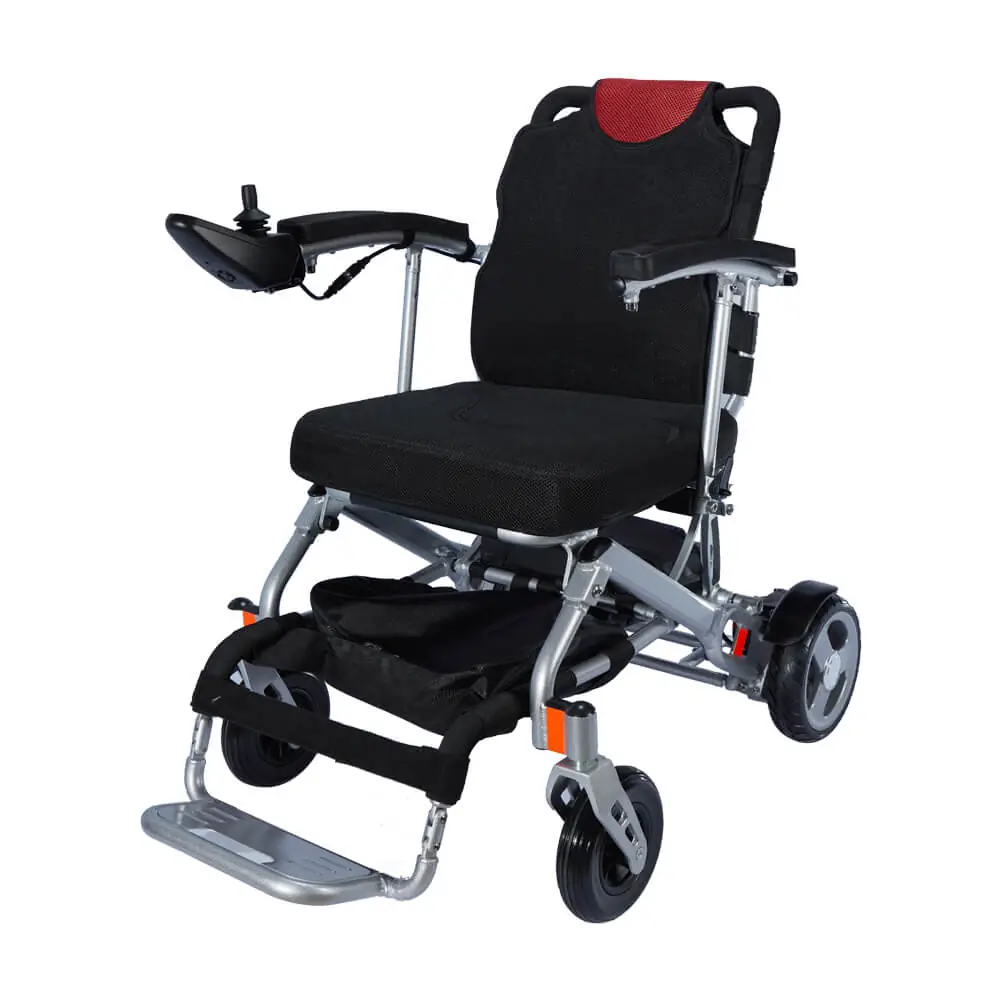
Keep the words plain. Say the folded size out loud, and show the tape measure beside the folded chair if you can. The EW100 folds to 73×55.5×31 cm, and the EW1000 folds to 73×39×71 cm, so a tape measure on screen turns a number into something a buyer can picture in a car trunk. End every video with one clear next step, such as visiting the showroom or sending a message for a quotation. A video without a next step is entertainment, not selling.
Key Takeaway: A demo video should show folding, lifting, and driving in one continuous shot, state the folded size plainly, and end with one clear next step.
How Do You Film a Wheelchair Demo With a Phone and No Studio?
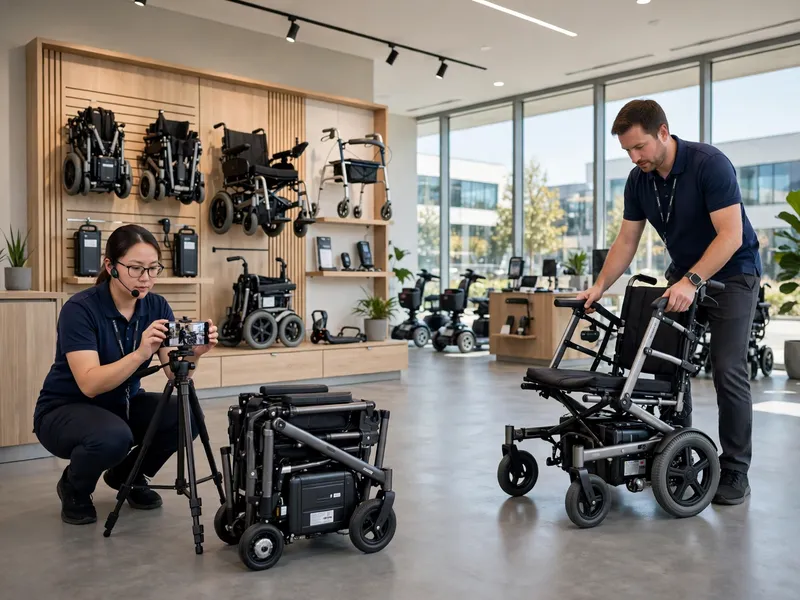
You do not need a studio or expensive equipment. A phone on a small tripod, daylight from a window, and a clean patch of showroom floor are enough. Film in the morning when the light is soft, and keep the background tidy so the chair stays the focus. Ask a colleague to drive the chair while you film, because one person cannot hold the phone and operate the controls at the same time.
Plan each clip before you press record. Write down three shots: the fold, the lift, and the drive. Film each one twice so you have a spare, and check the sound before you post, because showroom echo ruins more videos than bad lighting does. Training matters here too: the same habits that make a good live demo make a good filmed one, and our guide to distributor staff training for electric wheelchair demos covers the safety checks and handover steps your team should show on camera as well as in person.
Key Takeaway: A phone, a tripod, daylight, and three planned shots are enough for a demo video, and the same safety habits from live demos apply on camera.
How Should You Handle Enquiries and Comments Without Losing the Lead?
Most social media enquiries arrive as short messages: “How much?” “Does it fold?” “Can I try it?” Answer quickly, answer plainly, and move the conversation to a private message as soon as the buyer shares a real need. A public reply should answer the general question and invite the buyer to message you for details about their own situation. Never discuss a buyer’s health or personal circumstances in public comments.
Keep a simple reply sheet beside the phone so every member of staff gives the same honest answers. It should list your confirmed facts: a 1 unit MOQ, a 7-day lead time after payment, a frame warranty of 36 months, motor and controller warranties of 12 months each, and battery cover of 6 months for lead-acid and 12 months for lithium. It should also list what you never promise: no prices in comments, no delivery dates you cannot keep, and no medical advice. When a question goes beyond the sheet, say so honestly and offer to check with the factory before you reply.
Key Takeaway: Reply quickly and plainly in public, move personal details to a private message, and keep a shared reply sheet so every answer stays honest and consistent.
How Do You Turn Comments and Messages Into Showroom Visits?
A comment is not a sale, but it is an invitation. When someone asks about a model, answer the question and then offer something specific: a test drive on a named day, a comparison between two models side by side, or a look at the chair folded beside a car. A vague “come and visit us sometime” rarely works, while a concrete offer gives the buyer a reason to choose a date.
Make the visit easy to say yes to. Confirm the address, the parking, and who will meet them. Tell them which chairs will be charged and ready, so they do not arrive to find the model they came for sitting flat. The EW8722, for example, weighs 45 kg with a range of 18–22 km and folds to 80×39×74 cm, so a buyer who wants to test it needs to know it is ready and charged before they travel. After the visit, follow up with a short message thanking them and offering the quotation you discussed. Our guide on how to set up an electric wheelchair showroom covers the test-drive area and charging corner that make these visits work.
Key Takeaway: Turn a comment into a visit with a concrete offer, a named day, and a chair charged and ready, then follow up with the quotation you discussed.
How Do You Stay Honest and Compliant When You Advertise on Social Media?
Social media posts are advertising, and the same honesty rules apply as anywhere else. Only claim what you can prove, and label paid or gifted content clearly so nobody mistakes an advert for an independent review. The UK Advertising Standards Authority explains when social media content counts as advertising and how it must be identified, and its guidance is a useful check even outside the UK: Recognising ads: Social media and influencer marketing.
The most common mistake is exaggerating a specification. Range figures deserve special care: the EW1000 offers a range of 15±3 km and the EW100 offers 12±5 km, and those figures depend on the rider, the terrain, and the battery, so present them as a range, not a promise. The same applies to travel claims. Say a chair is “designed for air travel (airline approval required)” and leave the final decision to the airline. A buyer who discovers the truth later will not come back, and a buyer who trusts your numbers will recommend you to others.
Key Takeaway: Label paid content clearly, quote range figures as ranges rather than promises, and use the airline wording “designed for air travel (airline approval required)” every time.
How Do You Measure Whether Social Media Selling Is Working?
Social media selling works when it produces conversations, visits, and quotations, so measure those things, not vanity numbers. Keep a simple weekly log: how many enquiries arrived from social media, how many turned into showroom visits, and how many of those visits led to a quotation. A page with a small audience and a steady flow of visits is doing its job, while a page with a large audience and no visits is not.
Review the log every month and look for patterns. Which videos brought the most enquiries? Which questions keep coming up? If buyers keep asking about folded size, film a better folding video. If they keep asking about weight, show the lift more clearly. Regional experience can guide you too: our guide to selling electric wheelchairs in Spain shows how local buyers find suppliers and what they ask first, and the same habit of listening to real questions applies on social media. Small, steady improvements beat a new platform every month.
Weekly check
What to count
What it tells you
Enquiries
Messages and comments asking about a model
Whether your posts reach real buyers
Visits
Showroom visits booked from social media
Whether conversations turn into action
Quotations
Quotes sent after a social media visit
Whether visits turn into real demand
Key Takeaway: Count enquiries, visits, and quotations each week, and let the questions buyers keep asking decide what you film next.
Conclusion
How Distributors Sell Electric Wheelchairs on Social Media comes down to a repeatable routine: film a short, honest demo, answer enquiries quickly and plainly, invite the buyer to a real test drive, and follow up with a quotation. Social media opens the conversation, and your showroom, your staff, and your after-sales support close it. That routine works alongside your local marketing, your trade show follow-up, and your online listings, as our guide to selling electric wheelchairs online and our notes on electric wheelchair trade show follow-up for distributors show from different angles.
If you are building a social selling routine and need chairs that film well and demo well, start with a sample. ZVCARE supplies distributors with a 1 unit MOQ, a 7-day lead time after payment, and 100% visual inspection before shipment, with spare parts support behind every order. Contact our team to discuss which models fit your market, and we will help you plan a demo range your buyers can try in person.
FAQ
How often should a wheelchair distributor post on social media?
Post as often as you can keep the quality high, and no more. One honest demo video a week beats five rushed posts, because buyers remember a clear folding demo long after they forget a generic photo. A steady weekly rhythm also gives you time to answer every comment properly.
Which electric wheelchair model films best for a first demo video?
Start with the model your buyers ask about most, and film the fold, the lift, and a short drive in one continuous shot. The EW1000 is a natural first choice for many distributors because it weighs 15 kg including the battery and folds to 73×39×71 cm, so the lift on camera looks as easy as it feels in person.
Should distributors answer price questions in public comments?
No. Reply with the general information the buyer needs, such as folded size, range, and warranty, and invite them to send a private message for a quotation. Prices depend on the model, the quantity, and the market, and a public figure can mislead buyers whose situation is different.
Can a distributor repost a customer’s video of their wheelchair?
Yes, with the customer’s clear permission, and only if the video shows the chair honestly. Ask in writing, keep the customer’s own words, and do not add claims they did not make. A genuine customer clip is more persuasive than any scripted advert, but only when the customer is happy to share it.
What should a distributor do when a social media comment is negative?
Reply calmly, acknowledge the problem, and move the conversation to a private message or a phone call. Never argue in public and never delete a fair complaint, because other buyers read how you handle problems as closely as they read your demo videos. Fix the issue first, then, with the customer’s agreement, share what changed.
Founded in 2015, ZVCARE is an ISO 13485:2016 certified electric wheelchair manufacturer in China, providing OEM & ODM solutions for global distributors and medical stores.