Distributor Staff Training for Electric Wheelchair Demos
November 2, 2026
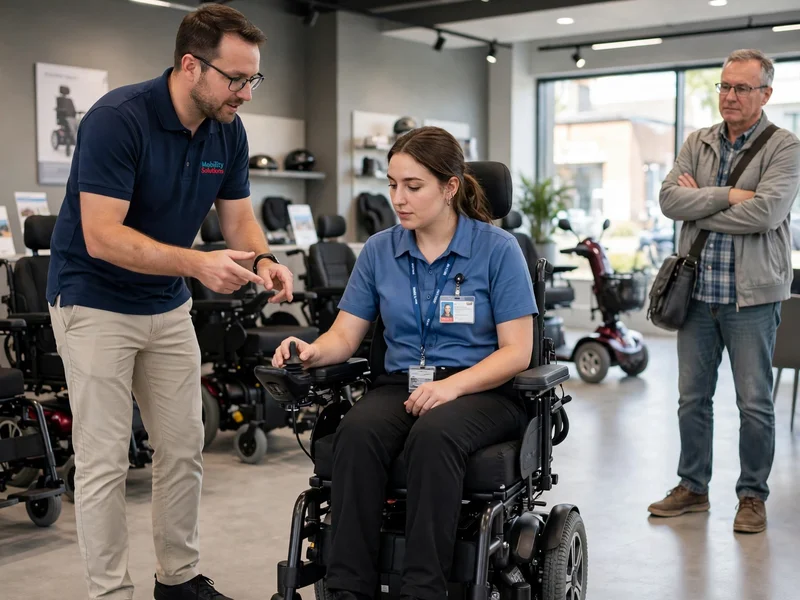
A customer rarely remembers a specification sheet. They remember the person who listened first, showed them how the chair actually works, and told them honestly when a model was not the right fit. That is why distributor staff training for electric wheelchair demos matters more than any display stand or brochure: a good demonstration builds trust in a few minutes, and a careless one can undo it just as fast.
This guide is about the people doing the demonstrating, not the room they work in. Setting up the space is a different job, covered in our guide to setting up a showroom, and running a fleet of chairs that customers borrow for a longer trial is different again, as explained in our guide to running a trial fleet. Becoming a distributor is also a separate step, covered in our guide to Becoming a distributor. Here the focus is narrower: what staff should ask, check, show, and say, and how you know they can do it well when no manager is watching.
What should staff ask before they recommend anything?
A demonstration should start with questions, not with a chair. Staff who open by pushing the newest or lightest model put the customer in the position of having to correct them, and that is a poor start. Train staff to ask first, listen fully, and only then narrow the choice to one or two models that fit what they have heard.
The questions should stay practical and everyday. Where will the chair be used most: indoors at home, outdoors on pavements, or both? How will it be transported: in a car boot, in a lift, or kept in one place? Who will fold it and lift it, and how often? Where will it be charged at home? These questions change the recommendation.
Staff also need to hear what is not said directly. A customer who keeps asking about weight may be worried about whether a family member can lift the chair into a car, and one who asks repeatedly about charging may fear running out of power away from home. Train staff to reflect that concern back in plain words, for example: “So lifting it into the car is the main worry, is that right?” That one sentence often reveals more than another five minutes of features.
Most importantly, train staff to be honest when the fit is wrong. If the chair is too heavy for the person who will lift it, or does not match how it will be used, staff should say so plainly and suggest a better-suited alternative. Customers remember that honesty, and they come back for service and for their next purchase because of it. A sale made by glossing over a mismatch almost always returns as a complaint.
Staff are not clinicians, and training should draw that line clearly. If a question is about medical need, posture, or seating prescription, staff should not guess or offer a clinical recommendation. They should explain the chair’s features in general terms and suggest the customer discuss the medical side with a qualified health professional. Knowing where advice stops is part of being trustworthy.
Key Takeaway: Ask about daily use, transport, lifting, and charging first, listen for the worry behind the question, and say so honestly when a model is not the right fit.
How do you run a pre-demo safety check every time?
No demonstration should start with a chair that has not been checked. A flat battery, a loose armrest, or a joystick set to the wrong mode can embarrass the demonstrator and, worse, put the customer at risk. Make the pre-demo check a fixed routine, done in the same order every time, so it becomes habit.
Train staff to check the chair before the customer sits in it, and to explain briefly what they are doing. Customers notice this care. The check does not need to be long, but it must be complete, and nothing on it should be skipped because the chair “was fine yesterday.”
Check
What to look for
If something is wrong
Battery and charging
Battery is charged, charger and cable are present and undamaged
Do not start the demo; charge the chair or swap in a ready demo unit
Joystick and controls
Joystick moves freely, buttons respond, speed setting is at its lowest for the first try
Reset the setting, and do not hand over a chair with controls you have not tested
Brakes
Chair holds still on a flat surface and stops promptly when the joystick is released
Take the chair out of demo use until it has been checked and fixed
Folding parts and locks
Frame locks engage fully, armrests and footrests are secure and not loose
Do not demonstrate folding or seating until the part is secure
Tyres and general condition
Tyres are in good shape, no loose bolts or damaged parts are visible
Remove the chair from demo use and report the fault the same day
Staff should also check the demo area: a clear path, no loose cables or clutter to drive over, and enough room to turn and stop safely.
Finally, set one simple rule and enforce it: if a check fails, the demo does not go ahead with that chair. A short delay while a ready chair is brought out is far better than an incident in front of a customer.
Key Takeaway: Check battery, controls, brakes, folding locks, and tyres in the same order before every demo, and never demonstrate a chair that has failed a check.
What must staff show before handover?
Customers buy confidence as much as they buy a chair. By the time a customer takes a chair home, they should have seen, and ideally tried, four things: charging, folding, driving, and braking. If any one of these is left to a manual they may never read, the first week at home becomes a series of phone calls a short demonstration could have prevented.
Start with charging, because it is the routine the customer will repeat most often. Show where the charger connects, how to tell that charging has started, and where the chair should be kept while charging. The point is that they leave knowing exactly what to do on the first evening at home.
Next, show folding and unfolding, then let the customer try it themselves. Staff should demonstrate slowly once, then step back and watch. This is also the moment to talk honestly about weight in practical terms. The EW1000 weighs 15 kg including the battery, while the EW100 weighs 23 kg, and that difference matters when the chair must be lifted into a car. Let the customer lift the folded chair with help, rather than asking them to trust a number on a page.
Then comes driving. Let the customer drive at the lowest speed setting first, in a clear space, with staff walking alongside. Show how the joystick controls direction and speed, how to turn, and how to stop, and resist the urge to take over the controls. A customer who has driven the chair themselves understands it far better than one who has only watched.
Finally, demonstrate braking clearly. Show that releasing the joystick brings the chair to a stop, and let the customer feel that for themselves. Explain in plain words what to do if the chair ever feels wrong, and who to contact.
If travel comes up, keep the wording careful. Some models are designed for air travel (airline approval required), so the customer must still confirm details with their airline. Staff should never promise an airline will accept a chair.
Key Takeaway: Before handover, every customer should have seen charging and folding, driven the chair themselves at low speed, and felt how braking works.
How should staff handle common objections without overselling?
Objections are not arguments to win. They are usually questions the customer has not yet found the words for, and staff who treat them as interruptions will lose both the sale and the trust. Training should give staff honest, calm answers to the objections they will hear most often, and the confidence to say “I do not know, but I will find out” when they genuinely do not know.
“It is too heavy” is one of the most common concerns, and it deserves a practical answer rather than a dismissal. Staff should ask who will lift the chair and into what vehicle, then let the customer try lifting the folded chair with help. If the weight is genuinely a problem, say so and look at a lighter option or a different way of transporting it. The same approach applies to price: explain what is included, what the warranty covers, and what service the distributor provides, without inventing discounts or promises that cannot be kept.
“How far will it go on one charge?” needs a careful answer too. Staff should explain that real range depends on how and where the chair is used, rather than quoting a single figure as a guarantee. A customer promised more than the chair delivers in daily use will feel misled, even if the figure came from a brochure.
Questions about delivery and cost need the same care. When a customer asks about shipping, staff should not estimate from the chair’s net weight. Freight is calculated on gross weight and carton weight, so any quote should be based on the packed shipment, not on the chair alone. If staff do not have the packed details, they should say so and confirm before quoting, rather than guessing.
Other objections are really requests for reassurance: what happens if something breaks, and who do they call? Here, staff should stick to confirmed terms. The frame warranty is 36 months, and the battery is covered for 6 months for lead-acid or 12 months for lithium, and the motor and controller are each covered for 12 months. Explain what the customer should do first if a fault appears, and give them a clear contact route, rather than vague reassurance that everything will be fine.
Train staff to practise these answers in role play, not just to read them. A good answer on paper can still sound defensive when spoken, and the only way to find that out is to say it out loud to a colleague playing a sceptical customer. Keep the phrasing that works in a short shared note, and update it when a new objection keeps appearing.
Key Takeaway: Treat objections as unasked questions, answer with a practical test or a confirmed fact, and never guess at range, delivery cost, or warranty terms.
How do you test staff after training, and keep them improving?
Training that ends with a presentation and a handout has not really ended at all. The only reliable test is watching staff run a full demonstration, from the first questions to the final handover points, with a colleague playing the customer. Managers should look for the habits this guide describes: asking before recommending, completing the safety check, letting the customer drive and fold the chair, and answering objections honestly.
Make the assessment realistic. Give the practice customer a specific situation, for example someone who needs to lift the chair into a car alone, or someone worried about charging at home, and see whether staff adapt or fall back on a generic pitch. Watch for what matters most: do they say plainly when a model is not suitable, keep the speed setting low for a first drive, and explain who to contact if something goes wrong? A checklist used kindly, as coaching rather than a trap, shows both manager and staff member what to practise next.
New staff should also shadow an experienced colleague for real demonstrations before working alone. Shadowing teaches the small things no manual covers: how to pace a demo, how to involve a family member without talking over the customer, and how to close without pressure. After shadowing, reverse the roles, so the new staff member demonstrates while the experienced colleague observes and gives feedback straight away.
Improvement should not stop after the first assessment. Hold short refresher sessions when a new model arrives, when a common objection keeps coming up, or when a demonstration has gone badly. Keep a brief shared log of what customers ask most often, which answers worked, and which demonstrations led to problems after handover. Over time, that log becomes the most useful training material a distributor owns, because it is written from real customers rather than from theory.
Finally, connect training to the rest of the business. Staff who demonstrate well also need the basics of ordering and service: the minimum order quantity is 1 unit, lead time is 7 days after payment is received, and OEM customisation is available for colours, logo placement, and packaging. A demonstrator who can answer a simple ordering question without guessing makes the whole business look more reliable. For background, staff can read about the company and direct deeper questions to the team through the contact page.
Key Takeaway: Test staff by watching a full demonstration, let new staff shadow experienced colleagues, and keep improving from a shared log of real customer questions.
What does a well-trained demo team change for the business?
Good demonstration training pays back quickly. Customers who have driven, folded, and charged a chair before buying ask fewer anxious questions after delivery, and are less likely to return a chair for a reason a demo would have revealed. Honest staff also build a reputation that brings repeat customers and referrals, worth far more than one forced sale.
It also makes the distributor easier to run. When every demonstrator follows the same safety check and handover routine, managers spend less time fixing avoidable problems. New staff settle in faster because there is a clear standard to learn, not just a habit to copy from whoever happens to be on duty.
The standard to aim for is simple. Every customer should leave understanding how to charge, fold, drive, and stop their chair, knowing who to contact if something goes wrong, and feeling listened to rather than sold to.
Key Takeaway: Consistent, honest demonstrations mean fewer post-delivery problems, faster onboarding for new staff, and customers who trust the distributor enough to return.
FAQ
How is demo training different from setting up a showroom?
Demo training is about staff skills: asking questions, checking the chair, showing charging, folding, driving, and braking, and handling objections honestly. Setting up a showroom is about the space itself, including layout and test-drive areas. A distributor needs both, but improving the room will not fix a demo where staff recommend before they ask.
Should staff recommend a model before asking about daily use?
No. Staff should ask about daily use, transport, lifting, and charging first, and only then narrow the choice to models that fit those answers. Recommending first forces the customer to correct the demonstrator, and increases the chance of selling a chair that does not suit how it will actually be used.
What should staff do if a chair fails the pre-demo safety check?
They should not demonstrate that chair. Set it aside, bring out a demo unit that has passed the check, and report the fault the same day so it can be fixed. A short delay is always better than demonstrating a chair with a known fault in front of a customer.
What should staff say when a question is about medical need or seating?
Staff should not guess or offer a clinical recommendation. They should explain the chair’s features in general terms and suggest the customer discuss the medical side with a qualified health professional. Knowing where product advice stops is part of doing the job well.
How can a distributor keep demo quality consistent as the team grows?
Use the same routine for every demonstration, assess new staff by watching a full demo, let them shadow experienced colleagues, and keep a shared log of real customer questions and answers that worked.
If you are building or refreshing a distributor team, start with the demonstration itself. Review the full product range, agree on the safety check and handover routine your staff will follow, and talk to the manufacturer about ordering, customisation, and service support through the contact page.
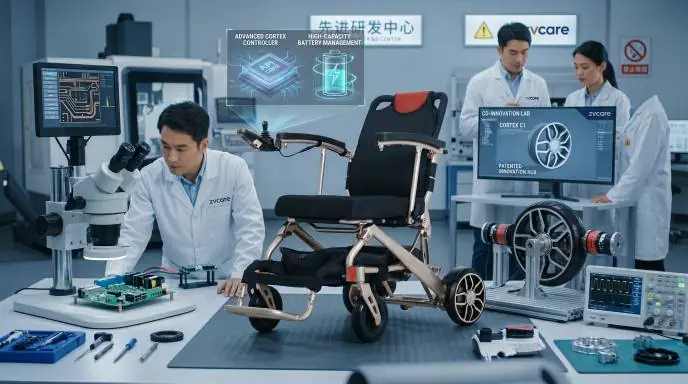
Founded in 2015, ZVCARE is an ISO 13485:2016 certified electric wheelchair manufacturer in China, providing OEM & ODM solutions for global distributors and medical stores.