How Distributors Order Electric Wheelchair Spare Parts
November 10, 2026
Every distributor runs into the same question sooner or later: how do you order electric wheelchair spare parts so the right part arrives the first time? A customer calls because a joystick stopped responding, a charger went missing, or a battery no longer holds a charge. The wheelchair itself is fine, but one part is holding up the sale or the repair. A clear order, with the right model, the right part number, and a written confirmation, moves fast. A vague order goes back and forth for days, and the customer waits.
This guide walks through the ordering process itself, step by step: the compatibility check before you order, the details every order should include, how to combine parts with chair orders, and what to confirm in writing before you pay. It builds on the stocking advice in our earlier guide, and it fits together with the consolidation and warranty-repair guides that follow the same process.
What Should You Check Before You Order a Spare Part?
Before you write to the factory, check three things on your side: which part has failed, which wheelchair it belongs to, and whether the chair is still under warranty. A joystick that drifts, a motor that cuts out under load, and a battery that drains fast are three different problems, and each one points to a different part. If you are not sure which part is at fault, ask the customer for a short video of the problem. A ten-second clip tells the factory more than a long written description.
Next, check the warranty position. At ZVCARE, the frame carries a 36-month warranty, the motor and the controller carry 12 months each, and the battery carries 6 months for lead-acid and 12 months for lithium. If the part is covered, the order becomes a warranty swap rather than a paid order, and the paperwork follows a different path. Our guide to warranty repairs explains that route in detail. Checking this first saves you from paying for a part the factory would have replaced free of charge.
Key Takeaway: Identify the failed part and check the warranty position before you order, so a covered part becomes a warranty swap instead of a paid order.
How Do You Match a Part to the Right Wheelchair Model?
Spare parts are model-specific far more often than distributors expect. A controller that fits one folding model may not fit another, even when the two chairs look almost identical. The same applies to motors, chargers, and batteries. The reliable way to match a part is the model name plus the serial number on the chair, not a photo of the chair alone. The serial number sits on the frame label, and it tells the factory exactly which production batch the chair came from and which revision of each part it uses.
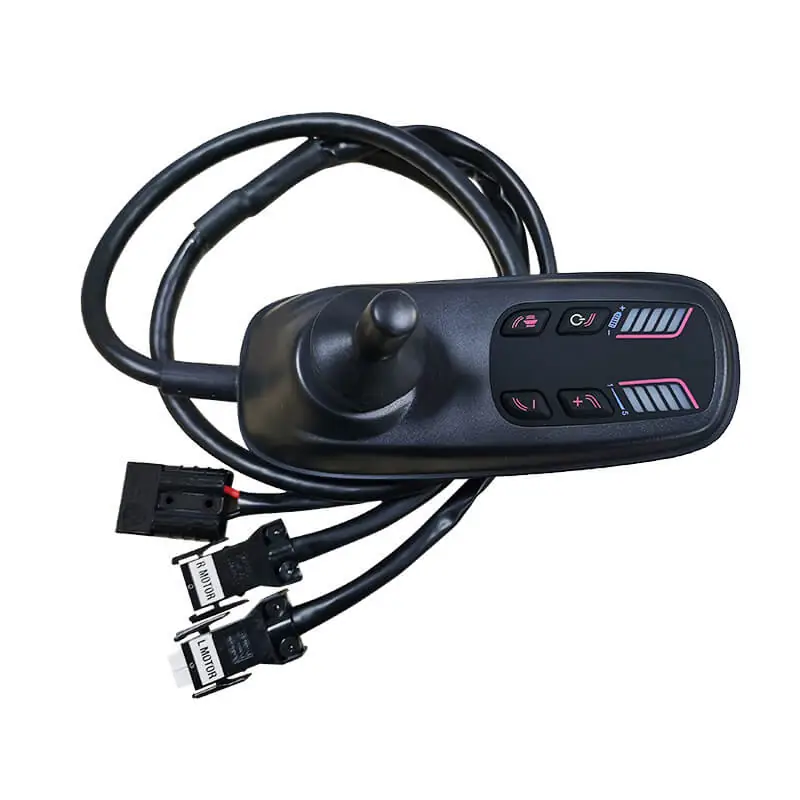
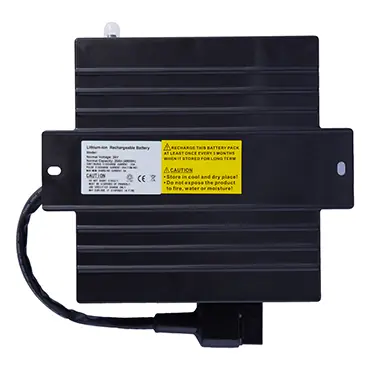
When you send the order, include the model name, the serial number, and a photo of the part itself, including any label or connector on it. That combination removes the guesswork. A connector with a different pin layout is the most common reason a part does not fit, and it is the easiest mistake to prevent.
The table below shows the checks that matter most for the parts distributors order most often. Note how the models differ: the EW100 folds to 73×55.5×31 cm with a range of 12±5 km, the EW1000 folds to 73×39×71 cm, weighs 15 kg including the battery, and runs 15±3 km, while the EW8722 weighs 45 kg, folds to 80×39×74 cm, and runs 18–22 km. Parts built for one of these chairs do not automatically fit the others.
Spare part
What to check before ordering
Warranty cover
Joystick controller
Model, serial number, connector type
12 months
Motor
Model, left or right side, serial number
12 months
Battery pack
Model, lead-acid or lithium, voltage
6 months lead-acid, 12 months lithium
Charger
Model, battery type, plug standard
Confirm the term with your supplier
Frame component
Model, serial number, side and position
36 months
Key Takeaway: Match parts by model name plus serial number, and add a photo of the old part and its connector, because look-alike models often take different parts.
What Information Should Every Spare Parts Order Include?
A good parts order reads like a checklist, not like a conversation. The factory should be able to pick the part, pack it, and ship it without writing back to ask what you meant. That means every order should carry the same six details, in the same order, every time.
The six details are the part name, the part number if you have it from a previous order, the wheelchair model, the serial number, the quantity, and the delivery address. Add a photo of the old part whenever the part number is missing. If the order is urgent, say so in the first line and give the date the customer needs the part. A date lets the factory plan; the word urgent on its own does not.
Order detail
What to write
Why it matters
Part name
Controller, motor, battery, charger
Picks the right product line
Part number
Number from the last order or label
Removes all doubt about the revision
Wheelchair model
EW100, EW1000, EW8722, or other
Parts differ by model
Serial number
Number from the frame label
Pins down the production batch
Quantity
Number of pieces
Confirms the order size
Delivery address
Full address for this shipment
Avoids a misdirected parcel
Key Takeaway: Send the same six details in every order, part name, part number, model, serial number, quantity, and delivery address, so the factory can act without writing back for clarification.
How Do You Order Spare Parts Together With New Wheelchairs?
The cheapest time to order spare parts is when you are already ordering wheelchairs. Adding parts to a chair order means one shipment, one set of export documents, and one delivery to track, instead of a separate small parcel with its own paperwork. This is the consolidation approach our guide to consolidating shipments explains for full orders, and it works just as well for parts. A carton of controllers or a few battery packs rides in the same shipment as the chairs they belong to, and the freight is shared rather than paid twice.
There is no minimum order for spare parts, so a single piece is welcome, but the saving comes from combining. When you place a chair order, add the parts your customers ask for most often, and list them clearly as spare parts, separate from the chairs. That separation matters at the warehouse: the chairs go to your showroom floor, and the parts go to your service shelf. Mixed on one line, they have to be sorted out on arrival, and that is where parts get lost or counted wrong.
Tell the factory how you want the parts packed. Parts in their own cartons, marked with the part name and the model they fit, are easy to receive and easy to find later. Loose parts in a shared carton save space but cost time at your end, so make the choice in writing when you place the order, not after the shipment has left.
Key Takeaway: Add spare parts to a chair order and list them on separate lines, so one shipment carries both and your warehouse can sort chairs from parts on arrival.
How Long Does a Spare Parts Order Take After Payment?
The production lead time for a spare parts order is 7 days after payment. That is the time the factory needs to prepare the part, run its checks, and have it ready to ship. Every part passes a 100% visual inspection before it leaves, so the lead time includes a real quality check, not just packing. If the part is in stock and the order is complete, the factory works to that schedule. If a detail is missing, the clock does not start properly, because the factory has to write back before it can prepare anything.
Freight time is separate from the factory lead time, and it depends on the forwarder and the route. No factory can promise a transit time it does not control. Ask the factory for the shipping plan in writing when you confirm the order: which forwarder, which service, and the expected handover date at the factory gate. The 7-day lead time is the part you can plan around; the freight time is the part you should confirm, not assume.
Key Takeaway: Plan on a 7-day lead time after payment for the factory to prepare and inspect the part, and confirm the freight plan separately in writing, because transit depends on the forwarder and the route.
What Should You Confirm in Writing Before You Pay?
Before you pay, get the order confirmed in writing. A written confirmation protects both sides, and it costs nothing. It should restate the part name and part number, the wheelchair model and serial number it fits, the quantity, the price terms you agreed, the 7-day lead time after payment, and the shipping plan. If anything in that confirmation differs from what you asked for, that is the moment to catch it, while it is still a line of text and not a parcel on its way to you.
The confirmation should also restate the warranty position. If the part is a warranty replacement, the confirmation should say so, and say whether the faulty part needs to be returned. If it is a paid order, the confirmation should state the warranty cover on the new part, so the customer who receives it knows where they stand. Spare parts for medical devices sit under real regulation, and the European Medical Device Regulation sets the framework that manufacturers and distributors work within, so keeping a clear written record of what was supplied, and for which device, is part of doing this business properly. You can read the regulation itself on the official EUR-Lex site: Regulation (EU) 2017/745 on medical devices.
Keep that confirmation with the order. When the part arrives, it is the document you check the delivery against, and when a customer asks a question a year later, it is the record that answers it.
Key Takeaway: Get the part, the model, the quantity, the lead time, the warranty position, and the shipping plan confirmed in writing before you pay, and keep that confirmation as the record for the order.
What Happens If a Spare Part Arrives Damaged or Does Not Fit?
Inspect every part as soon as it arrives, before it goes onto your shelf. Open the carton, check the part against the written confirmation, and look for transit damage. A cracked controller housing or a bent connector is easy to see in the first minute, and much harder to explain a month later. Take a photo of any damage before you move the part, and tell the factory the same day. A fast report with a photo gets a fast answer; a late report turns into a debate about when the damage happened.
If the part does not fit, stop and compare it with the old part before you try to force it. Check the connector first, then the mounting points, then the label. Often, a part that does not fit traces back to a missing or wrong serial number on the order. Tell the factory what you found, with photos of both parts side by side, and ask for the correct part. If the mistake came from the information on the order, say so plainly: with the photos and the right serial number in hand, the factory can send the correct part without another round of questions.
If the part failed under warranty rather than arriving damaged, the path is the warranty swap described in our guide to handling warranty repairs. That guide covers the return of the faulty part and the paperwork that goes with it. The rule is the same either way: report fast, photograph everything, and keep the written record.
Key Takeaway: Inspect every part on arrival against the written confirmation, photograph any damage the same day, and report it at once, because a fast report with photos gets a fast answer.
How Do You Keep Spare Parts Orders Organized for Repeat Customers?
The distributors who handle parts well are the ones who keep records. A simple log, one line per order, is enough: the date, the customer, the wheelchair model and serial number, the part ordered, and the outcome. When the same customer calls again in a year, that line tells you which part they already replaced and which revision their chair takes, without a new round of questions. It also tells you which parts your customers actually need, which is the starting point for deciding what to keep on your shelf. Our stocking guide explains how to turn that history into a sensible shelf, but the log comes first.
The log also protects you on warranty. When a customer claims a part failed early, the log shows the date it was supplied and the warranty cover that applied. Without it, you are guessing. With it, you can answer in one message. Keep the written confirmations with the log, either as files or as a folder of emails, so the record for any order is complete.
Review the log every few months. You will see patterns: one model that always needs the same controller, one part that never gets ordered at all. Those patterns are worth more than any forecast, because they come from your own customers. Order the parts your log says you need.
Key Takeaway: Keep a one-line log for every parts order, model, serial number, part, and outcome, because it answers the next order, supports warranty claims, and shows which parts your customers truly need.
Conclusion
How Distributors Order Electric Wheelchair Spare Parts comes down to a process, not a talent. Check the failed part and the warranty position first. Match the part by model name and serial number, and add a photo of the old part and its connector. Send the same six details in every order. Combine parts with chair orders where you can, plan on a 7-day lead time after payment, and confirm everything in writing before you pay. Inspect the part when it arrives, report problems the same day, and keep a log so the next order is easier than the last.
Distributors who run this process spend less time chasing orders and more time serving customers. The parts arrive right, the customers wait less, and the warranty paperwork stays clean. If you are setting up your parts ordering for the first time, start with the spare parts range on our site, and build your first order around the models your customers already own. One piece is enough to start, and the process works the same whether you order one controller or a full service shelf. ZVCARE works with 50+ global partners, and the process is ready for you to use.
FAQ
Is there a minimum order quantity for electric wheelchair spare parts?
No. Spare parts have no minimum order, and a single piece is welcome. If you need one controller or one charger, order one. Combining parts with a chair order saves on freight, but it is never a requirement.
Can I order spare parts together with new wheelchairs in one shipment?
Yes. Add the parts to the same order, on separate lines from the chairs, and ask for them to be packed in their own marked cartons. They then travel with the chairs in one shipment, with one set of export documents and one delivery to track.
How do I know a spare part fits my customer’s wheelchair model?
Send the wheelchair model name and the serial number from the frame label, plus a photo of the old part and its connector. The serial number tells the factory which production batch the chair came from and which revision of the part it takes.
What should I do if a spare part arrives damaged?
Photograph the damage before you move the part, check it against the written order confirmation, and tell the factory the same day. A fast report with photos gets a fast answer.
Are spare parts covered by warranty?
The new part carries its own warranty cover: the frame is covered for 36 months, the motor and the controller for 12 months each, and the battery for 6 months for lead-acid and 12 months for lithium. If the original part failed inside its warranty period, the order may be a warranty swap instead of a paid order.
Founded in 2015, ZVCARE is an ISO 13485:2016 certified electric wheelchair manufacturer in China, providing OEM & ODM solutions for global distributors and medical stores.