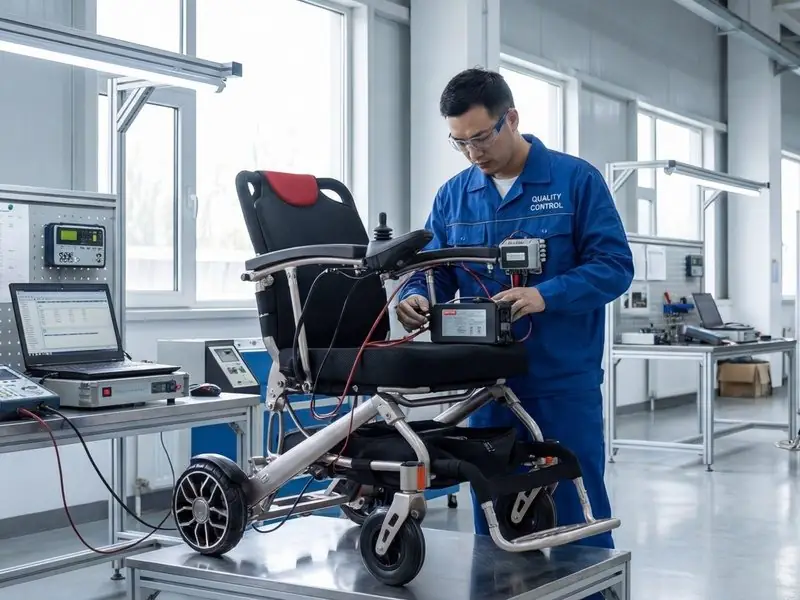
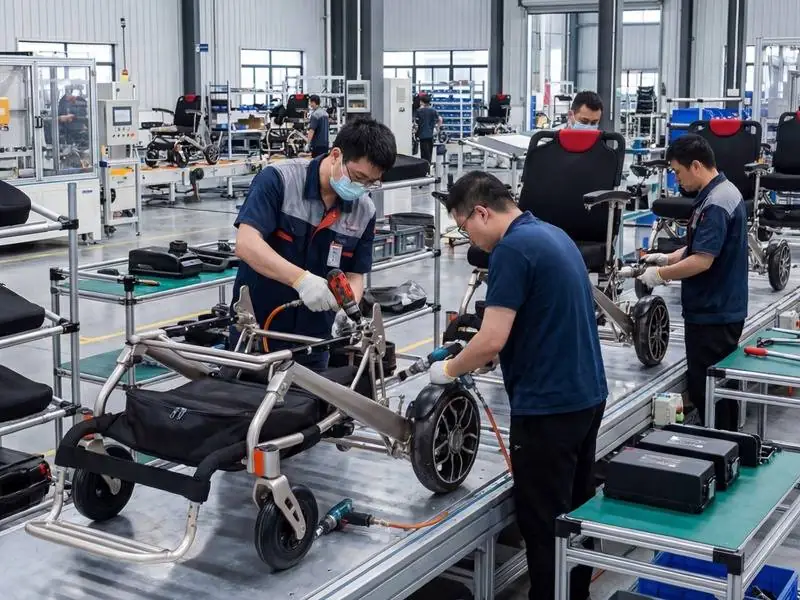
Most distributors win their first hospital order the same way they win any other order: a buyer calls, asks for a price, and places an order. Then one day a tender document lands in the inbox, and the rules change completely. When hospitals buy electric wheelchairs by tender, the decision is rarely made by one person in one phone call. It is made by a committee, against a written specification, on a fixed deadline — and a bid that misses one required document can be thrown out before anyone looks at the price. This guide walks through the process from the bidder’s side: how to read the document, how to build a compliance sheet evaluators trust, and how to price and support a bid without losing money on it.
What Is Different About Selling Through a Tender?
A direct order is a conversation. A tender is an exam. In a direct order, the buyer tells you what they want, you quote, and the two of you negotiate the gaps. In a tender, the buyer has already written down what they want, and your job is to prove, line by line, that you can deliver exactly that — or to state clearly where you cannot.
Three differences matter most. First, the specification is fixed. You cannot substitute a different model halfway through and explain it later; if your chair does not match the stated requirements, you either say so or risk being disqualified for misrepresentation. Second, the evaluation is comparative. Your bid sits next to others on the same table, scored against the same criteria, so a vague answer scores worse than a precise one even when the product is the same. Third, the deadline is absolute. A bid submitted late is usually rejected regardless of quality, and clarification questions asked after the cutoff may simply go unanswered.
Institutional buyers also differ from one another. A hospital tender is not the same as a care-home purchase, even when both buy wheelchairs. Hospitals typically buy through formal procurement departments with written procedures, while smaller care facilities often buy more directly. If you have sold into long-term care before, read our guide to selling electric wheelchairs to nursing homes to see where the two buyer types overlap and where they diverge — then treat the hospital tender on its own terms, not as a bigger version of a care-home order.
How Do You Read a Tender Document Without Missing a Disqualifier?
Start by reading the whole document once before you write anything. Distributors most often lose tenders not on price but on a requirement buried in an annexe: a certificate that must be attached, a delivery window that must be confirmed, or a form that must be signed by an authorised person. Skim-reading the technical pages and skipping the administrative pages is the fastest way to get disqualified.
Read in this order. First, eligibility: who is allowed to bid, and what registrations or company documents must accompany the bid. Second, the technical specification: the exact product requirements, including any standards the chairs must meet. Third, the compliance sheet or response schedule: the form on which you must answer each requirement, usually with a simple comply-or-deviate format. Fourth, commercial terms: pricing format, payment terms, delivery schedule, and penalties for late delivery. Fifth, evaluation criteria: how the buyer will score the bids, and how much weight price carries against technical compliance and service.
Watch for contradictions. Tender documents are sometimes assembled from older templates, and two sections may ask for different things — for example, a technical page that asks for one battery type and a compliance sheet that lists another. When you find a conflict, ask a clarification question in writing before the deadline, and keep the buyer’s written answer with your bid file. Never guess which version the evaluators will use.
Also check who is actually behind the bid. A tender that looks attractive can still be a bad fit if your factory support is weak — late samples, missing certificates, or vague warranty terms will surface during evaluation. The warning signs are the same ones in our guide to red flags when choosing an electric wheelchair supplier, and they apply just as much to a tender bid as to a direct order.
What Goes Into a Compliance Sheet That Evaluators Trust?
The compliance sheet is the heart of your bid. Evaluators often read it before they read anything else, because it tells them in one place whether you meet every requirement. Treat it as a promise, not a brochure: every line you mark as compliant must be true, and every deviation must be declared.
Answer line by line. For each requirement, give a direct answer — comply, deviate, or clarify — and attach the evidence that supports it. A claim without evidence scores little better than no claim at all. If the tender asks for a quality management certificate, attach the certificate itself, not a paragraph saying you have one. If it asks for a product standard, name the standard and attach the relevant documentation.
Three document groups come up in nearly every hospital tender for powered wheelchairs. The first is quality management: hospitals want to see that the manufacturer works to a recognised medical-device quality system. Our guide to ISO 13485 for electric wheelchair buyers explains what that certification covers and what a buyer should check on the certificate itself.
The second is market authorisation for the destination: in Europe, that means the CE route for a Class I medical device, which rests on the manufacturer’s declaration and its EU Authorised Representative notification rather than a notified-body certificate. Our article on CE marking on electric wheelchairs explains what Class I really means in practice.
The third is battery transport safety: lithium batteries shipped by air or sea need UN38.3 test evidence, and our guide to UN38.3 for wheelchair batteries explains what distributors should ask their factory for.
Build a simple bid file as you go: the tender document, your clarification questions and the buyer’s answers, your compliance sheet, every certificate attached, your pricing schedule, and your delivery and warranty terms. If an evaluator asks a follow-up question weeks later, you should be able to answer it from the file without reconstructing anything from memory.
Tender document section
What to check first
What to attach
Eligibility
Who may bid, what company documents are required
Company registration, authorised signatory proof
Technical specification
Every product requirement, including standards
Product datasheets, test evidence
Compliance sheet
Whether each line is comply, deviate, or clarify
Completed sheet, deviations declared in writing
Commercial terms
Pricing format, payment terms, delivery schedule
Pricing schedule, delivery confirmation
Evaluation criteria
Weight of price vs technical vs service
Nothing to attach — use it to prioritise your effort
How Should You Price a Tender Bid Without Losing Money?
Tender pricing fails in two directions: too high and you lose, too low and you win an order that loses money. The discipline is to price the whole obligation, not just the chairs.
Start with the product cost, then add every cost the tender actually imposes: freight to the delivery point, import duties and local taxes where they fall on you, spare parts the tender requires you to hold, warranty service during the warranty period, and any training or documentation the tender asks for. A bid that forgets the spares holding or the warranty call-outs will look competitive on paper and bleed money in practice.
Read the pricing format carefully. Some tenders ask for a single delivered price per unit; others split product, freight, and service into separate lines. If you put a cost in the wrong line, evaluators may score you as non-compliant on format alone. Match the tender’s format exactly, even if your normal quotation looks different.
Be honest about what is fixed and what is not. If your factory price depends on order quantity, say so in the bid and state the quantity your price assumes. If delivery time depends on production scheduling, state the lead time you are committing to rather than your fastest-ever result. Evaluators score reliability, and a bid that overpromises on delivery and then slips will damage your standing for the next tender far more than a realistic bid that loses this one on price.
What Service and Warranty Terms Do Hospitals Actually Score?
Hospitals score service because they live with the chairs after delivery. A wheelchair that waits weeks for a repair is a ward problem, not just a warranty claim, and tender evaluators know it. Your service terms should therefore read like a plan, not a slogan.
State the warranty structure plainly. As a manufacturer, we warrant the frame for 36 months and the battery for 6 months for lead-acid or 12 months for lithium, and the motor and controller for 12 months each, and a bid should state its warranty terms with the same clarity: which parts are covered, for how long, and what the buyer does when something fails. If your terms differ by component, say so; a single vague warranty line invites the evaluator to assume the worst.
Then describe the service mechanics: how a fault is reported, who responds, what response time you commit to, and how spare parts reach the hospital. Do not promise a response time you cannot staff. It is better to commit to a realistic response window and meet it every time than to promise the fastest window in the bid and miss it on the first call. If the tender asks you to hold spare parts locally, price that holding into the bid and say where the parts will sit.
Spare parts deserve their own paragraph in the bid. Hospitals will ask which parts fail most often and how quickly replacements arrive. Our guide to electric wheelchair spare parts stocking covers how distributors plan that holding; use it to make your spares commitment specific — named parts, quantities, and location — rather than a general assurance.
What Should You Do After You Submit?
Submission is not the end of the work. Keep the bid file intact until the contract is awarded and the delivery is complete, because clarification questions can arrive at any point and the buyer will expect consistent answers.
If the buyer asks a clarification question, answer it in writing, briefly, and only on the point asked. Do not use a clarification as a chance to re-pitch the bid; evaluators notice, and it can count against you. If the question reveals that you misunderstood a requirement, correct the record honestly rather than defending the original answer.
If you lose, ask for a debrief. Most public buyers will explain, at least in general terms, where your bid scored weakly — price, technical compliance, or service. That debrief is the most valuable document for your next tender, because it tells you exactly what to fix. File it with the bid, and review it before you start the next one.
Finally, treat every tender as practice for the next one, whether you win or lose. The distributors who do well in hospital tenders are rarely the ones with the lowest price. They are the ones whose compliance sheets are complete, whose certificates are attached rather than promised, whose pricing covers the whole obligation, and whose service terms read like something they can actually deliver. That reputation compounds: evaluators remember the bidder whose last bid was clean.
FAQ
What is the first thing to check in a hospital tender document?
Eligibility and disqualifiers come first. Before you spend time on pricing or technical answers, confirm who may bid, what documents must accompany the bid, and what the submission deadline and format are. A bid that fails an eligibility rule is rejected regardless of how good the product or price is.
How do you answer a requirement your product does not fully meet?
Declare the deviation in writing on the compliance sheet, and explain what you offer instead. Hiding a gap is worse than declaring it: if evaluators discover the gap themselves, they may question the whole bid, while a declared deviation lets them judge it on its merits.
Should you ask the buyer clarification questions?
Yes, when the document is genuinely unclear or contradictory, and always in writing before the clarification deadline. Keep each question short and specific, and file the buyer’s written answer with your bid. Do not ask questions that the document already answers clearly.
What certificates do hospital tenders most often ask for?
Expect requests for quality management certification, market authorisation documents for the destination, and battery transport test evidence where lithium batteries are involved. Attach the documents themselves rather than describing them, and check that names, dates, and product scope on each certificate match your bid.
Can a small distributor compete against large bidders in a hospital tender?
Yes, where the evaluation scores technical compliance and service alongside price. Small distributors often win by being precise: a complete compliance sheet, attached evidence, realistic delivery terms, and a service plan the hospital can actually use. Price matters, but a clean bid beats a cheap vague one.
Is this guide legal advice on tender law?
No. This is practical bidding guidance from a manufacturer’s perspective, not legal advice. Tender rules vary by buyer and jurisdiction, and for any binding legal question you should consult a qualified professional in the relevant market.
Conclusion
Hospital tenders reward preparation more than persuasion. The bidders who win consistently are the ones who read the whole document before writing, answer every compliance line with evidence, price the full obligation, and describe service they can actually deliver. If you approach the next tender that way — treating the compliance sheet as a promise and the bid file as your record — you will be in a stronger position whether you win this one or the next. That discipline is exactly what matters when hospitals buy electric wheelchairs by tender.
Key Takeaway: Read the whole tender first, answer every compliance line with attached evidence, price the full obligation including service and spares, and never promise a delivery or response time you cannot meet.
Founded in 2015, ZVCARE is an ISO 13485:2016 certified electric wheelchair manufacturer in China, providing OEM & ODM solutions for global distributors and medical stores.