How to Source Electric Wheelchair Batteries in China
November 1, 2026
Batteries are a frequent source of follow-up questions after delivery. A chair can look right, fold right, and drive well on a showroom floor, and still create problems if the battery does not match the chair, the charger, or the paperwork that a forwarder or a customer asks for later. This guide walks through How to Source Electric Wheelchair Batteries in China from a distributor’s point of view: what to confirm before you order, how to vet the supplier behind the battery, which documents to ask for, and what to inspect when the cartons arrive.
What should you confirm before you contact a battery supplier?
Start with your own chairs, not with a supplier catalogue. A battery order often goes wrong when the buyer knows the chair model but not the battery details that sit behind it. Before you send an enquiry, write down the answers for each model you sell.
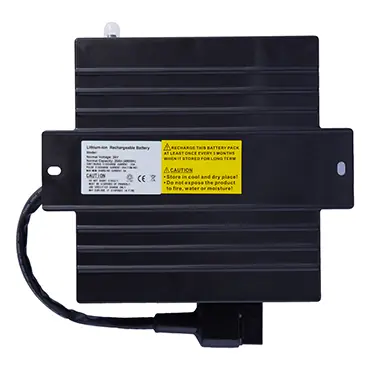
First, confirm the battery type your chair was built for: lead-acid or lithium. The two are not interchangeable just because they fit the same space, and the charger, the wiring, and the way the chair is used all follow from that choice. A supplier range may include two lead-acid options and two lithium options, so “a battery for this chair” is not a precise enough request. Name the type, and ask the supplier to confirm in writing that the battery they quote is the one built for your model.
Second, confirm the charger pairing. Chargers in this market commonly come in 2A and 5A versions, and the right one depends on the battery it serves. Ask which charger current the supplier recommends for the exact battery on the quote, how long a full charge takes for that combination, and whether the charger is included in the battery price or priced separately. A quote that lists a battery without naming its charger leaves a gap your customers will find later.
Third, confirm how the battery is removed, carried, and stored. Ask whether it comes out of the chair without tools, how heavy the pack itself is, and what the supplier recommends for storage between deliveries. If your customers travel, remember that a chair described as designed for air travel (airline approval required) still needs the airline’s own approval for the battery on the day of travel.
Write these answers down in one short brief and send the same brief to every supplier you contact. When every supplier answers the same questions, their quotes become comparable, and the cheapest quote stops hiding behind missing details.
How to Source Electric Wheelchair Batteries in China: How Do You Match a Battery to the Models You Already Sell?
Matching starts with three questions: does it fit, does it connect, and does it suit how your customers use the chair?
Fit means more than the outside size of the pack. Ask for the battery compartment dimensions the battery was designed for, the position of the connector, and whether any bracket or cable is needed to install it. A pack that needs a different bracket is not a drop-in replacement, even if the voltage looks right on paper.
Connection means the plug, the cable, and the controller it talks to. Ask the supplier to confirm the connector type and to show how the battery connects to the chair’s controller. If your chair uses a particular controller, say so in your brief, because a battery that works on one controller setup cannot be assumed to work on another. This is also the point to confirm spare cables: ask whether a replacement battery cable is available as a spare part, and what it costs, so a damaged cable does not take a chair out of service.
Use means range, charging routine, and weight. A customer who uses a chair all day in a large facility has a different battery need from a customer who uses one for short trips around the home. Ask the supplier what daily use pattern each battery option is suited to, and check that answer against what your own customers actually do. For background on the trade-offs between chemistries, read our comparison of lithium versus lead-acid batteries, which explains the practical differences between the two types in plain terms: lithium versus lead-acid batteries.
One more matching check is easy to skip and expensive to miss: spare battery stock. If you sell a chair model for years, you will need replacement batteries for years. Ask whether the supplier will still supply the same battery in, e.g., two or three years, and what happens if that exact pack is replaced by a new version.
How do you check whether a battery supplier is credible?
A battery supplier should be judged on evidence, not on how polished the catalogue looks. Four checks will tell you most of what you need to know.
First, ask who actually makes the battery. Some sellers assemble packs from cells bought elsewhere, some buy finished packs and resell them, and some manufacture the pack in-house. None of these is automatically wrong, but the answer changes what you should ask next. If the seller is a reseller, ask who the manufacturer is and whether you can speak to them about technical questions.
Second, ask for references you can actually use. A list of country names is not a reference. Ask for the names of distributors in markets similar to yours who buy the same battery, and ask whether you may contact one of them. Even one honest conversation with an existing buyer will tell you more than a dozen brochure pages.
Third, look at how the supplier handles a difficult question. Ask something specific, such as what happens if a battery arrives with a swollen case or a connector that does not match the quote. A credible supplier gives a concrete process: photos required, a time frame for a decision, and who pays for return freight. A supplier who answers every problem with reassurance and no process is waving a flag. Our guide to warning signs to watch for when choosing a supplier covers this pattern in more detail: warning signs to watch for when choosing a supplier.
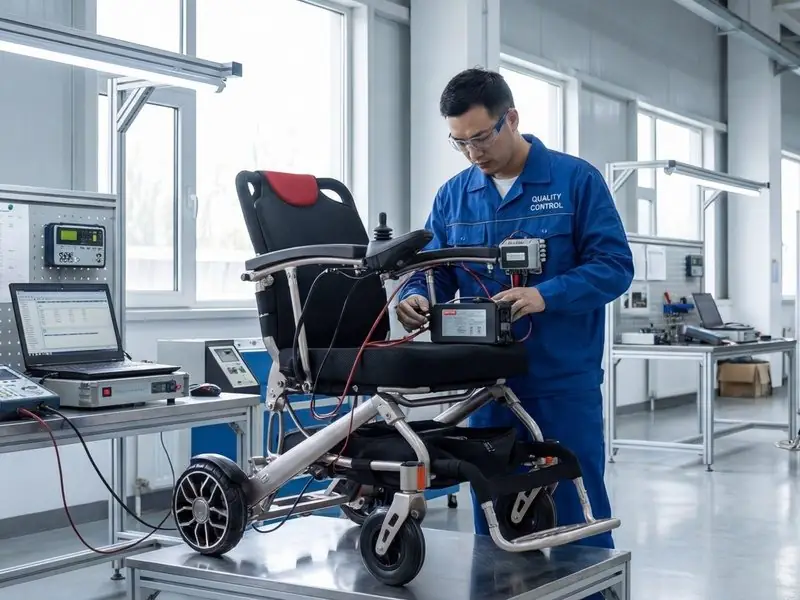
Fourth, check the factory behind the battery, not just the sales office. Ask for recent photos or a short video of the battery assembly and testing area, and ask what tests every pack goes through before packing. You need to see that testing is a routine step with records, not something done only when a buyer asks for it.
Which documents should you ask for, and what should you check on them?
Documents do not make a battery good, but they do make problems solvable. Ask for documents early, while you can still walk away, and read them instead of filing them.
Start with the test report for the exact battery you are buying. For lithium batteries shipped by air or sea, carriers and forwarders commonly ask about UN38.3 testing, a set of transport safety tests for lithium batteries. Treat this as a process to work through with your forwarder, not as a single stamp that guarantees every shipment everywhere. Ask your supplier for the report that names the exact battery model, voltage, and capacity on your order, and check that those details match your quote line by line. As an example, a UN38.3 report for the EW1000 covers its 24V 10Ah battery specifically.
Next, ask for the battery specification sheet and the charger specification sheet as separate documents. Check that the charger current, e.g. 2A or 5A, matches what the battery specification calls for, and that the connector shown matches the one on your chair. If the two documents disagree, ask for a corrected version before you pay, not after the goods arrive.
For more on how UN38.3 testing works for wheelchair batteries, see our guide to UN38.3 testing for wheelchair batteries: UN38.3 testing for wheelchair batteries.
Then ask for the warranty terms in writing: how long the battery is covered, what counts as a warranty failure, and what evidence you must send to make a claim. Battery warranty terms are often shorter than frame warranty terms, so do not assume the chair’s warranty applies to the battery.
Finally, keep a complete order file: the quote, the specification sheets, the test report, the warranty terms, and every written confirmation about charger pairing and connector type. When a customer or a forwarder asks a question six months later, that file is the difference between a quick answer and a long argument.
What should your order confirmation spell out in writing?
A purchase order for batteries should read like a checklist, not like a friendly email. Before you confirm, make sure the following points appear in writing on the order itself or on a specification sheet attached to it:
– Battery type: lead-acid or lithium, and which of the supplier’s listed options it is.
– Battery identity: the exact model name or code the test report refers to.
– Charger pairing: charger current, e.g. 2A or 5A, and whether the charger is included in the price.
– Connector and cable: connector type, cable length if it matters for your chair, and whether a spare cable is included.
– Quantity and packing: number of packs, how many packs per carton, and the gross weight and carton weight for freight costing. Freight is charged on gross and carton weight, not on the net weight of the battery alone, so get those figures before you book transport.
– Warranty: battery warranty period, what it covers, and the claim process.
– Documents: which reports and specification sheets will ship with the order, or be sent before shipment.
If any of these points is missing, ask for it to be added before you pay a deposit. Suppliers respect a buyer who confirms details in writing, because it protects both sides when a delivery is checked against the order.
Also confirm the delivery sequence. Ask whether batteries ship in the same cartons as the chairs or separately, and how each battery carton is labelled. Separate battery cartons are easier to inspect, count, and store.
How should you inspect batteries when they arrive?
Incoming inspection is where a careful order pays off, because this is the moment when a mismatch is still the supplier’s problem to fix. Set aside time and space for it before the delivery day, and inspect before the batteries go into your warehouse stock.
Start with the cartons. Count them against the packing list, check the labels against your order, and photograph any carton that arrives crushed, wet, or opened. Note the damage on the delivery paperwork before the driver leaves, even if the batteries inside look fine. A note made later is much harder to use.
Then open a sample of cartons, not just the top one. Check that the battery model name on each pack matches the order and the test report, that the connector matches your chair, and that the charger current matches what was confirmed. Connect one battery from the delivery to a chair of the model it was bought for, and run the chair through its basic functions. A battery that fits but does not drive the chair properly has failed the most basic test, and it is far better to find that out on one sample than after you have sold the whole batch.
Check the paperwork in the shipment against your order file. If a promised document is missing, ask for it the same day, while the shipment is still fresh in everyone’s mind.
Record everything on a simple inspection sheet: date, order number, carton count, sample results, and photos of anything unusual. That sheet becomes your evidence if a claim is needed, and it becomes your own quality record for comparing suppliers over time. Our incoming inspection checklist for electric wheelchairs gives a fuller structure you can adapt for battery deliveries: incoming inspection checklist for electric wheelchairs.
What should you do when a delivery does not match the order?
First, stop and separate the affected stock. Mark the cartons that do not match, keep them apart from good stock, and do not sell from them while the issue is unresolved. Selling a battery you already know is wrong turns a supplier problem into a customer problem.
Second, gather evidence the same day: photos of the battery label, the connector, and the carton label, plus a short written note of what differs from the order. Send that evidence to the supplier with a reference to the exact line of the order confirmation that was not met. Specific evidence gets faster answers than general complaints.
Third, agree on the remedy in writing before you act: replacement, credit, or return, who pays for return freight, and a date by which it will happen. If the supplier offers a replacement battery of a different model, check it against your chair the same way you checked the original order.
Finally, update your supplier record. Note what went wrong, how it was handled, and how long it took. Over a year of orders, that record is what separates a supplier you can plan around from one you keep hoping will improve.
What should you check before you pay?
– Chair models and battery types confirmed in your own brief.
– Battery type and exact option confirmed in writing by the supplier.
– Charger current, e.g. 2A or 5A, confirmed and matched to the battery.
– Connector type confirmed against your chair model.
– Test report checked: it names the exact battery on your order.
– Warranty period, coverage, and claim process confirmed in writing.
– Gross weight and carton weight confirmed for freight costing.
– Packing, labelling, and document list confirmed on the order.
– Inspection time booked for delivery day, with a sample test on a real chair.
What is the simplest way to judge a battery supplier?
Judge on the boring evidence: a specification sheet that matches the quote, a test report that names the exact battery, a warranty process described in steps rather than promises, and a delivery that matches the order on inspection. Suppliers who are comfortable with those checks tend to stay comfortable when something goes wrong later.
That discipline is also what protects your customers. A battery that matches the chair, charges on the right charger, and carries paperwork you can show a forwarder is a battery you can sell with confidence.
This guide has set out How to Source Electric Wheelchair Batteries in China as a practical sequence: confirm your own needs first, match the battery to the chair, vet the supplier on evidence, check the documents line by line, confirm the order in writing, and inspect on arrival. Follow that sequence, and the battery stops being the uncertain part of your wheelchair business.
What do distributors ask most often?
Should I buy the battery and the charger from the same supplier?
Yes, in most cases. Buying both from one supplier makes the pairing their responsibility, and it gives you one contact when a charging problem appears. If you buy them separately, confirm the charger current and connector against the battery specification sheet yourself, and get that confirmation in writing.
Can one battery work across all my wheelchair models?
Do not assume so. Even when two chairs look similar, their battery compartments, connectors, and controllers can differ. Check each model separately, and ask the supplier to confirm compatibility model by model, not for your range in general.
What if the supplier’s test report names a different battery from my order?
Ask for the report that names your exact battery before you pay. A report for a different pack, even from the same supplier, does not prove anything about the battery you are buying, and a forwarder may reject it for exactly that reason.
How many batteries should I inspect on arrival?
Inspect a sample from more than one carton, and test at least one battery on a real chair of the model it was bought for. If the sample fails, expand the inspection to the full delivery before any of the stock is sold.
Should I keep spare batteries in stock?
Yes, if you sell the chair models they belong to. Replacement batteries are one of the most common after-sales requests, and having the right pack on the shelf turns a service problem into a quick sale. Confirm long-term availability with the supplier before you commit to stocking a battery.
Key Takeaway: Confirm the battery type, charger pairing, connector, test report, and warranty in writing before you order, then inspect a sample on a real chair when it arrives.
Founded in 2015, ZVCARE is an ISO 13485:2016 certified electric wheelchair manufacturer in China, providing OEM & ODM solutions for global distributors and medical stores.