Malaysia asks a distributor to think in two halves. Most buyers live on the peninsula, around Kuala Lumpur, Penang, and Johor Bahru. The other half runs on its own cities and its own timetable. Sabah and Sarawak sit across the sea on Borneo. On top of that, your buyers read in three languages. This guide starts with that split, because every choice after it — first city, languages, service — follows from it. For a distributor who already sells mobility equipment in Asia, Selling Electric Wheelchairs in Malaysia is the practical next step.
How Does a New Distributor Start Selling Electric Wheelchairs in Malaysia?
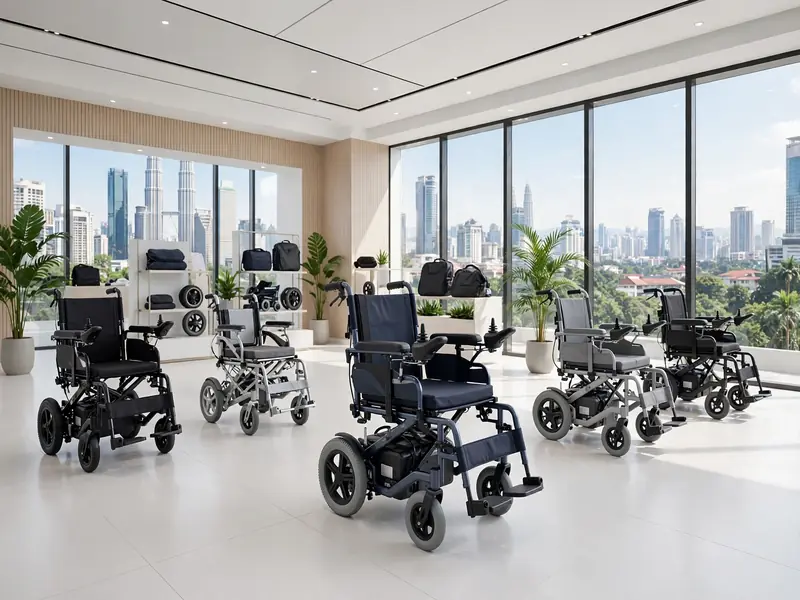
A new distributor in Malaysia usually starts with two kinds of buyer in mind. The first is the walk-in buyer. They visit a specialist mobility shop or a medical equipment retailer in a large city, sit in a chair, and decide on the spot. Keep demo chairs on the floor and staff nearby who can fit one while the customer waits. That fitting, done in person, is what closes the sale.
The second kind of buyer comes through hospital suppliers. They sell on to hospitals, clinics, and care homes. They judge you on paperwork and a service promise, not on a showroom. If you already supply medical equipment, this channel can open before your first shop does. Give them a written warranty, a named service contact, and a delivery date you can keep.
Online listings sit behind both. India is a useful comparison for a large multi-city market, as our guide to selling electric wheelchairs in India shows.
Key Takeaway: Walk-in shops close the sale with a fitting; hospital suppliers open the door with paperwork. Both need a service promise behind them.
Is Malaysia One Market or Two?
Treat Malaysia as two markets, not one. Most buyers live on the peninsula, where Kuala Lumpur, Penang, and Johor Bahru hold most of the mobility shops. East Malaysia is a separate market with its own cities: Kuching and Kota Kinabalu, on the island of Borneo. The sea sits between the two halves. A chair sold in Kuala Lumpur does not reach Kuching the way it reaches Penang.
Open on the peninsula first, starting in Kuala Lumpur: it holds the most shops and buyers. Add Penang or Johor Bahru next, once the first shop runs smoothly. Keep East Malaysia for a second phase. Open there only with a partner who runs a shop and a service bench in Kuching or Kota Kinabalu. A partner on the ground is worth more than a new shop in a city you do not know.
Key Takeaway: Win the peninsula first, then open East Malaysia as a second phase with a local partner.
Which Malaysian City Should You Open In First?
Start in Kuala Lumpur unless your partner already runs a shop somewhere else. The capital holds the most mobility shops and the most buyers, and the peninsula’s transport links run through it.
Penang comes next for the north of the peninsula. Johor Bahru covers the south. It sits close to Singapore, so buyers there may already have seen prices and models across the border. The order between the two depends on your partner’s footprint, not on a map. The choice is rarely between cities. It is between starting where your partner already is and starting where the market is biggest. If your partner runs a shop in Penang, start there: a partner who knows the local buyers beats a new shop in Kuala Lumpur you have to learn from zero. If you have no partner yet, Kuala Lumpur is where you meet one.
Give each city what it actually needs. A shop needs demo chairs, printed material in three languages, and fast answers. A hospital supplier needs paperwork and a named service contact. An online buyer needs clear specifications, real photos, and a plain note on delivery and warranty. Thailand is the closest comparison for a multi-city launch, as our guide to selling electric wheelchairs in Thailand shows.
Key Takeaway: Kuala Lumpur first — unless your partner’s shop is already somewhere else. Let their footprint set the order.
How Should You Localize Your Listings in Three Languages?
Treat the three languages as three jobs, not three copies of the same page. English carries the product pages, the manual, and the warranty card. Malay and Chinese carry the quick-start guide — the page a buyer actually reads before the first charge. Safety and charging in the buyer’s own language earns trust faster than any feature list. A listing in English only still reads like an import. If the full manuals are not ready in all three languages for the first order, ship the quick-start guides first. Say the full manuals follow.
Before anything goes live, have a local partner read it. The words for parts, charging, and service rarely match a direct translation, and a local reader hears what sounds foreign. Beside each demo chair, put a short spec card. Buyers can compare models without waiting for staff: English and Malay on the front, a Chinese version behind the counter for buyers who ask.
Then check the numbers every buyer reads first. Folded size in centimeters, weight in kilograms, range in kilometers. Use real photos of the exact model you sell. Name the battery type in plain words, and show prices in ringgit with a note on what the price includes.
Key Takeaway: English for the manual, Malay and Chinese for the quick-start. A local partner reads every word before it goes live.
What Should You Look for in a Malaysian Distribution Partner?
A good Malaysian partner knows the local buyers and speaks the local languages. They already run a place where customers can try a chair. Look for a partner with a real showroom or a service workshop, not only a website. Fitting and after-sales cannot be done from a warehouse alone. Ask how many demo chairs they keep and how they handle a chair that comes back faulty.
Check the practical side too: a small stock of spare parts, a simple warranty process, and records for each chair sold. Ask them to confirm which local registrations, labels, or certificates apply to your models. Your partner on the ground is the one who knows what applies, so do not guess yourself.
Agree the basics in writing before the first order: territory, order sizes, payment terms, and who handles warranty. Put the service split in the same agreement, so a buyer never has to guess who to call.
Key Takeaway: Choose a partner with a real showroom and a service bench. Agree territory, orders, and warranty in writing.
Which Electric Wheelchair Models Suit Malaysian Buyers Best?
Open the range with the folding chairs — that is what a Malaysian buyer asks for first. The EW1000 is the carbon fiber one. It weighs 15 kg with the battery, folds to 73×39×71 cm, with a range of 15±3 km. A buyer can lift it into a car alone and put it away at home without help. The EW100 is the aluminum alloy one at 23 kg. It folds to 73×55.5×31 cm, with a range of 12±5 km — the light chair for everyday use. Both folding models are designed for air travel (airline approval required). Tell customers to confirm approval with their airline before they fly.
After the folding chairs come the sturdier daily models. The EW8722 weighs 45 kg and runs 18–22 km, built for comfort through a full day of sitting. It suits a buyer who uses the chair every day and hardly ever lifts it into a car. The EW8703G is the big-wheel model at 46 kg, also 18–22 km. It suits buyers who spend more time outdoors and want a steadier ride on uneven ground. The EW8720 is the comfortable daily model at 45 kg and 18–22 km. It runs on dual 12V 22.3Ah lead-acid batteries in series, which gives 24V 22.3Ah. All five models run on a 24V system.
A short run on a real street answers more questions than a spec sheet.
Model
Weight
Range
Battery
Suits
EW1000
15 kg incl. battery
15±3 km
24V 10Ah lithium
Travel between cities, including flights
EW100
23 kg
12±5 km
24V
Light chair for everyday use
EW8722
45 kg
18–22 km
24V
Comfort through a full day
EW8703G
46 kg
18–22 km
24V
Rough paths and outdoor use
EW8720
45 kg
18–22 km
Dual 12V 22.3Ah lead-acid in series = 24V 22.3Ah
Long days, fewer charges
Key Takeaway: Folding models first, and every buyer folds the chair and drives it outside before deciding.
What Should Your First Order for Malaysia Include?
Think of the first order as a test, not a launch. A handful of chairs across the range tells you what Malaysian buyers actually pick. A deep order on one model only tells you what you guessed. The minimum order quantity is 1 unit, and the lead time is 7 days after payment. A small first order costs you nothing in time. Reorder once the shops show you what moves.
The order is more than chairs. Each shop needs a demo chair; the bench needs spare controllers, motors, and chargers, plus printed material in three languages. Split the order by channel, not just by model. A hospital supplier in Kuala Lumpur will ask for the warranty in writing and a named service contact before they order a single chair. A shop in Penang will ask for a demo chair first and the paperwork second. None of the first order goes to East Malaysia: the peninsula comes first, and Kuching or Kota Kinabalu wait for a partner with a shop and a bench there. Before you commit, look into your supplier the way you would any new partner. Our guide on how to choose an electric wheelchair manufacturer in China walks through the checks worth doing first.
Get the shipment paperwork in writing before the goods leave — commercial invoice, packing list, and battery documents. Ask your Malaysian partner which papers customs will want on arrival, and which local registrations, labels, or certificates cover your models. The partner on the ground knows what applies.
What to order
Why it earns its place
Check it before you pay
Mixed model range
Tells you what buyers actually pick
Folding chairs plus sturdier daily chairs
Demo chair per shop
A buyer who tries, buys
One demo chair in each shop you open
Spare parts
A fast first repair builds trust
Controllers, motors, chargers on the shelf
Printed material
Buyers read specs while staff are busy
English, Malay, and Chinese, for each model
Key Takeaway: A small mixed first order is a test — demo chairs, spares, and paperwork confirmed before the goods leave.
How Do You Set Up After-Sales Service for Malaysian Customers?
Get the service point open before the first sale, not after it. A small bench in your partner’s workshop is enough to start: basic tools, a few common spare parts, and one trained person who can inspect a chair and answer warranty questions. A buyer trusts a seller who can fix a chair close to home.
Write the claims process down before the first sale. Share it with your hospital suppliers as well as your shops. A hospital buyer will ask for it in writing; a walk-in buyer will ask for it when something breaks. Start every claim the same way: inspect the chair, note the model, the serial number, and the failed part, then check the warranty — frame 36 months, motor and controller 12 months each, battery 6 months for lead-acid or 12 months for lithium. Give the buyer an answer with a date, and file the record. The same sheet works for a shop buyer and a hospital order; only the contact name changes.
For buyers in East Malaysia, agree the process before the first sale. Ask the buyer to send photos and a short video of the fault before anything else. A chair in Kuching cannot come back to Kuala Lumpur by road, so the photos and the video decide the fix. From there your partner picks the fix: local, a part sent by air, or a return to the main workshop.
Key Takeaway: Open the service bench first. Run every claim — shop or hospital — off the same written sheet.
What Trips Up New Sellers in Malaysia?
The cheapest-looking saving is skipping translation. A listing in English only reaches the buyers who read English first. It misses the Malay and Chinese readers who compare listings closely before they buy. A buyer who cannot read the safety and charging guidance properly simply skips to the next listing. Translate the product pages and the quick-start guides first; the full manuals can follow.
The second mistake is promising Kuching the same delivery and service as Kuala Lumpur. East Malaysia is a second phase, not a checkbox on the peninsula launch. Win the peninsula and show the service works. Then open East Malaysia with a partner who runs a shop and a bench there.
The third mistake is betting the first order on one model. You do not yet know which half of the market will buy more. The lightest folding chair, or the sturdier daily one? A deep order on one model leaves the other half of the market with nothing to buy. A small mixed range costs little extra and teaches you far more.
The fourth mistake is leaving after-sales until after the first fault. The first buyer who waits weeks for a part will tell that story further than any advertisement travels. Open the service point first and stock the common parts.
Key Takeaway: Translate first, keep East Malaysia for phase two, and order a mixed range. Open service before the first sale.
Conclusion
Selling Electric Wheelchairs in Malaysia rewards the distributor who plans around the split. Peninsula first, East Malaysia second, three languages from day one, and a service bench open before the first sale. Start with a specialist shop in Kuala Lumpur — or wherever your partner already runs a showroom. Translate the product pages and quick-start guides into Malay and Chinese. Write the claims process down for shops and hospital suppliers alike. Order a small mixed range. Confirm the paperwork with your partner before the first shipment, and let the first sales tell you what to reorder. If you want a supplier who works the same way, ZVCARE — Shenzhen Zhiwei Health Technology Co., Ltd., founded in 2015, with two production facilities totaling 3000+ sqm and ISO 13485:2016 certification — offers a minimum order quantity of 1 unit, a lead time of 7 days after payment, and spare parts support. Contact us to discuss your first order for Malaysia.
FAQ
Do I need a Malaysian company to sell electric wheelchairs in Malaysia?
Your Malaysian partner is the one who can answer this for your exact setup, so ask them before your first sale. Most distributors begin with a local partner who already runs a showroom and a service bench — that partner knows what applies.
Which electric wheelchair sells best in Malaysia?
Folding models lead. A buyer who travels between cities wants a chair that lifts into a car alone and stores at home without help. The EW1000 opens the range well at 15 kg including the battery, folding to 73×39×71 cm. The EW100 is the aluminum alloy everyday chair.
Do my product pages and manuals need to be in Malay and Chinese?
Yes — at least a quick-start guide in Malay and Chinese, alongside the English product pages, before you sell. Buyers want the safety and charging guidance in a language they are comfortable with. English-only material still reads like an import at the point of decision.
How do I serve buyers in East Malaysia from Kuala Lumpur?
Do not try to serve it from Kuala Lumpur. East Malaysia is a second phase: open there only with a partner who runs a shop and a service bench in Kuching or Kota Kinabalu. Before the first sale there, agree the delivery promise in writing — how the chair crosses the sea, how long it takes, and who pays for freight.
How do I handle a warranty claim in Malaysia?
Write the claims process down before the first sale and share it with your shops and your hospital suppliers. Every claim starts the same way. Inspect the chair, note the model, the serial number, and the failed part. Then check the warranty: frame 36 months, motor and controller 12 months each, battery 6 months for lead-acid or 12 months for lithium. Give the buyer an answer with a date.
Founded in 2015, ZVCARE is an ISO 13485:2016 certified electric wheelchair manufacturer in China, providing OEM & ODM solutions for global distributors and medical stores.