Selling Electric Wheelchairs in Thailand is a practical next step for a distributor who already sells mobility equipment in Southeast Asia and wants one market to focus on. Buyers here shop the same way they do across the region: they want to try a chair in person, read the details in their own language, and know who will fix it if something goes wrong. This guide walks through the work in the order you will actually do it — channels, partner, models, localization, first order, after-sales, shipment, and the first 90 days.
How Do Distributors in Thailand Usually Sell Electric Wheelchairs?
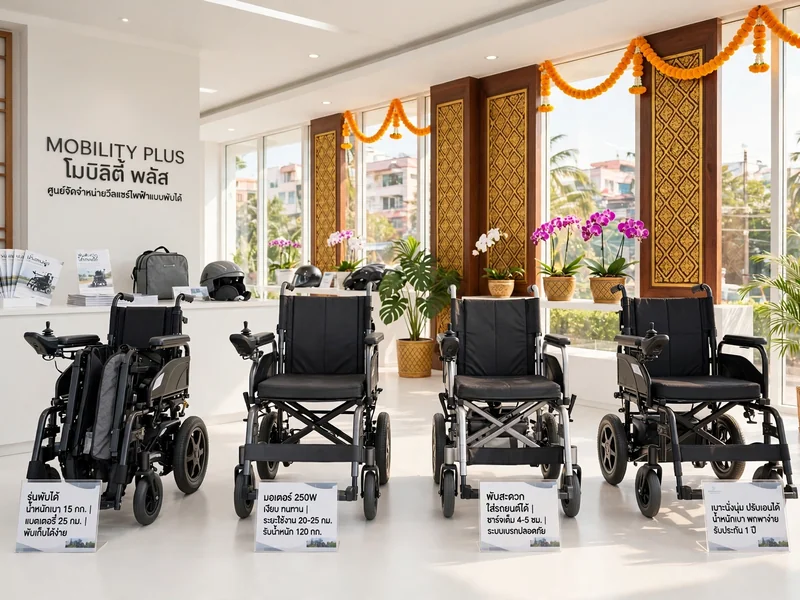
Many electric wheelchairs in Thailand reach buyers through specialist mobility shops and medical equipment retailers, rather than through general stores. These shops keep demo chairs on the floor, let customers try them, and handle the fitting and handover in person — which makes the specialist shop your most important channel.
Alongside the shops, many distributors also sell through local agents who cover a region, and through online listings that point back to a local service address. Online sales work best when the listing is honest about folded size, weight, and range, and when a buyer can still book a test drive or a phone call before ordering.
Thailand is a large country, and buying habits can differ from one city to another. A shop network that covers your first city well is worth more than a thin presence spread across the whole country, so start where you can serve buyers properly and expand from there. Our guide to selling electric wheelchairs in Southeast Asia makes the same point for the region: pick one beachhead market first and do it well.
Key Takeaway: Start in one Thai city with shops you can support properly, and treat Thailand as your beachhead market for Southeast Asia.
Which Sales Channels Work Best When You Are New to the Thai Market?
When you are new to the Thai market, start with two or three channels you can serve well, rather than trying to be everywhere at once. A small network of mobility shops gives you local presence and feedback, while a clear online listing gives buyers a way to find you and compare models.
Each channel needs a different kind of support from you. Shops need demo chairs, printed material in Thai, and a fast answer when a customer asks a technical question. Online buyers need clear specifications, real photos, and a plain explanation of delivery and warranty. Before you sign up a new channel, ask whether you can support it properly: a channel you cannot serve will cost you more in lost trust than it earns in orders.
Channel
How it works
Best for
What to watch
Specialist mobility shop
Demo, fitting, and handover in store
First-time buyers who want to try before they buy
Shops need demo stock and quick technical answers
Online listing
Buyer compares models and contacts you
Buyers who already know what they need
Listings must be accurate and lead to a real contact
Local distributor or agent
Partner sells in a city you do not cover
Reaching cities outside your own area
Agree the territory and the service split in writing
Care provider or clinic contact
Professional recommends your chair
Buyers who trust a care referral
Keep the summary short, honest, and easy to pass on
Key Takeaway: Start with two or three channels you can support properly, and add more only when the first ones are running smoothly.
What Should You Look for in a Thai Distribution Partner?
A good Thai partner knows the local buyers, speaks Thai, and already has a place where customers can try a chair. Look for a partner who runs a real showroom or a service workshop, not just a website, because fitting and after-sales work cannot be done from a warehouse alone. Ask how many demo chairs they keep, who answers customer questions, and how they handle a chair that comes back faulty.
Check that the partner is comfortable with the practical side: storing a small stock of spare parts, running a simple warranty process, and keeping records for each chair they sell. Finally, agree the basics in writing before the first order: territory, order sizes, payment terms, and who handles warranty. Use our guide on how to become an electric wheelchair distributor as a checklist before you sign.
Key Takeaway: Choose a partner with a real showroom, demo chairs on the floor, and staff who can demonstrate the chair — and agree territory, payment, and warranty in writing first.
Which Electric Wheelchair Models Fit Thai Buyers Best?
Thai buyers value chairs that fold small, travel easily, and cope with everyday use at home and outdoors, so lightweight folding models usually lead the range. The EW1000 is a carbon fiber folding chair at 15 kg including the battery, with a folded size of 73×39×71 cm and a range of 15±3 km — easy to lift into a car and simple to store at home. The EW100 is the aluminum alloy alternative at 23 kg, folding to 73×55.5×31 cm with a range of 12±5 km, and it suits buyers who want a light, practical chair for everyday use.
For buyers who need a sturdier daily chair, the EW8722 adds comfort and durability at 45 kg, with a range of 18–22 km. The EW8703G, our big-wheel model, suits buyers who spend more time outdoors and want a steadier ride on uneven ground, at 46 kg with a range of 18–22 km. The EW8720 is a comfortable daily model at 45 kg with a range of 18–22 km, powered by dual 12V 22.3Ah lead-acid batteries in series, which gives 24V 22.3Ah. All models run on a 24V system. The folding models are designed for air travel (airline approval required), so always remind customers to confirm approval with their airline before they fly.
Model
Weight
Range
Battery
Best for
EW1000
15 kg incl. battery
15±3 km
24V 10Ah lithium
Travel and easy lifting into a car
EW100
23 kg
12±5 km
24V
Everyday folding use at home
EW8722
45 kg
18–22 km
24V
Comfortable daily use
EW8703G
46 kg
18–22 km
24V
Outdoor use and uneven ground
EW8720
45 kg
18–22 km
Dual 12V 22.3Ah lead-acid in series = 24V 22.3Ah
Comfortable daily use with long battery life
Key Takeaway: Lead with the lightweight folding models, keep a sturdier daily chair in the range, and let customers try the chair outside on real ground.
How Should You Localize Your Listings and Manuals for Thai Buyers?
Localization starts with the Thai language. Product pages, manuals, and warranty cards should be available in Thai, because many buyers want to read safety instructions and charging guidance in their own language before they trust a chair. English-only material still looks like an import, while a Thai listing looks like a product that belongs in the country. If a full Thai manual is not ready for the first order, provide a Thai quick-start guide and a clear note that the full manual follows.
Use everyday Thai wording in your material, not a word-for-word translation from another market. Terms for parts, charging, and service can sound stiff or unclear when they are translated literally, so have a local partner read your material before it goes live.
Beyond language, check the details buyers actually read. Show folded size in centimeters, weight in kilograms, and range in kilometers, and show a photo of the folded chair next to an everyday object so the size is easy to judge.
Key Takeaway: Publish your listings and at least a quick-start guide in Thai, and have a local partner read the wording before it goes live.
What Should Your First Order for Thailand Include?
Keep the first order small enough to manage, but wide enough to learn from. Start with a mix of models rather than a single chair: a few lightweight folding chairs for travel buyers, and a few sturdier chairs for daily use. With a minimum order quantity of 1 unit and a lead time of 7 days after payment, you can start small and reorder once you see which models your shops actually sell.
Your first order should also include the items that make the sale work: a demo chair for each shop, spare controllers, motors, and chargers, and Thai printed material for the showroom. A shop without a demo chair is only a brochure, and a shop without spare parts cannot fix the first fault quickly.
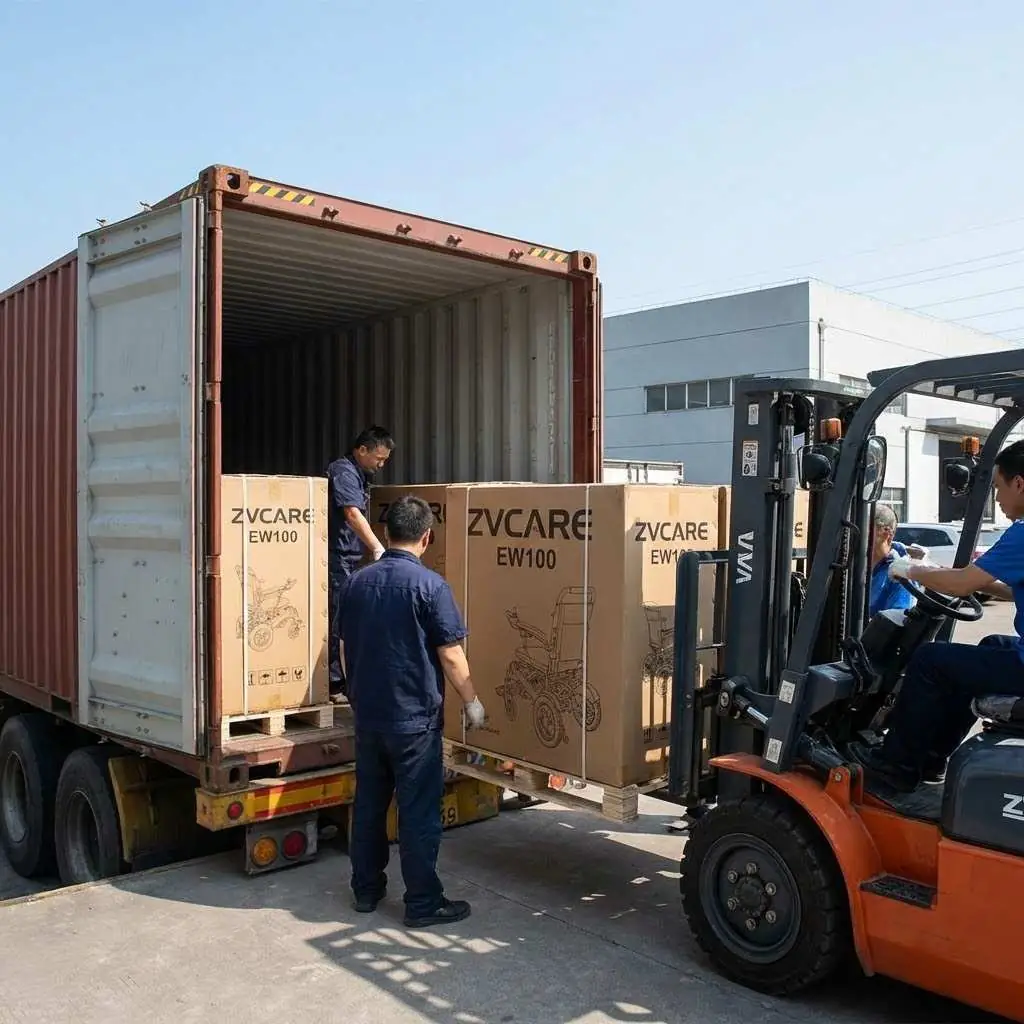
Ask your supplier to confirm the shipment paperwork in writing before it leaves the factory — commercial invoice, packing list, and battery documents — and ask your local partner what Thai customs will ask for on arrival, because requirements can differ by model and battery type.
Key Takeaway: Order a small mixed range plus a demo chair for each shop, spare controllers, motors, and chargers, and Thai printed material — and confirm the paperwork list in writing first.
How Do You Set Up After-Sales Service and Spare Parts in Thailand?
In Thailand, after-sales decides whether the business lasts: buyers judge you on the second visit, not the first. Set up a simple service point before your first sale, even if it is one trained technician and a bench in the back of a shop. That technician should be able to check a controller, swap a motor, test a charger, and run a basic safety check after any repair. Keep a written record for each chair — model, serial number, and any part you changed.
Stock the parts that stop a chair from being used when they fail: controllers, motors, chargers, joysticks, and batteries. Keep the common parts on the shelf: a buyer who waits weeks for a basic part will not recommend you. Agree response times with your supplier in writing, and know the warranty terms by heart: frame 36 months, motor and controller 12 months each, and battery 6 months for lead-acid or 12 months for lithium.
Service distance matters more in Thailand than in a compact market, so plan for it from the start. If your shops cover more than one city, decide which workshop handles each area and how a chair travels to the workshop when it cannot be fixed on site. Our guide on how distributors build an after-sales service network shows how to plan that coverage before the first sale.
Key Takeaway: Open a small service point before the first sale, stock controllers, motors, chargers, and batteries, and keep a written record for every chair.
What Should You Confirm Before Your First Shipment to Thailand?
Before your first shipment leaves the factory, confirm the practical details in writing with your supplier and your local partner. Start with the documents: commercial invoice, packing list, and battery documents, plus anything else your partner says local customs will ask for. Keep the full set together with the shipment, and keep a copy for yourself.
Next, confirm the local rules with your Thai partner before you ship, not after the goods arrive. Ask them to check which product registrations, labels, or certificates apply to your models, and whether any step needs time before the shipment lands. Do not guess at regulatory details: your partner on the ground is the person who can confirm what applies to your exact models and batteries.
Also confirm the delivery plan: the delivery address, who receives the goods, and who handles local transport from the port or airport to your warehouse or shop.
Key Takeaway: Confirm documents, local requirements, and the delivery plan in writing with your partner before the shipment leaves the factory.
Selling Electric Wheelchairs in Thailand: What Should Your First 90 Days Look Like?
The first 90 days in Thailand are about learning, not scaling. In the first month, get the demo chairs into the shops, train the shop staff to fold the chair, explain the controls, and answer the common questions about charging and warranty. Visit each shop yourself and watch a demo, so you can fix whatever confuses customers on the spot.
In the second month, follow up every buyer. A short call after delivery tells you more than any sales report: did the chair fit through the front door, does the buyer charge it the way the manual says, is there a question nobody answered in the shop? Write the answers down, because the same questions will come up again.
In the third month, review what sold and what did not, then place a focused reorder. Do not add a new city or a new model in the first 90 days: the point of the beachhead is to learn one market properly before you widen it.
Key Takeaway: Spend the first 90 days on demos, staff training, buyer follow-up, and one focused reorder — do not add a new city or model yet.
What Does Selling Electric Wheelchairs in Thailand Look Like After the First Year?
Growth in this market comes from repeat orders and referrals, not from one large first shipment, so let the first year teach you what to reorder before you widen the range.
Keep in touch with buyers who already own a chair: they are your best source of honest feedback and new customers. A short follow-up call after delivery, a reminder about battery care, and a quick answer when something goes wrong will do more for your reputation than any advertisement. As the business grows, add shops and cities one at a time, keep the same service standard in each one, and keep your range tight: a few models you know well will always beat a long list you cannot support. The same rule applies in our guide to selling electric wheelchairs in Brazil: grow by serving the customers you already have, then add the next city.
Key Takeaway: Grow by repeat orders and referrals, add one city at a time, and keep the range tight around the models you know well.
Conclusion
Selling Electric Wheelchairs in Thailand comes down to three things: channels you can serve well, material in Thai, and after-sales buyers can rely on. Start with a few specialist shops in one city, translate your material into Thai, and open a small service point before the first sale. Order a small mixed range, confirm the paperwork and local requirements with your partner before the first shipment, and let the first 90 days teach you what to reorder. If you want a supplier who works the same way, ZVCARE offers a minimum order quantity of 1 unit, a lead time of 7 days after payment, and spare parts support. Contact us to discuss your first order for Thailand.
FAQ
Do I need a Thai company to sell electric wheelchairs in Thailand?
Ask your Thai partner to confirm whether you need a local company for your exact setup before your first sale — many distributors start by working with a local partner who already has a showroom and a service point, and your partner is the one who can confirm what applies. What you do need is a partner who can handle demos, fitting, and after-sales in Thai, plus a written agreement that says who does what.
Which electric wheelchair sells best in Thailand?
Lightweight folding models usually lead, because Thai buyers travel often between cities and want a chair that is easy to lift into a car and simple to store at home. The EW1000, at 15 kg including the battery with a folded size of 73×39×71 cm, is a strong opening model.
Do my product pages and manuals need to be in Thai?
Yes, your product pages and at least a quick-start guide should be in Thai before you sell. Buyers want to read safety and charging instructions in their own language, and a Thai listing signals that the product is properly supported in the country.
What should I confirm before my first shipment to Thailand?
Confirm the commercial invoice, packing list, and battery documents with your supplier in writing before the shipment leaves the factory, and ask your Thai partner to confirm which local registrations, labels, or certificates apply to your models. Do not guess at regulatory details: the partner on the ground is the one who can confirm what applies.
How do I handle warranty claims for Thai customers?
Set up a small service point first, so a claim starts with an inspection, not a phone argument. Record the model, serial number, and the failed part, then check the warranty term: frame 36 months, motor and controller 12 months each, and battery 6 months for lead-acid or 12 months for lithium.
Founded in 2015, ZVCARE is an ISO 13485:2016 certified electric wheelchair manufacturer in China, providing OEM & ODM solutions for global distributors and medical stores.