How Distributors Manage Electric Wheelchair Demo Stock
November 12, 2026
A demo chair is the hardest-working chair a distributor owns: the chair customers sit in, fold, lift, and drive before they decide, and it has to feel like a new chair every time — even after months on the showroom floor. That is why how distributors manage electric wheelchair demo stock matters as much as which models they sell: a well-run demo fleet earns trust at the point of decision, while a tired, flat-battery demo chair loses the sale before the conversation starts.
This guide covers the demo stock itself: how many chairs to keep, which models to choose, how to store and rotate them, battery care, pre-use checks, and honest ex-demo sales.
How Do Distributors Manage Electric Wheelchair Demo Stock?
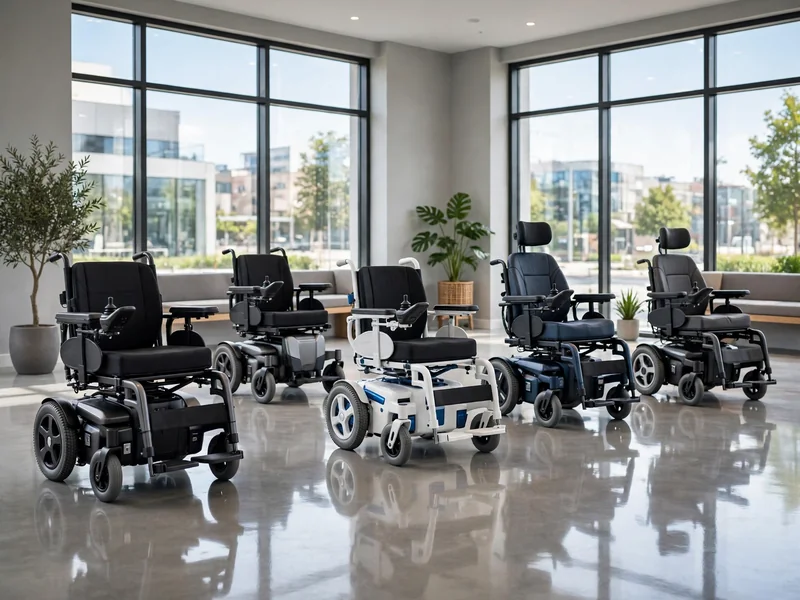
Managing demo stock means treating your demonstration chairs as a small fleet of their own, separate from the chairs you hold for sale. Each demo chair has one job: to show a model at its best, every time a customer tries it — charged, clean, adjusted, and safe to drive. That takes a routine, not just good intentions.
Give every demo chair a home and a record: a fixed place on the floor or in storage, with its charger and accessories kept with it, and a simple log noting the model, serial number, date it entered demo service, and every check or repair since. The other half of the job is deciding when a demo chair stops being one — a chair that has done many demonstrations, picked up marks, or been replaced by a newer model should move on to an ex-demo sale or out of the fleet entirely. Keeping a tired chair on the floor is a false saving, because customers notice wear, and wear makes them doubt the new chairs too. Our guide on how distributors run an electric wheelchair trial fleet covers the chairs you lend to customers for a trial at home — a different job from the showroom demo fleet, with different rules, even when the two fleets share the same models.
Key Takeaway: Treat demo chairs as a fleet of their own, with a fixed place, a written record, and a clear point where a chair retires from demo service.
How Many Demo Chairs Should a Distributor Keep?
The right number is the smallest number that lets every customer try the model they are considering without waiting: one demo chair for each model you actively sell, plus a spare for your best-selling model so a demonstration never stops because one chair is being serviced or charged.
A small range keeps this affordable: e.g., five models need five or six demo chairs, while a dozen models make the fleet expensive to keep in good order and hard for customers to tell apart. A tight range is easier to maintain and easier for staff to know well. Think about floor space too: a demo chair earns its place only if a customer can drive it, which means room to turn, a clear route to the door, and space to fold the chair and lift it into a car. If the floor is crowded, a chair that never gets driven is just decoration.
Which Models Belong in a Demo Fleet?
Your demo fleet should mirror the range you actually sell, with one chair standing for each kind of buyer you serve: a travel buyer wants a light folding chair, a daily user wants a comfortable, sturdy chair, and an outdoor buyer wants a big-wheel model for uneven ground. If a model has no demo chair, it will rarely sell — customers buy the chair they have tried.
Build the fleet around the five models in the ZVCARE range, each showing a different strength. The EW1000 is the carbon fiber folding chair at 15 kg including the battery, folding to 73×39×71 cm with a range of 15±3 km — the chair to show when a customer needs to lift it into a car. The EW100 is the aluminum alloy alternative at 23 kg, folding to 73×55.5×31 cm with a range of 12±5 km, for light everyday use. The EW8722 is the comfortable, durable small-wheel model at 45 kg, the EW8703G is the big-wheel model at 46 kg for outdoor use, and the EW8720 is the comfortable daily model at 45 kg, powered by dual 12V 22.3Ah lead-acid batteries in series, which gives 24V 22.3Ah. All models run on a 24V system. The folding models are designed for air travel (airline approval required).
Model
Weight
Folded size
Battery
Demo role
EW1000
15 kg incl. battery
73×39×71 cm
24V 10Ah lithium
Travel and easy lifting
EW100
23 kg
73×55.5×31 cm
24V
Everyday folding use
EW8722
45 kg
80×39×74 cm
24V
Comfortable daily use
EW8703G
46 kg
89×43×76 cm
24V
Outdoor and uneven ground
EW8720
45 kg
80×34×74 cm
Dual 12V 22.3Ah lead-acid in series = 24V 22.3Ah
Comfortable daily use
When a new model joins your range, add its demo chair at the same time, and retire the demo chair of any model that leaves, so the floor only shows chairs you can actually supply.
How Should Demo Chairs Be Stored Between Demonstrations?
A demo chair spends most of its life waiting — between demonstrations, overnight, and over quiet weeks — so where it waits matters. Keep demo chairs indoors, dry and out of direct sun, with enough space around each one that staff can reach it without moving three others. A chair squeezed into a corner gets knocked and forgotten; a chair with its own space stays in showroom condition.
Folded chairs need care too: a chair stored folded for a long stretch should be opened and checked on a regular schedule, so the folding joints, latches, and cables stay free and smooth. Store the charger with the chair it belongs to, and label it — a charger that has wandered off is a common reason a demo chair is flat when a customer arrives. If you have more demo chairs than floor space, rotate them: keep the best sellers on the floor and the rest in a clean storage room. A chair in storage is still part of the fleet, not a chair you have forgotten about.
How Do You Keep Demo Chair Batteries Healthy in Storage?
A demo chair is only useful if its battery is ready, and batteries suffer most from neglect. A chair that sits unused for weeks with a flat battery will not just fail the next demonstration — a battery left flat for a long stretch can lose capacity and shorten its working life. Battery care is part of demo stock management, not a separate chore.
The habit is simple: check every demo chair battery on a set schedule, and charge any chair that has dropped low before it sits flat. Keep a regular charging day when every demo chair goes on charge and is checked, so no chair is missed. For a fuller guide to storage conditions and charging routines, see our article on how distributors store electric wheelchair batteries. Know your battery types, because they need different care: the EW1000 uses a 24V 10Ah lithium battery, with a warranty of 12 months, while the EW8720 runs on lead-acid batteries with a warranty of 6 months. Keep the two kinds of chargers clearly labeled and separate — a charger used on the wrong battery type is an avoidable mistake.
Key Takeaway: Check demo batteries on a set schedule, never leave a chair standing flat, and keep lithium and lead-acid chargers clearly labeled and separate.
What Should a Demo Chair Check Cover Before Each Use?
Before a customer sits in a demo chair, someone should run a short check — the same check, every time, on every chair. A written checklist keeps it consistent, so any member of staff can do it, not just the person who knows the fleet best. The check takes a few minutes, and it is the difference between a smooth demonstration and an awkward one.
Start with power and drive: battery charged, chair powers on, joystick smooth, and the chair moves forward, turns, and stops cleanly. Then check the parts the customer will touch and see: brakes hold, armrests and footrests are secure, the seat and cushion are clean and undamaged, and the folding mechanism opens and closes smoothly. Finally, look the chair over as a customer would — marks, scratches, loose cables, or a dusty frame all tell the customer something about the chairs you sell. If the check finds a fault, take the chair out of service until it is fixed: a chair with a known fault is worse than no demo chair at all. The person running the demonstration should also know the safety basics — our guide to distributor staff training for electric wheelchair demos covers what staff need to know before they show a chair to a customer.
Check
What to look for
When to do it
Battery and power
Chair charged, powers on, drives and stops cleanly
Before every demonstration
Controls and brakes
Joystick responds smoothly, brakes hold
Before every demonstration
Seat and fittings
Cushion clean, armrests and footrests secure
Before every demonstration
Folding mechanism
Opens and closes smoothly, latches hold
On a regular schedule and before a folding demo
Frame and finish
No new marks, scratches, or loose cables
On a regular schedule
How Do You Rotate Demo Stock So No Chair Sits Idle?
Even a well-kept demo fleet goes stale if the same chairs sit in the same place for months. Rotation keeps the fleet fresh: it spreads the wear across chairs, brings stored models back onto the floor, and stops one chair from doing all the work while another gathers dust.
A simple rotation is to swap floor and storage chairs on a set schedule, and to move the best-selling demo chair to a different spot on the floor from time to time. When a chair has done a long run of demonstrations, give it a rest in storage and bring a fresher chair forward — the rest is also a good moment for a deeper clean and a full check. Keep the rotation in the fleet record, so you can see which chair has been working hardest and which one has been idle. Rotation also tells you what your customers want: if one demo chair is requested again and again while another is never asked for, the popular model may deserve a spare demo chair, and the ignored one may need better positioning.
How Do You Sell an Ex-Demo Chair Honestly?
Every demo chair eventually reaches the end of its floor life, and selling it as an ex-demo unit is a normal part of managing demo stock — provided the sale is honest. The buyer is entitled to know exactly what they are getting: a chair that has been demonstrated, not a new chair.
Before you offer the chair, give it a full check and a clean, and write down its condition in plain words: how long it served as a demo chair, what wear it shows, and which parts — if any — have been replaced. Price it as a used chair, not as a new one with a small discount, and say plainly it is an ex-demo unit. Photograph the actual chair, including any marks, rather than using a stock photo of a new one. If warranty remains, state the terms clearly — frame 36 months, motor and controller 12 months each, and battery 6 months for lead-acid or 12 months for lithium — and confirm how much cover is left.
Condition
What it means
How to present it
Light demonstration use
Few demonstrations, little visible wear
State the demo history and show the actual chair
Regular demonstration use
Visible wear from normal handling
Photograph the wear and price it as a used chair
Heavy demonstration use
Noticeable marks, parts replaced
Disclose every repair and price it accordingly
Not fit to sell
Faults that cannot be put right
Keep it out of the fleet and out of the sale
Some distributors also take a customer’s old chair in part exchange when they sell an ex-demo unit, and our guide to electric wheelchair trade-in programs for distributors explains how to run that kind of offer fairly. Either way, the rule is the same: describe the chair as it is, price it as it is, and let the buyer decide with the full picture.
Key Takeaway: An ex-demo sale is honest when the buyer knows the chair’s history, sees its actual condition, and pays a used-chair price.
What Records Should You Keep for Every Demo Chair?
A demo fleet without records is a fleet you are guessing about. For every demo chair, keep a simple record that answers four questions: which chair is it, where is it, what condition is it in, and what has been done to it. That record is what saves you when a customer asks about a chair’s history or a warranty question comes up.
The record does not need to be complicated: a sheet per chair, or a row in a simple log, is enough — model, serial number, date it entered demo service, where it is kept, and a line for every check, repair, or part changed. Note when a chair moves between the floor and storage, and when it is retired or sold as ex-demo. Good records also protect the business side: if a demo chair needs a warranty repair, the record shows its service history and the part that failed, which makes the claim straightforward — frame 36 months, motor and controller 12 months each, battery 6 months for lead-acid or 12 months for lithium. If a chair is sold as ex-demo, the same record becomes the honest history you hand to the buyer.
Conclusion
How distributors manage electric wheelchair demo stock comes down to treating demonstration chairs as a fleet with its own rules: one chair per model you actively sell, a fixed place and a written record for each one, batteries checked on a set schedule, the same short check before every demonstration, regular rotation so no chair sits idle, and an honest ex-demo sale when a chair’s floor life ends. Keep the fleet small enough to maintain well, and it will repay you every time a customer sits in a chair that feels new. If you want a supplier who supports that way of working, ZVCARE offers a minimum order quantity of 1 unit, a lead time of 7 days after payment, and spare parts support. Contact us to discuss the demo chairs for your range.
FAQ
How many demo chairs does a distributor need to start with?
One demo chair for each model you actively sell, plus a spare for your best-selling model so a demonstration never stops because one chair is being serviced or charged. Start with the models your customers ask about most, and add a demo chair whenever a new model joins your range.
Which electric wheelchair models should be in a demo fleet?
The fleet should mirror the range you sell, with one chair for each kind of buyer you serve: the EW1000 suits travel buyers, the EW100 suits everyday folding use, the EW8722 and EW8720 suit comfortable daily use, and the EW8703G suits outdoor use on uneven ground. If a model has no demo chair, it will rarely sell, because customers buy the chair they have tried.
How should demo chair batteries be looked after in storage?
Check every demo chair battery on a set schedule and charge any chair that has dropped low before it sits flat — a battery left flat can lose capacity. Keep lithium and lead-acid chargers clearly labeled and separate. The EW1000 uses a 24V 10Ah lithium battery, while the EW8720 runs on lead-acid batteries.
What should I check on a demo chair before a customer tries it?
Run the same short check every time: battery charged, chair powers on, joystick smooth, brakes hold, armrests and footrests secure, seat and cushion clean, and the folding mechanism working smoothly. Take any chair with a fault out of service until it is fixed.
Can I sell a demo chair as an ex-demo unit?
Yes, provided the sale is honest. Give the chair a full check and a clean, write down its demo history and any wear or repairs in plain words, photograph the actual chair including any marks, and price it as a used chair. State any warranty remaining clearly.
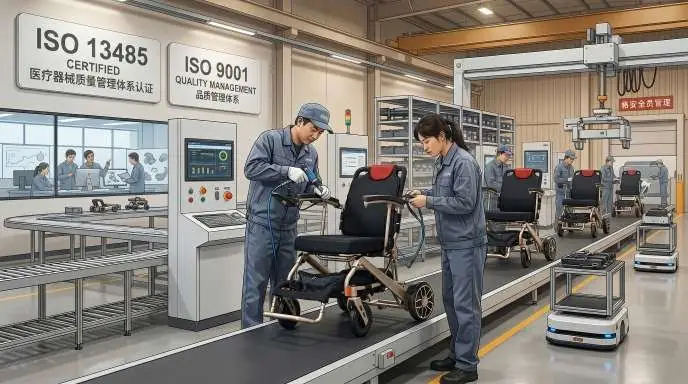
Founded in 2015, ZVCARE is an ISO 13485:2016 certified electric wheelchair manufacturer in China, providing OEM & ODM solutions for global distributors and medical stores.