How Distributors Store Electric Wheelchair Batteries
November 5, 2026
A distributor’s warehouse holds two kinds of stock: chairs, and the batteries that power them. Chairs are more forgiving in storage: they sit, wait, and work when needed. Batteries are different: one left flat, in a hot corner, or forgotten at the back of a shelf can come back as a dead unit, a warranty argument, or a safety problem. This guide explains How Distributors Store Electric Wheelchair Batteries as a practical routine: charge level, room conditions, labelling and rotation, checks, damaged batteries, and pre-shipment steps.
What charge level should a battery sit at in storage?
Neither full nor flat is a good storage state. A battery stored fully charged spends its wait under stress, and one stored flat can drop too low to take a charge again. The right state is part-charged: enough to sit safely for weeks, without being held at maximum.
Where the battery maker gives a storage charge figure, follow it: it beats any general rule. Where no figure is given, a useful working rule is e.g. around half charge: charge to roughly the middle of its range before shelving, and write the date on the label so the next check has a starting point.
Two habits make this work. First, set the charge level at intake, not later: a battery shelved at whatever charge it travelled with may already be nearly flat, and nobody will know until a customer complains. Second, never store a returned battery without checking its charge first: a returned battery may have been run flat, and a flat battery on a shelf is the one most likely to be dead when you reach for it. For what a battery’s working life normally looks like, see our guide to how long electric wheelchair batteries last.
Key Takeaway: Store batteries part-charged, not full or flat, and set the level at intake.
How do you check a battery before it goes on the shelf?
Every battery gets a short inspection before storage, new factory stock or a unit back from a customer. It takes a couple of minutes, and it keeps a problem battery out of your good stock.
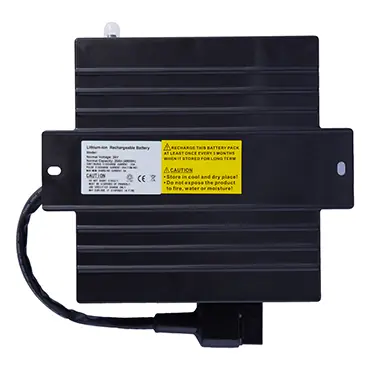
Look at the case first: cracks, dents, swelling, or signs of crushing or dropping. Then check terminals for damage or corrosion, and make sure covers are fitted. A bare terminal touching a metal shelf, a tool, or another battery is a short circuit waiting to happen, so cover terminals before storage, not after. Finally, check the charge level and confirm type and size match the label. Lithium and lead-acid batteries look similar on a shelf but behave differently in storage, so never share a label or a bay between types. Our guide to lithium vs lead-acid wheelchair batteries explains the differences that matter when you handle them.
Any battery that fails this inspection does not go on the shelf. It goes to the isolation spot below, with a note saying what is wrong and when it was found. A battery with a note is a problem being managed; one without is a problem waiting to be shipped by mistake.
Key Takeaway: Inspect every battery at intake, cover terminals, confirm type, and send failures straight to isolation.
What do you do with a battery that looks damaged?
A damaged battery gets its own place, away from good stock, until you have a plan for it. Do not put it back on the shelf “for now”, stack anything on it, or try charging it to see if it recovers: charging a swollen, cracked, or leaking battery can make the damage worse, and a dropped or crushed battery may look fine outside while damaged inside.
Set up the isolation spot before you need it, not after a damaged battery arrives: a clear area away from other stock and flammables, visible to staff. A metal container or a marked bay on a concrete floor works well. Sign it plainly: batteries there are not for sale and not for use, and tell all staff where it is. When a damaged battery goes in, attach a note with the date, the model or batch, and what was found: swollen, cracked, leaking, overheated, or simply “failed inspection, reason unclear”. That note is what stops the battery being picked up by someone who was not there when it arrived.
What happens next depends on the damage and your supplier’s advice: contact them with the note and photos, and ask how they want the battery handled. Never ship a damaged battery to a customer, and never put it in ordinary waste. A battery at the end of its life, damaged or not, needs the proper route, which our guide to electric wheelchair battery recycling for distributors covers.
Key Takeaway: A damaged battery goes straight to a marked isolation spot with a dated note, and is never charged, sold, or shipped.
How do you keep a stored battery ready to ship?
A battery stored well but badly for shipping still costs you a day. The packing, the paperwork, and the terminal covers should be sorted while the battery is on the shelf, not hunted for when an order comes in.
Keep the battery’s original packaging where you can find it, or equivalent packing with the battery’s bay. Batteries travel best in packing made for them: padding that stops movement, and a box that protects the terminals. If the original box is gone, pack the battery so it cannot shift or press against anything sharp, and fit terminal covers before it goes in the box. Keep the battery’s paperwork with its batch, not in a separate office file: delivery note, batch or serial record, and any test summary your carrier asks for. Our guide to UN38.3 for wheelchair batteries explains the transport testing paperwork that carriers commonly ask about.
One more habit saves arguments: note the battery’s condition on arrival into storage, so you can show what left your warehouse and when if a customer later claims it arrived damaged.
Key Takeaway: Store each battery with packing, terminal covers, and paperwork close at hand, so shipping day is a pickup, not a search.
How should the battery storage area itself be laid out?
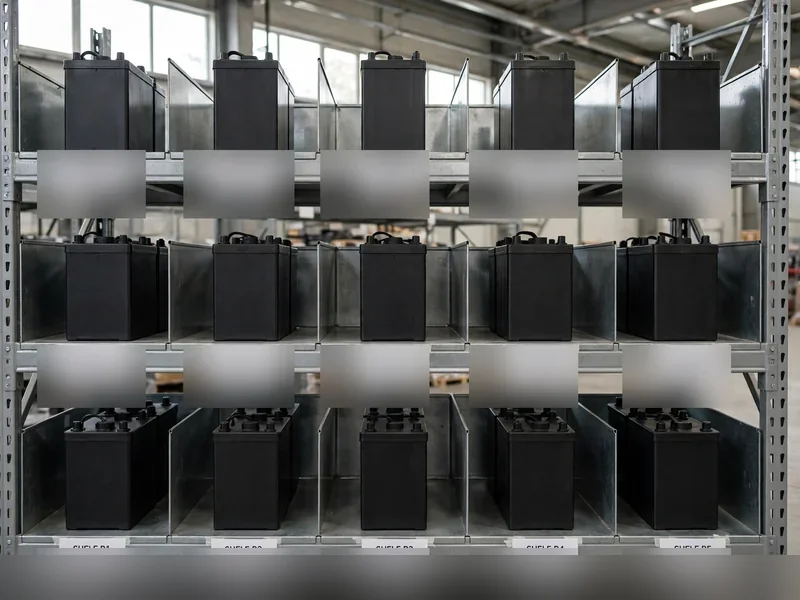
Batteries deserve their own area, not a corner shared with whatever else would not fit elsewhere. A dedicated area makes every other rule here easier: checks happen because batteries are all in one place, rotation because the order is visible, and a problem battery is noticed because it is not hidden behind other stock.
The room should be cool, dry, and stable. Avoid heat sources, direct sunlight, and damp corners where condensation forms. An unheated shed that freezes in winter and bakes in summer is not a battery store, however convenient its rent. Keep the area ventilated, the floor dry, and the temperature steady rather than chasing a precise figure: a normal cool indoor room, kept out of extremes, suits stored batteries far better than a space swinging between hot and cold. Cold deserves special attention in winter, and our guide to how cold weather affects electric wheelchair batteries explains why a battery that sat through a cold spell may behave differently when used again.
Separation matters as much as temperature. Keep batteries away from flammable stock: bulk cardboard, solvents, fuel, and packing foam. Keep them off the floor on racking or pallets, upright, spaced so air moves and a problem with one battery does not reach its neighbour. Keep heavy units low, keep the walkway clear so any battery can be reached without shifting others, and keep a suitable fire extinguisher within reach where staff know to find it.
Battery area rule
What it looks like in practice
Own dedicated area
Batteries together in one marked area
Cool, dry, stable room
Indoors, out of sun, away from heaters, no damp
Away from flammables
No bulk cardboard, solvents, or fuel beside or above batteries
Off the floor, upright, spaced
Racking or pallets, upright, gaps between units
Heavy units low
Heaviest at waist height or below
Clear access
Walkway clear, any battery reachable without shifting others
Key Takeaway: Give batteries their own cool, dry, stable area: off the floor, upright, spaced apart, clear of flammables.
How do labelling and rotation stop old stock going stale?
A battery without a label is a guess. A shelf without labels is a warehouse full of guesses, and the guess that costs money is picking a battery that sat for a year when a fresher one was two bays along. Labelling turns a shelf of identical black boxes into stock you can manage.
Label every battery when it goes into storage with four things: type and size, batch or serial reference, storage date, and charge state at that date. A paper tag or a shelf-bay label works; the method matters less than the habit. Use the same four items every time, so any member of staff can read a battery’s story at a glance. Record it in your stock system too, but never let the system replace the physical label: the picker reads the shelf, not the screen.
Rotation follows from labelling. Ship the longest-stored battery first, provided it passes its pre-shipment check. This is first-in-first-out, and it matters for batteries more than for most stock because a battery ages while it sits, even when never used. Without rotation, the same batteries at the back keep getting skipped until they are past their useful life. This is the same discipline as general spare-parts stocking, and our guide to electric wheelchair spare parts stocking covers running it across a wider range.
Label item
Why it matters
Battery type and size
Stops types being mixed or picked for the wrong chair
Batch or serial reference
Lets you trace a battery if a batch problem appears
Date stored
Shows which battery waited longest
Charge state at storage
Gives the next check a starting point
Key Takeaway: Label every battery with type, batch, storage date, and charge state, and always ship the longest-stored battery first.
What should a periodic battery check cover?
Stored batteries are not “set and forget”. Left alone, a battery slowly loses charge, and a lead-acid battery left flat long enough may not recover at all. A regular check catches that slide while still fixable, and also catches slow problems intake inspection cannot see: a case starting to swell, a terminal corroding, a label fallen off.
Fix a routine and stick to it. A practical rhythm is e.g. a quick check once a month: walk the battery area, look at every battery, and note anything changed. Check charge levels, on every unit for small stock or a sample for large stock, and top up any battery below its storage level. Check cases, terminals, and labels, and confirm the oldest battery is still next out. Write the check down: date, who checked, and anything found. A written record turns “we check the batteries” into something you can prove to a customer, a supplier, or an insurer.
Seasonal changes deserve an extra look. After a hot spell, check for swelling or heat damage; after a cold spell, check charge levels, since cold affects how a battery holds and delivers charge. After any leak or damp patch near the battery area, check for moisture and move stock if the area is no longer dry. A battery failing a periodic check follows the same route as a failed intake inspection: isolation, a dated note, and no return to the shelf until the supplier advises otherwise. For batteries showing their age rather than failing outright, our guide to how to replace an electric wheelchair battery covers the replacement decision from the distributor’s side.
Key Takeaway: Check stored batteries on a fixed routine, e.g. monthly, covering charge, case, terminals, and labels, and write it down.
What do you check before a stored battery leaves the building?
Shipping day has its own checklist: the last chance to catch a mistake before it becomes a customer complaint. Run it for every battery, even one stored for only a week.
First, confirm the battery is the right one for the order: type, size, and batch match the paperwork. Second, run the physical check again: case undamaged, terminals clean and covered, no swelling, no leaking, no smell. Third, check the charge level and bring it to the level the customer or carrier expects, following the maker’s guidance where it gives one. Fourth, confirm the paperwork travels with the battery: delivery note, batch record, and any transport documents the carrier requires. Fifth, pack it so it cannot move in transit, terminal covers fitted, padding on all sides.
If any step fails, stop. A battery that fails the dispatch check goes back to isolation, not onto the van with a note saying “check on arrival”. The customer will not remember that you shipped fast; they will remember that you shipped a bad battery. Update shelf labels and stock records at the same time, keeping rotation true for the next order. For the wider picture of running a warehouse that stores chairs as well as batteries, see our guide to storing electric wheelchairs in your warehouse.
Dispatch check
Pass means
Right battery for the order
Type, size, and batch match the paperwork
Physical condition
Case sound, terminals covered, no swelling or leaking
Charge level
At the expected level, set per the maker’s guidance
Paperwork complete
Delivery note, batch record, carrier documents travel with it
Packing secure
Battery cannot shift, terminals covered, padding on all sides
Key Takeaway: Run the same five dispatch checks on every stored battery, and stop the shipment if any check fails.
This guide has set out How Distributors Store Electric Wheelchair Batteries as a practical routine: part-charged on arrival, inspected before shelving, kept cool, dry, and dedicated away from flammables, labelled and rotated so the oldest ships first, checked on a routine, isolated the moment something looks wrong, and checked once more before it leaves. Follow it, and stored batteries stop being a source of dead stock and awkward customer calls, and go back to being what they should be: stock ready to sell.
If you are building battery stock alongside your chair range, talk to our factory team about battery types, batch supply, and packaging under our OEM service. We supply from a 1-unit MOQ, with a 7-day lead time after payment, frame warranty 36 months, and battery warranty 6 months for lead-acid or 12 months for lithium, motor, and controller warranty 12 months each. Tell us which models and battery types your customers need, and we will help you stock batteries your routine can stand behind.
FAQ
How long can an electric wheelchair battery sit in storage before it needs attention?
It depends on battery type and room, but no stored battery should be left unchecked indefinitely. A fixed routine, e.g. a monthly check of charge, case, and terminals, catches a battery sliding toward flat while it can still be topped up. If a battery has sat unchecked for a long time, inspect it and check its charge before promising it to a customer.
Should stored batteries be kept fully charged?
No. A battery held at full charge for weeks spends its whole wait under stress, and a battery left flat can drop too low to recover. Store batteries part-charged, following the maker’s figure where given, and top up any battery below its storage level at each check.
Can lithium and lead-acid batteries share the same shelf?
They can share the battery area, but never a label or a bay. Keep types clearly separated and labelled, because they behave differently in storage. Mixing types under one label is how the wrong battery gets shipped.
What should I do with a battery that has swollen in storage?
Move it to your isolation spot, do not charge it, and do not ship it. Attach a dated note saying what you found, contact your supplier with photos, and follow their advice. Keep it away from good stock and flammables until it is collected or disposed of through the proper route.
Do stored batteries need different care in summer and winter?
The routine stays the same, but the risks shift with the season. Summer heat and sun can damage cases and shorten battery life, while cold can leave a battery delivering less than expected. Keep the room cool, dry, and stable year-round, and give stored batteries an extra check after a heatwave or cold spell.
Founded in 2015, ZVCARE is an ISO 13485:2016 certified electric wheelchair manufacturer in China, providing OEM & ODM solutions for global distributors and medical stores.