How Long to Charge an Electric Wheelchair Battery?
November 25, 2026
It is Saturday morning at the community hall. The loan desk opens at nine, and the first visitor takes a chair out for the day. By noon that chair comes back with a dead battery, and another visitor is already waiting. The question is simple: when will that chair be ready to go out again?
How Long to Charge an Electric Wheelchair Battery: this guide gives our own factory figures, worked out in the open. It also shows how a shared fleet turns those hours into a charging rota that keeps chairs moving all day.
How do you work out how long a charge takes?
The maths is one short division. Divide the battery size in amp-hours by the charger output in amps. The answer is the charging time in hours. A 10Ah battery on a 2A charger takes 10 divided by 2, which is 5 hours. The same battery on a 5A charger takes 10 divided by 5, which is 2 hours. That is the whole formula, and every figure in this guide comes from it.
You need two facts before the division works. First, the battery size in amp-hours, from the battery label. Second, the charger output in amps, from the charger label. If either label is missing, ask the factory for the figures in writing. Guessing at either number makes the whole rota wrong.
One warning belongs here before any figure. Charging slows down as the battery fills up. So the last stretch takes longer than the straight division suggests. Treat every time in this guide as the working plan for a rota, not a stopwatch promise. Build slack into the day.
How long a charge takes is not the same as how long a charge lasts once the chair goes out. That second question is about range, and our guide to how long electric wheelchair batteries last covers it. This guide stays on charging time only.
Key Takeaway: Divide amp-hours by charger amps to get the hours. Check both labels first, and plan with slack, because charging slows near full.
How long does the EW1000 lithium battery take to charge?
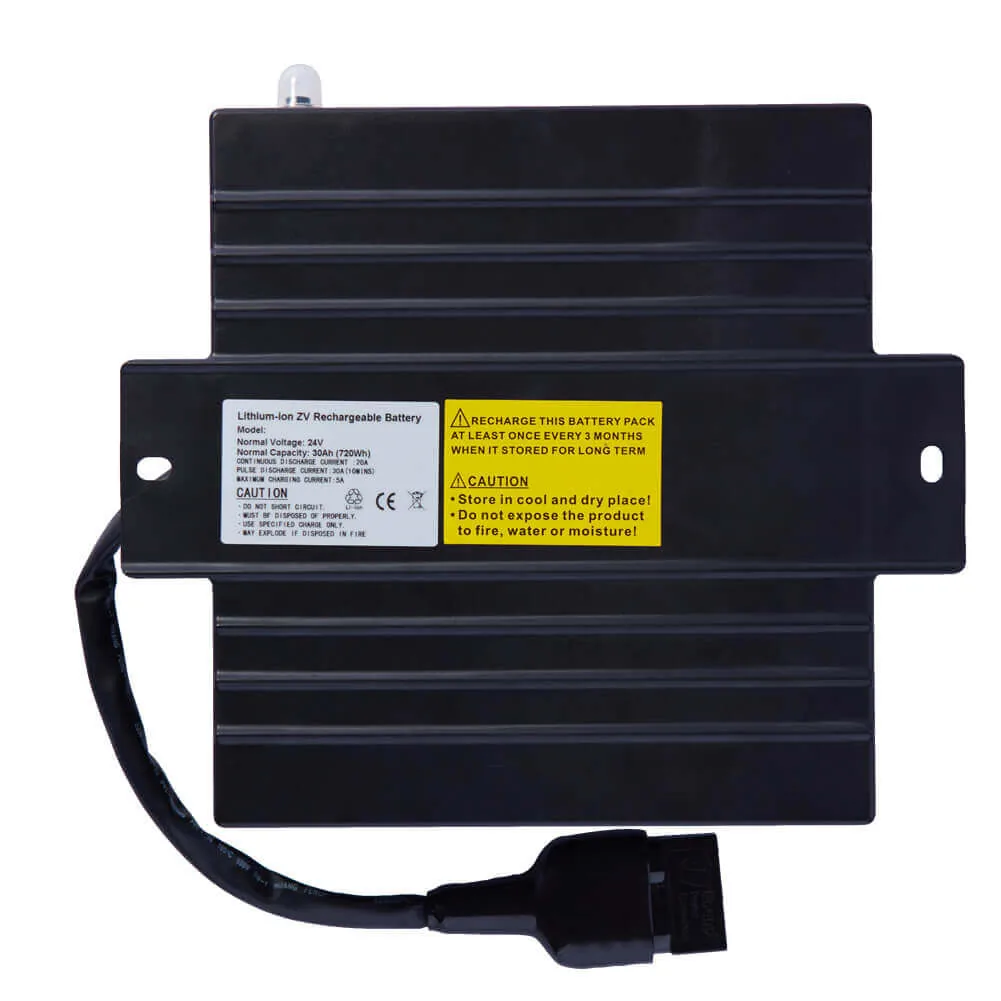
The EW1000 runs on a 24V 10Ah lithium battery, and that battery belongs to the EW1000 only. On the standard 2A charger, the maths runs 10Ah divided by 2A, which is 5 hours. On a 5A charger, it runs 10Ah divided by 5A, which is 2 hours. Those are the two figures that matter for this chair, and both come straight from the division above.
Two hours instead of five changes the shape of a day. A chair that comes back drained at noon on a 5A charger is ready again soon after lunch. The same chair on a 2A charger is ready again in the late afternoon. For a shared fleet with visitors waiting, that decides whether a chair works one loan a day or two.
Which charger to order is its own decision. Our comparison of 2A vs 5A electric wheelchair chargers walks through the trade-offs in full. Read that before you choose. What matters here is the time each charger gives you. For the EW1000 lithium battery, that is five hours on 2A and two hours on 5A.
The EW1000 is also the lightest chair in the range at 15 kg with its battery. It folds down to 73×39×71 cm. That matters at the loan desk, because staff lift these chairs in and out of storage all day. A lighter chair gets plugged in on time. A heavy one gets left in the corner until someone finds the strength for it.
Key Takeaway: The EW1000 lithium battery takes 5 hours on a 2A charger and 2 hours on a 5A charger. The faster charger buys a second loan in one day.
How long does the EW8720 lead-acid battery take to charge?
The EW8720 runs on a different kind of battery. It carries two 12V 22.3Ah lead-acid batteries wired in series. That makes one 24V 22.3Ah pack. It charges on a 24V 2A charger. The maths runs 22.3Ah divided by 2A, which is about 11 hours. That is an overnight charge, not a between-loans charge.
Eleven hours shapes the rota in a plain way. A lead-acid chair that comes back drained at noon is done for the day. It plugs in at closing time. It is ready again the next morning. Do not plan as if it will be ready by mid-afternoon, or you will have a visitor waiting at a desk with no chair to give them.
The table below puts all three charging times side by side. The lithium figures come from the EW1000 battery, and the lead-acid figure comes from the EW8720 pack. Do not swap them between models.
Battery and charger
The maths
Charging time
EW1000 lithium, 24V 10Ah, 2A charger
10Ah ÷ 2A
5 hours
EW1000 lithium, 24V 10Ah, 5A charger
10Ah ÷ 5A
2 hours
EW8720 lead-acid, 24V 22.3Ah, 2A charger
22.3Ah ÷ 2A
About 11 hours
Lead-acid and lithium also carry different warranty cover: 6 months for a lead-acid battery, 12 months for lithium. The frame carries 36 months, and the motor and controller carry 12 months each. Ask for the terms in writing with the order.
Key Takeaway: The EW8720 lead-acid pack takes about 11 hours on its 2A charger. Treat it as an overnight charge, and never plan a same-day turnaround for it.
Why does charging slow down as the battery fills up?
A battery does not drink at one steady speed from empty to full. The charger pushes hard while the battery is low, then eases off as the charge level climbs. The last stretch takes longer than the first stretch, even though both add the same amount of charge. That is normal behavior for both lithium and lead-acid batteries, and no charger setting changes it.
This is why the figures in this guide are planning figures, not promises. The division gives you the shape of the day: five hours, two hours, or about eleven hours. The charge light decides the exact minute. A rota built on exact minutes will break. A rota built on whole hours, with slack at the end, will hold.
The practical rule is simple: never promise a waiting visitor a chair at an exact time. Promise them a chair in the afternoon, or first thing tomorrow, and let the charge light settle the rest.
Key Takeaway: Charging eases off near full, so the last stretch runs longer than the maths suggests. Plan in whole hours with slack, and let the charge light set the exact minute.
How Long to Charge an Electric Wheelchair Battery When the Fleet Is Out All Day?
This is where the figures turn into a rota. Start with a small fleet of six lithium chairs, all fully charged. Three go out in the morning, and three stay behind as cover. The morning loans come back around noon, and each one goes straight onto a charger the moment it returns. That single habit is the whole rota.
On 2A chargers, a chair that comes back drained at noon needs 5 hours. It is ready again in the late afternoon, for one extra loan per chair. On 5A chargers, the same chair needs 2 hours. It is ready again soon after lunch, for a full second round of loans. The charger you chose decides how many loans a day each chair can cover.
Lead-acid chairs play a different role in the same rota. A lead-acid chair that comes back drained at noon is done for the day. Its 11-hour charge will not finish before closing time. So give the lead-acid chairs the morning loans. Keep the lithium chairs for the afternoon, when a fast turnaround matters.
Keep one spare chair fully charged and waiting. It covers a failed morning check, a battery that did not finish overnight, or a visitor who turns up without booking. If the spare goes out every day, the fleet is too small. Retirement villages run their shared fleets on the same pattern. Our guide to electric wheelchairs for retirement villages shows how a written rota keeps chairs moving when staff change daily.
Write the rota on a card on the storage room wall. List each chair, its battery kind, the time it went on charge, and the time it should be ready. Update it every time a chair goes out or comes back. A rota on the wall works on every shift.
Key Takeaway: Plug each chair in the moment it returns. Lithium chairs turn around in 2 to 5 hours for a second loan. Lead-acid chairs take the morning slot and charge overnight.
How do you run the overnight charging schedule?
Overnight charging is the quiet part of the rota, and it needs one rule above all: one socket per chair. Count wall sockets first and chairs second. Six chairs and four sockets means two chairs start the day uncharged. No rota on paper can fix that. If the room is short of sockets, fix the room before you add chairs to the fleet.
The evening routine takes minutes. Whoever takes a chair back plugs it in, checks the charge light, and marks the time on the wall card. One named person owns the job each night.
The morning check is just as short. Look at the charge light on each chair before it goes out. Roll it a few meters, push the joystick both ways, and listen for rattles. A chair that fails stays put, and the spare goes out instead.
Keep a spare charger on the shelf, next to a spare set of tires. Chargers fail and cables fray. A fleet with no spare charger loses a chair for days while a replacement ships.
Key Takeaway: One socket per chair, plug in on return, and a short morning check by a named person. Keep a spare charger on the shelf, and the overnight schedule holds.
What should you check before you order chargers and spares?
Start with the battery and charger each model ships with. Ask the factory to state them in writing. You need the battery size in amp-hours, the battery kind, and the charger output in amps. Those three facts are all the rota needs.
Then check the weight your staff will lift every day. The EW1000 weighs 15 kg with its battery, while the EW100 weighs 23 kg. Our guide to how much a folding electric wheelchair weighs gives plain words for the lifting. It covers which chairs a volunteer can manage alone. A fleet that staff can move without strain gets plugged in on time.
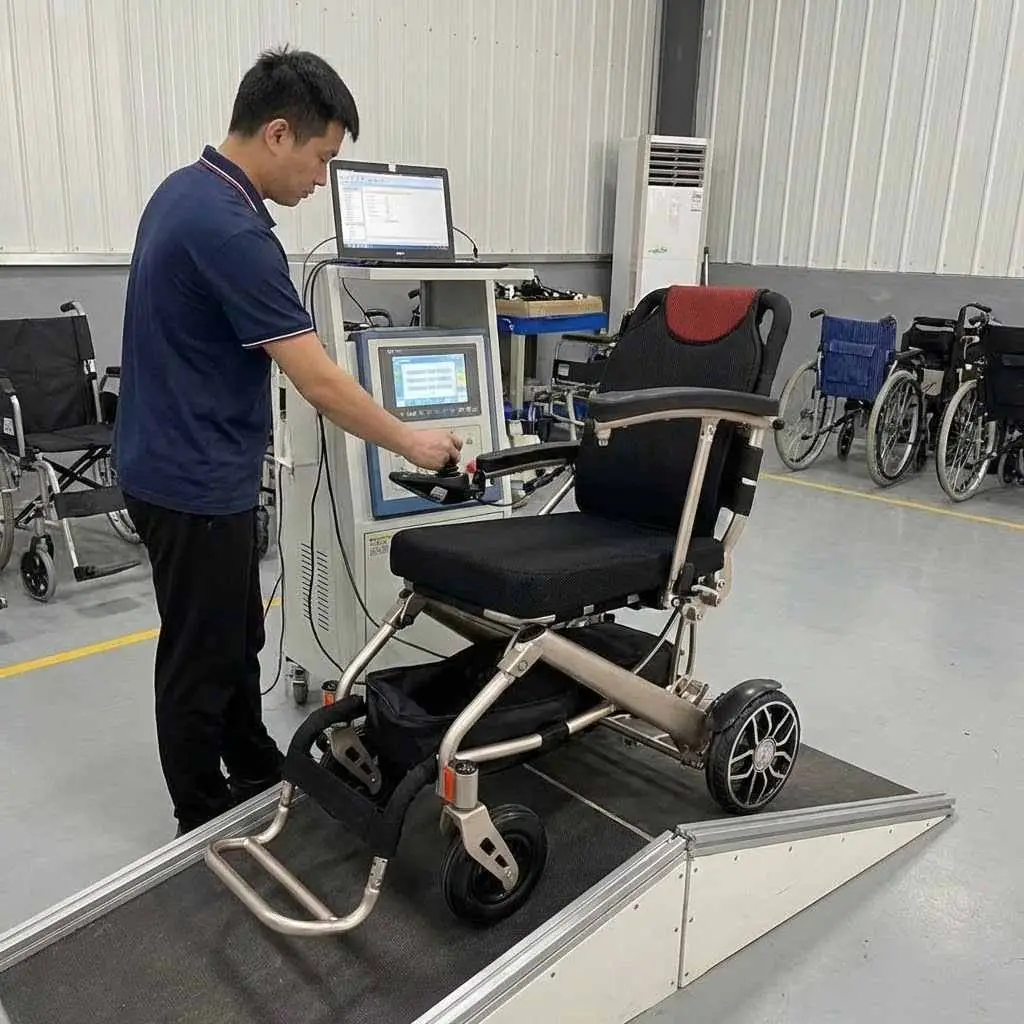
Ask how each chair is checked before it ships. Every chair should pass a full visual inspection before it leaves the factory. Ask what happens if a chair arrives with a fault, and how fast a spare charger ships. A factory with two facilities and 50+ global partners should answer that in plain words, before you order.
Order spares with the first fleet, not after the first failure. You need one spare charger and one spare joystick. The warranty runs 36 months on the frame. It runs 12 months each on the motor and controller. A lead-acid battery carries 6 months, and lithium carries 12 months. Learn the terms before you need them.
Key Takeaway: Get the battery size, battery kind, and charger amps in writing. Order a spare charger with the fleet. Learn the warranty terms before the first failure.
What should you ask the factory before ordering?
Ask which battery and charger come with each model you are considering. Do not accept a bare model name as the answer. You need the battery size, the battery kind, and the charger output. Those three facts set every charging time in your rota.
Ask for the charging figures in writing, worked out the same way this guide works them out. A supplier that gives you a single round number with no maths behind it is guessing. A supplier that shows the division gives you a figure you can plan a rota around.
Ask about spare chargers and spare parts before you order, not after the first breakdown. How fast does a spare charger ship? Which parts does the factory hold in stock? The answers decide whether a fault costs you a day or a month.
Ask for a demo chair for a week. Your staff can try the real routine in your own rooms. Plug it in at night, check the light in the morning, and run it through a full day of loans. A week with a demo chair settles the charging question better than any brochure.
Key Takeaway: Ask for the battery facts and the charging maths in writing. Ask how fast spares ship. Try a demo chair for a week before you order.
How Long to Charge an Electric Wheelchair Battery — The Short Answer
The short answer is the division, plus the rota. The EW1000 lithium battery takes 5 hours on a 2A charger and 2 hours on a 5A charger. That is 10Ah divided by 2A, and 10Ah divided by 5A. The EW8720 lead-acid pack takes about 11 hours on its 2A charger. That is 22.3Ah divided by 2A. Charging slows near full, so treat those times as the working plan, not a stopwatch promise.
How Long to Charge an Electric Wheelchair Battery comes down to what you do with those hours. Plug each chair in the moment it returns. Give lead-acid chairs the morning loans and lithium chairs the afternoon turnaround. Keep one spare charged and waiting. A fleet run that way rarely keeps a visitor waiting.
ZVCARE — Shenzhen Zhiwei Health Technology Co., Ltd. — was founded in 2015 and is ISO 13485:2016 certified. It makes the folding and bigger models a fleet needs, with spare parts support behind them. You can order from 1 unit, with a 7-day lead time after payment. When your fleet is ready to order, talk to us before you order anything.
Frequently Asked Questions
How long does an electric wheelchair battery take to charge?
It depends on the battery and the charger. The EW1000 lithium battery takes 5 hours on a 2A charger and 2 hours on a 5A charger. The EW8720 lead-acid pack takes about 11 hours on its 2A charger. Divide amp-hours by charger amps, and plan with slack, because charging slows near full.
Can a 5A charger cut the charging time in half?
Yes — by more than half. For the EW1000 lithium battery, a 5A charger cuts the time from 5 hours to 2 hours. That is 10Ah divided by 5A. Whether a 5A charger suits your fleet is a separate choice. Our guide to 2A vs 5A electric wheelchair chargers covers it.
Why does my chair take longer to charge than the maths says?
Because charging slows down as the battery fills up. The charger pushes hard while the battery is low, then eases off near full. That is normal for both kinds of battery. Build slack into the rota, and let the charge light decide the exact minute.
Can one charger serve a whole fleet?
No. Each chair needs its own charger and its own wall socket. Each chair goes on charge the moment it returns. Sharing one charger between chairs leaves most of the fleet uncharged. Count sockets before you count chairs.
How do I plan charging for a full day of loans?
Start every chair fully charged. Plug each one in the moment it returns, and write the times on a wall card. Lithium chairs turn around in 2 to 5 hours for a second loan. Lead-acid chairs take the morning slot and charge overnight. Keep one spare chair charged and waiting.
Founded in 2015, ZVCARE is an ISO 13485:2016 certified electric wheelchair manufacturer in China, providing OEM & ODM solutions for global distributors and medical stores.