Electric Wheelchairs for Conference Centers Buyers Guide
November 25, 2026
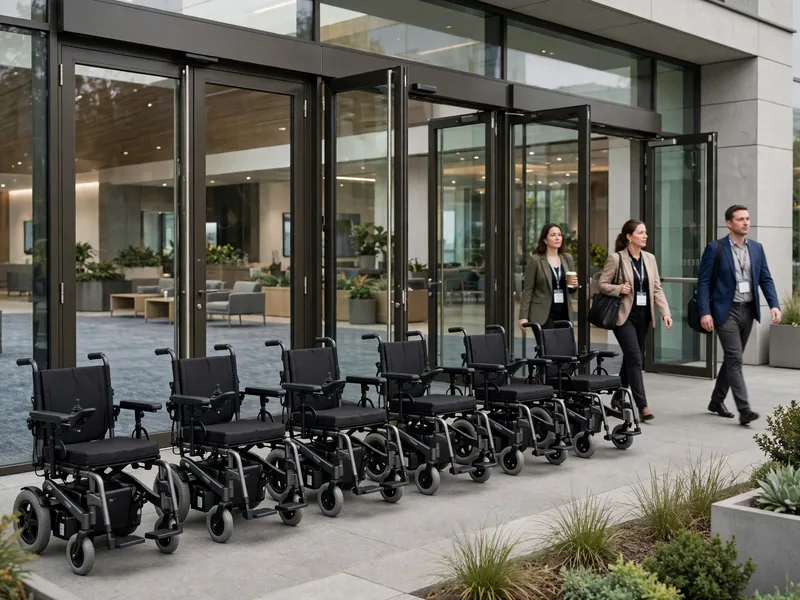
It is nine in the morning on the first day of a three-day conference. Delegates pour through the main doors, badges on, coffee in hand. Some of them cannot walk the length of the building. They need a chair before the opening session starts. They need it back in the hall after every break, all day, for three days running.
Electric Wheelchairs for Conference Centers Buyers Guide: this guide helps a conference center operator put together a shared fleet that suits the building, the delegates who visit, and the staff who run it. It walks through the tea-break peaks and the hall-to-breakout-room flow. It covers the floors the chairs must cross and the overnight charging that keeps the fleet ready for the next day.
What does a conference center fleet actually have to do?
The fleet has one job above all: every delegate should reach every room on the program. A delegate stuck at the main hall misses the breakouts, the lunch, and the reception. A delegate who reaches all of them goes home with the full value of the ticket.
A conference center fleet is not one chair lent to one person for the day. It is a shared pool that turns over again and again. One chair may serve three delegates before lunch: a keynote, a breakout, then a trade stand. The fleet has to survive that pace for the whole event.
Then there is the building itself. Chairs roll from the main hall to the breakout rooms and back. They cross carpet, hard floors, and the paved path to the car park. They roll while sessions run, so they must run quietly. A chair that rattles through a keynote will not be borrowed twice.
Key Takeaway: The fleet exists so every delegate reaches every room on the program. It turns over many times a day, crosses mixed floors, and must run quietly enough for a live session.
Why does the tea break decide how many chairs you need?
Picture the tea break. The session ends, the doors open, and two hundred delegates stand up at once. In five minutes, a dozen borrowers hand chairs back and another dozen ask for one. That is the peak your fleet must survive. Count the peak, not the average: a fleet sized for the quiet morning runs out at the first break. Ask how many chairs were out at your last event’s busiest break, then add spares. The sign-out sheet from that event tells you the number.
The return rush matters as much as the borrowing rush. Chairs come back together, often drained and with coffee on the armrest. Staff need a clear spot by the door where returns stack up. Each chair gets a quick check before it goes out again. A return bay the size of a broom closet will jam within one break.
A convention center faces one huge entry rush and one huge exit rush. Our guide to electric wheelchairs for convention centers shows how that pattern shapes a fleet. A conference center feels it in waves, at every break, all day.
Key Takeaway: Size the fleet for the busiest tea break, not the quiet average. Give returns a bay of their own, and keep a quick check between one borrower and the next.
How does a delegate borrow a chair for the day?
Put the help desk by the main entrance, next to registration, where the delegates already are. A delegate collects a chair on the way in. A desk down a side corridor sits empty while delegates struggle past.
Keep sign-out simple: name, mobile number, time out, time back, on paper. A delegate in a hurry will not fill in a long form, and rushed staff will not chase one. Paper works at the pace of a tea break.
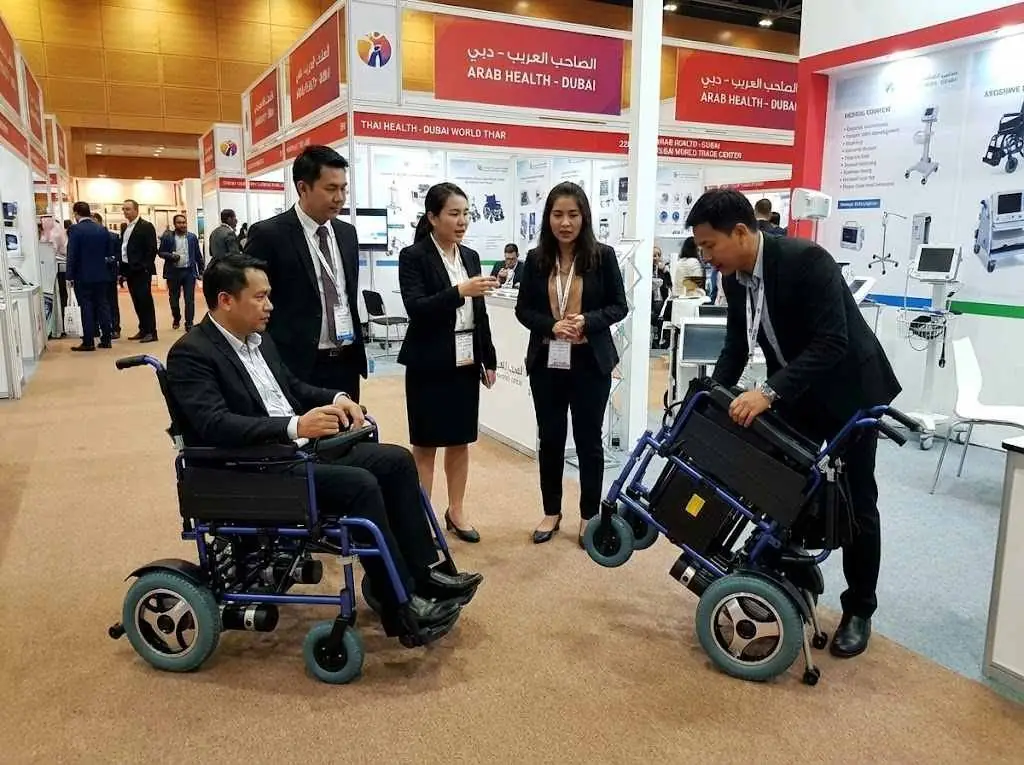
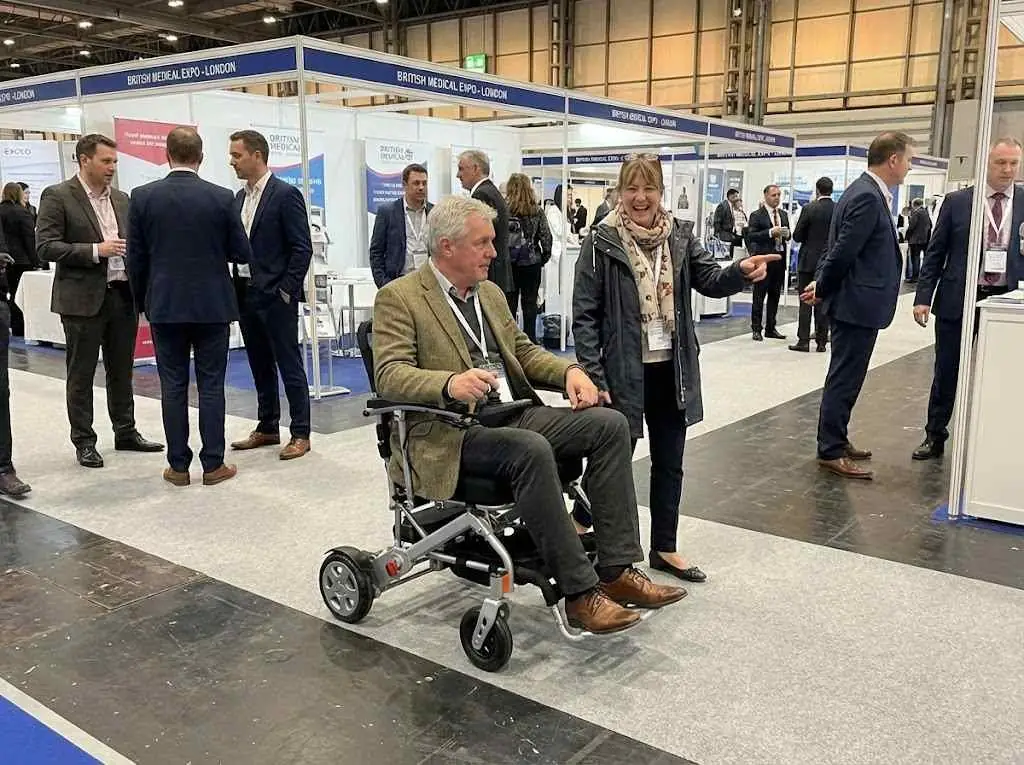
Demo the chair for two minutes at every handover. Show the joystick, the speed control, and how to stop. Then let the delegate try a short loop by the entrance. Most delegates have never driven a chair before.
Check the chair back in with the delegate beside you. Walk around it together: wheels, seat, joystick. Note any mark that was already there. That minute of checking heads off arguments later. Schools keep a similar sign-out routine for their shared chairs. Our guide to electric wheelchairs for schools explains how a simple sheet keeps track of who has which chair.
Key Takeaway: Put the desk by registration and keep sign-out to four lines on paper. Demo each chair for two minutes, and check it back in with the delegate beside you.
Which chairs fit a conference center: folding or fixed?
Folding chairs suit most conference centers. The rooms decide how many of each model you need. Folding chairs earn their keep in breakout rooms: they roll in for a session, then fold flat and stack by the door for the next group. When staff lift a chair into the store, the EW1000 is the lightest choice. It weighs 15 kg with its battery and folds down to 73×39×71 cm. The EW100 weighs more at 23 kg. Its fold is slimmer, though — 73×55.5×31 cm — so it leans flat against the wall. Both pack down small enough to line up in a tight store room. Both are designed for air travel (airline approval required), which shows how portable they are.
Bigger chairs suit delegates who want a steadier ride all day. Staff drive them between halls instead of folding and carrying them, which saves effort on a busy day. The small-wheel EW8722 weighs 45 kg and folds to 80×39×74 cm. It runs 18–22 km per charge. The big-wheel EW8703G weighs 46 kg and folds to 89×43×76 cm. It covers the same 18–22 km. The high-end EW8720 weighs 45 kg and folds to 80×34×74 cm. It also runs 18–22 km. Between sessions, a bigger model handles the paved path to the car park better.
Centers often shop by range, then lose the day to a dead battery. Per charge, the EW1000 gives 15±3 km, the EW100 gives 12±5 km, and the bigger models give 18–22 km. A delegate rarely covers more than a few kilometers in a day. What matters more than the label is the overnight charge. A chair that starts full does the job, whatever its range. A chair that starts the day uncharged does not.
Model
Weight, with battery
Folded size
Range
Best use at a conference
EW1000
15 kg
73×39×71 cm
15±3 km
Lightest lift between halls
EW100
23 kg
73×55.5×31 cm
12±5 km
Slim fold for the storage closet
EW8722
45 kg
80×39×74 cm
18–22 km
Carpeted halls, tight breakout doors
EW8703G
46 kg
89×43×76 cm
18–22 km
Outdoor paths between halls
EW8720
45 kg
80×34×74 cm
18–22 km
Long session days, top comfort
Key Takeaway: Choose the mix for the building: folding chairs for the breakout rooms and the store, bigger models for the paved paths and long days. A full overnight charge beats the range on the label.
How do chairs cope with carpet, hard floors, and quiet halls?
A conference center mixes deep carpet in the halls with hard floors in the foyer and breakout rooms. Carpet drags on small wheels and drains the battery faster. Hard floors are easy to roll on but show every rattle. Try the demo chair on both, not just the smooth foyer.
Quiet running matters more here than in most venues. A chair rolls past the back row while a speaker is mid-sentence. A loose panel or a rattling wheel will draw every eye in the room. Listen to the chair at low speed on a hard floor before you order. If it rattles empty, it will rattle louder with a delegate in it.
Doorways and elevators shape the route too. Measure the narrowest door on the hall-to-breakout route, not the widest one. If it fits the main hall but not the breakout door, its driver is stranded mid-day. Check the elevator too: chair, delegate, and bag must fit together, or the route breaks at the first floor change.
A leisure center asks the same kind of question about its own floors. Our guide to electric wheelchairs for leisure centers shows how one all-day loan differs from the batch borrowing a conference center runs. Here the chairs cross more surfaces, more often, with an audience listening.
Key Takeaway: Test the demo chair on carpet and hard floors and listen for rattles at low speed. Measure the narrowest door and the elevator on the real route.
Where do chairs live between sessions, and how do they charge overnight?
Find the store room before you order the fleet. Look for a dry room near the main entrance. It needs wall sockets for charging and floor space to fold chairs flat. Plan one wall socket per chair, so the whole fleet plugs in when the last session ends. Three sockets and eight chairs leaves five chairs dead at nine in the morning.
Between sessions, chairs need a short rest, not a full charge. A chair back at lunch can top up for an hour while its borrower eats. Keep a few chargers free near the return bay for that midday top-up.
The morning check takes minutes and pays for itself daily. Roll each chair a few meters and push the joystick both ways. Listen for rattles as you go. A chair that fails stays put. The spare goes out instead. Whoever takes a chair back plugs it in. The morning check looks at the charge light before the chair goes out again.
Keep one spare plugged in by the help desk, ready when a chair fails its check. That spare covers the failed morning check, the chair that comes back drained at lunch, and the walk-in with no booking. For a small fleet, one spare is enough. If the spare goes out every day, the fleet is too small. Our guide to how much a folding electric wheelchair weighs gives staff plain words for the chairs. It covers which members of the team can lift one into the store unaided.
Key Takeaway: One socket per chair, charging overnight, a midday top-up bay, and a short morning check by a named member of staff. Keep one spare charged. Let the sign-out sheet tell you when to add a chair.
What happens when a chair comes back damaged?
Damage comes with shared use. Delegates clip door frames, catch wheels on steps, and scrape armrests on tables. Plan for it. Hoping it never happens is not a plan. The check at the desk spots most damage on the spot. A small shelf of spares covers the rest: joystick, charger, and a set of tires. Those spares decide if a chair is out for a day or a month.
Read the warranty when you order, not when a chair is broken. Warranty cover runs 36 months on the frame and 12 months each on the motor and controller. A lead-acid battery gets 6 months; lithium gets 12 months. A scrape from a delegate is not a warranty claim. A motor that fails in normal use is. Get the warranty in writing before you order. Then you know where you stand when a chair fails.
Wipe every chair down between borrowers. Staff spot damage while they clean. A wipe-down at the return bay takes a minute. It keeps the next delegate from sitting in the last one’s coffee.
Retirement villages run their shared fleets the same way. Our guide to electric wheelchairs for retirement villages shows how a written handover keeps a fleet running when the staff changes daily. A conference center needs the same habit, compressed into the rush between sessions.
Key Takeaway: Expect knocks, keep spares on the shelf, know the warranty first. Wipe each chair between borrowers. That wipe-down is the daily inspection as well.
What should a conference center ask the factory before ordering?
Start with the building. Tell them about your doorways, your floors, and the tea-break peaks. Then ask which model they would place there. The answer shows how much they know. A factory that has supplied centers will talk about door frames, carpet, and quiet running. One that has not will answer with a brochure.
Ask how each chair is checked before it ships. Every chair should pass a full visual inspection before it leaves the factory. Ask the factory to say so in plain words. Ask who pays return freight if a chair arrives faulty. A factory with two facilities and 50+ global partners should give a straight answer, before you order.
Ask about the exact chairs your delegates will use. Can the factory lend you a demo chair for a week? Your staff can then try it in your own halls. A chair that looks right in the photo may still fail on your carpet. A week with a demo chair costs little and settles it. Try it at a real tea break, not on an empty morning, so the peak gets tested.
Key Takeaway: Ask about your building first, then spares, then a demo week at a real event. A factory that answers all three straight is one worth working with.
Electric Wheelchairs for Conference Centers Buyers Guide — In Short
Three things: the building, the break, and the daily routine. Fit the chairs to the rooms. Folding chairs suit the breakout rooms and the store; bigger models suit the paved paths and long days. Size the fleet for the busiest tea break. Keep sign-out simple, demo each chair at handover, and charge each chair overnight. Let the sign-out sheet decide when to add a chair.
Electric Wheelchairs for Conference Centers Buyers Guide boils down to one idea. The fleet is a service for delegates, not a display of products. Centers that treat it that way see delegates come back event after event. Behind the fleet is ZVCARE — Shenzhen Zhiwei Health Technology Co., Ltd., founded in 2015 and ISO 13485:2016 certified — which builds the folding and bigger models and stocks their spare parts. You can order from 1 unit, with a 7-day lead time after payment. The warranty runs 36 months on the frame, 12 months each on the motor and controller, and 6 months for lead-acid and 12 months for lithium batteries. When your center is ready to put a fleet together, talk to us first.
Frequently Asked Questions
How many chairs does a conference center need to start with?
Start with the busiest tea break of your last event, not the average. Count the chairs out at that peak, then add one spare. The MOQ is 1 unit and the lead time is 7 days after payment. Add chairs one at a time as the sign-out sheet proves the need.
Can the chairs run quietly during a live session?
Yes, if you test for it before you order. Try the demo chair at low speed on a hard floor and listen for rattles. A chair that runs quietly empty will run quietly with a delegate in it. Keep the morning check short and regular, and rattles get caught before sessions start.
How small do the chairs fold for storage?
Small enough for a tight store room. The EW1000 folds to 73×39×71 cm and the EW100 to 73×55.5×31 cm. The bigger models fold too, but they need more room. Measure the store room before you order.
What do we do when a delegate damages a chair?
Write the damage on the sheet before the delegate leaves. Hold spares on hand: a spare joystick and a spare charger. A damaged chair is then back in a day, not a month. Damage a delegate causes is not a warranty claim. Wear from normal use is a different case, and the warranty wording decides it.
How far will one charge take a delegate?
Enough for a full program, opening session to evening reception. On one charge: 15±3 km from the EW1000, 12±5 km from the EW100, 18–22 km from the bigger three. Send every chair out fully charged each morning and use the midday top-up bay at lunch. Range will rarely hold you back.
Founded in 2015, ZVCARE is an ISO 13485:2016 certified electric wheelchair manufacturer in China, providing OEM & ODM solutions for global distributors and medical stores.