Selling Electric Wheelchairs in Vietnam starts with two cities. Vietnam is a two-city market for a new distributor: Ho Chi Minh City in the south and Hanoi in the north, with smaller cities after that. Buyers here shop through specialist mobility shops and medical equipment retailers, and they compare listings in Vietnamese before they trust a chair. This guide covers how to enter through those shops, what to localize, and how to set up service — so the first sale does not become the last one.
How Does Selling Electric Wheelchairs in Vietnam Work for a New Distributor?
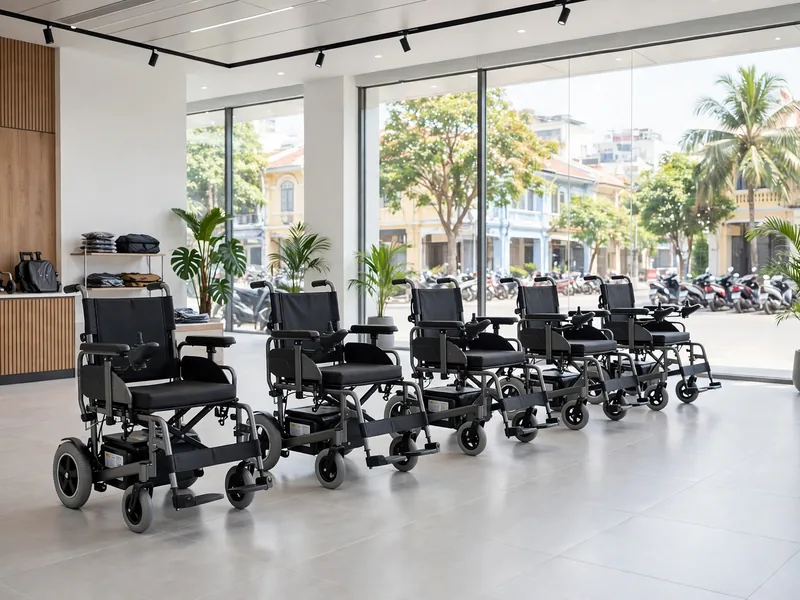
New distributors enter Vietnam through shops, not through a website alone. In Ho Chi Minh City and Hanoi, specialist mobility shops and medical equipment retailers keep demo chairs on the floor. A buyer sits in the chair, folds it, and asks questions in Vietnamese. That demo is where the sale is won or lost. A shop that demos well also handles fitting, so the buyer leaves with a chair that suits them.
Online listings and local agents support the shops. A listing works when it states folded size, weight, and range plainly, and when it points to a real shop where the buyer can try the chair. An agent works when they already know buyers in a city you do not cover. Win the two big cities before you chase smaller ones. Start in one of them, prove the service, then open the other. The same care applies when you pick a supplier, as our guide to finding a reliable electric wheelchair OEM partner explains.
Key Takeaway: Win Ho Chi Minh City and Hanoi first — a shop that demos well in one big city teaches you how to open the next.
Which Channels Should You Open First in Vietnam?
Open two or three channels, and no more at the start. A small group of mobility shops in one big city gives you a place to demo and a stream of feedback. A clear online listing lets buyers find your models and compare them in Vietnamese. A local agent can cover a second city while you are still building the first.
Give each channel what it needs. Shops need demo chairs, Vietnamese printed material, and quick answers when a buyer asks a technical question. Online buyers need honest specs, real photos, and a plain note on delivery and warranty. Agents need a short summary they can pass on in their own words. Before you add a channel, check that you can support it. A channel you cannot serve costs you more in lost trust than it earns in orders.
Channel
What it does
Who it suits
Watch out for
Specialist mobility shop
In-store demos and fitting
Buyers trying a chair for the first time
Needs demo chairs and fast answers
Online listing
Buyers compare models, then contact you
Buyers who know what they want
Must be accurate and lead to a real person
Local agent
Sells in a city you do not cover
Reach beyond your home city
Put territory and service in writing
Key Takeaway: Two cities, two or three channels: prove the service in one city before you add the next.
How Do You Choose a Vietnamese Distribution Partner?
Look for a partner who already sells to Vietnamese buyers in Vietnamese. They should run a real showroom or a service workshop, not only a website. Fitting and after-sales need a place and a person. Ask how many demo chairs they keep on the floor, and how they handle a chair that comes back with a fault.
Check the practical side before you sign. A good partner keeps a small stock of spare parts, runs a simple warranty process, and records each chair they sell. Ask them which local registrations, labels, or certificates apply to your models. They work on the ground, so they can confirm what applies. Do not guess at these details yourself.
Agree the basics in writing before the first order. Territory, order sizes, payment terms, and who handles warranty all go in the agreement. Put the service split in the same document. A buyer should never have to guess who to call when a chair needs fixing.
Key Takeaway: Pick a partner who already serves Vietnamese buyers in their own language — then put territory and warranty in writing.
Which Models Fit Vietnamese Buyers Best?
Folding chairs lead the range in Vietnam. A chair that folds small is easy to lift into a car and simple to store at home. The EW1000 leads here. It is carbon fiber, 15 kg with the battery fitted, and folds to 73×39×71 cm. One charge covers 15±3 km. A buyer can lift it into a car and store it at home without help. The EW100 is the aluminum alloy option at 23 kg. It folds to 73×55.5×31 cm and covers 12±5 km. It suits buyers who want a light, practical chair for daily use. Both folding models are designed for air travel (airline approval required), so remind buyers to confirm approval with their airline before they fly.
Some buyers need a sturdier chair for daily use. The EW8722 is a comfortable, durable daily chair at 45 kg, with a range of 18–22 km. It suits regular use better than frequent lifting in and out of a car. The EW8703G is the big-wheel model at 46 kg, also with a range of 18–22 km. It gives a steadier ride on uneven ground for buyers who spend more time outdoors. The EW8720 is a comfortable daily model at 45 kg with a range of 18–22 km. It runs on dual 12V 22.3Ah lead-acid batteries in series, which gives 24V 22.3Ah. Every model runs on the same 24V system.
Let every buyer fold the chair in the shop and try it on the street outside. A short test drive on a real street shows a buyer more than any spec sheet can. For buyers who travel between cities, a folding chair they can lift into a car matters most. Our guide to selling electric wheelchairs in Thailand shows how a nearby market makes the same choice.
Model
Weight
Range
Battery
Best for
EW1000
15 kg incl. battery
15±3 km
24V 10Ah lithium
Travel and easy lifting
EW100
23 kg
12±5 km
24V
Everyday folding use
EW8722
45 kg
18–22 km
24V
Comfortable daily use
EW8703G
46 kg
18–22 km
24V
Outdoor and uneven ground
EW8720
45 kg
18–22 km
Dual 12V 22.3Ah lead-acid in series = 24V 22.3Ah
Daily use, long battery life
Key Takeaway: Lead with a folding chair buyers can lift into a car, and let every buyer try it on a real street.
How Do You Localize Listings and Manuals for Vietnam?
Start with Vietnamese. Product pages, manuals, and warranty cards should be in Vietnamese, because buyers want to read safety and charging guidance in their own language before they trust a chair. English-only material still reads as an import. If a full Vietnamese manual is not ready for the first order, ship a Vietnamese quick-start guide and note that the full manual follows.
Ask a local partner to read your material before it goes live. Words for parts, charging, and service can differ from a straight translation. A local reader catches wording that sounds foreign or unclear. In the shop, a short Vietnamese spec card beside each demo chair lets buyers compare models without waiting for staff.
Check the details buyers read first. Folded size in centimeters, weight in kilograms, and range in kilometers. Put a photo of the folded chair beside an everyday object, so buyers can judge the size at a glance. Use real photos of the exact model you sell, and state the battery type plainly. Show prices in dong where you list them, and state what the price includes.
Key Takeaway: Translate into Vietnamese first, let a local partner check every word, and show folded size, weight, and range in metric units.
What Goes Into a Good First Order for Vietnam?
Keep the first order small and mixed. A few lightweight folding chairs suit travel buyers, and a few sturdier chairs suit daily use. You do not yet know which half of the market will buy first. With a minimum order quantity of 1 unit and a lead time of 7 days after payment, you can start small and reorder once your shops show you what sells.
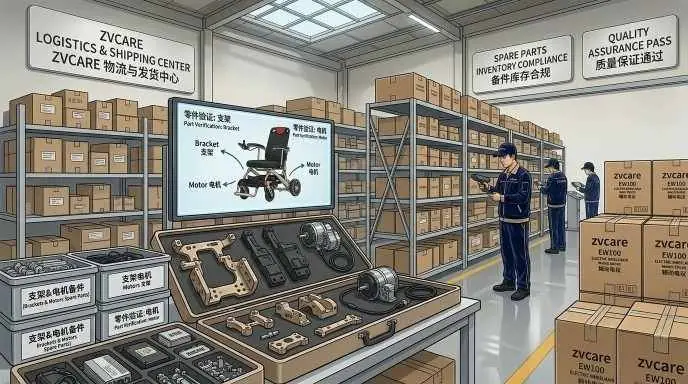
Add the items that make the sale work: a demo chair for each shop, spare controllers, motors, and chargers, and Vietnamese printed material for the showroom. Before you commit, check the shipment steps the way you would check any new route. Our guide on how to import electric wheelchairs from China walks through the checks worth doing first.
Get the paperwork confirmed in writing: the commercial invoice, the packing list, and the battery documents. Ask your local partner what Vietnamese customs will ask for when the goods arrive.
Item
Why it matters
What to check
A mixed range
Tells you which chairs sell
Folding chairs plus sturdier daily chairs
A demo chair per shop
Buyers try before they buy
One demo chair for each shop you open
Spare parts
Keeps service fast from day one
Controllers, motors, and chargers
Printed material
Buyers read specs in the shop
Vietnamese, for each model
Key Takeaway: Keep the first order small and mixed, with a demo chair and spares for every shop.
How Do You Set Up After-Sales Service in Vietnam?
Set up the service point before the first sale. A small bench in your partner’s workshop is enough to start. It needs basic tools, a few common spares, and one trained person to inspect chairs and answer warranty questions. Buyers trust a seller who can fix a chair nearby.
Give claims a simple process. Start every claim with an inspection, not a phone argument. Note the model, the serial number, and the failed part. Then look up the warranty term for that model. Frame cover is 36 months. Motor and controller cover is 12 months each. Battery cover is 6 months for lead-acid or 12 months for lithium. Give the buyer a clear answer with a date, and file the record.
Stock the parts you will need first. Controllers, motors, chargers, and batteries run out first, so keep them on the shelf. Reorder a part before it runs out, not after. When a buyer waits weeks for a part, other buyers hear about it. Speed matters more than anything else here.
Key Takeaway: Open the service bench before the first sale, and answer every claim with an inspection, a part, and a date.
Which Mistakes Do New Sellers Make in Vietnam?
The first mistake is English-only material. Vietnamese buyers compare listings closely, and a listing they cannot read is a listing they skip. Translate first, even if it starts with the product pages and a quick-start guide.
The second mistake is chasing too many cities at once. A seller who signs up shops in several cities before the service point is running ends up with buyers they cannot support. Open one city well, prove the service, then add the next.
The third mistake is ordering one model in depth. You do not yet know whether buyers will pick the lightest folding chair or the sturdier daily chair. One model leaves you with nothing for the other half of the market. A small mixed order costs little extra and teaches you far more.
The fourth mistake is leaving after-sales until later. When the first buyer with a fault waits weeks for a part, that story travels further than any ad you could run. Open the service point first and stock the common parts, so every member of staff gives the same answer on warranty.
Key Takeaway: Translate into Vietnamese first, open one city well, and keep the first order small and mixed.
Conclusion
Selling electric wheelchairs in Vietnam comes down to doing a few things well in one city first: a shop that demos, listings in Vietnamese, and a service bench that answers claims fast. Start with Ho Chi Minh City or Hanoi, translate your material, open the service point before the first sale, and let the first orders show you which models to reorder. If you want a supplier who works the same way, ZVCARE — Shenzhen Zhiwei Health Technology Co., Ltd., founded in 2015, with two production facilities totaling 3000+ sqm and ISO 13485:2016 certification — offers a minimum order quantity of 1 unit, a lead time of 7 days after payment, and spare parts support. Contact us to discuss your first order for Vietnam.
FAQ
Do I need a Vietnamese company to sell electric wheelchairs in Vietnam?
Ask your Vietnamese partner to confirm this for your exact setup before your first sale. Many distributors start by working with a local partner who already runs a showroom and a service point. That partner can confirm what applies to you. What you do need is someone on the ground who can demo, fit, and service chairs in Vietnamese, with a written agreement on who does what.
Which electric wheelchair sells best in Vietnam?
Lightweight folding models usually lead. For buyers who travel between cities, a chair that lifts easily into a car and stores simply at home wins the sale. The EW1000, at 15 kg with the battery fitted and folding to 73×39×71 cm, is a strong opening model. The EW100 suits buyers who want an aluminum alloy chair for everyday use.
Do my product pages and manuals need to be in Vietnamese?
Yes. Product pages and at least a quick-start guide should be in Vietnamese before you sell. Buyers want to read safety and charging instructions in their own language. A Vietnamese listing shows the product is properly supported. English-only material still reads as an import, and buyers notice it when they decide.
What should I confirm before my first shipment to Vietnam?
Confirm the commercial invoice, packing list, and battery documents with your supplier in writing before the goods leave the factory. Ask your Vietnamese partner to confirm which local registrations, labels, or certificates apply to your models. Leave the regulatory details to your partner. Do not guess at them yourself.
How do I handle warranty claims for Vietnamese customers?
Open a small service point first, so every claim begins with an inspection rather than a phone call. Note the model, serial number, and failed part, then check the warranty term. Frame cover is 36 months, motor and controller 12 months each, and battery 6 months for lead-acid or 12 months for lithium.
Founded in 2015, ZVCARE is an ISO 13485:2016 certified electric wheelchair manufacturer in China, providing OEM & ODM solutions for global distributors and medical stores.