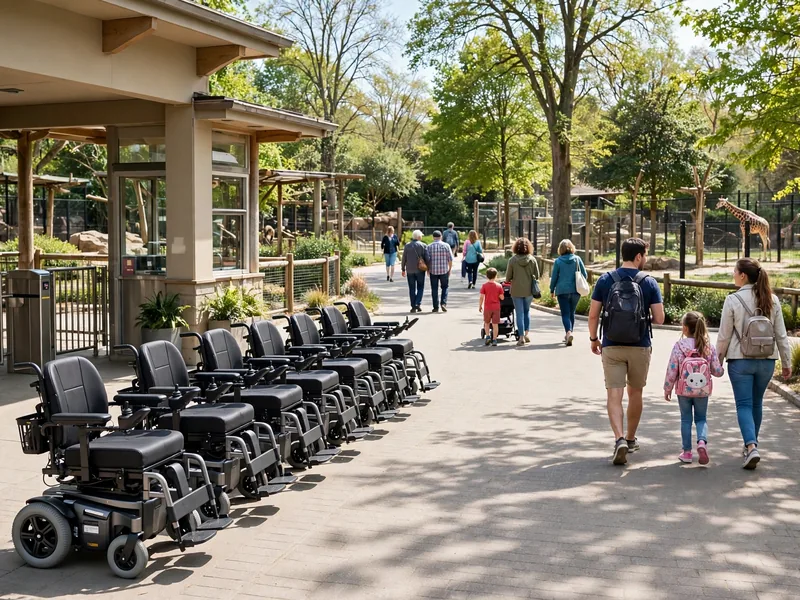
A zoo buys electric wheelchairs for a simple reason: many visitors cannot walk the whole park. A loan fleet at the entrance lets those visitors see the animals instead of cutting the visit short. This electric wheelchairs for zoos buyers guide helps zoo and visitor-services teams choose that fleet. It covers how many chairs you need, what works on zoo paths all day, and how to run charging, handover, and cleaning without adding a new department.
What Should You Check First in an Electric Wheelchairs for Zoos Buyers Guide?
Start with the visit itself. Walk your own zoo the way a visitor does, from the gate to the farthest enclosure and back. Note the hills, the gravel paths, the narrow turns, and the places where visitors stop to rest. A chair that works on a flat indoor floor may struggle on a full day of outdoor zoo paths. Your fleet has to match your ground, not a brochure.
Next, count who will use the chairs. Older visitors, visitors with a temporary injury, and parents carrying a tired child all borrow chairs for different reasons. Some need a chair for an hour. Others need it for the whole day. That mix decides how many chairs you need and how long each battery has to last.
Finally, check who will run the fleet. A loan fleet needs one owner on your team. That person handles handover, charging, cleaning, and simple checks. Without an owner, chairs sit flat, dirty, or broken. With one, the fleet runs itself most days.
Key Takeaway: Walk your own paths first, count your borrowers, and give the fleet one owner on your team.
How Many Loan Chairs Does a Zoo Actually Need?
Start small and grow from real use. A small zoo with a short visit route can start with a few chairs at the entrance. A large zoo with a full-day route needs a bigger fleet, plus a spare or two for chairs that are charging or being cleaned. Watch the first busy weekends before you order more. A queue at the loan desk tells you the number faster than any plan.
Think in shifts, not just in chairs. A chair that runs all morning needs charging by the afternoon. If you have no spare to swap in, the next visitor waits. A small pool of spare chairs costs less than turning visitors away at the gate. Keep the spares in the same place as the fleet, so a swap takes minutes.
Count your peak days separately. School holidays and weekends bring far more visitors than a quiet weekday. Your fleet should cover a busy Saturday, not an average Tuesday. If the budget only covers part of the fleet now, buy the chairs for peak days first and add the rest later.
Zoo size
Visit route
Starting fleet
What to watch
Small zoo
A short loop, mostly flat
A few chairs at the entrance
Weekend queues tell you when to add more
Medium zoo
A half-day route with some hills
A full row plus one or two spares
Swap in a spare while a chair charges
Large zoo
A full-day route over mixed ground
A bigger fleet with spares at more than one point
Cover the busy Saturday, not the quiet Tuesday
Key Takeaway: Start small, watch the busy weekends, and keep spares ready so no visitor waits.
What Makes a Wheelchair Work on Zoo Paths All Day?
Zoo paths are not showroom floors. They mix paving, gravel, slopes, and tree roots. A chair for a zoo needs steady handling on that ground. Big wheels help on gravel and uneven paths. A comfortable seat matters too, because a visitor may sit in the chair for hours. Let your team test-drive the chairs on your own paths before you buy, not only on a flat floor.
Battery range decides how far a visitor can go. A chair with a range of 18–22 km covers a full zoo day for most visitors. Shorter-range folding chairs suit a small zoo or a short visit. Ask the supplier for the range in kilometers and check it against your longest route. A chair that runs out halfway round the park is worse than no chair at all.
The chair should also run quietly. Loud motors disturb animals and other visitors. Ask the supplier how the chair sounds at walking speed, and test it yourself in a quiet corner of the zoo. A quiet chair fits a zoo far better than a noisy one. The same thinking applies to other venues, as our guide to electric wheelchairs for theme parks shows — a theme park runs rides and queues, while a zoo runs long outdoor paths, so the ground decides the chair.
Key Takeaway: Test-drive on your own paths, match range to your longest route, and pick a quiet chair.
How Should a Zoo Run Charging and Storage for a Loan Fleet?
Charging is a daily routine, not a problem to solve later. Give the fleet one storage room near the entrance, with a charging point for every chair. Plug each chair in when it comes back, so the next morning starts with a full fleet. A chair that is not plugged in is a chair that will fail mid-visit.
Store the chairs indoors overnight. Rain, dust, and sun wear out seats and controls faster than use does. A dry room with space to walk between chairs also makes the morning check quick. Keep the chargers labeled by chair number, so staff can see at a glance which chair is charging and which is ready.
Keep a small stock of spare parts in the same room. Controllers, chargers, and batteries are the parts you will need first. When a chair shows a fault, swap in a spare and fix the faulty chair off the floor. That keeps the fleet full while the repair waits for a part.
Key Takeaway: One room, one charger per chair, plugged in every night — and spares on the shelf.
What Should the Handover Look Like at the Zoo Entrance?
Handover should take minutes, not a form. Keep a short sign-out sheet: name, time out, chair number, and time back. Show the visitor the controls, the speed setting, and the brake before they leave the desk. A two-minute demo prevents most problems on the paths.
Set a simple rule for the deposit or ID. Most zoos hold an ID card and return it when the chair comes back. Keep the rule the same for every visitor, and write it on a small sign at the desk. A clear rule avoids arguments at the end of a long day.
Plan for the return too. When a chair comes back, staff should check the battery, wipe the seat, and plug it in before the next loan. That three-step check takes a minute and keeps the next visitor from getting a flat or dirty chair. Our guide to electric wheelchairs for museums shows the same handover habit in a quiet indoor setting — the steps are the same, only the ground differs.
Key Takeaway: A two-minute demo, one short sign-out sheet, and a quick check on return.
How Do You Keep a Zoo Loan Fleet Clean and Working?
Clean the chairs every day. Zoo dust, animal feed, and spilled drinks get onto seats, armrests, and controls. Wipe each chair when it comes back, and wash the seat covers on a regular schedule. A clean chair is part of the visit, not a chore to skip.
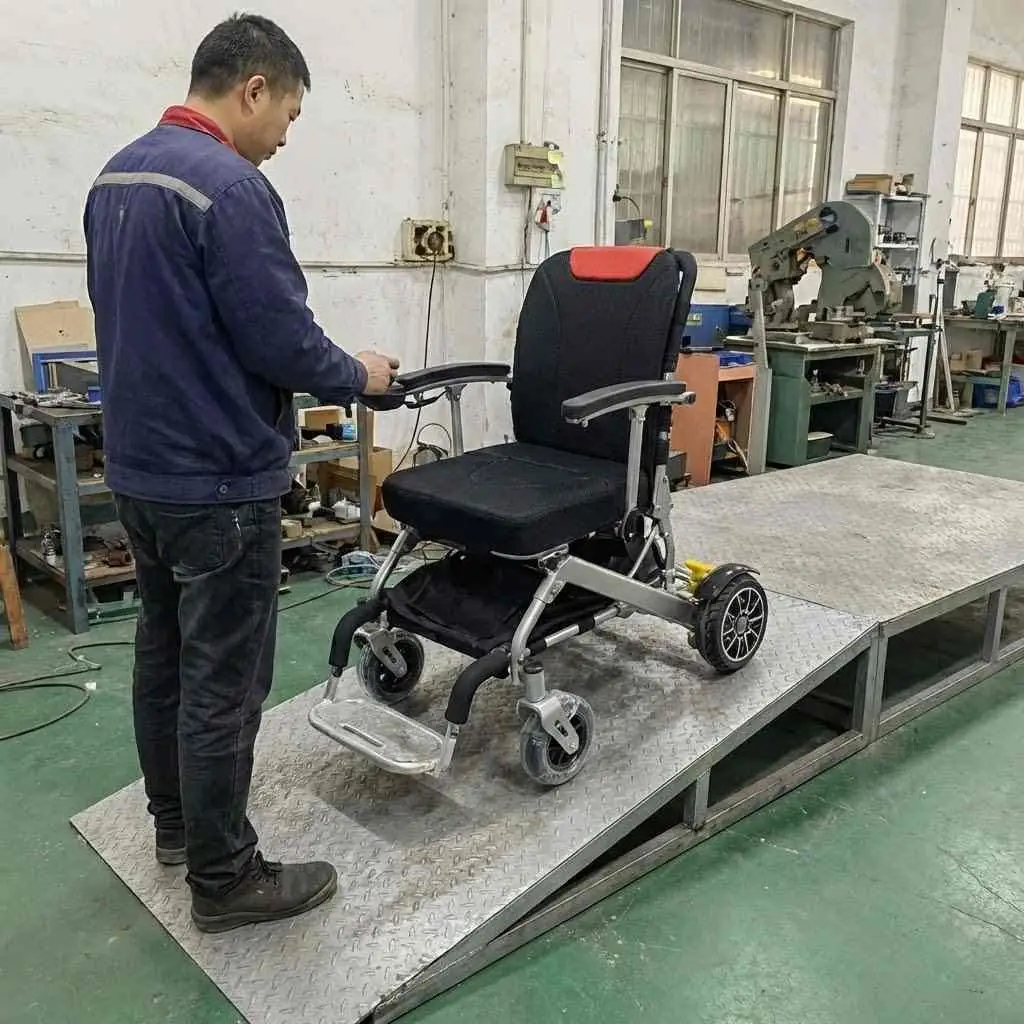
Check each chair every morning before the gate opens. Test the drive, the brake, and the battery level. Listen for a new noise and feel for a wobble in the wheels. A five-minute check catches small faults before they become a breakdown on the far side of the park.
Keep a simple log for each chair. Note the date, the check, and any part you replaced. The log shows which chairs need more attention and when a battery is getting old. It also helps you plan the next order, because you can see which models held up best on your paths.
Daily job
When
Who does it
What to check
Wipe-down
On every return
Loan desk staff
Seat, armrests, controls
Morning check
Before the gate opens
Fleet owner
Drive, brake, battery, wheels
Deep clean
Once a week
Fleet owner
Seat covers, frame, charging points
Log update
With every check
Fleet owner
Date, chair number, parts replaced
Key Takeaway: Clean on return, check every morning, and keep a log per chair.
Which Electric Wheelchair Models Fit a Zoo Loan Fleet Best?
A zoo fleet needs chairs that are easy to drive, easy to store, and tough enough for outdoor paths. The EW8722 is a comfortable and durable small-wheel chair at 45 kg, with a range of 18–22 km. It suits a full day of visitor use. The EW8703G, our big-wheel model at 46 kg with a range of 18–22 km, suits zoos with more gravel and uneven ground, because the bigger wheels roll more steadily outdoors.
For smaller zoos or short visits, folding models also work. The EW1000 is a carbon fiber folding chair at 15 kg including the battery, with a folded size of 73×39×71 cm and a range of 15±3 km. The EW100 is the aluminum alloy alternative at 23 kg, folding to 73×55.5×31 cm with a range of 12±5 km. Folding chairs store in less space, which helps when your storage room is small.
The EW8720 is a comfortable daily model at 45 kg with a range of 18–22 km, powered by dual 12V 22.3Ah lead-acid batteries in series, which gives 24V 22.3Ah. All models run on a 24V system. Pick one main model for the fleet and keep the rest as spares, so staff learn one chair properly.
Model
Weight
Range
Battery
Best for
EW8722
45 kg
18–22 km
24V
Comfortable all-day zoo use
EW8703G
46 kg
18–22 km
24V
Gravel and uneven zoo paths
EW1000
15 kg incl. battery
15±3 km
24V 10Ah lithium
Small zoo, easy storage
EW100
23 kg
12±5 km
24V
Short visits, easy storage
EW8720
45 kg
18–22 km
Dual 12V 22.3Ah lead-acid in series = 24V 22.3Ah
Daily use, long battery life
Key Takeaway: Pick one main model for the fleet, match it to your paths, and keep the rest as spares.
What Are the Common Mistakes Zoos Make When They Buy a Loan Fleet?
The first mistake is buying on price alone. The cheapest chair often has the shortest range and the weakest wheels for outdoor paths. A chair that fails mid-visit costs more in unhappy visitors than the saving was worth. Buy for your ground, not for the lowest price.
The second mistake is skipping the test drive. A chair that looks right in a catalog may feel wrong on your gravel paths or your steepest hill. Test every model on your own ground before you order. Bring the supplier to the zoo and walk the route together.
The third mistake is buying the fleet without a storage and charging plan. Chairs left outside overnight wear out fast, and chairs with no charger each end up flat by midday. Sort the room and the chargers before the chairs arrive.
The fourth mistake is giving the fleet to no one in particular. A loan fleet with no owner slowly falls apart. Chairs go out dirty, come back flat, and sit broken for weeks. Name one owner, give them the morning check and the log, and the fleet stays working. The same lesson applies to hotels, as our guide to electric wheelchairs for hotels shows — a fleet without an owner is a fleet that stops working.
Key Takeaway: Buy for your ground, test-drive on your paths, sort storage first, and name one owner.
Conclusion
This electric wheelchairs for zoos buyers guide comes down to four things: match the chair to your paths, size the fleet for busy days, run charging and cleaning as a daily routine, and give the fleet one owner. Walk your own zoo first, test-drive the models on your ground, and start with a fleet that covers a busy Saturday. If you want a supplier who works the same way, ZVCARE — Shenzhen Zhiwei Health Technology Co., Ltd., founded in 2015, with two production facilities totaling 3000+ sqm and ISO 13485:2016 certification — offers a minimum order quantity of 1 unit, a lead time of 7 days after payment, and spare parts support. Contact us to discuss a loan fleet for your zoo.
FAQ
How many electric wheelchairs should a zoo buy for a loan fleet?
Start small and grow from real use. A small zoo can start with a few chairs at the entrance. A large zoo needs a bigger fleet plus spares for charging and cleaning. Watch the first busy weekends before you order more — a queue at the loan desk tells you the number faster than any plan.
Which electric wheelchair works best on zoo paths?
A chair with steady handling on gravel and slopes, a comfortable seat, and a range that covers your longest route. The EW8722 suits all-day use at 45 kg with a range of 18–22 km. The EW8703G big-wheel model suits more gravel and uneven ground at 46 kg with a range of 18–22 km.
How do zoos charge a loan fleet of electric wheelchairs?
Give the fleet one storage room near the entrance, with a charging point for every chair. Plug each chair in when it comes back, so the next morning starts with a full fleet. Store the chairs indoors overnight, and keep the chargers labeled by chair number.
Do visitors need to pay to borrow a wheelchair at a zoo?
That is your zoo’s own policy. A common approach is to lend chairs free with an ID held as a deposit. Keep the rule the same for every visitor and write it on a small sign at the desk, so there is no argument at the end of a long day.
How do zoos keep loan wheelchairs clean?
Wipe each chair when it comes back, and wash the seat covers on a regular schedule. Check every chair each morning before the gate opens: drive, brake, battery, and wheels. Keep a simple log for each chair, so you can see which models held up best on your paths.
Founded in 2015, ZVCARE is an ISO 13485:2016 certified electric wheelchair manufacturer in China, providing OEM & ODM solutions for global distributors and medical stores.