Electric Wheelchair Lead Times Explained: What Affects Your Delivery Date
October 20, 2026
A supplier promises “7 days,” the goods arrive six weeks later, and nobody technically lied. The factory meant 7 days of production. You heard 7 days to your warehouse.
That gap between what a lead time covers and what you think it covers is where most delivery disputes start. This guide breaks down what electric wheelchair lead times include, what stretches or shortens them, and how to check a factory’s delivery promise before you wire money.
What does “lead time” actually cover?
Lead time sounds like one number, but it is really three separate clocks running one after another:
Clock
What it covers
Who controls it
Production lead time
From confirmed payment to goods packed and ready for pickup at the factory
The factory
Shipping time
Port/airport handling, transit, customs clearance at your end
Freight forwarder, carrier, customs
Door-to-door total
Everything above, plus spec confirmation, payment clearing, and your own receiving checks
Shared — partly you
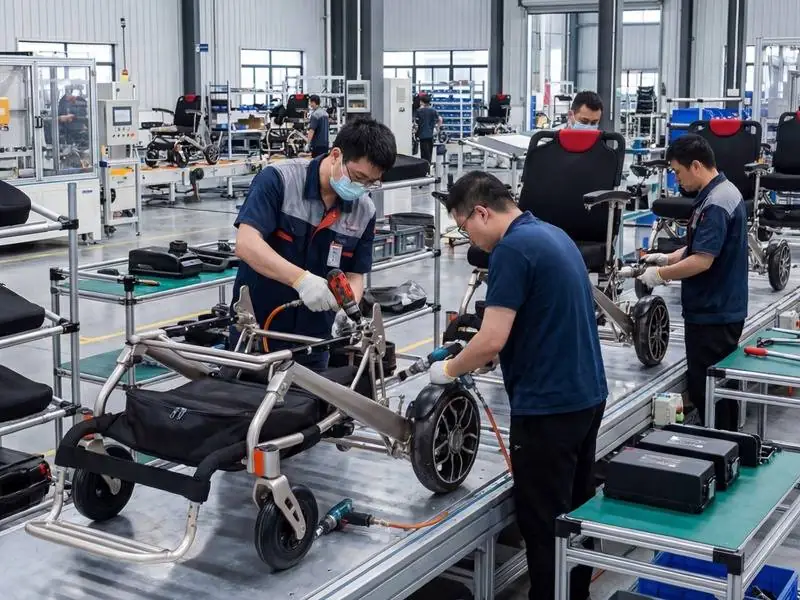
When a factory quotes a lead time, it is almost always quoting only the first clock: production. Our factory standard is 7 days after payment is received, for any model, starting from a single unit. That number says nothing about how long sea freight to your port takes, and it does not start running until the payment actually lands and the specifications are confirmed.
This is why two suppliers can both honestly say “7 days” and deliver a month apart. One counted from the deposit, the other from full payment. One included export packing and QC in the 7 days, the other started counting after.
Key Takeaway: Never compare lead-time quotes until you know which clock each supplier is quoting, when their clock starts, and what has to happen before it starts. A lead time without a defined start point is not a commitment — it is a slogan.
What stretches a lead time?
Once the clock is defined, these are the factors that most often push a delivery date out:
Customization. A standard model in a standard color is the fastest thing any factory makes. The moment you add custom electric wheelchair options — a specific frame color, your logo on the chair and carton — extra steps appear: artwork confirmation and materials prepared before assembly finishes. Every approval round-trip with your design team adds days that have nothing to do with production speed. If you plan to private label electric wheelchairs, lock the artwork before you place the order, not after.
Order size. A single trial unit and a full container do not move through a factory at the same pace. Larger orders need more components staged, more assembly slots, and more QC time per batch. That is normal, not a red flag — but a supplier quoting the identical lead time for 1 unit and 500 units is probably quoting a number they have not thought about.
Battery configuration. Lithium and lead-acid versions of the same model are not interchangeable on the line, and lithium batteries carry their own shipping paperwork (UN38.3 test summaries, MSDS) that has to be correct before the goods can move. If your order is the factory’s first shipment of a particular battery configuration to your market, allow extra time for document preparation — our import guide covers the full document set.
Peak-season pressure. Before major holidays — and in the rush after long factory holidays such as Chinese New Year — every supplier’s calendar compresses at once, and component suppliers slow down too. Orders placed into a peak window should carry a bigger buffer, whoever you buy from.
QC and export packing. A factory that checks every unit, photographs the packing, and palletizes properly is spending time your customers will thank you for later. Rushed packing is how chairs arrive with scratched frames and missing chargers. When you evaluate an electric wheelchair factory, ask where QC sits inside their lead time — inside the quoted days, or added on top?
What keeps a lead time short?
The flip side is just as useful — what reliably protects a delivery date:
Factor
Effect on your delivery date
Standard model, standard color, factory packaging
Fastest path — nothing custom to prepare
Specifications and artwork confirmed before payment
The production clock starts clean, no mid-run changes
Full spec sheet in writing (model, battery, plug type, voltage)
No clarification rounds while the order waits
Ordering outside peak season
Full production calendar available
Spare parts packed with the main order
No second shipment to wait for later
Key Takeaway: Most lead-time overruns are born before production starts — in unclear specifications, unconfirmed artwork, and payments that take days to clear. The fastest orders are the ones where nothing is left ambiguous.
Stock-ready standard models help too. When a factory builds its regular models continuously, a standard order is often an allocation and QC job rather than a build-from-zero job. Ask a supplier which models they keep in regular production — the answer tells you which quotes are realistic.
A worked example: 1 unit vs 50 units
Here is how the same factory, same 7-day production standard, produces two different door-to-door timelines:
The production line is identical. The difference is everything around it. This is also why a trial order is such a useful test: as our MOQ guide explains, a 1-unit order reveals the factory’s real communication speed and packing quality — and if their simple order runs late, their complicated order will too.
How should you read a lead-time clause on a proforma invoice?
The PI is where a verbal promise becomes a written one, so read the lead-time line word by word. You are looking for four things:
1. The start trigger. “7 days after payment” should specify which payment — deposit or full balance. Some factories start assembly on a deposit, others only when the full amount arrives. Both are legitimate; you just need to know which one you signed.
2. What is included. Does the quoted period end at “production complete,” “packed,” or “handed to your forwarder”? These can be days apart.
3. Working days or calendar days. A 7-working-day quote spanning a holiday weekend is not a 7-calendar-day quote.
4. The remedy. What happens if the date slips — advance notice, a revised date in writing, or silence? A factory that warns you early gives you time to manage your customers. Silence is the real problem, not the delay.
If any of these four are missing from the PI, ask before you pay, in writing. Delivery terms and warranty terms are the two clauses distributors most often wish they had read more carefully.
What questions verify a factory’s lead-time claim?
A lead-time promise is easy to make. These questions separate a real production plan from a sales line:
– “Do you keep raw materials and components in stock, or order them per order?” A factory that stocks frames, motors, and controllers can start when your payment lands. One that orders components after your payment carries a hidden lead time inside the lead time.
– “Does assembly start on the deposit or on full payment?” As above — this single answer can shift your delivery date by the entire payment-clearing period.
– “What does your production calendar look like in peak season?” Listen for honesty about congestion, not a promise that peak season doesn’t affect them. It affects everyone.
– “Which models do you build continuously?” Regular-production models carry the most reliable lead times.
– “Who tells me if the date moves, and when?” A named contact and early notification are worth more than a heroic promise.
Whether you structure the project as OEM or ODM also matters — the two models carry different preparation work before production can start.
Key Takeaway: Judge a factory less by the number they quote and more by how precisely they can explain it. A supplier who can walk you through the clock, stage by stage, actually runs one.
How much buffer should you build into your timeline?
Plan backwards from the date you actually need the goods — a trade show, a retailer’s reset date, your own stock running out — and then protect that date:
– Standard order, low season: add 1 week of buffer on top of production plus transit.
– Customized order or peak season: add 2 weeks, and get artwork signed off before the order is placed.
– First order with a new supplier: add the most buffer of all. First orders surface every unclear detail at once — plug types, carton marks, document formats.
And think one step past delivery: packing common electric wheelchair spare parts in the same shipment costs almost nothing in lead time, and saves a second, slower shipment when a customer first needs a controller or charger.
Frequently Asked Questions
Does lead time include shipping to my country?
Almost never. A factory-quoted lead time normally ends when the goods are packed and ready for pickup. Transit, customs clearance, and delivery to your warehouse are separate — add them on top when you plan.
When exactly does the lead-time clock start?
It depends on the supplier, which is why you must ask. At our factory, the 7-day clock starts when payment is received and specifications are confirmed. Other factories start on deposit. Get the trigger written on the PI.
Can a factory really finish production in 7 days?
For standard models built continuously, yes — that is our standard for every model, from 1 unit up. The claim becomes less believable when quoted identically for heavily customized orders or peak-season volume without explanation. Ask what the 7 days include.
Does customization always extend the lead time?
Not always, but it always adds steps before or during production: artwork approval, printing, material preparation. Confirm everything before ordering and the extension can be zero; leave artwork being revised after payment, and the delay sits in approvals, not on the assembly line.
What delays a first order most often?
Unclear specifications, unconfirmed logo artwork, slow payment clearing, and missing shipping documents — in that order. Production itself is rarely the bottleneck.
How do I hold a supplier to their lead time?
Get the start trigger, the included stages, and the day-count basis (working vs calendar days) written on the PI, agree on how delays are communicated, and test the supplier with a small trial order before placing volume. A factory’s behavior on a 1-unit order is the best predictor of their behavior on a 500-unit order.
Tell us your target date — we’ll tell you if it’s realistic
If you are planning an order around a specific date, send us the models, quantities, and any customization you have in mind through our contact page. We’ll walk the timeline backwards from your date and tell you plainly whether it works — and if not, what would have to change. No pressure: a realistic date protects your business and ours.
—
About Our Company
Since 2015, our company has focused on electric wheelchairs, building practical mobility solutions for distributors and medical stores worldwide.
Our specialized focus has led to collaborations with industry leaders and experts to develop products that truly understand and meet the needs of our discerning clients.