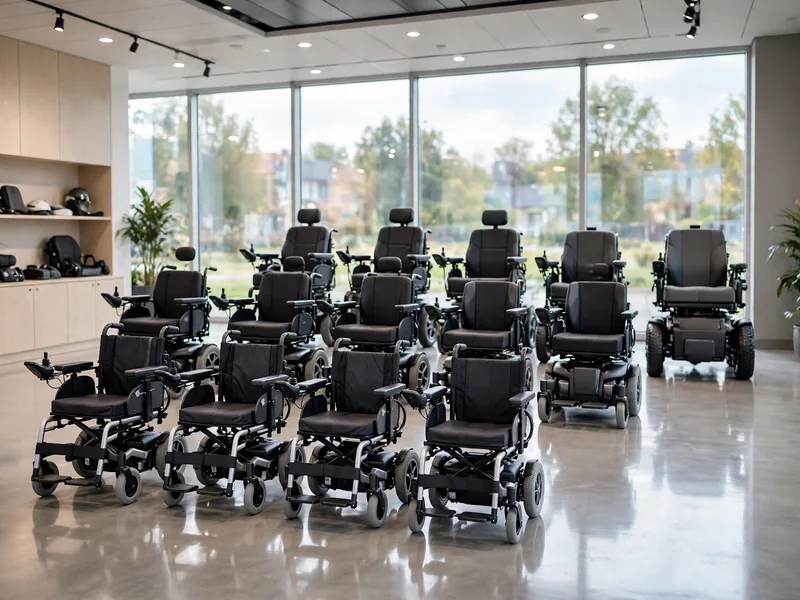
A distributor picks up the phone on a Monday morning. A buyer on the line asks one question before anything else: will this chair hold me? The distributor looks at the shelf, at three rows of chairs, and has to give an answer that holds up when the chair arrives. A wrong answer costs a return, a refund, and a buyer who never rings back.
Electric Wheelchair Weight Capacity Guide: this guide shows a distributor how to stock three weight tiers. It covers how much room to leave above a buyer’s weight, and what overload does to range and warranty. It is written for the shelf, not the showroom floor.
Why does weight capacity decide what a distributor stocks?
Every buyer who rings up has a weight in mind, and every chair on the shelf has a limit. When those two numbers meet, the sale either works or it does not. A chair that is too light for its rider wears out fast, and the buyer blames the distributor, not the factory. A chair that is far too heavy for its rider costs more to ship and takes up shelf space that could hold a chair that sells.
Capacity shapes the whole range a distributor carries. Stock only light chairs and the heavier buyers walk away. Stock only big chairs and the light buyers pay for strength they never use. The shelf has to cover the buyers who actually ring up. That runs from the lightest traveler to the 125 kg buyer who needs real room to spare.
Capacity also shapes what the distributor can promise. A buyer who hears “yes, it will hold you” expects that promise to hold for years, not weeks. The distributor who stocks by tier can make that promise with confidence, because each tier has a job and each buyer fits one tier.
Key Takeaway: Capacity decides the range on the shelf. Stock by tier, and every buyer who rings up finds a chair that fits.
What are the three weight tiers worth stocking?
Think of the shelf in three tiers: lightweight, everyday, and heavy-duty. Each tier serves a different buyer, and each tier earns its place in a different way. A distributor who holds all three can answer nearly every call that comes in.
The lightweight tier is built for travel and easy lifting. The EW1000 leads it at 15 kg with its battery, folding to 73×39×71 cm, with a range of 15±3 km per charge. The EW100 sits beside it at 23 kg, folding slimmer to 73×55.5×31 cm, with a range of 12±5 km. Both are designed for air travel (airline approval required), which is why buyers who fly ask for them first. These chairs suit buyers who value a light lift over a high load.
The everyday tier covers the middle of the market, where most buyers sit. These are the chairs that go out day after day to shops, parks, and family visits. They carry more than the folding chairs and they cope with daily use without fuss. A distributor sells more chairs from this tier than from either of the other two, so it deserves the most shelf space.
The heavy-duty tier is built for the strongest loads. The EW8722 weighs 45 kg and folds to 80×39×74 cm. The EW8703G weighs 46 kg and folds to 89×43×76 cm. The EW8720 weighs 45 kg and folds to 80×34×74 cm. All three run 18–22 km per charge. These are the chairs for the 125 kg buyer and for anyone who needs a chair with plenty of room above their weight. They cost more to ship and take more space, but they are the chairs that stop a distributor losing the heaviest buyers.
Tier
Who it suits
ZVCARE models
Chair weight
Range per charge
Lightweight
Travelers and easy lifting
EW1000, EW100
15 kg, 23 kg
15±3 km, 12±5 km
Everyday
Daily use for most buyers
Mid-range chairs
Heavier than a folding chair
Varies by model — check the label range
Heavy-duty
The 125 kg buyer and above
EW8722, EW8703G, EW8720
45 kg, 46 kg, 45 kg
18–22 km
Key Takeaway: Stock three tiers: lightweight for travel, everyday for the middle of the market, and heavy-duty for the 125 kg buyer. Each tier answers a different call.
How much room should you leave above a buyer’s weight?
Never sell a chair that is rated for exactly the buyer’s weight. A buyer who weighs 125 kg needs a chair rated above 125 kg, with room to spare. The rated limit is a ceiling, not a target. A chair that works at its ceiling every day wears out faster than one with room to breathe.
Think about what else rides on the chair. A buyer carries a bag, wears a winter coat, and sometimes holds shopping on their lap. That extra load counts against the limit too. A chair that fits the buyer on paper but not the buyer with a bag is a chair that will come back with a complaint.
The safe rule is simple: move up a tier when the buyer sits near the top of one. A buyer at 125 kg belongs in the heavy-duty tier, not at the top of the everyday tier. The next tier up costs more, but it costs less than a return, a repair, and a lost buyer. Our guide to how much weight a folding electric wheelchair can hold answers the folding-chair question in full, so this guide does not repeat it here.
Key Takeaway: Leave room above the buyer’s weight. A 125 kg buyer belongs in the heavy-duty tier, with a bag and a coat counted in.
What does overload do to range?
Overload eats range first. A motor that pushes more weight than the chair was built for draws more power on every trip, and the battery runs down sooner. A chair that should cover a full day of trips comes home early, and the buyer thinks the battery is at fault. The battery is fine. The load is the problem.
The label range assumes a rider the chair was built for. The EW1000 is rated at 15±3 km, the EW100 at 12±5 km, and the bigger models at 18–22 km. Those figures hold when the chair carries the load it was built for. Load the chair past that point and the real range falls short of the label, trip after trip. A distributor who warns the buyer about this before the sale saves a support call after it.
Overload also wears the chair down in ways the buyer feels. The motor works harder on every slope, the tires wear faster, and the frame takes more strain on every bump. None of this shows on day one. It shows in month six, when the buyer rings up and says the chair feels tired. A chair sold to the right tier stays lively far longer than one sold a tier too low.
Key Takeaway: Overload cuts range first and wears the chair down next. Sell the right tier and the label range holds up.
How do capacity and seat width get decided together?
Capacity and seat width are decided together, never apart. A chair that holds the weight but pinches the rider is a chair that stays in the closet. A chair with a wide seat but a low limit is a chair that will fail under its rider. The distributor has to check both numbers before the sale, side by side.
Start with the buyer’s weight, then measure the seat. A wider rider needs a wider seat, and wider seats sit on the bigger frames that carry more weight. That is why the heavy-duty tier and the wider seats go together: the frame that holds 125 kg is the frame with room for a wider seat. Selling a narrow seat to a wide rider is the same mistake as selling a light chair to a heavy rider.
Measure before you promise. A tape measure across the seat takes seconds and settles the question. Ask the buyer to sit in the chair if they can, or measure the chair they use now and match it. Our guide to how to measure electric wheelchair seat sizes walks through the measuring steps in full, so use it with the buyer on the phone.
Key Takeaway: Check weight and seat width together. The frame that holds 125 kg is the frame with room for a wider seat.
What does overload do to the warranty?
Overload puts the warranty at risk. Warranty cover runs 36 months on the frame, 12 months each on the motor and controller, and 6 months on a lead-acid battery or 12 months on lithium. That cover assumes the chair is used within its rated limit. A motor that fails because the chair carried more than it was built for is not a fault in the motor. It is a chair sold to the wrong tier.
The distributor sits in the middle of this. The buyer brings the failed chair back to the distributor, and the distributor has to explain why the warranty does not cover it. That talk is hard when the distributor sold the chair, and harder still when the buyer was never warned. A short note on the order — the buyer’s weight, the tier sold, and the limit — protects the distributor when that talk comes.
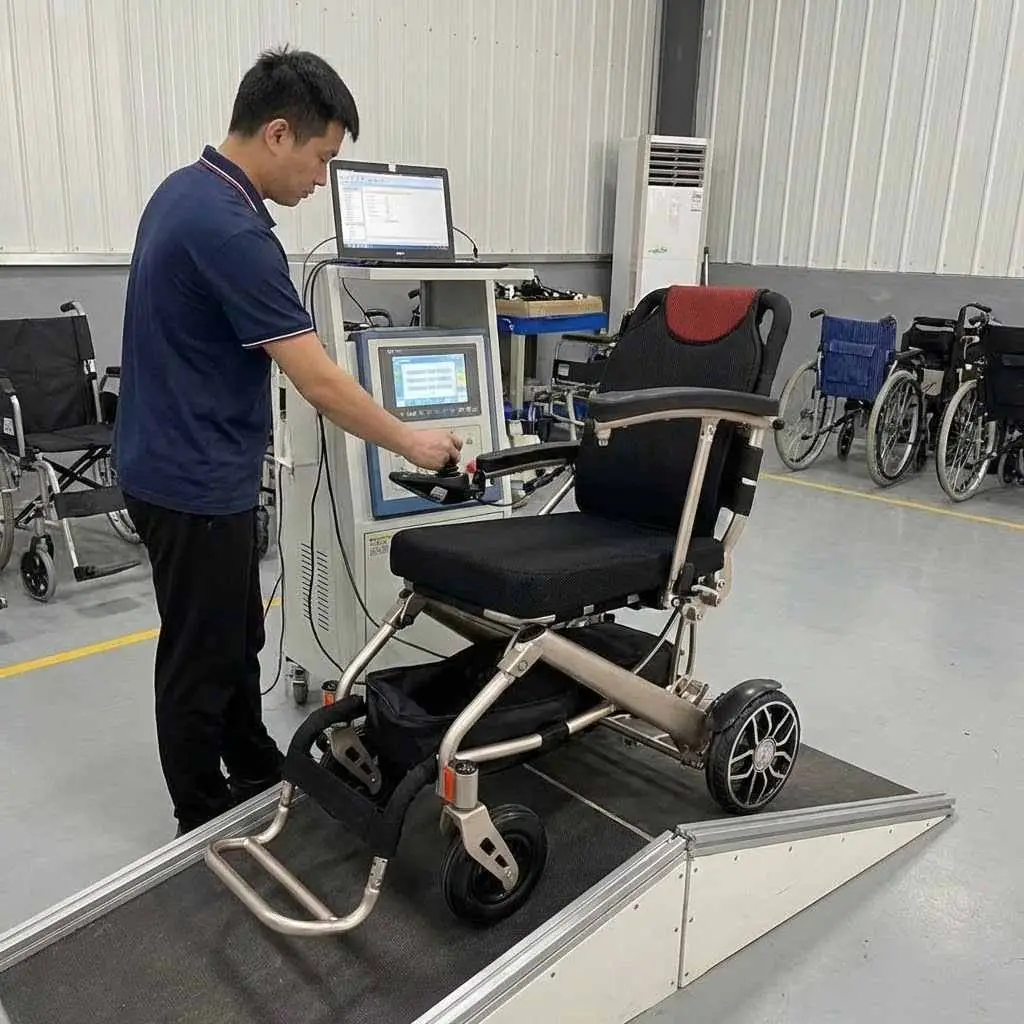
Every chair should pass a full visual inspection before it leaves the factory, and the distributor should be able to say so plainly. A chair that arrives with a fault is a factory matter, and it should be fixed as one. A chair that fails from overload is a stocking matter, and it should be sold as one. Knowing which is which keeps the distributor out of arguments that waste time and trust.
Key Takeaway: Overload is not a warranty claim. Note the buyer’s weight and the tier sold on every order, and the warranty talk stays simple.
How should a distributor use this Electric Wheelchair Weight Capacity Guide when ordering?
Start with the buyers who already ring up. Look at the last few months of calls and sort them into the three tiers. Most calls will land in the everyday tier. A smaller group will want the lightest chairs for travel. A steady few will weigh around 125 kg and need the heavy-duty tier. That split is the shape of the first order.
Order the everyday tier deepest, the lightweight tier next, and the heavy-duty tier in smaller numbers. Heavy-duty chairs take more space and cost more to ship, so a distributor does not need many on the shelf at once. What matters is having one ready when the 125 kg buyer rings up, because that buyer will not wait for a chair that is out of stock. Our guide to lightweight electric wheelchair stocking covers the travel end of the shelf in more detail.
Use the small-order terms to learn the split. The MOQ is 1 unit and the lead time is 7 days after payment. So a distributor can add chairs one at a time as the calls prove the need. Order one heavy-duty chair, watch how fast it sells, and then decide how many to hold. The carton sizes help with planning: an EW100 carton is 62×35×78 cm at 26 kg, and an EW1000 carton is 80×41×76 cm at 21 kg. Bigger models ship in bigger cartons, so leave floor space for them. Our EW100 vs EW1000 comparison helps when a buyer asks which folding chair suits them best.
Key Takeaway: Order the everyday tier deepest. Keep one heavy-duty chair ready for the 125 kg buyer, and add chairs one at a time as the calls prove the need.
What should a distributor ask the factory before ordering?
Ask how the chairs are checked before they ship. Every chair should pass a full visual inspection before it leaves the factory, and the factory should be able to say so plainly. Ask what happens if a chair arrives with a fault. A factory with two facilities and 50+ global partners should answer that question in plain words, before you order.
Ask for the rated limit of each model in writing, next to the chair weight and the folded size. The distributor needs those three numbers for every chair on the shelf: how much the chair weighs, how small it folds, and how much it holds. A factory that puts all three in writing is a factory that stands behind its chairs.
Ask about spare parts for the heavy-duty tier. A heavy-duty chair that waits weeks for a part is a chair that loses its buyer. Ask which parts the distributor should hold: a spare joystick and a spare set of tires. Those spares decide whether a chair is out for a day or out for a month.
Key Takeaway: Ask for the rated limit of each model in writing, ask how chairs are checked before they ship, and ask which spares to hold. A factory that answers all three in plain words is one worth working with.
Electric Wheelchair Weight Capacity Guide — The Short Answer
The short answer comes down to three tiers and one rule. Stock lightweight chairs for travel, everyday chairs for the middle of the market, and heavy-duty chairs for the 125 kg buyer. Leave room above the buyer’s weight on every sale, and count the bag and the coat too. Overload cuts range, wears the chair down, and puts the warranty at risk, so the right tier is worth more than the quick sale.
Electric Wheelchair Weight Capacity Guide boils down to one idea: the shelf should answer the phone. A distributor who holds all three tiers can say yes to nearly every buyer who rings up, and can say it with confidence. ZVCARE — Shenzhen Zhiwei Health Technology Co., Ltd. — was founded in 2015 and is ISO 13485:2016 certified. It makes the folding and bigger models a distributor needs, with spare parts support behind them. You can order from 1 unit, with a 7-day lead time after payment. The warranty runs 36 months on the frame and 12 months each on the motor and controller. Batteries run 6 months for lead-acid and 12 months for lithium. When you are ready to stock the three tiers, talk to us before you order anything.
Frequently Asked Questions
Can a buyer who weighs 125 kg use a folding chair?
Check the rated limit of the exact folding chair first. Folding chairs are built for travel and easy lifting, and the heavy-duty tier is the safer home for a 125 kg buyer. Our folding-chair guide answers the folding question in full, so start there before you promise anything.
How do I know which tier a buyer needs?
Start with the buyer’s weight, then add the bag and the coat, then check the seat width. If the total sits near the top of a tier, move up to the next one. A buyer at 125 kg belongs in the heavy-duty tier, not at the top of the everyday tier.
Does overload void the warranty?
Overload is not a warranty claim. The warranty covers faults in normal use. It runs 36 months on the frame and 12 months each on the motor and controller. Batteries run 6 months for lead-acid and 12 months for lithium. A motor that fails from carrying more than the chair was built for falls outside that cover.
Will overload cut the range?
Yes. A motor pushing more weight than the chair was built for draws more power on every trip, so the battery runs down sooner. The EW1000 is rated at 15±3 km and the EW100 at 12±5 km. The bigger models run 18–22 km. Those figures assume a rider the chair was built for.
How do I start stocking the three tiers?
Start small and learn from the calls. The MOQ is 1 unit and the lead time is 7 days after payment. So order one chair from each tier and watch which one sells first. Then add chairs one at a time as the calls prove the need.
Founded in 2015, ZVCARE is an ISO 13485:2016 certified electric wheelchair manufacturer in China, providing OEM & ODM solutions for global distributors and medical stores.