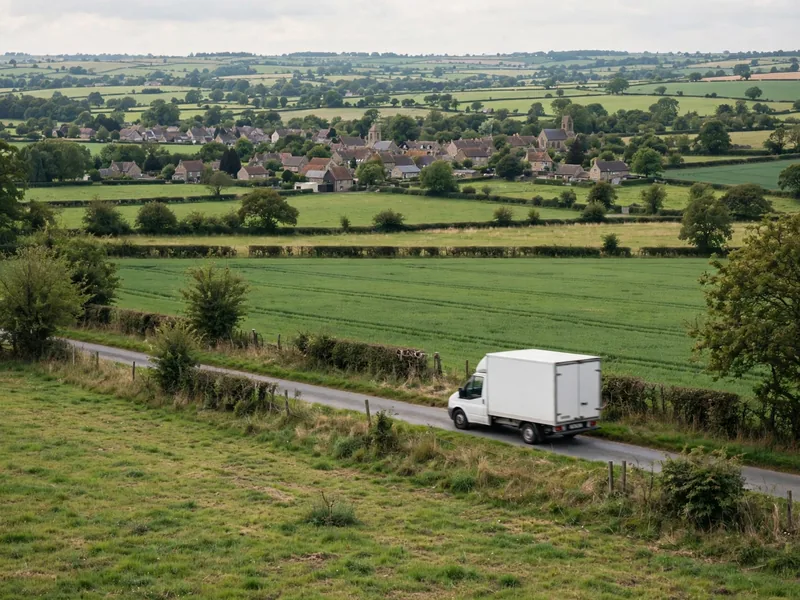
Your showroom sits in the city. Your next customer lives past the last town on the map, down a lane with no street lights, an hour or more from your door. They cannot pop in to try a chair. They cannot drop by when something goes wrong. If you want their business, you have to go to them — and you have to stay reachable after the sale.
Selling Electric Wheelchairs in Rural Areas: this guide covers how a distributor reaches buyers far from the showroom, runs home demos on the road, delivers chairs to remote homes, and keeps service working when the nearest branch is hours away. It is about distance, logistics, and service. It is not about any one country. The same problems show up wherever buyers live far apart.
What makes selling in rural areas different?
Distance changes everything. In a city, a customer visits your showroom, tries three chairs, and buys one the same day. In a rural area, the customer may never visit your showroom at all. They find you online or by word of mouth, they talk to you on the phone, and they decide from a demo you bring to their home. The sale happens on their doorstep, not yours.
Distance also changes service. A city customer with a faulty joystick drives to your branch. A rural customer cannot. When their chair stops, they call you, and you have to fix it from far away — by phone, by post, or by a visit you plan days ahead. A distributor who sells rural without a service plan sells chairs that strand their owners.
Trust works differently too. In a small town, everyone knows everyone. One happy customer tells the whole village. One unhappy customer does the same. Rural selling runs on reputation, and reputation runs on keeping promises: the demo you said you would bring, the delivery day you gave, and the call back when a chair fails.
Key Takeaway: Distance moves the sale to the customer’s doorstep and stretches service over hours of road. Rural selling runs on home demos, planned visits, and a reputation you earn one promise at a time.
How do rural buyers first meet your chairs?
Mostly by word of mouth. A neighbor who bought a chair, a family member who saw one at a market, a nurse who mentioned your name — that is how rural buyers find you. Online search brings some, but a recommendation from someone they know brings more. Ask every rural customer how they heard of you. The answer tells you where your next customers will come from.
Some find you at a local event: a village fair, a market day, or a community hall demo. A chair on display at a fair, with staff to answer questions, does more than any advert in a rural area. People try the chair, talk to your staff, and take a leaflet home. The sale often comes weeks later, when they have talked it over with family.
Some find you by phone. They call with questions, and the call itself is the first demo. Answer plainly, in words they understand, and do not rush them. A rural buyer who feels rushed on the phone will not invite you to their home. A buyer who feels heard will.
Key Takeaway: Rural buyers find you by word of mouth, at local events, and by phone. The recommendation of a neighbor beats any advert, and a patient phone call beats a rushed one.
How do you run a home demo far from your showroom?
Plan the trip like a route, not a single visit. One drive out should cover several homes in the same area, not one. Book two or three demos on the same day, in villages near each other, and drive one loop. A day on the road with three demos pays for itself. A day on the road with one does not.
Bring the right chairs. Two models are enough for a home demo: a folding chair for the car and the house, and a big-wheel chair for the garden and the lane outside. Bring the chargers, and bring a spare battery if the visit runs long. Our guide to running electric wheelchair home demos covers the full routine, and it works the same in a village as in a city.
Check the home, not just the chair. Look at the doorways, the thresholds, and the path from the road to the door. Look at where the chair will charge overnight. A chair that works in your showroom and not in the buyer’s home is a sale that comes back. Let the buyer drive the chair through their own front door, around their own rooms, and out to their own garden. The home decides, not the showroom.
Key Takeaway: Run demos as a route: several homes, one loop, two models, and the chargers. Let the buyer drive the chair through their own home, and the home will tell you if it fits.
How does delivery work when the customer is hours away?
Delivery is part of the sale, not an afterthought. A rural customer cannot collect a chair from your branch, so you bring it to them. Plan the delivery with the demo: if the buyer decides on the day, the chair can go in the van on the next trip. If they need time, set a delivery day and keep it. A missed delivery day in a rural area costs you more than a missed day in a city, because the customer waited all day for you.
Deliver, then demo again. When the chair arrives, show the buyer the joystick, the speed control, and how to stop — even if you showed them at the demo. Then let them drive it in their own home. Check the battery is charged, the charger works, and the buyer knows how to plug it in. Our guide to transporting a folding electric wheelchair in a car covers the loading side, and the same care applies when the chair rides in your van.
Leave the buyer with a phone number that answers. A rural buyer who cannot reach you after delivery feels abandoned. Give them one number, tell them when it is answered, and call them back the same day if you miss them. A follow-up call a week after delivery — did the chair fit the home, is the battery charging, any questions — costs minutes and buys loyalty.
Key Takeaway: Deliver on the day you promised, demo again at the door, and leave a phone number that answers. A follow-up call a week later costs minutes and buys loyalty.
What happens when a rural customer’s chair needs service?
Service is the hard part of rural selling, so plan it before you sell. A chair that fails in a village cannot come to your branch. You go to it, or you fix it by phone, or you send the part by post. Our guide to building an after-sales service network covers the structure. This section covers what the customer experiences.
Start with the phone. Most faults are small: a joystick locked by mistake, a charger not plugged in properly, a seat that needs adjusting. A staff member who knows the chairs can fix most of these on a call, step by step. Train your staff to ask the right questions first: what does the chair do, what changed, and what is on the display. A fix by phone saves a day on the road.
When the phone cannot fix it, send the part. A joystick, a charger, or a set of tires fits in a small parcel and arrives in days. Tell the customer which part is coming and when. When the fault needs hands on the chair, plan a visit — and combine it with other visits in the area, the same way you plan demos. A loaner chair covers the gap: lend one while the customer’s chair is away for repair, so the customer stays mobile. Our guide to electric wheelchair warranty questions lists what to ask your supplier before you order, so you know where you stand when a rural chair fails.
Key Takeaway: Fix by phone first, send the part by post second, and visit third — combined with other visits in the area. A loaner chair keeps the customer mobile while their chair is away.
Which chairs suit rural buyers?
Rural buyers need chairs that travel well and handle rough ground. The chair rides in a car or a van to reach them, then it drives on lanes, gravel tracks, and farm paths. Folding chairs suit the journey: the EW1000 folds to 73×39×71 cm and weighs 15 kg with the battery, and the EW100 folds to 73×55.5×31 cm and weighs 23 kg. Both fold down small enough to load into a car trunk, and both are designed for air travel (airline approval required), which tells you how portable they are.
Big wheels suit the ground. The EW8703G is the big-wheel model at 46 kg, with a range of 18–22 km. It crosses gravel and grass with less effort, and it holds steady on slopes. The EW8722 is the small-wheel model at 45 kg, with the same range. It turns tighter indoors and on paved paths, but it struggles on soft ground. If the buyer’s lane is unpaved, the big-wheel model is the safer pick. If the buyer mostly stays indoors and on paved paths, the small-wheel model does fine.
Range matters more in rural areas than in a city. The EW1000 goes 15±3 km on a charge, the EW100 goes 12±5 km, and the bigger models go 18–22 km. A rural buyer drives further in a day: to the village shop, to a neighbor, and back. What matters most is still the same: the chair must start the day fully charged, and the buyer must know how to charge it. A chair with a long range and a dead battery is worse than a chair with a short range and a full one.
Model
Weight, with battery
Folded size
Range
Best for rural buyers
EW8703G
46 kg
89×43×76 cm
18–22 km
Gravel lanes, grass, slopes
EW8722
45 kg
80×39×74 cm
18–22 km
Paved paths, tight indoors
EW1000
15 kg
73×39×71 cm
15±3 km
Lightest to load, folds tall
EW100
23 kg
73×55.5×31 cm
12±5 km
Thinnest fold, familiar frame
Key Takeaway: Rural chairs must travel well and handle rough ground: folding models for the car, big wheels for unpaved lanes, and a full charge every morning. Range matters more here, but a full charge still beats a long range.
How do you build trust without a local showroom?
Keep every promise, and let customers see you keep them. The demo on the day you said. The delivery on the day you gave. The call back the same day. In a small community, those three promises are your showroom. A distributor who keeps them gets recommended. A distributor who breaks them gets talked about just as fast.
Work with local people. A village nurse, a community worker, or a local shop owner who knows your name and your chairs is worth more than any advert. They meet the people who need chairs, and they pass your name on. Treat them well: answer their calls, visit when you are in the area, and thank them when a referral buys.
Follow up after every sale. Call a week after delivery. Call again after a month. Ask if the chair fits the home, if the battery charges, and if anything needs adjusting. A customer who hears from you after the sale trusts you when the chair needs service. A customer who never hears from you again will look elsewhere next time.
Key Takeaway: In a rural area, your promises are your showroom. Keep the demo day, the delivery day, and the call back. Work with local people, and follow up after every sale.
What should you ask the factory when you sell rural?
Ask about spare parts first. Your customers live far away, so parts must reach them by post or with your next visit. Ask what parts to hold in your van, and what the lead time is for the rest. Ask about the warranty in plain words: frame 36 months, motor and controller 12 months each, battery 6 months for lead-acid and 12 months for lithium. Get the answer in writing before you order.
Ask about the carton. Your chairs travel long distances in vans and by courier, so the carton must survive the trip. The EW1000 ships in a carton of 80×41×76 cm, with a gross weight of 21 kg. Ask for the same details on every model you stock, so your drivers know what to expect and your customers know what is coming.
Ask about ordering in small steps. Rural demand comes one customer at a time, not in waves. The factory should support that: MOQ is 1 unit, and lead time is 7 days after payment. Order one chair when a rural customer needs it, not a container when they do not. A factory that sells one unit at a time is a factory that fits a rural distributor. Our guide to importing electric wheelchairs covers the supply side, including how a small order moves from the factory to your branch.
Key Takeaway: Ask the factory about spare parts, the carton, and ordering one unit at a time. Rural selling needs a factory that ships small, ships strong, and ships fast.
Selling Electric Wheelchairs in Rural Areas — The Short Answer
The short answer is the road. Rural buyers live far from your showroom, so the sale happens at their door: a home demo on a planned route, a delivery on the day you promised, and a phone number that answers. Service runs by phone first, by post second, and by visit third. Chairs must travel well and handle rough ground: folding models for the car, big wheels for unpaved lanes, and a full charge every morning. Trust is built one kept promise at a time.
Selling Electric Wheelchairs in Rural Areas comes down to this: distance is not a barrier, it is a routine. The distributor who plans routes, keeps promises, and follows up after every sale wins rural buyers one village at a time. ZVCARE is Shenzhen Zhiwei Health Technology Co., Ltd. Founded in 2015 and ISO 13485:2016 certified, we build the folding and big-wheel models rural distributors carry, with spare parts support behind them. MOQ is 1 unit. Lead time is 7 days after payment. The warranty runs 36 months on the frame and 12 months each on the motor and controller. Batteries carry 6 months for lead-acid and 12 months for lithium. If your next customer lives past the last town on the map, talk to us before you place the order.
Frequently Asked Questions
How do rural buyers try a chair before they buy?
Through a home demo. You bring two models to their home, let them drive the chairs through their own rooms and out to the garden, and check the doorways and the charging point. Plan demos as a route: several homes in one area, one loop, one day.
What if a rural customer’s chair breaks down?
Fix it by phone first — most faults are small. If the phone cannot fix it, send the part by post. If the fault needs hands on the chair, plan a visit and combine it with other visits in the area. Lend a loaner chair while the customer’s chair is away, so they stay mobile.
Do rural buyers need a different chair than city buyers?
Not a different chair, but a different mix. Folding models travel well in a car, and big-wheel models handle unpaved lanes and grass. The EW8703G is the big-wheel model at 46 kg with a range of 18–22 km. The EW1000 folds to 73×39×71 cm and weighs 15 kg. Match the chair to the buyer’s lane, not to the showroom.
How do you deliver to a home hours away?
Plan the delivery with the demo, set a delivery day, and keep it. Deliver, then demo again at the door: show the joystick, the speed control, and how to stop, and check the battery is charged and the charger works. Leave a phone number that answers.
Is selling in rural areas worth the driving?
Yes, if you plan it as routes. One drive out should cover several homes in the same area. Rural buyers buy by word of mouth, and one happy customer tells the whole village. The driving pays for itself when the route is planned, not when it is one trip for one customer.
Founded in 2015, ZVCARE is an ISO 13485:2016 certified electric wheelchair manufacturer in China, providing OEM & ODM solutions for global distributors and medical stores.