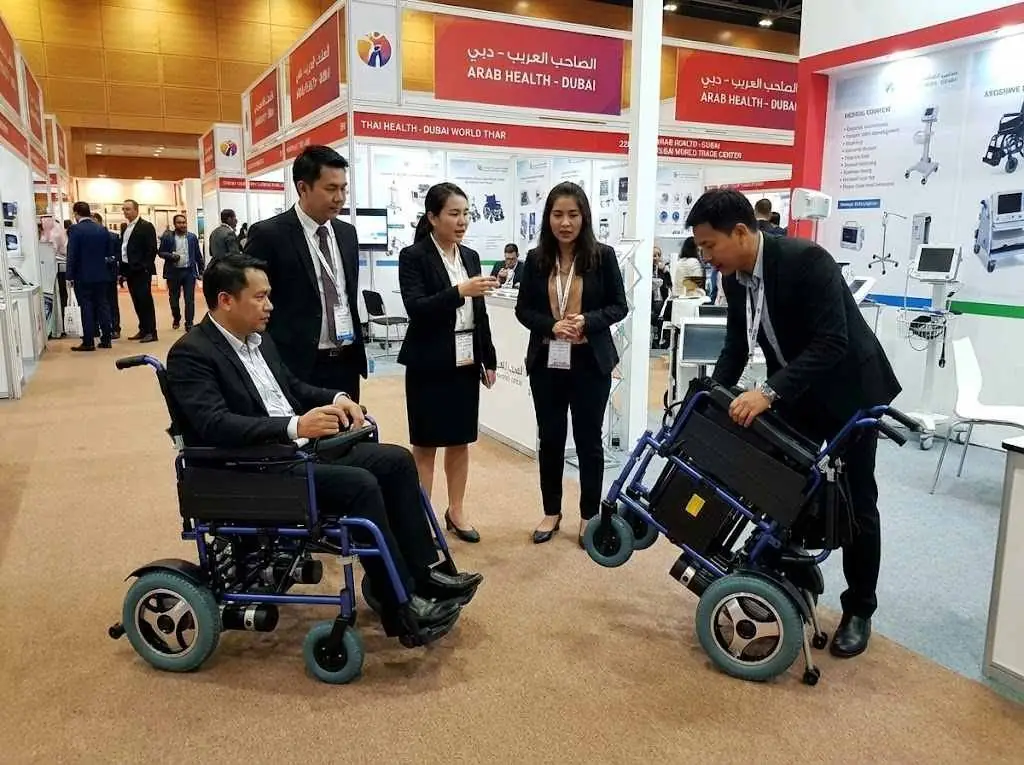
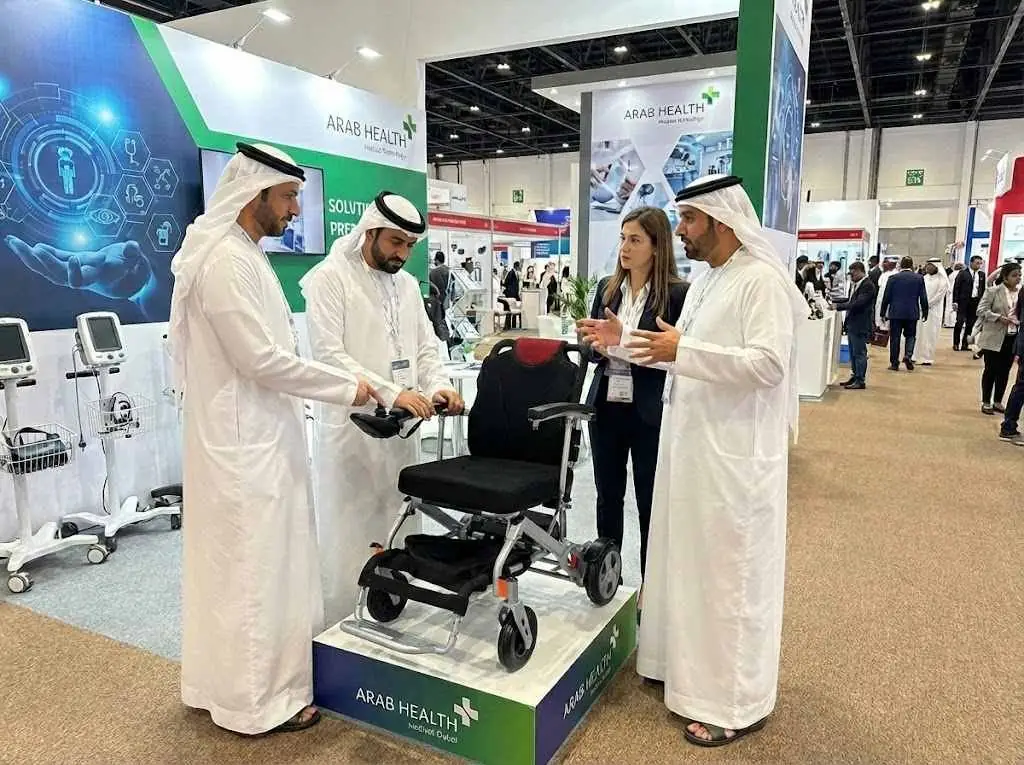
If you are planning on selling electric wheelchairs in the middle east, the first thing to understand is that the region is not one market. A distributor in the Gulf faces different buyers, different paperwork, and different service expectations from one country to the next, and a plan that works in one place can stall in another. The opportunity is real for a supplier who prepares properly, but it favours patient work with local partners and honest after-sales planning over a quick shipment.
This guide is written for a distributor or buyer looking at the Middle East for the first time. It focuses on the Gulf markets, where distributor and tender buying are most common. It covers sales channels in the Gulf, what to check on registration before you ship, how tenders differ from retail sales, and what heat means for product choice and service. It is a practical starting point, not a legal guide; confirm every market-specific question with a local partner or authority before you commit money.
How do distributors usually enter Gulf markets?
Most overseas brands reach buyers in the Gulf through a local partner rather than by selling directly from abroad. A local distributor already knows the buyers, speaks the language, handles import paperwork, and offers the face-to-face service hospitals, retailers, and end users expect. For a new supplier, that partner is often the difference between a product that sits in a warehouse and one that actually reaches users.
There are a few common routes. A distributor route suits steady retail and institutional sales across a country without opening your own office. A tender route suits hospitals and government buyers through formal bids. A direct business-to-business route can work when you already have a relationship with a large buyer, such as a hospital group or a retail chain, that can handle import and service itself. Many suppliers start with one route in one country, learn how it works, and only then expand to a second market.
Before you sign with anyone, spend time on the basics. Ask how the partner sells today, who their customers are, and how they handle repairs and spare parts. A partner who can describe their service process clearly is usually safer than one who only talks about sales volume. Agree in writing on who covers warranty work, who stocks spare parts, and how long a repair should take. A short trial period, with a small first order and clear service expectations, tells you more than promises.
Channel habits and buyer priorities shift from one region to another, so comparing regions helps. Reading about selling electric wheelchairs in Southeast Asia is a useful contrast: in both regions, the partner who can service what they sell matters more than one who only promises volume, but registration and tender weight differ by market.
What should you check before you commit to a market?
Registration and import rules differ across Middle East markets, so treat each country as a separate check. Do not assume paperwork accepted in one market will be accepted in the next, and do not ship on the assumption that registration can be sorted out after the goods arrive. The cheapest time to find a paperwork problem is before production and shipping.
Start by asking your local partner or the relevant local authority what the destination market asks for: whether the product needs local registration before import, whether a local agent or distributor must be named, what product documents are normally requested, and what labelling the market expects. A factory holding ISO 13485:2016 certification and a CE Class I EU Authorized Representative notification can usually supply standard product documents, but whether those documents satisfy a particular market is a local question.
For Saudi Arabia, confirm local registration before shipping. That check belongs at the top of your list for that market, and it should be settled in writing with your local partner before you place an order. For other Gulf markets, the same discipline applies: confirm what is required, get the answer from a local source, and keep a record of it. If a partner cannot explain the registration path for their own market, treat that as a warning sign and slow down.
Labelling and documentation deserve the same care. Confirm the language and information the destination market expects on packaging and user materials early enough that the factory can prepare it during production rather than as a rushed fix afterwards. OEM customization, including colors, logo placement, and packaging, is available, so use that window to get the market-facing details right the first time. A product that arrives with the wrong labelling or missing documents can cost weeks, even when the product itself is exactly what the buyer wanted.
How do hospital and government tenders work in practice?
Tenders are a major channel in the Gulf, especially for hospitals, rehabilitation centres, and government buyers. They differ from retail sales in almost every way that matters: the buyer writes a detailed specification, suppliers bid against it, and the decision often weighs service capacity and documentation just as heavily as price. A supplier that only competes on price, without showing it can deliver and support the product, often loses to one that looks more dependable on paper and in practice.
A tender bid usually needs more than a price list. Expect to show product information, certification documents, warranty terms, and a clear after-sales plan, including who will service the chairs and where spare parts are held. Factory warranty terms are worth stating plainly in a bid: the frame carries a warranty of 36 months, and the battery carries a warranty of 6 months for lead-acid or 12 months for lithium, and the motor and controller each carry a warranty of 12 months. Stating those terms exactly, rather than stretching them into a broader promise, builds trust with a buyer who will check the fine print.
Local presence matters in tenders. Many buyers prefer a local partner who can deliver, install, train staff, and respond when something goes wrong. If you are bidding from abroad without one, be honest about response times and service coverage, and put the arrangement in writing. A bid that overpromises on service and then fails on the first repair does more damage than a modest, reliable one.
If tenders are new to you, study how hospital buyers think before you enter one. This guide to how hospitals buy electric wheelchairs by tender explains the process, documents, and service expectations in practical terms, and reading it before you bid will help you answer the buyer’s real concerns rather than only quoting a price.
What does heat change about product choice and after-sales service?
Heat surprises new suppliers most, because it affects the product, the user, and the service plan all at once. Chairs may be stored, charged, and used in conditions far hotter than a temperate showroom, and a service plan written for a mild climate will not hold up through a Gulf summer. Planning for heat is part of choosing the right product and the right support.
Battery care is the first place to start. Talk with the factory about how batteries should be stored and charged in hot conditions, and pass that guidance on to partners and end users in plain language. Keep chairs and spare batteries out of direct sun, charge in a shaded and ventilated place, and avoid leaving a chair inside a closed vehicle for long periods. These simple habits protect the battery and reduce service calls from heat-related wear rather than from any fault in the product.
Comfort and durability matter too. Upholstery, grips, and exposed parts age faster under strong sun and heat, so ask which of these parts are wear items, how a buyer orders replacements, and what care guidance the factory provides for hot climates, and pass that answer on to buyers plainly. A buyer who understands that a cushion cover or a grip is a wear item, and knows where to get a replacement, is far less likely to treat normal wear as a product failure. Stocking common wear items and spare parts locally, so a user is not waiting on an overseas shipment for a small fix, is one of the most practical decisions a distributor can make.
Service capacity is the other half of the heat question. A good plan names the technicians who will do repairs, the parts they will hold, and the training they have received. Agree with the factory what training materials and guidance are available, and make sure your local team can use them. A distributor who can fix a common problem quickly, in the buyer’s own city, is more likely to keep customers than a cheaper supplier without local service. In a hot climate, where users depend on their chairs daily, that speed of response is the core of the sale.
Sales route
What it suits best
What to confirm first
Local distributor
Steady retail and institutional sales without your own office
Service capacity, spare parts stock, and warranty handling
Tender bid
Hospitals and government buyers
Bid documents, local service coverage, and delivery terms
Direct business buyer
A large buyer who can handle import and service
Who covers import, training, and after-sales support
How should you compare suppliers and quotes before ordering?
Quotes can look very different even when the products look similar in a photo, and the gap usually has a reason. Frame material, battery type, motor and controller specification, warranty scope, and what is included in the price can all move a quote, and a cheaper quote that leaves out service or spare parts may cost more over the life of the product. Comparing quotes line by line, rather than headline price against headline price, is the only way to know what you are buying.
Ask every supplier the same questions, so the answers can be compared fairly. Ask what the frame is made of, what battery is supplied, what the warranty covers and for how long, what is included in the quoted price, and what spare parts and support are available after delivery. A supplier that answers plainly and in writing is easier to trust than one that answers only in general terms. The reasons quotes vary, and the questions that expose those reasons, are set out in this explanation of why electric wheelchair quotes differ so much, worth reading before you shortlist anyone.
Factory capacity is also worth checking, because it affects whether a supplier can deliver on time and repeat an order consistently. Ask for concrete figures — for example, the factory behind this guide operates two production facilities totaling 3,000+ sqm — and ask how production is scheduled, how quality is checked before shipment, and what happens if a delivery needs repeating at short notice. The answers tell you whether you are dealing with a factory or a middleman.
Meeting a supplier in person can shorten the learning curve. Trade shows let you handle the product, ask direct questions, and judge the people behind the quote. This guide to how to source electric wheelchairs at the Canton Fair covers what to check on the stand and what to confirm afterwards, and the discipline of comparing suppliers face to face transfers directly to Gulf buying.
How do you plan a first order that protects cash flow?
A first order into a new region should be sized to learn, not to impress. A small trial order lets you test the partner, the registration path, the shipping route, and the service process with limited risk. If the trial goes well, the second order can be larger with confidence. If something goes wrong, you learn the lesson on a small scale.
Put payment and delivery terms in the order documents before production starts. Payment terms affect cash flow as much as price does, and they should be settled while both sides still have room to negotiate. The factory lead time is 7 days after payment, and the minimum order quantity is 1 unit, which means a trial order is genuinely possible without a large upfront commitment. That flexibility does not remove the need for a clear written agreement on price, specification, delivery terms, and warranty handling. A plain-language overview of payment terms from an electric wheelchair factory will help you ask the right questions before you pay anything.
Shipping deserves a specific check. Shipping cost is based on gross and carton weight, never on net weight alone, so ask for carton dimensions and gross weight when you are quoted freight, and budget on that basis. A quote that looks attractive on a net-weight calculation can become expensive once the real carton weight is applied. Confirm who arranges freight, who covers insurance, and what happens if goods are delayed or damaged, and keep those answers with the order documents.
Spare parts should be part of the first order, not an afterthought. A small stock of the parts most likely to be needed, agreed with the factory and your local partner, lets your service team respond quickly instead of waiting on a separate shipment for every repair. The table below is a starting point; agree the exact mix with the factory for the models you order.
First-order item
Why it matters
Example to discuss
Trial chairs
Test the partner, registration, and service process
e.g. a small trial quantity agreed with your partner
Spare batteries
A common service need in hot climates
e.g. spare units matched to the models ordered
Spare controllers and chargers
Fast local repair without waiting on overseas shipment
e.g. a small stock per model in service
User guidance in plain language
Fewer avoidable service calls
e.g. one care sheet per chair covering charging and storage
What do buyers ask most often?
Do I need a local partner to sell in the Gulf?
In practice, yes for most distributors. A local partner handles import, registration questions, language, and after-sales service in a way that is very hard to replicate from abroad. Some large buyers can handle import themselves, but for retail and hospital sales a local partner is usually the practical route.
Can one registration cover every Middle East market?
No. Registration and import requirements differ by market, so each country needs its own check with a local partner or authority before shipping.
What matters most in a tender bid besides price?
Documentation, warranty terms, and a credible after-sales plan matter at least as much as price. Buyers want to know who will service the chairs, where spare parts are held, and how quickly a repair can be done.
How should I handle heat and battery care for customers?
Give customers plain-language guidance on shaded storage, ventilated charging, and avoiding long periods in direct sun or a closed hot vehicle, and make sure your local team stocks parts for quick repairs. Simple care habits and fast local service reduce avoidable heat-related complaints.
Where should you start?
Start with one market, one partner, and one clear service plan. Let the second market wait until the first one is working. Visit the partner if you can, handle the product yourself, and agree the service and spare-parts arrangement in writing before the first shipment. Confirm registration through a local source, settle payment and shipping terms on gross and carton weight, and place a trial order sized to learn without risking cash flow.
For a distributor weighing a first step into the region, selling electric wheelchairs in the middle east rewards the supplier who treats service as part of the product. Buyers want a chair that suits their climate, documents that satisfy their market, and a partner who answers the phone when a repair is needed. Meet those needs, and you are in a much stronger position to win a second order.
Key Takeaway: Pick one Gulf market, confirm its registration path locally, partner with someone who can service what they sell, and protect the first order with a trial quantity, clear warranty terms, and a local stock of spare parts.
Founded in 2015, ZVCARE is an ISO 13485:2016 certified electric wheelchair manufacturer in China, providing OEM & ODM solutions for global distributors and medical stores.